
How to Tell Good Cashmere: Five Checks Before You Order
The word cashmere names a fibre, not a quality level. Five checks — micron and staple together, ply, garment weight, collar construction and dye-lot discipline — separate a sweater that lasts a decade from one that pills in a month.
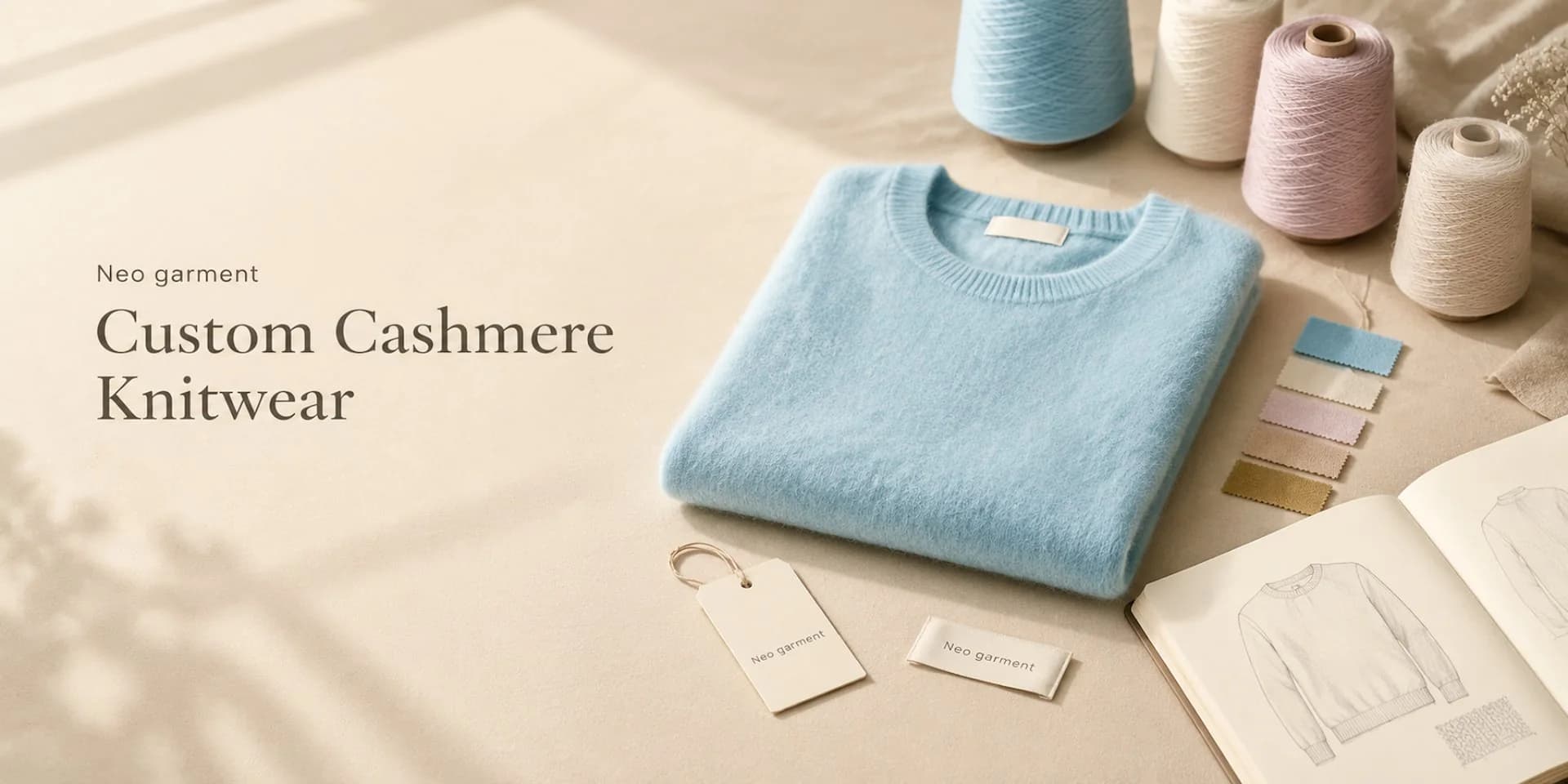
Written for buyers comparing cashmere quotes or reviewing a first sample. Every check below can be run with a specification sheet, a kitchen scale and ten minutes — none of them requires a lab, and all five can be asked about before any money changes hands.
The photograph above is a cashmere order reduced to one table: a folded crew neck, three cones of yarn, a fan of colour swatches, a blank hang tag, a woven neck label, and the technical drawing the garment will be programmed from. Every check in this article maps onto something in that frame. That is the point — cashmere quality is not a feeling you get in a showroom, it is a set of numbers somebody wrote down, or did not.
The word cashmere names a fibre, not a quality level. Two garments can both be labelled 100% cashmere and differ more from each other than cashmere differs from merino — in surface, in recovery, in how they look after twenty wears. The difference is decided by five things, and none of them is the fibre name on the label.
Check 1 — Micron and Staple, Together or Not at All
Micron is the diameter of the fibre, and it decides softness. Staple is the length of the fibre, and it decides pilling. Buyers almost always hear the first number and never the second, because micron is what suppliers volunteer — it is the number people ask for. Staple is the number that decides whether the garment still looks new in March.
The mechanism is simple. Short fibres are not anchored deeply enough in the twisted yarn, so under friction they work their way to the surface and mat together into pills. Long fibres stay locked in. A 14-micron cashmere with a 28 mm staple feels extraordinary in the shop and looks tired after ten wears; a 16-micron cashmere with a 36 mm staple feels slightly less silky on first touch and outlives it by years. Ours runs 15.5 to 16.5 micron with a 34 to 38 mm staple, sourced from Inner Mongolia.
The check: ask for micron and staple length in the same sentence. A quote that supplies only micron has answered half the question — and the easier half.
Check 2 — Ply, and What the Yarn Count Actually Says
Ply is how many single yarns are twisted together, and it is a construction decision, not a grade. Yarn counts are written as fractions: 2/26 means two strands of 26-count, 3/48 means three strands of 48-count. Two yarns of the same finished thickness can be built from one coarse single or from three fine ones, and they behave nothing alike — the plied version is rounder, stronger at the surface and slower to fuzz.
For a crew neck, two-ply is the commercial standard and the right answer for drape. A polo carries three plies because a collar and a placket are edges, and edges take abrasion. Our guide to 3-ply cashmere covers the polo case in detail; the crew-neck version of the same check is simpler — ask what the ply and the finished count are, and be suspicious of a quote that gives neither. A garment whose supplier cannot name its own yarn is a garment somebody else will specify.
Check 3 — Weigh the Garment
This is the cheapest check on the list and the most revealing. Finished weight per piece is a specification, not a detail, and cashmere is light enough that a shortfall hides easily. A 12GG crew neck in genuine two-ply cashmere lands somewhere between 300 and 380 grams depending on the size run; a 14GG version between 240 and 280; a 7GG interpretation between 480 and 560. Put the sample on a kitchen scale.
Weight is where substitutions hide, because the two cheapest ways to cut a cashmere order both show up there. One is a lighter, lower-count yarn at the same gauge — the garment drapes differently and measures light. The other is a blend that the paperwork does not mention. Neither survives the scale plus a fibre test, which is why a supplier who volunteers the target weight before sampling is telling you how the whole relationship will go.
Check 4 — The Collar Tells You How the Garment Was Made
Turn a cashmere crew neck inside out and look at the neckline. There are two ways it got there. The cheap way is a folded edge: the body fabric is turned and stitched, which is fast and adds no pieces. The proper way is a ribbed collar knitted as its own piece, at its own density, and linked to the body stitch by stitch.
On a sample table the two can look similar. On the third wash they do not. A folded collar in cashmere relaxes — it rolls, it gapes, and the opening grows a size. A knitted-and-linked collar holds, because the rib is a structure with recovery, not a hem with memory. Run the check with your hands: stretch the collar gently and let go. It should snap back to shape with no wave in it. Then look at the join where collar meets body — a linked join disappears into the fabric; a stitched fold shows a seam line that will only get softer.
The same logic runs through the cuffs and hem. Wherever a garment has an edge is where a cheap construction goes to hide, and cashmere — soft, expensive, and unforgiving of shortcuts — shows it first and worst.
Check 5 — One Dye Lot, and a Label That Tells the Truth
Shade variation is the fault that turns up between panels rather than between garments: the front from one lot, the sleeves from another, each within tolerance on paper and visibly different at the shoulder seam. On a solid-colour cashmere sweater there is no pattern to hide it, so the entire order has to run from a single dye lot, and the approved lot should be held for reorders. Ask how lots are controlled and what happens if the lot runs out mid-order.
The second half of this check is the label itself, and it is a naming question. A garment may be described as cashmere only if the fibre content says so, at the percentage stated. A soft acrylic engineered to imitate the hand is a legitimate product — but its copy has to describe the hand, cashmere-like, downy, and state the real composition. Buyers who test incoming goods find the difference immediately, and the cost of that discovery lands on the brand, not on the factory that spun the yarn.
The colour swatches in the photograph are the physical version of this check. A Pantone code matched on one fibre will not read identically on another — the swatch has to match on the actual production fibre, in daylight, and the approved swatch should be the thing the bulk is judged against.
What a Comparable Quote Looks Like
Run all five checks on two quotes and something useful happens: they become comparable. A quote worth taking seriously states micron and staple together, names the ply and finished yarn count, declares a target weight per piece, says whether the collar is knitted and linked or folded, and commits to a dye lot. A quote that gives only a fibre name and a price is asking you to accept every open decision sight unseen — and every one of those decisions was available to be made cheaply.
This is also why the spread between two cashmere quotes is usually wider than between two quotes for any other fibre. The fibre name is the same on both papers; everything that decides the garment is not.
Frequently Asked
Is expensive cashmere always better cashmere?
No — price tracks micron, marketing and margin as much as it tracks quality. A long-staple 16-micron yarn knit properly will outperform a short-staple 14-micron one at any price point. Judge the specification, not the invoice.
How can I check cashmere without a lab?
Four of the five checks need no equipment: read the spec for micron and staple, weigh the garment, stretch the collar and watch the recovery, compare the sleeve shade against the front in daylight. For fibre authenticity, a loose thread from an offcut burns with a hair-like smell and leaves a brittle black bead — protein fibre behaves differently from acrylic, which melts into a hard lump. Do it on a swatch or a yarn end, never on the garment.
Why does cheap cashmere pill in the first month?
Short staple, almost always. The feel in the showroom comes from fineness, which is cheap to source; the pilling comes from fibre length, which is not. The garment was soft and it was cashmere — both claims were true — but the specification was chosen so that neither claim survives contact with a coat sleeve.
If you are comparing cashmere quotes and want a second read on the specifications, send both. Telling you which line the difference sits in takes less time than a sample round — and it is the same table of numbers either way.
Looking to manufacture this style at scale?
Send us your design brief and we'll quote a direct-factory run with low MOQs, 72h sampling and DDP worldwide delivery, knitted on our own floor in Dalang.
Knitwear you can manufacture right now
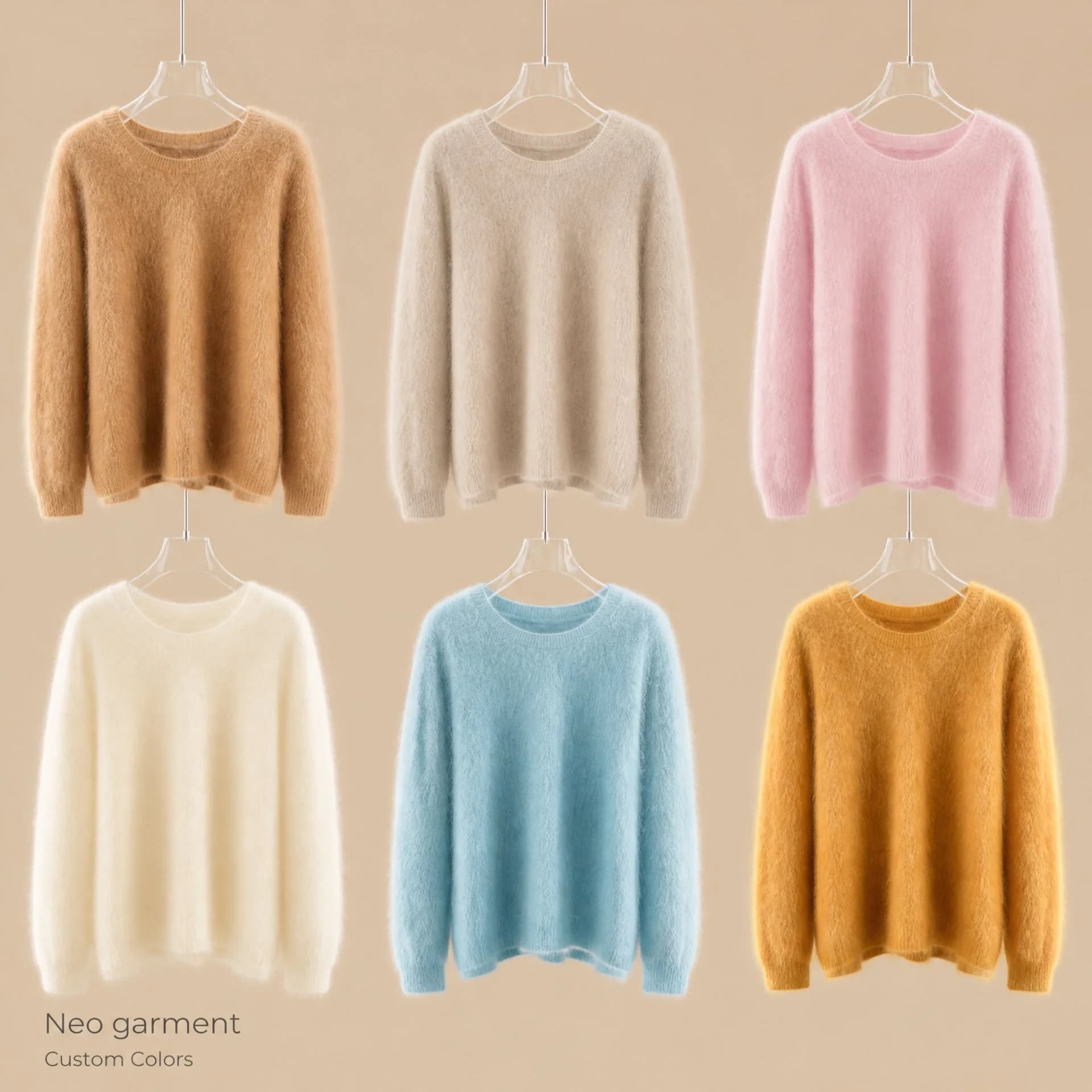
Custom 100% Cashmere Crew Neck Sweater
Two-ply Inner Mongolian cashmere at 12GG, knitted plain so the fibre does the talking — with your own neck label and hang tag.
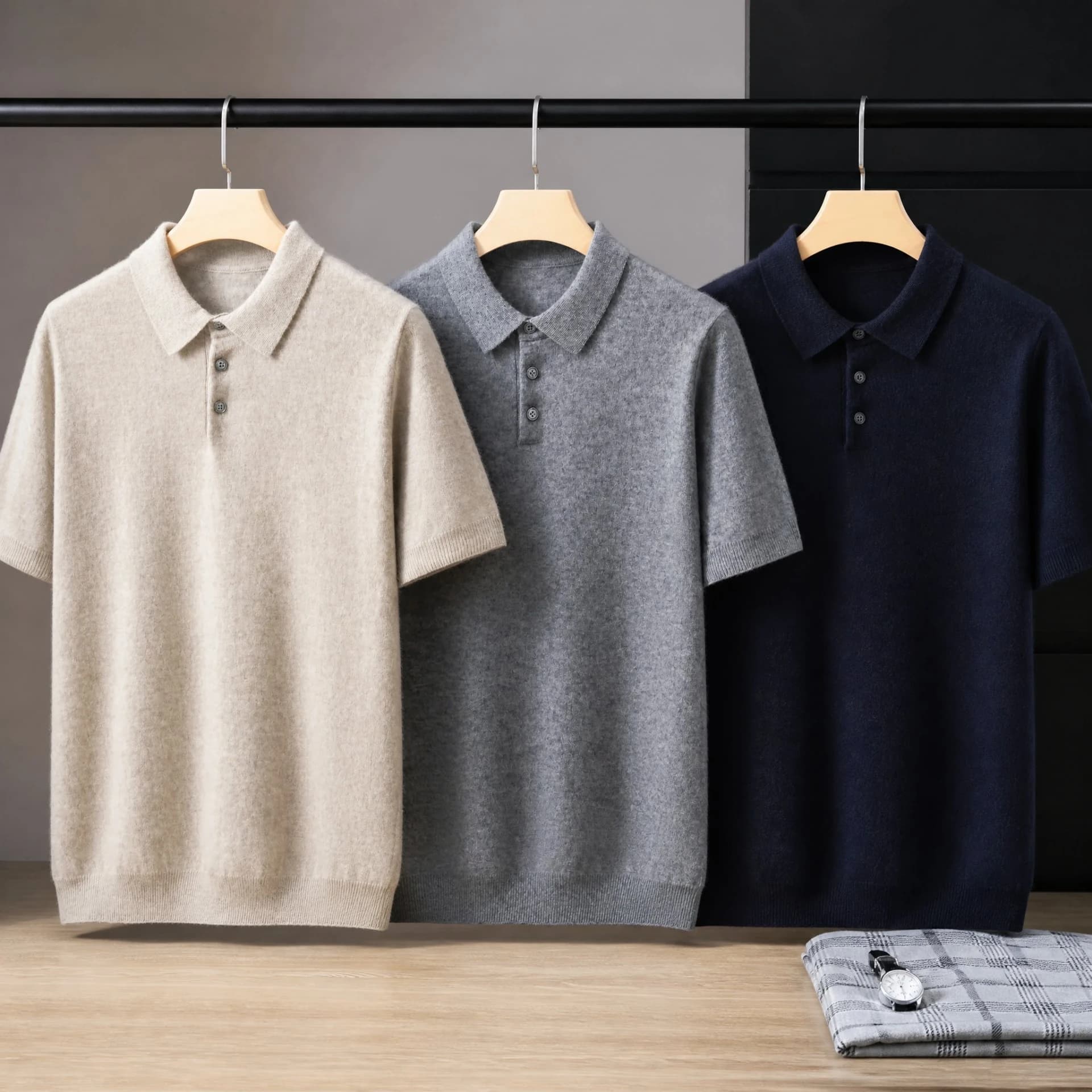
Custom Cashmere & Wool Knit Polo Shirt
A solid fine-gauge polo in a 35/65 cashmere-wool blend - the hardest thing we knit precisely because there is no pattern to hide behind.
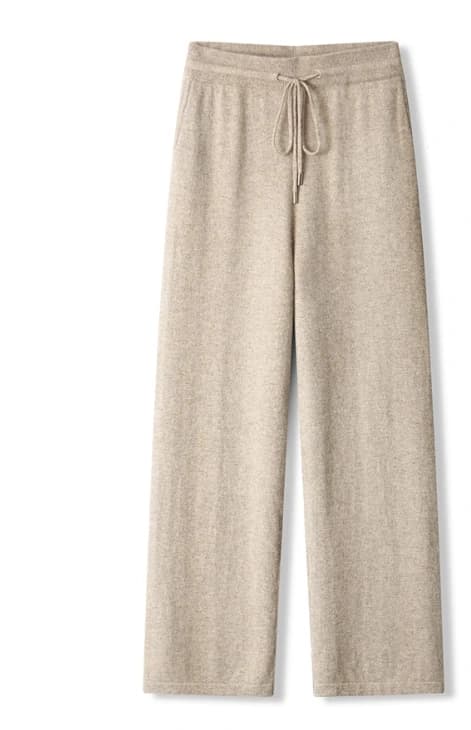
Custom 100% Cashmere Wide-Leg Knit Pants
Two-ply Inner Mongolian cashmere at 12GG — the drape of the fibre is the whole product, so the knitting has to stay out of its way.
Keep reading

It's Time to Custom-Own Your Christmas Jumper
A short consumer-oriented overview of the custom Christmas jumper trend — design ideas, group-event tips, and the festive looks defining this year's holiday season.
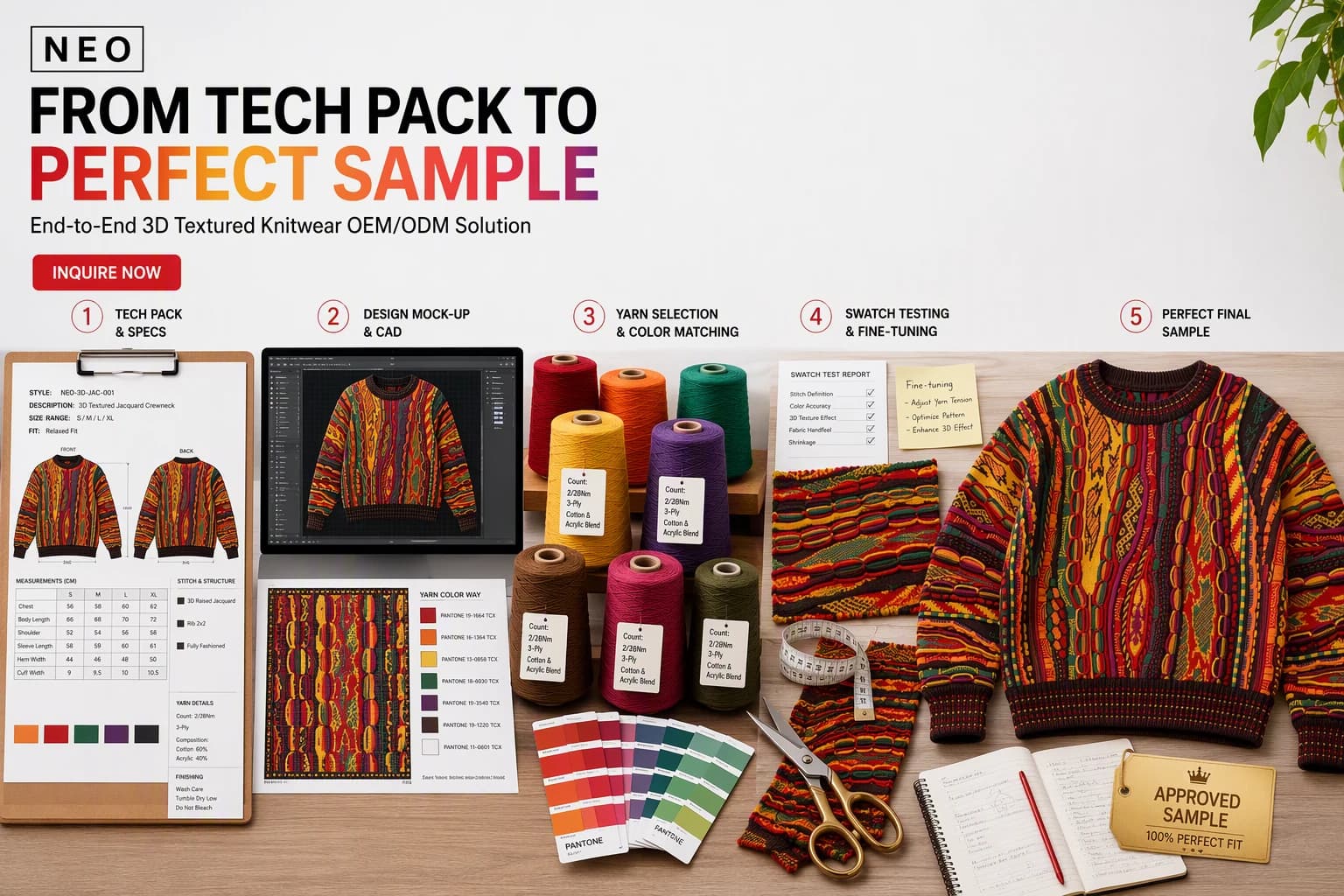
From Tech Pack to Perfect Sample: How Knitwear Sampling Actually Works
A floor-level walkthrough of the five stages between your tech pack and an approvable knit sample — mock-up and CAD programming, yarn colour matching, swatch testing, and the final PPS.
Sourcing Custom Men's Knitwear: What Separates a Knitwear Factory from a Sweater Mill
Mens knitwear briefs rarely fail on the design. They fail on gauge, size grading and reverse-side finishing — three things most price requests never ask about. Here is what to specify before you ask for a quote.
Send us the piece you were told was too hard.
Reference photo, rough sketch, or full tech pack — our Dalang technical punchers evaluate feasibility, machine gauge, yarn options, and pricing within 24 hours.