Sourcing Custom Men's Knitwear: What Separates a Knitwear Factory from a Sweater Mill
Mens knitwear briefs rarely fail on the design. They fail on gauge, size grading and reverse-side finishing — three things most price requests never ask about. Here is what to specify before you ask for a quote.
Written for brand owners, menswear buyers and product developers sourcing custom knitwear at production scale. If you are shopping for a single personalised jumper, this is not the right article.
A mens knitwear programme almost never fails because the design was wrong. It fails because the sample came back on the wrong gauge, the grading ran wide at the chest, or the reverse side was left as a mess of floats that nobody saw until the first customer washed it. All three are decided long before a price is agreed, and none of them appear in a standard quote request.
Why Mens Knitwear Is a Different Brief
Womenswear knitwear tolerates drape. Menswear does not. A men's sweater is usually judged on whether it holds its line across the shoulder and sits flat at the hem, which pushes the whole brief toward heavier gauges, straighter silhouettes and tighter grading. Where a womenswear programme might run 12GG or 14GG for a soft fall, a men's crew or cable pullover is more often 3GG to 7GG — the fabric has enough body to stay where it is put.
- Heavier gauge: 3GG to 7GG for structure, 12GG for a finer layering weight.
- Straighter body: minimal waist shaping, shorter body length than womenswear equivalents.
- Tighter grading: a half-size error at the chest reads as a fit fault on menswear far faster.
- Cleaner reverse side: men wear these over a shirt or nothing at all, so floats matter.
Four Things to Specify Before You Ask for a Price
1. Gauge, not just silhouette
Gauge is the number of needles per inch on the machine, and it decides the hand-feel, the weight, the drape and how much detail your artwork can survive. Say "crew neck sweater" to three factories and you will get three completely different fabrics back. State the gauge and the target weight in grams per piece, and the quotes become comparable.
2. Yarn and finished weight
Ask for the finished garment weight, not the yarn count. A 7GG acrylic-cotton pullover and a 7GG merino pullover can look identical on a spec sheet and arrive 150 grams apart. Weight is also how shipping costs get predicted, so a factory that cannot answer this before sampling is guessing at your freight too.
3. The grading basis
Send your existing size chart or a garment you are happy with. Knitwear is programmed, not cut, so a factory can put your exact graded dimensions into the machine file — but only if they ask for them. A supplier who quotes from a menu of standard sizes is quoting a stock pattern, not your product.
4. Reverse-side requirement
This is the most common hidden difference between expensive and cheap knitwear. In multi-colour jacquard, every colour that is not on the face has to travel across the back as a float. Short, locked floats are soft and invisible. Long loose floats snag on rings, catch on hair and pull the face out of shape after a few washes. Ask specifically how floats are locked, and ask to see a reverse-side photo of a comparable piece — not a swatch.
If a supplier will only show you the face of the fabric, that is usually the answer. The reverse side is where the cost sits.
Where Fashion Knitwear Diverges from Basics
A menswear core programme is silhouette-led: the value is in fit, gauge and consistency across re-orders. Fashion knitwear is artwork-led, and the limits move entirely. Multi-colour jacquard, intarsia panels, 3D relief structures and graphic placements are all knitted into the structure rather than printed on top — which is what gives them depth, but also what makes a 13-colour brief a different project from a 4-colour one.
Most volume mills cap out between four and six colours per design, because each additional colour needs its own yarn carrier and its own tension control to stop the back floats from snagging. Ask how many colours the factory can hold in a single piece before you fall in love with a comp. If the answer is six and your artwork needs eleven, the piece will come back printed, and it will look printed.
Five Questions That Expose a Trading Company
- "How many flat-knit beds do you run, and on whose machines?" A factory knows its bed count and its machine brands. A trader describes the factory they subcontract to in vague terms.
- "Who punches the stitch file?" In-house CAD programming is the difference between a factory that can iterate on your artwork and one that forwards your file and waits.
- "Can I see the linking and finishing floor?" Knitwear is only half machine work. Linking, mending and pressing decide whether the seams sit flat.
- "What is your sampling turnaround in working days from yarn in stock?" A trading company quotes sampling time as shipping time plus their own queue.
- "Which AQL do you inspect to, and will you accept third-party inspection?" 2.5 with SGS, BV or QIMA accepted is a normal factory answer. Refusal is not.
What to Lock Between Sample and Bulk
Once the PPS is approved, three things need to be frozen in writing or the bulk will drift: the yarn dye lot, the gauge and weight of the approved sample, and the graded measurement chart. Dye lot matters most on multi-colour work — two lots of the same Pantone can knit up visibly different when they sit next to each other in one garment. Ask for the bulk yarn to be reserved against the approved lot, and ask what happens to colour accuracy if the lot runs out mid-order.
The Short Version
Mens knitwear sourcing is decided by specifications that most buyers never write down: gauge, finished weight, grading basis and reverse-side finishing. Get those four into the brief and the quotes you receive become comparable, the samples start arriving close to right, and the difference between a knitwear factory and a sweater mill stops being a matter of opinion.
If you have a menswear brief in progress and want an honest read on whether it is knittable at your target price, send the sketch and the target gauge. That answer usually comes back faster than a quote does.
Looking to manufacture Christmas jumpers at scale?
Skip the print-on-demand platforms. Send us your design brief and we'll quote a direct-factory run with low MOQs, 72h sampling, and DDP worldwide delivery.
Knitwear you can manufacture right now
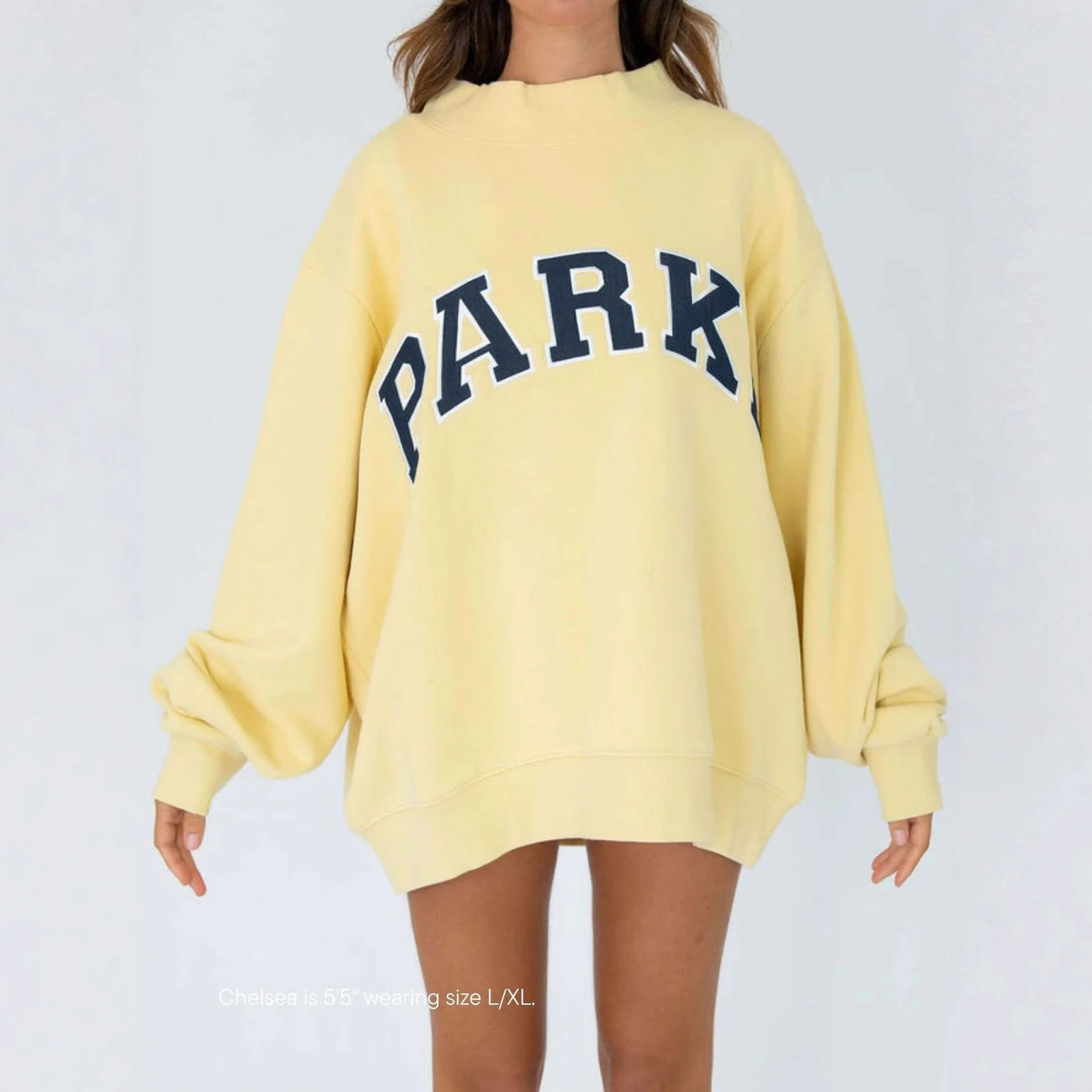
Custom Crew-Neck Jacquard Sweater
The essential knitwear staple — programmed to your exact fit, gauge, and artwork.
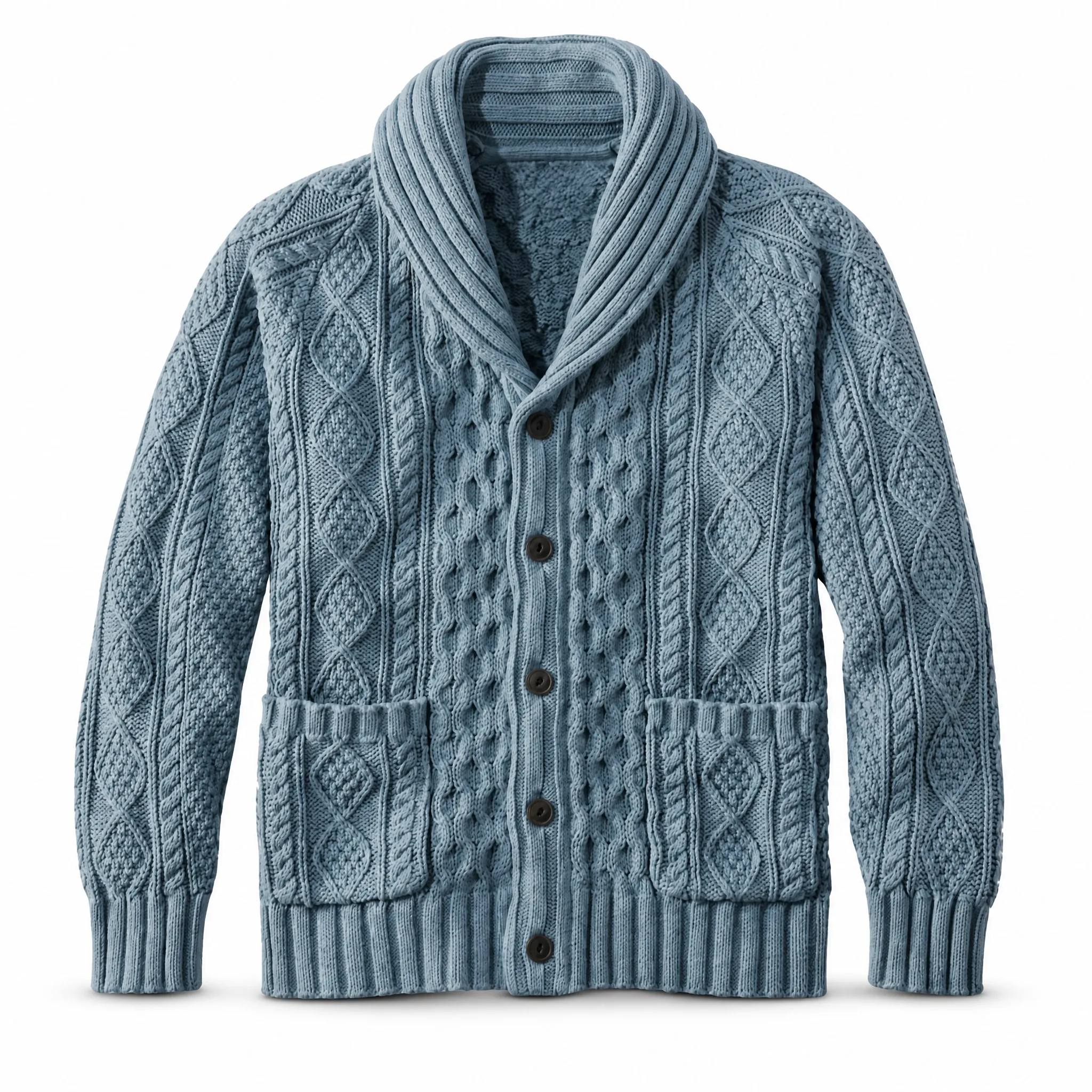
Custom Shawl Collar Cable Knit Cardigan
Chunky cable-and-diamond cardigan with a fully fashioned shawl collar — knitted as structure, never cut and sewn.
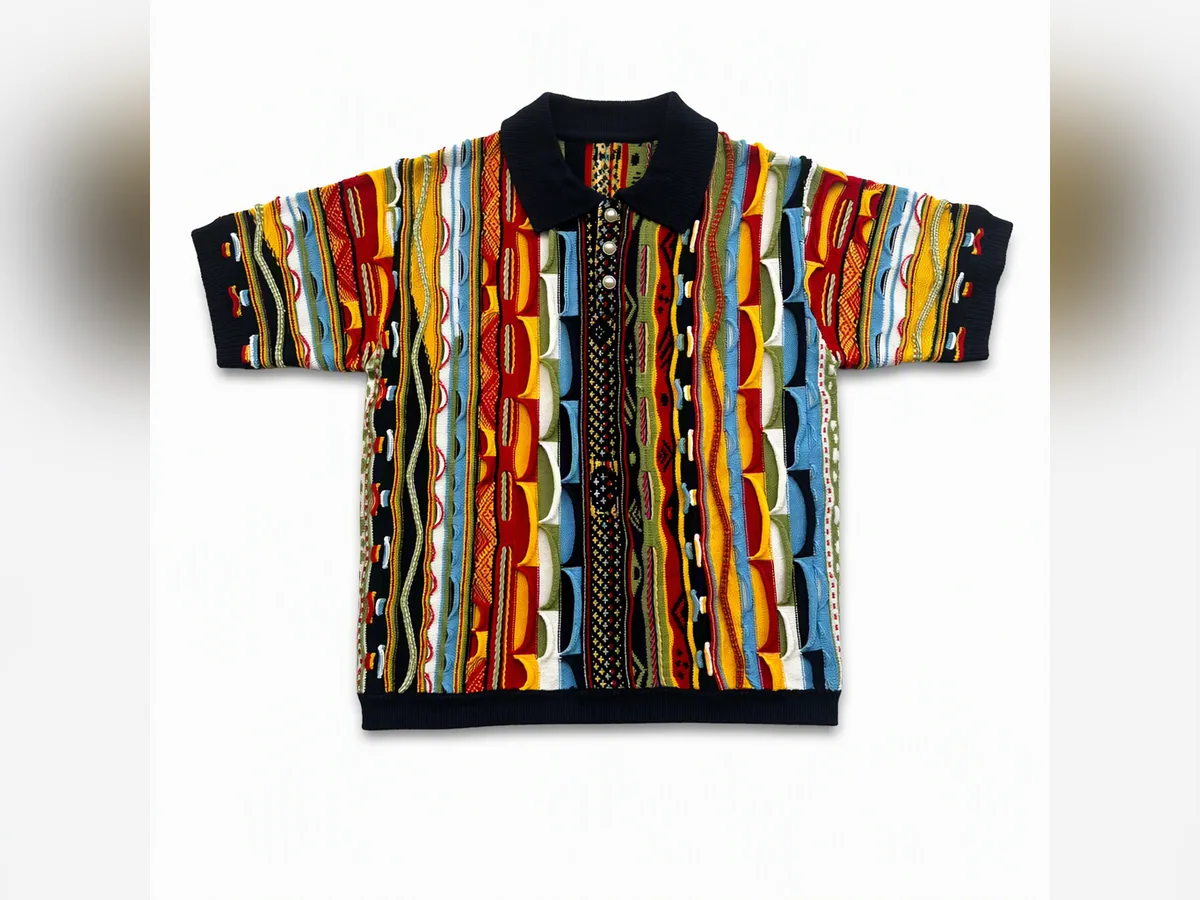
Vintage 3D Multi-Texture Knit Polo Shirt
Retro vertical band polo combining jacquard, 3D relief sculpture and cable texture in a single knit programme.
Custom Ugly Christmas Sweater — Double-Layer Thermal Knit
Retail-ready novelty jacquard with a brushed thermal interior — no bonded lining, no bulk at the collar.
Techniques behind this product
Multi-Colour Jacquard
CoreUp to 13 colours in one piece — standard mills stop at 4 to 6.
Cable & Aran
Sculpted cable braids and diamond honeycomb textures.
Bitter-Gourd Relief Stitch
CoreRaised 3D textured relief, clean on both face and reverse.
Fine Gauge
Ultra-smooth, lightweight 14GG–16GG luxury knitwear.
Keep reading
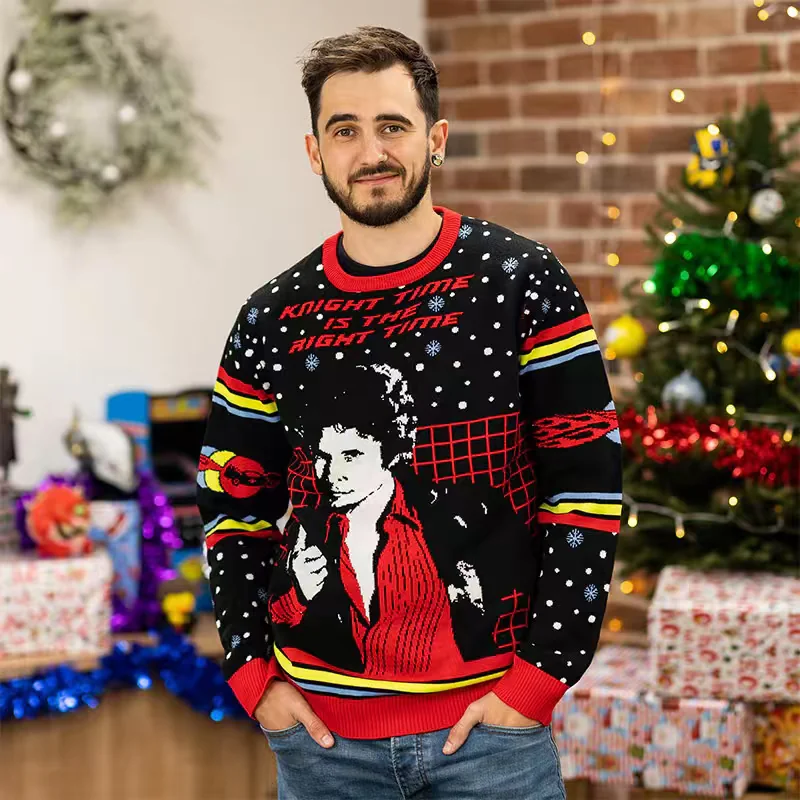
It's Time to Custom-Own Your Christmas Jumper
A short consumer-oriented overview of the custom Christmas jumper trend — design ideas, group-event tips, and the festive looks defining this year's holiday season.
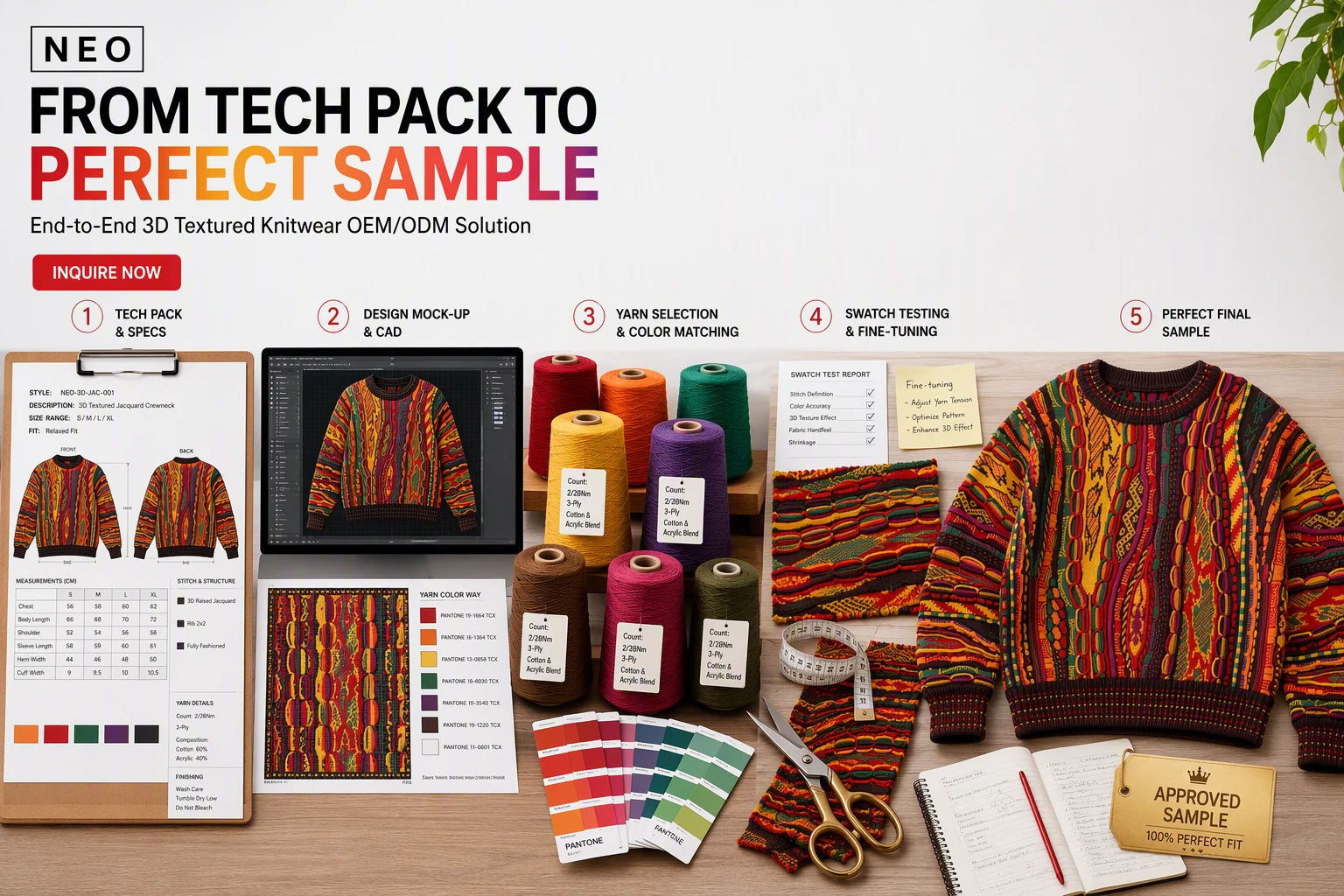
From Tech Pack to Perfect Sample: How Knitwear Sampling Actually Works
A floor-level walkthrough of the five stages between your tech pack and an approvable knit sample — mock-up and CAD programming, yarn colour matching, swatch testing, and the final PPS.
Send us the piece you were told was too hard.
Reference photo, rough sketch, or full tech pack — our Dalang technical punchers evaluate feasibility, machine gauge, yarn options, and pricing within 24 hours.