From Tech Pack to Perfect Sample: How Knitwear Sampling Actually Works
A floor-level walkthrough of the five stages between your tech pack and an approvable knit sample — mock-up and CAD programming, yarn colour matching, swatch testing, and the final PPS.
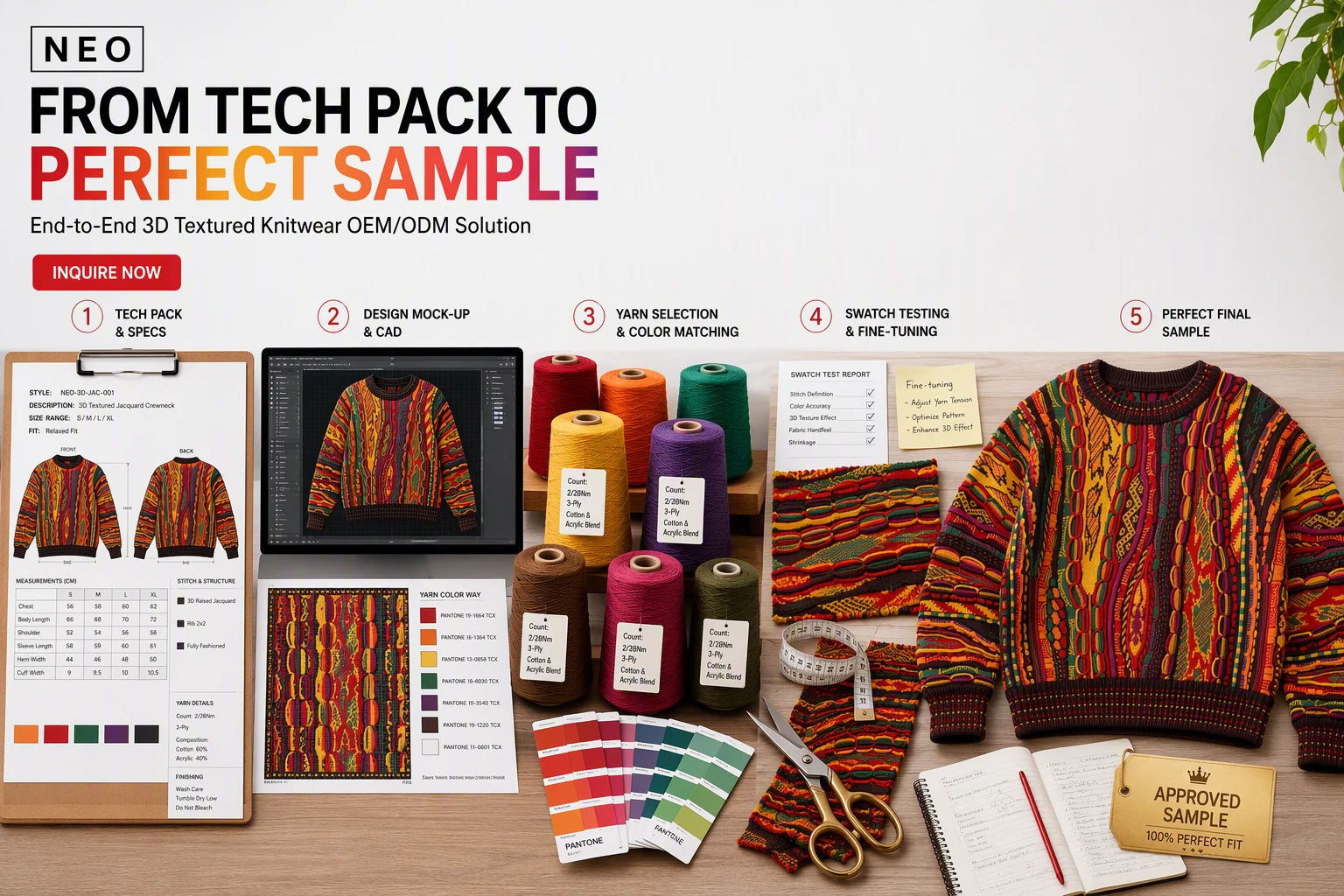
Written for brand owners, designers and sourcing managers who are about to place a knitwear development. Every stage below is something we run in-house on our own flat-knit floor in Dalang, Dongguan — nothing is outsourced to a trading desk.
Most buyers judge a knitwear factory on price per piece. The real difference shows up earlier, in the two weeks between sending a design and holding an approvable sample. A knitted garment is not cut from a roll of fabric — it is built stitch by stitch on a needle bed, which means every design decision has to be translated into a machine programme before anyone can see or feel it. That translation is the knitwear sampling process, and it is where good factories separate from fast ones.
Here is the honest version of how that process runs, what each stage is for, and what you need to supply to keep it moving.
Stage 1 — Tech Pack and Spec Review
It starts with your tech pack: the flat sketches, measurements, colour references and construction notes that describe the garment. For knitwear we read it differently than a cut-and-sew factory would. The questions we need answered at this stage are structural, not cosmetic:
- Silhouette and fit — relaxed, regular or oversized, and where the drop sits on the shoulder.
- Gauge — the needle density. 3GG and 5GG give a chunky hand; 12GG and 14GG give a fine, dressier surface. Gauge changes the entire look of the same sketch.
- Stitch structures — plain stockinette, rib, cable, intarsia panels, jacquard colourwork or 3D relief.
- Colour count — how many yarns a single design needs. This is the number that decides whether a design is simple or genuinely complex.
- Trims and finishing — collar type, placket, cuffs, hem, buttons, labels and packaging.
If the tech pack is thin, this is also where we flag it rather than three weeks later. Sending a sketch with no gauge and no measurement chart is the single most common reason a sample round loses a week.
Stage 2 — Design Mock-Up and CAD Programming
Before a single needle moves, the design is rebuilt digitally. Two things happen in parallel. The first is a visual mock-up: your artwork placed on the silhouette so you can judge proportion, motif scale and colour balance without waiting for yarn. The second is the knitting programme — the actual machine file that tells the needle bed which needle knits, tucks, transfers or drops at every course.
This is the stage that quietly determines what is possible. A jacquard band with thirteen colours is a very different programme from a four-colour one, because each additional colour adds carries, floats and tension management on the reverse side. A 3D relief motif needs transfer sequences timed so the raised structure holds without pulling the flat ground around it. Buyers often ask whether a design is 'doable' — the accurate answer is that it is doable at a specific gauge, with a specific number of colours, and a specific float plan. The mock-up stage is where those three get agreed in writing.
Our own programme library covers multi-colour jacquard, 3D bitter-gourd relief, intarsia, cable Aran and fine gauge. If a reference garment exists, we can reverse-engineer its band sequence instead of starting from a flat sketch.
Stage 3 — Yarn Selection and Colour Matching
Knitwear colour lives in the yarn, not in a print file, so colour decisions have to be made physically. At this stage we shortlist the fibre and the count, then match each colour against your Pantone references. Two practical points matter more than most buyers expect:
- Dye lot control. The same Pantone code can land slightly differently between dye batches. For repeat business we hold the approved yarn lot as the reference, so a reorder six months later still matches the sample you signed.
- Fibre behaviour. Wool, acrylic, cotton and nylon take dye and reflect light differently. A colour matched on acrylic will not read identically on merino — the hand-feel and the lustre change the perceived shade.
Because our yarn suppliers sit within walking distance in Dalang, physical matching here is measured in hours rather than shipping days. That is the main structural reason our sampling runs on a 72-hour clock from yarn stock confirmation.
Stage 4 — Swatch Testing and Fine-Tuning
A swatch is where a design stops being a file and starts being a fabric. We knit the panel, then check it against the intended result on four axes:
- Stitch definition — does the cable read cleanly, does the jacquard motif stay in register, does the relief hold its height.
- Tension and hand-feel — is the fabric too loose or too dense for the weight brief, and does it drape the way the silhouette needs.
- Shrinkage and stability — how the panel behaves after a wash cycle, which drives the finished measurements.
- Colour under real light — matching the swatch in daylight rather than on a screen.
Then we adjust: gauge, stitch density, the transfer plan, the float structure on the reverse side. Most samples that come out wrong on the first attempt are not programme failures — they are tension decisions that only a physical panel can expose. This is the stage where a factory either has technicians who can read a panel and fix it, or it sends you the panel and asks what you think.
Stage 5 — The Final Sample (PPS)
The last stage produces the piece you actually approve: the pre-production sample, or PPS. It is knitted on production machines with production yarn, finished and linked, labelled and measured against your size chart. What you are signing off is not just the look — it is the record. The approved PPS becomes the reference against which every bulk carton is checked, including colour, hand-feel and finished measurements.
From there bulk production typically runs two to three weeks after PPS approval, with AQL 2.5 inspection and photo or video verification before dispatch.
What to Send to Get Started
The tighter the input, the shorter the loop. A complete brief usually contains:
- Flat sketches or a reference garment you already own and like.
- A measurement chart, or your existing size grading if you have one.
- Pantone references for every colour, including the trims.
- Target gauge and weight per piece, if you have a preference.
- Branding assets — logo file, label and hangtag requirements.
- Target quantity, delivery window and destination country for DDP quoting.
With that in hand, we return a costed development plan and a sampling slot. Designs that need a complex jacquard or 3D relief programme take the same 72 hours to sample as a plain crew neck — the difference is in how much of the programme has to be built from zero.
Frequently Asked
How long does knitwear sampling take?
Standard turnaround is 72 hours from yarn stock confirmation. If a colour has to be dyed to match a new Pantone reference, add the dyeing time before that clock starts.
Can you sample from a photo instead of a tech pack?
Yes, and it is common. A clear photo plus a reference garment for hand-feel is usually enough for us to rebuild the band sequence and return a PPS. What we cannot do is guarantee a measurement fit without a size chart, so expect one clarification round.
Is there a minimum for a sample order?
Sampling is separate from bulk MOQ, which is 100 pieces per design. You can develop a sample before committing to a production quantity.
If you are weighing up a design and want an honest read on whether it is knittable at your target price, send the sketch. The answer comes back faster than a quote request usually does.
Looking to manufacture Christmas jumpers at scale?
Skip the print-on-demand platforms. Send us your design brief and we'll quote a direct-factory run with low MOQs, 72h sampling, and DDP worldwide delivery.
Knitwear you can manufacture right now
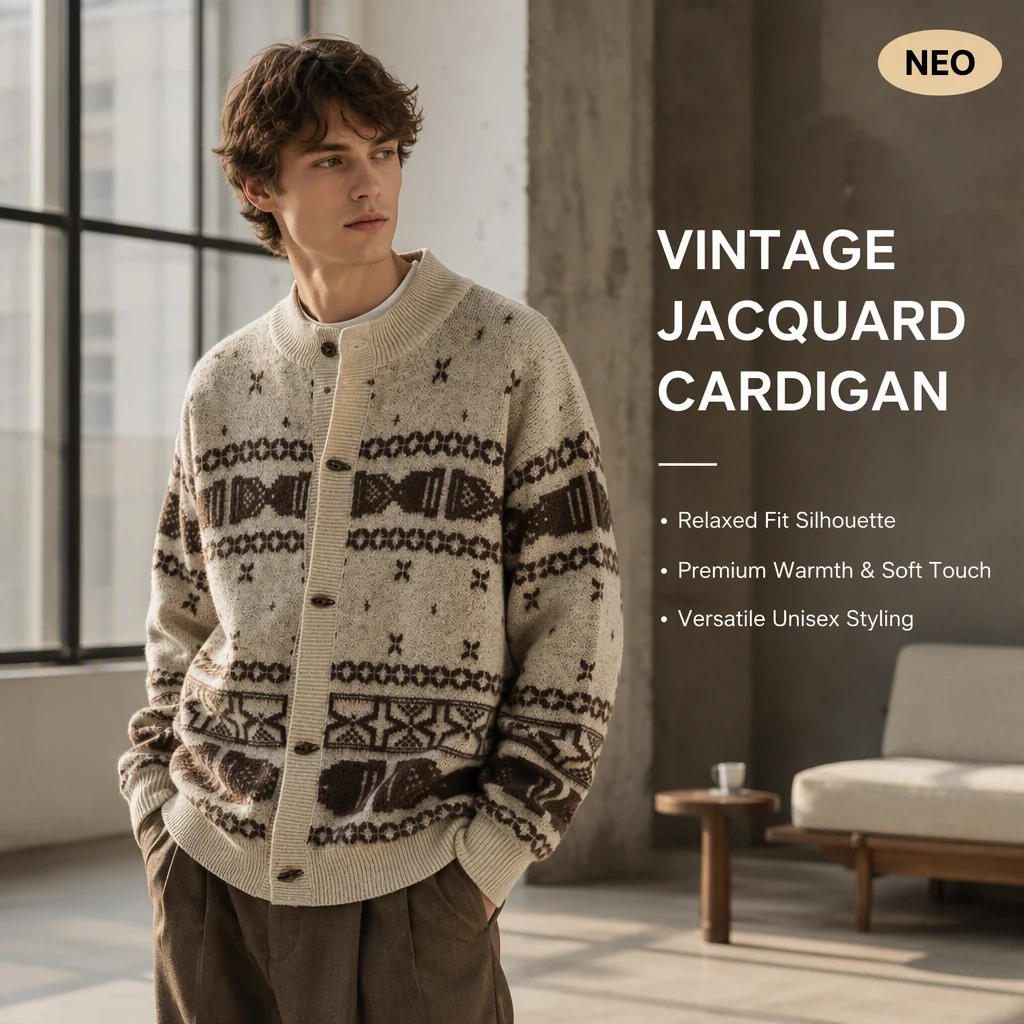
Custom Unisex Fair Isle Jacquard Knit Cardigan
Unisex banded Fair Isle cardigan knitted as true jacquard structure — relaxed fit, Pantone-matched colourways, private label ready.
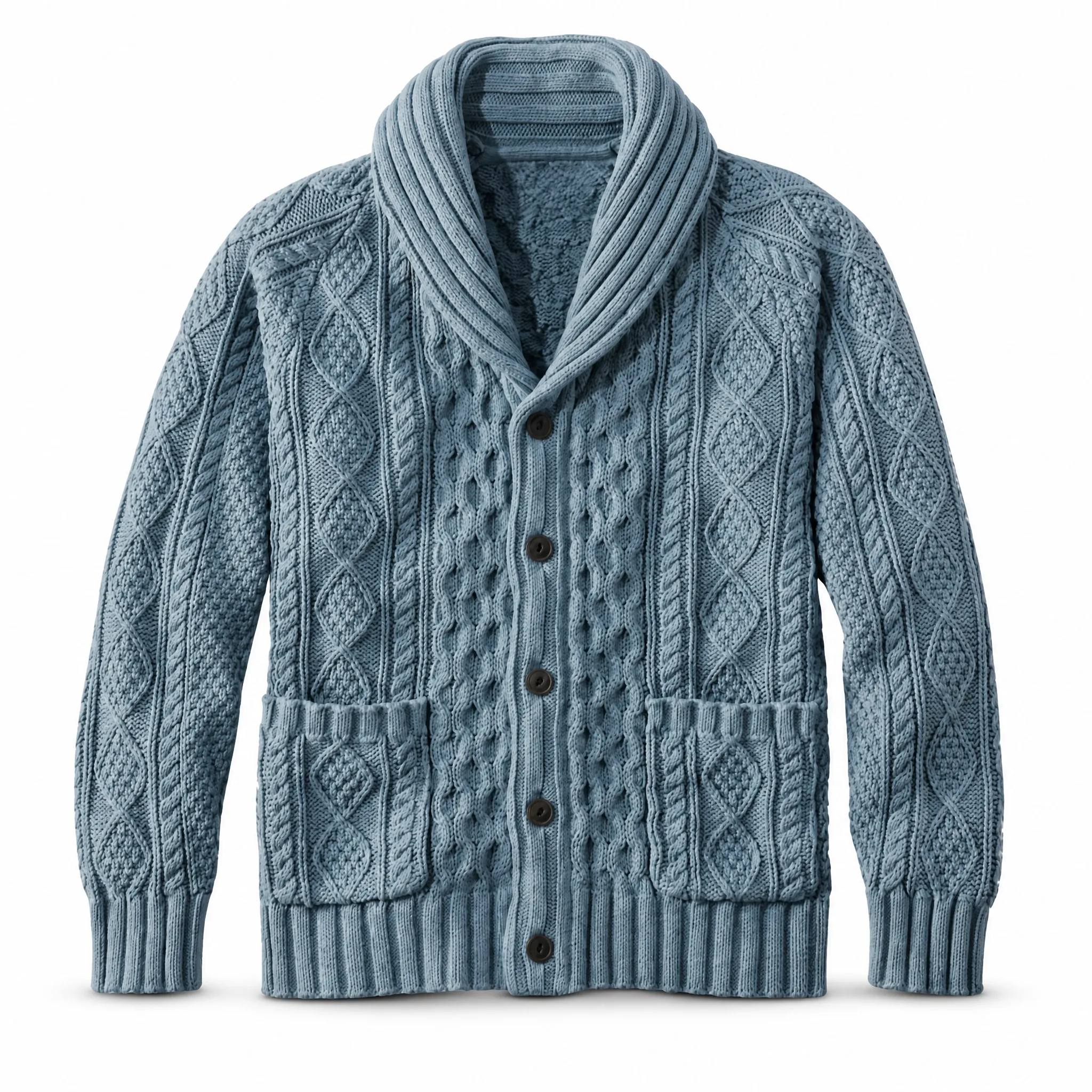
Custom Shawl Collar Cable Knit Cardigan
Chunky cable-and-diamond cardigan with a fully fashioned shawl collar — knitted as structure, never cut and sewn.
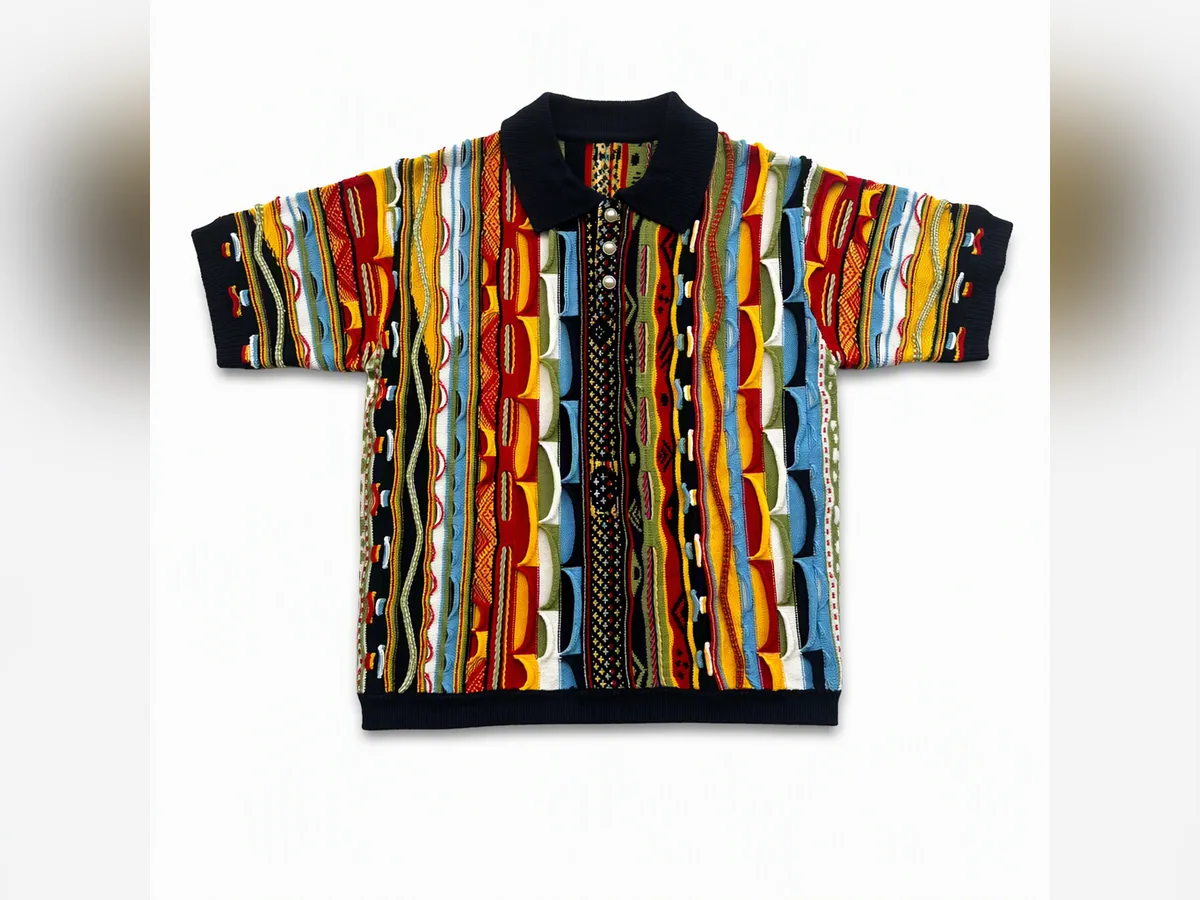
Vintage 3D Multi-Texture Knit Polo Shirt
Retro vertical band polo combining jacquard, 3D relief sculpture and cable texture in a single knit programme.
Techniques behind this product
Multi-Colour Jacquard
CoreUp to 13 colours in one piece — standard mills stop at 4 to 6.
Bitter-Gourd Relief Stitch
CoreRaised 3D textured relief, clean on both face and reverse.
Cable & Aran
Sculpted cable braids and diamond honeycomb textures.
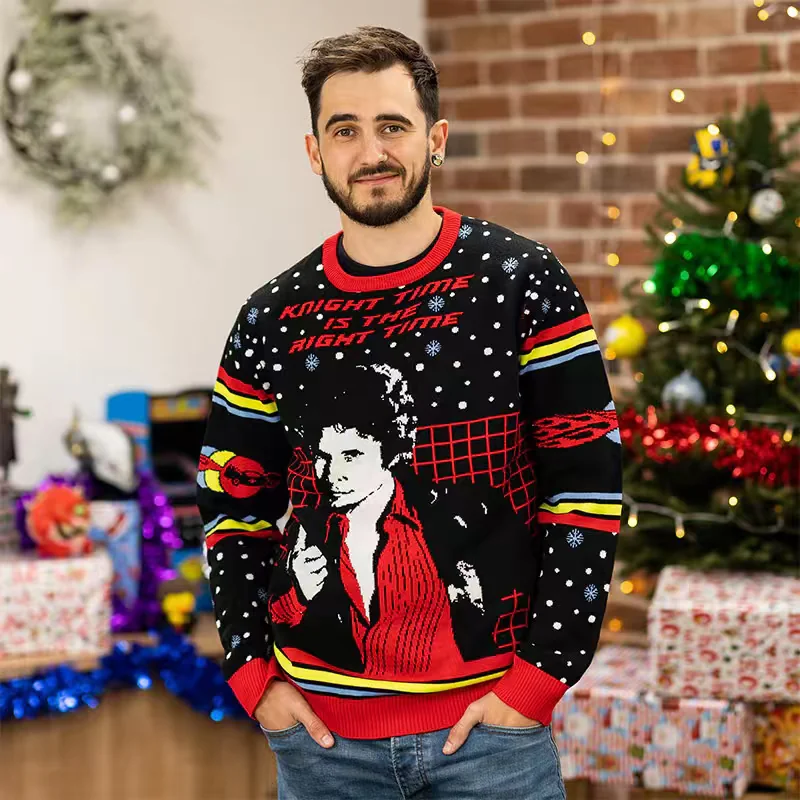
Send us the piece you were told was too hard.
Reference photo, rough sketch, or full tech pack — our Dalang technical punchers evaluate feasibility, machine gauge, yarn options, and pricing within 24 hours.