
What Is Piqué Knit? The Stitch Behind a Polo That Holds Its Shape
Piqué is not a yarn or a finish — it is a stitch structure. Tuck stitches gather the surface into a dimpled, breathable texture that resists bagging, hides wear and reads as premium. Here is what decides whether that texture survives washing, and what to specify before you order.
Written for buyers choosing between flat jersey and piqué for polos, lightweight sweaters and premium basics — and for anyone whose sample looked great in the showroom but went flat after three washes. The structure, not the yarn, is usually the difference.
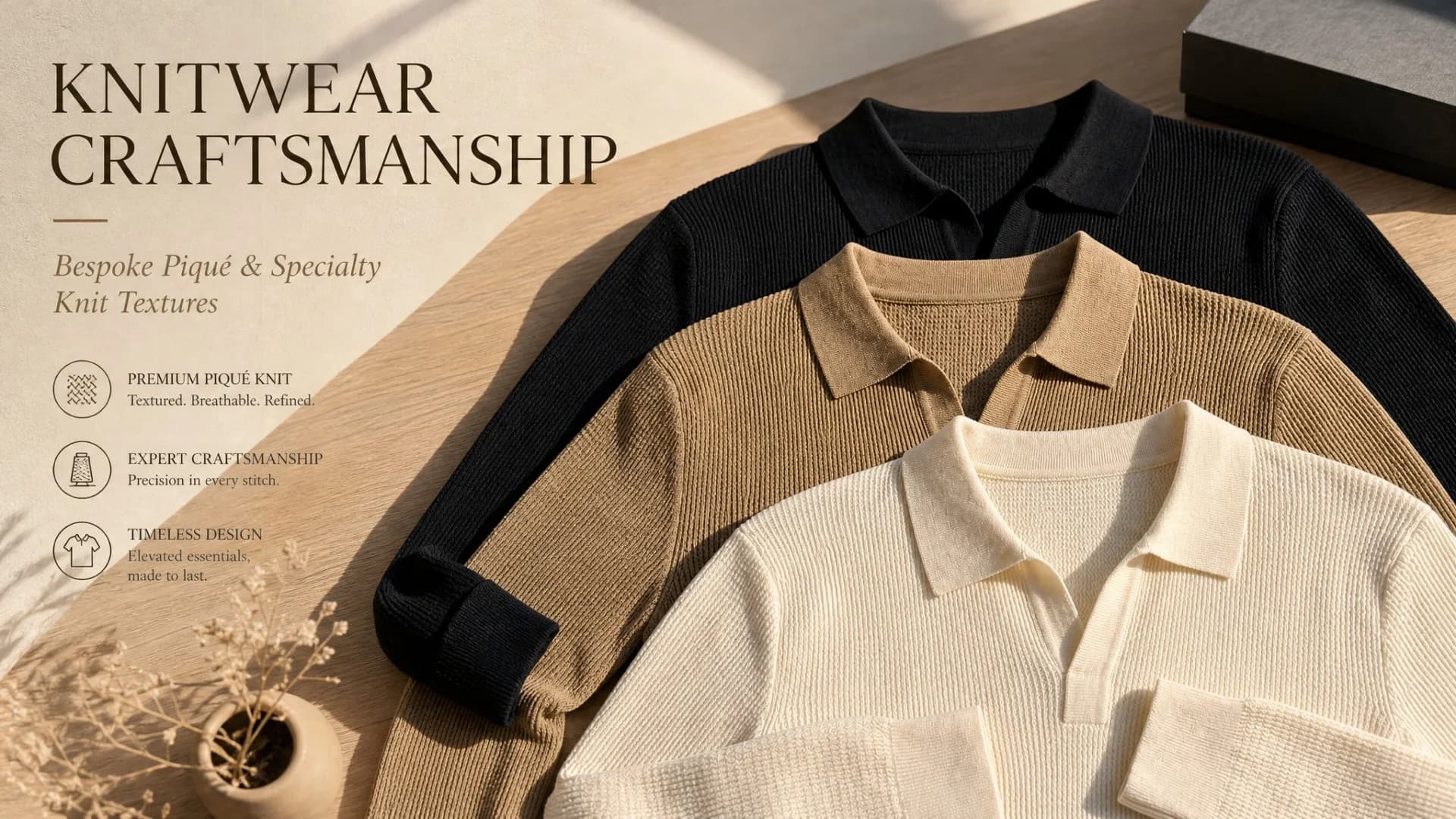
The photograph above shows three polos in the same family: black, camel and cream, all knitted in a textured piqué structure with flat rib collars. Nothing about the premium read of these garments comes from the fibre name on the care label. It comes from the surface — that dimpled, needle-out texture that catches light unevenly and refuses to lie flat. Buyers feel it before they can name it, which is why piqué has been the default fabric of tennis and golf polos since the 1930s. But piqué is also the structure most often damaged by a wrong specification, because most briefs treat it as a fabric name when it is actually a stitch decision.
So, what is piqué knit? It is a knitted structure built from tuck stitches — loops that are held on the needle for an extra course before being knocked over. Each tuck gathers neighbouring loops together and pulls them slightly out of plane, and repeated across the fabric, that gathering forms the dimpled, honeycomb-like surface. The yarn can be cotton, merino, a blend, almost anything. The texture comes from the stitch notation, which is why the same machine that knits flat jersey can knit piqué on the next program.
Why Piqué Holds Its Shape When Flat Jersey Does Not
A tuck stitch is a tighter, thicker point in the fabric. It locks the loops around it, which does three things at once. First, recovery: a piqué panel pulled at the hem or cuff returns to dimension faster than flat jersey of the same weight, because the tucks act as thousands of small springs distributed across the surface. Second, breathability: the dimples create micro-channels of air between the body and the fabric, which is why piqué polos feel cooler than a smooth knit of identical grammage. Third, wear-hiding: a smooth jersey shows every abrasion mark and every slightly uneven yarn; a dimpled surface swallows them. A piqué garment that is two years old still photographs as textured, where flat jersey starts to read as tired.
The trade is honest: piqué is bulkier than jersey at the same yarn count, it drapes less, and the texture itself must be engineered — too loose and the dimples flatten out, too tight and the surface goes boardy. That engineering is where samples are won and lost.
Flat-Knit Piqué vs Circular-Knit Piqué: Why the Machine Matters
Most piqué in the world is circular-knit as tube fabric, then cut into panels and sewn — that is how classic polo shirt fabric is made, and at very large volumes it is efficient. Fully-fashioned flat-knit piqué is a different offer. Each panel — front, back, sleeve, collar — is knitted to its finished shape with the piqué texture programmed in, so there is no cutting waste and no seam where the texture abruptly changes direction. Texture can also be zoned: a finer, tighter piqué on the collar stand where shape matters most, a slightly larger dimple across the body where the hand-feel lives, flat rib at the cuffs. On a circular line, that zoning is impossible; on a flat machine, it is a program.
The practical consequence for a buyer: flat-knit piqué costs more per kilogram of knitting time and less in everything else — no lay-planning, no cutting loss, size changes done by panel length rather than a marker. At order volumes from 100 to a few thousand pieces, it is usually the better route, and it is the only route when the texture needs to be part of the design rather than uniform across the garment.
What Decides Whether the Texture Survives Washing
Three specifications, and none of them is the yarn. First, tuck depth and tension: the dimple is formed by how far the tuck course is held and how tightly the following course is knocked over. A program built for looks in the showroom can still relax to flat after five washes if the base course tension is set too low. Second, gauge relative to yarn count: piqué needs enough needles per centimetre to form a crisp dimple; the same texture knitted at too coarse a gauge turns into a loose, open grid that snags. Third, the wash test written into the approval: texture retention is judged by comparing dimple depth on the sample against the same garment after three and five home washes, in daylight, not by re-measuring the fabric weight. A factory confident in its piqué programs will volunteer this test; one that is not will offer a hand-feel opinion instead.
Weight discipline belongs here too. Piqué polos and lightweight knits typically land between 180 and 240 g/m²; heavier piqué sweaters run well above that. The number that matters is not the target but the tolerance — a spec that says 220 g/m² with no range invites a garment that meets the number and loses the texture, because weight can be recovered by loosening tension, and texture is exactly what loosened tension destroys. Specify both, and say which one wins the argument.
What to Put in the Tech Pack
Four lines keep a piqué order honest. The structure notation or a close-up macro of the required surface, so the mill is programming a stitch and not imitating a photo. The gauge and yarn count together, because the texture scale is set by their ratio. The target weight with a tolerance, and which parameter governs if weight and texture conflict. And the collar-and-cuff pairing — flat rib, self-texture, or a finer piqué trim — decided before sampling, because collar construction is where a textured garment visibly succeeds or fails, and changing it after PPS means re-knitting the program, not just the trim.
One related structure worth knowing: some technical knits carry a bird's-eye reverse — a fine, spotted back face formed by the same family of tuck-and-miss movements. Buyers sometimes meet the term on a fabric spec and assume it is a different fabric class. Usually it is the inside of the structure doing its job — which is, again, the point: with textured knits, the specification lives in the stitch notation, and everything else follows from it.
Frequently Asked
Is piqué hotter to wear than flat jersey?
No — usually cooler. The dimpled surface keeps a layer of air moving between skin and fabric instead of lying flat against it, which is why it became the standard for sports polos. At identical yarn and weight, piqué breathes better than smooth jersey and always will; the exceptions are very heavy piqué sweaters, where the structure itself is not the issue, the grammage is.
Can piqué be knitted in wool or cashmere, or only cotton?
Any yarn that can be looped can be tucked — piqué is a stitch structure, not a fibre. Wool and cashmere piqué gives a textured, breathable sweater with better recovery than flat jersey of the same weight; the spec discipline is stricter because fine-gauge animal fibres show a badly tensioned tuck program faster than cotton does. Start at 12 to 14 gauge with a 2-ply count and judge the sample, not the swatch photo.
Why did my previous supplier's piqué go flat after a few washes?
Base-course tension, almost every time. Loosening tension is the cheapest way to hit a weight target, and it is exactly the parameter that flattens tuck stitches. The garment met its weight spec and lost its texture, and both facts came from the same decision. This is why the wash test and the weight-tolerance hierarchy belong in the tech pack before sampling, not in the complaint after bulk.
If you are deciding between flat jersey and piqué for a programme, or arguing about a sample whose texture died in the wash, send the spec. Reading a stitch notation against a photo of the failed surface takes minutes, and it usually names the guilty line before any new sampling money is spent.
Looking to manufacture this style at scale?
Send us your design brief and we'll quote a direct-factory run with low MOQs, 72h sampling and DDP worldwide delivery, knitted on our own floor in Dalang.
Knitwear you can manufacture right now
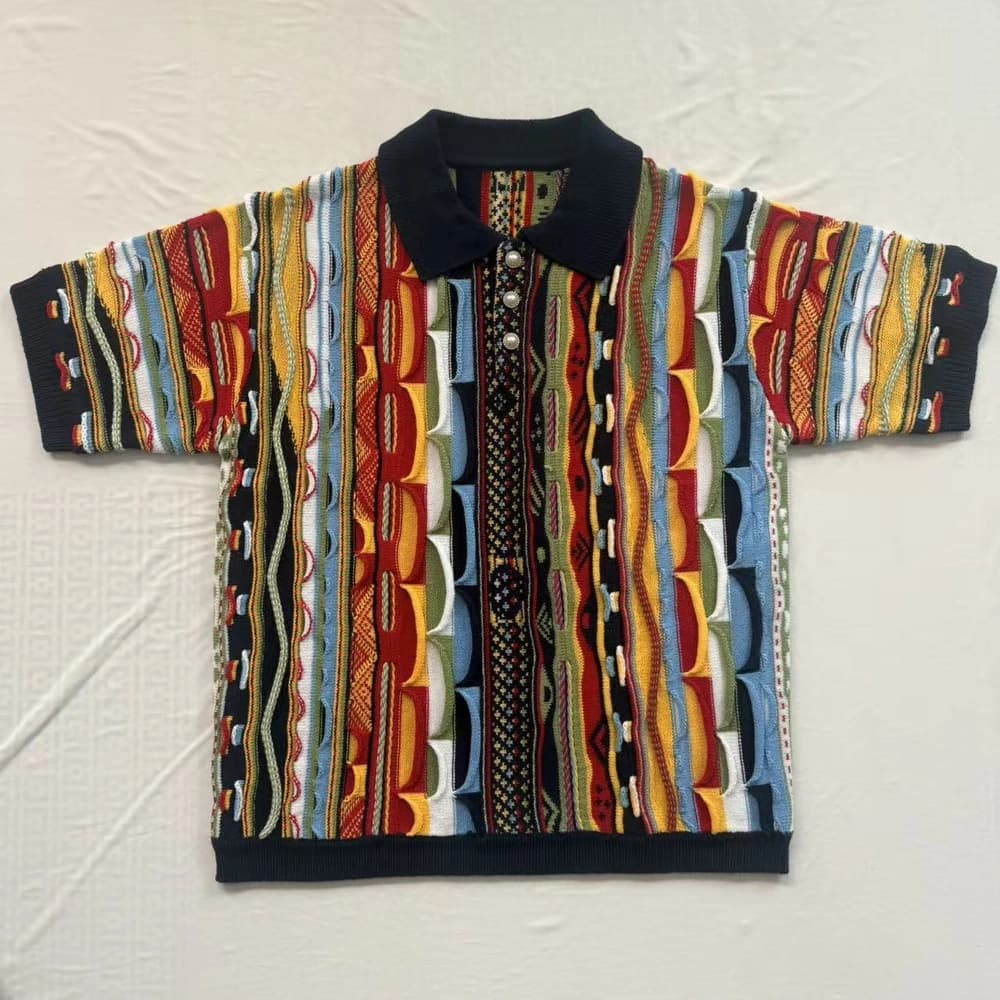
Custom Multi-Colour Jacquard Knit Polo Shirt
A short-sleeve knit polo built on a multi-colour jacquard programme — up to 13 yarn colours, against the 4-6 colour ceiling most mills quote.
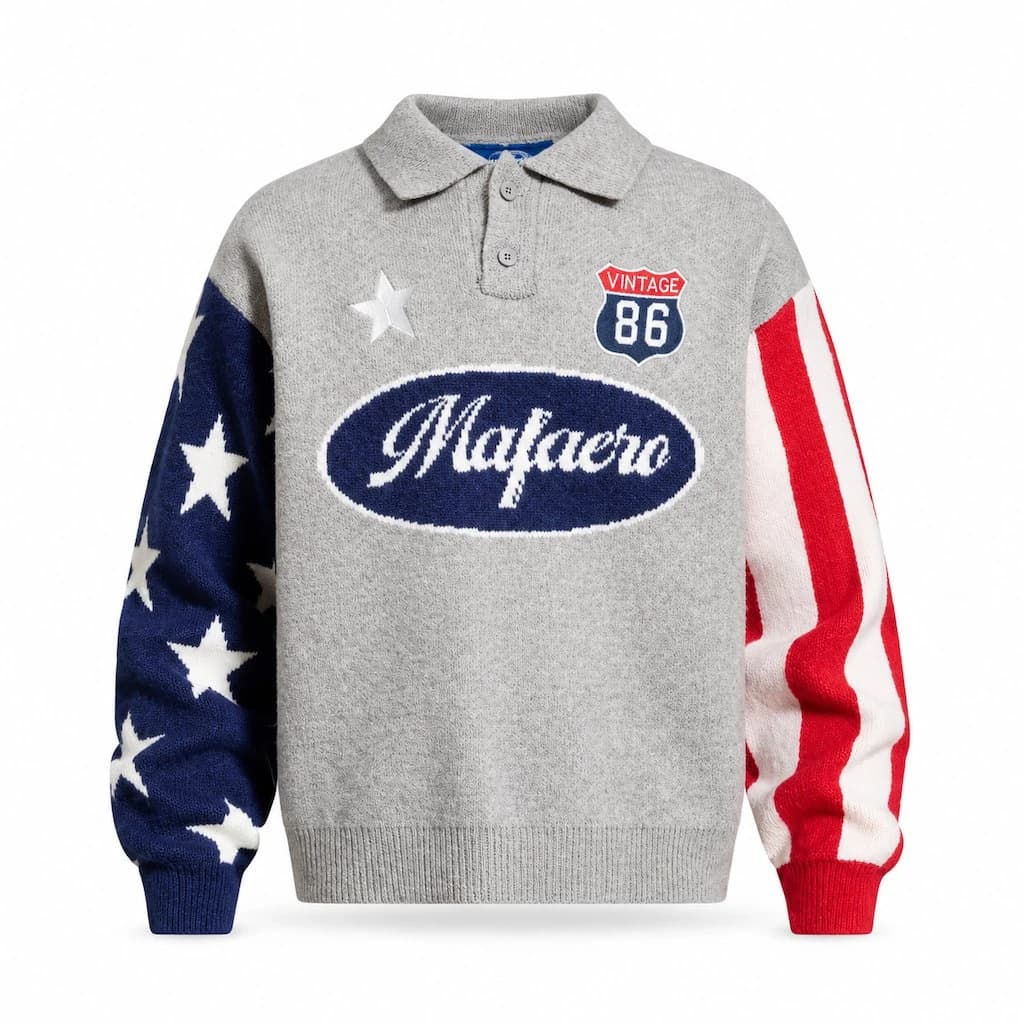
Custom Long-Sleeve Jacquard Polo Sweater
Four structures in one garment — solid heather body, two different sleeve jacquards, a chenille chest patch — every one of them re-programmed from your artwork.
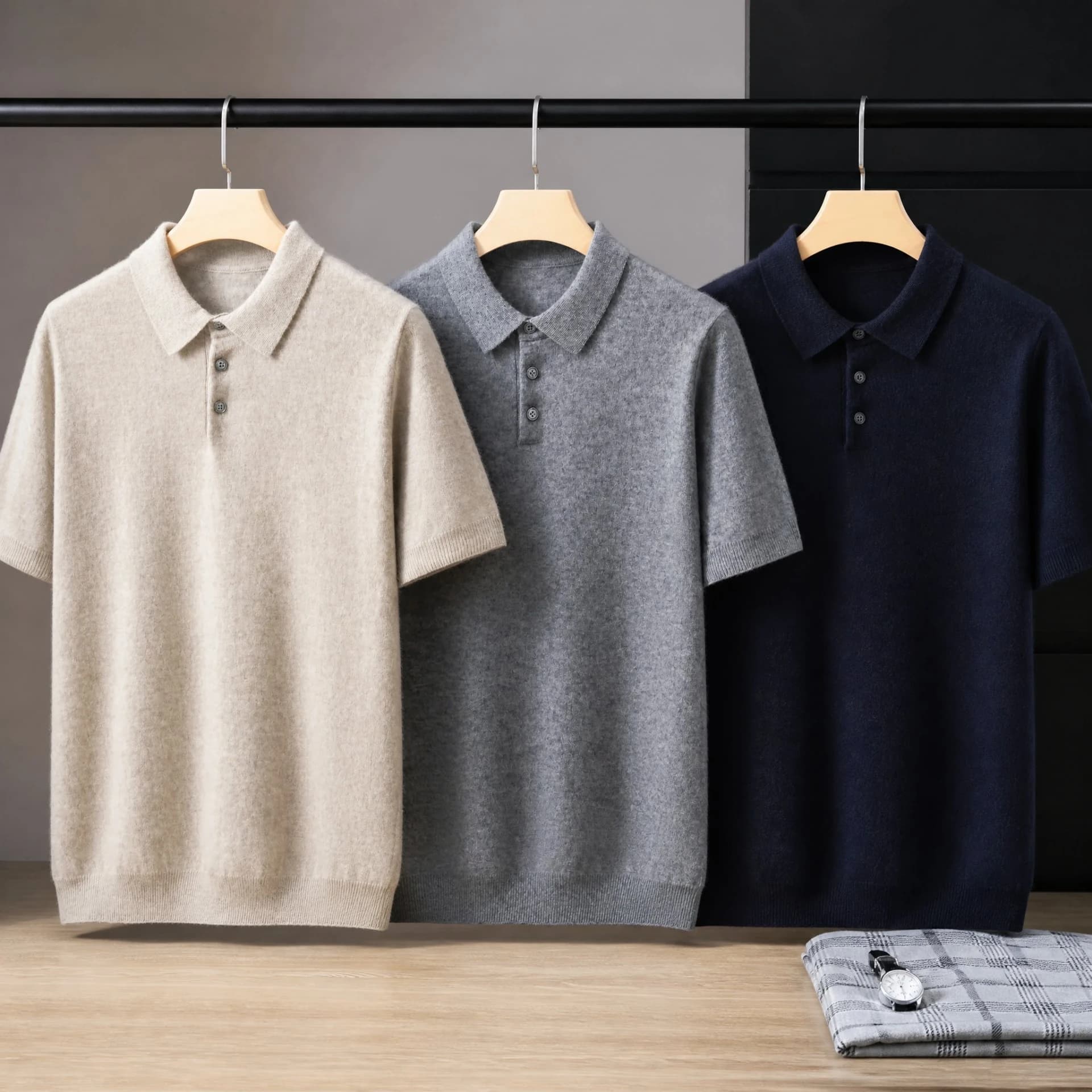
Custom Cashmere & Wool Knit Polo Shirt
A solid fine-gauge polo in a 35/65 cashmere-wool blend - the hardest thing we knit precisely because there is no pattern to hide behind.
Keep reading

It's Time to Custom-Own Your Christmas Jumper
A short consumer-oriented overview of the custom Christmas jumper trend — design ideas, group-event tips, and the festive looks defining this year's holiday season.
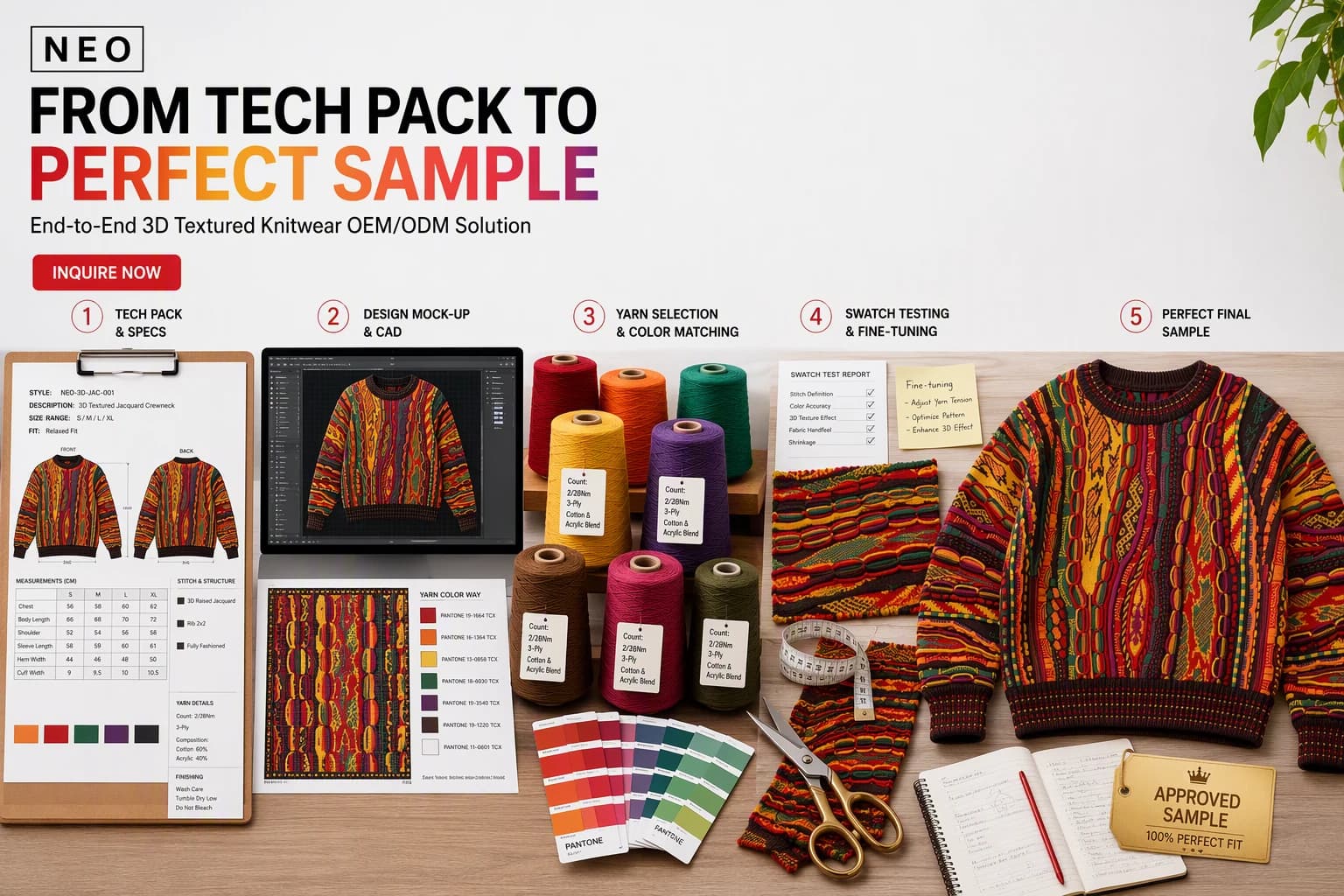
From Tech Pack to Perfect Sample: How Knitwear Sampling Actually Works
A floor-level walkthrough of the five stages between your tech pack and an approvable knit sample — mock-up and CAD programming, yarn colour matching, swatch testing, and the final PPS.
Sourcing Custom Men's Knitwear: What Separates a Knitwear Factory from a Sweater Mill
Mens knitwear briefs rarely fail on the design. They fail on gauge, size grading and reverse-side finishing — three things most price requests never ask about. Here is what to specify before you ask for a quote.
Send us the piece you were told was too hard.
Reference photo, rough sketch, or full tech pack — our Dalang technical punchers evaluate feasibility, machine gauge, yarn options, and pricing within 24 hours.