What Is 3-Ply Cashmere? The Number Behind a Polo Price
Three-ply does not mean three times the cashmere. It is one of four specification lines that decide what a fine-gauge polo really costs - the others being micron, gauge and whether the panels are fully fashioned.
For buyers comparing cashmere polo quotes that differ by forty per cent on what looks like the same garment. The gap is almost always in four specification lines, and none of them is the fibre name.
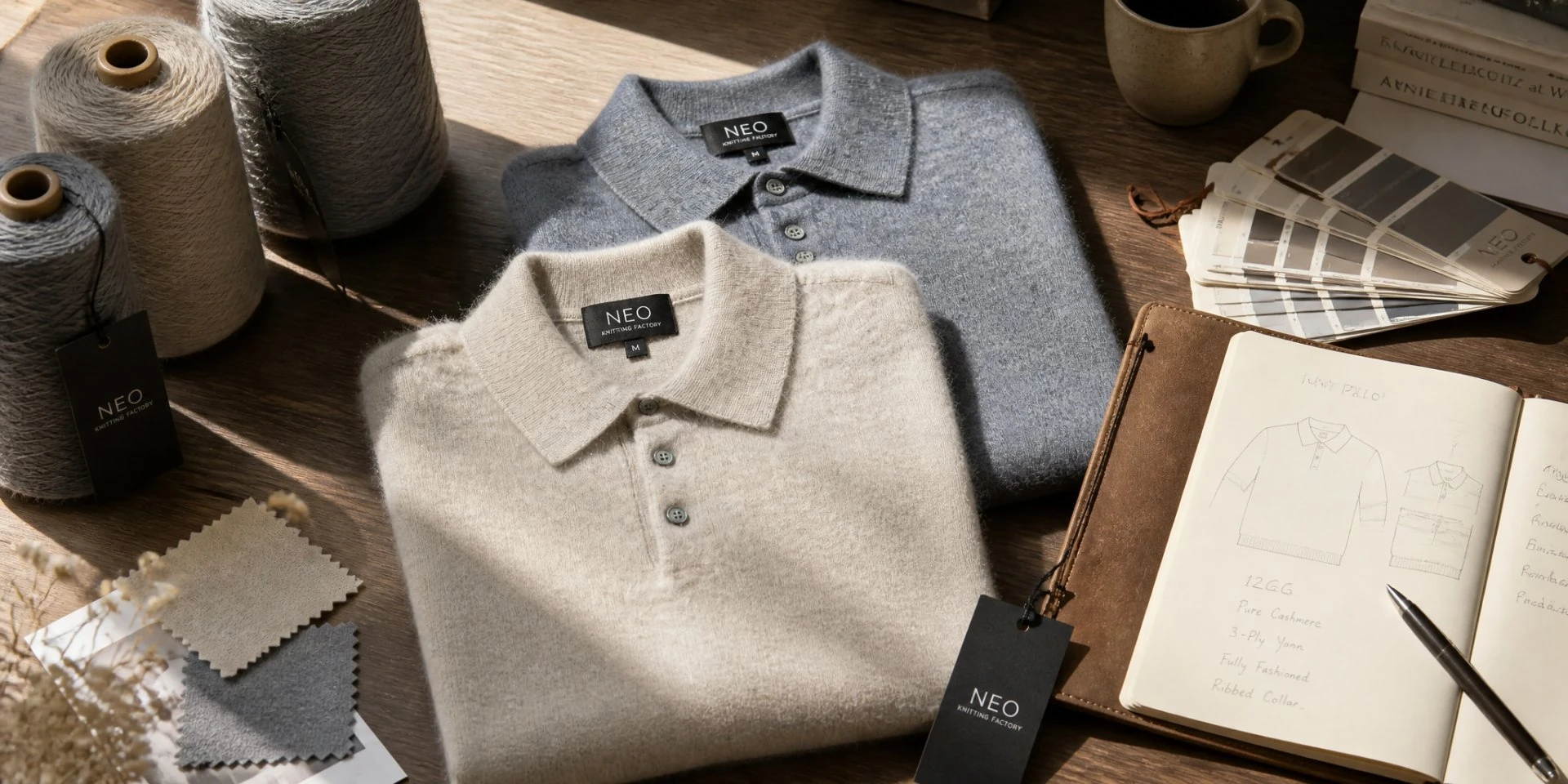
Two quotes for a cashmere polo, both 100% cashmere, one nearly double the other. Nothing dishonest is happening. The word cashmere names a fibre, not a quality level, and four further numbers decide what the garment actually costs. They are the ones written on the notebook beside the sample in the photograph: 12GG, three-ply, fully fashioned, ribbed collar.
This page unpacks those four, in the order they move the price.
Ply Is Not a Grade - It Is How Many Yarns Got Twisted Together
Three-ply means three single yarns twisted together into one knitting yarn. It does not mean three times the cashmere, and it is not a quality class. Ply is a construction: the strands are twisted, and that twist is what gives the yarn its strength, its roundness and its resistance to abrasion at the surface.
The confusion comes from yarn counts, which are usually written as a fraction such as 2/26 or 2/48. The first number is the ply and the second is the count of the single yarn in the metric system - 2/26 means two strands of 26-count, an effective 13-count yarn. A 3/26 is three strands of 26-count, effectively about 8.7. Fine singles plied up and coarser singles used two-up can land on the same finished thickness and still behave nothing alike.
That is why two 12GG cashmere polos at the same weight can feel different in the hand. One is built from a coarser single, the other from finer singles plied more times. The second costs more and pills less.
Why a Polo Wants Three Plies and a Trouser Wants Two
A polo is a garment of edges. The collar has to stand, the placket has to lie flat behind three buttons, and the cuffs take abrasion whenever the wearer leans on a desk. A three-ply yarn is rounder and more resistant to fuzzing, so those edges survive a season instead of a month. It also knits a firmer surface, which is what makes a fine-gauge polo read as crisp rather than limp.
Trousers are the opposite problem. A knit trouser is judged on drape and on how the leg falls, and a firmer yarn makes the fabric hang like cardboard. That is why our cashmere trousers are two-ply and this polo is three: same fibre, opposite requirement. The ply count should follow the garment, not the prestige.
The Fibre Underneath Matters More Than the Ply
Ply cannot rescue a short fibre. Cashmere pills when short fibres work loose from the yarn and mat together on the surface, and the length of the fibre - the staple - decides whether that happens. Micron makes a garment soft; staple length keeps it from fuzzing. A 14-micron cashmere with a 28 mm staple feels wonderful in the showroom and looks tired after ten wears.
Our cashmere runs 15.5 to 16.5 micron with a 34 to 38 mm staple, sourced from Inner Mongolia. Micron is the number suppliers volunteer because it is the number buyers ask for. Staple length is the one that decides whether the garment still looks new in March.
Ask for micron and staple length together. A quote that gives you only micron has told you half of what you asked.
Fully Fashioned Changes How the Garment Is Assembled
Fully fashioned means each panel is knitted to its final shape on the bed with the shaping knitted in, then linked stitch for stitch rather than cut from a wider piece of fabric. On a polo it shows up in two places: the collar and the placket.
A cut-and-sew polo has seam allowances, and the allowance has to go somewhere at the neck - usually into a fusible interlining holding the shape. A fully fashioned polo has no allowance at the neck, so the collar can be knitted as its own piece with a denser stitch structure and linked on. The difference shows up on the third wash, not on the sample table.
Where the Money Goes
- Fibre grade. Micron and staple length together, not one without the other. This is the largest single line and the easiest to shave invisibly.
- Ply. Three plies of fine single yarn cost more than two, and more again than one coarser single of the same finished thickness.
- Gauge. 12GG gives a smooth, dense surface. Moving to 14GG or 16GG buys refinement and costs machine minutes on every panel.
- Fully fashioned assembly. Linking is handwork, and a polo carries more linked edges than a jumper: neck, placket, cuffs and hem.
What Goes Wrong
- Collar collapse. Usually a density decision taken too light, or a fusible used to compensate that gives up in the first wash.
- Pilling at the underarm and cuff. Short staple, or a yarn spun with too little twist to lock the surface down.
- Shade variation between panels. Different yarn lots. On a solid-colour polo there is no pattern to hide it, so the whole order has to run from one dye lot.
- Growth after washing. A fine-gauge cashmere polo that was not washed and blocked at the factory reaches the customer two centimetres longer than the approved sample.
How to Brief It
- Micron and staple length, or a reference garment we can measure.
- Ply, or the finished yarn count - one or the other, not neither.
- Gauge, and whether the collar is knitted as its own piece or linked from body yarn.
- Fully fashioned or cut and sew, stated explicitly, because the price difference is real and not a rounding error.
- Target weight per piece. A 12GG polo can legitimately land anywhere between 240 and 340 g depending on the rest of the specification.
Frequently Asked
Is 3-ply cashmere warmer than 2-ply?
Not meaningfully. Warmth comes from the weight of fibre and the air it traps, so a 300 g two-ply polo is about as warm as a 300 g three-ply one. What the third ply buys is durability, surface stability and a crisper hand - not temperature.
Can this polo be made in a cashmere-wool blend instead?
Yes, and it is usually the sensible first order. A 35/65 cashmere-wool at 12GG delivers most of the hand at a materially lower yarn cost, and it is more forgiving on pilling. The trade-off is a slightly stiffer drape and less depth on the darkest shades, which is where pure cashmere still earns its price.
What does the 12GG on the notebook actually mean?
Twelve needles per inch on the needle bed. It sets how fine the surface is and how small a detail can be knitted cleanly. Our gauge chart covers the trade-offs from 3GG to 16GG; for a polo, 12GG is the commercial middle - fine enough to look dressy, heavy enough not to cling.
If you are comparing quotes for the same polo and the numbers differ by a third, ask for micron and staple, ply and finished count, gauge, and whether the panels are fully fashioned. Those four answers usually explain the entire gap - and a supplier who cannot give them is quoting a garment he has not specified.
Looking to manufacture this style at scale?
Send us your design brief and we'll quote a direct-factory run with low MOQs, 72h sampling and DDP worldwide delivery, knitted on our own floor in Dalang.
Knitwear you can manufacture right now
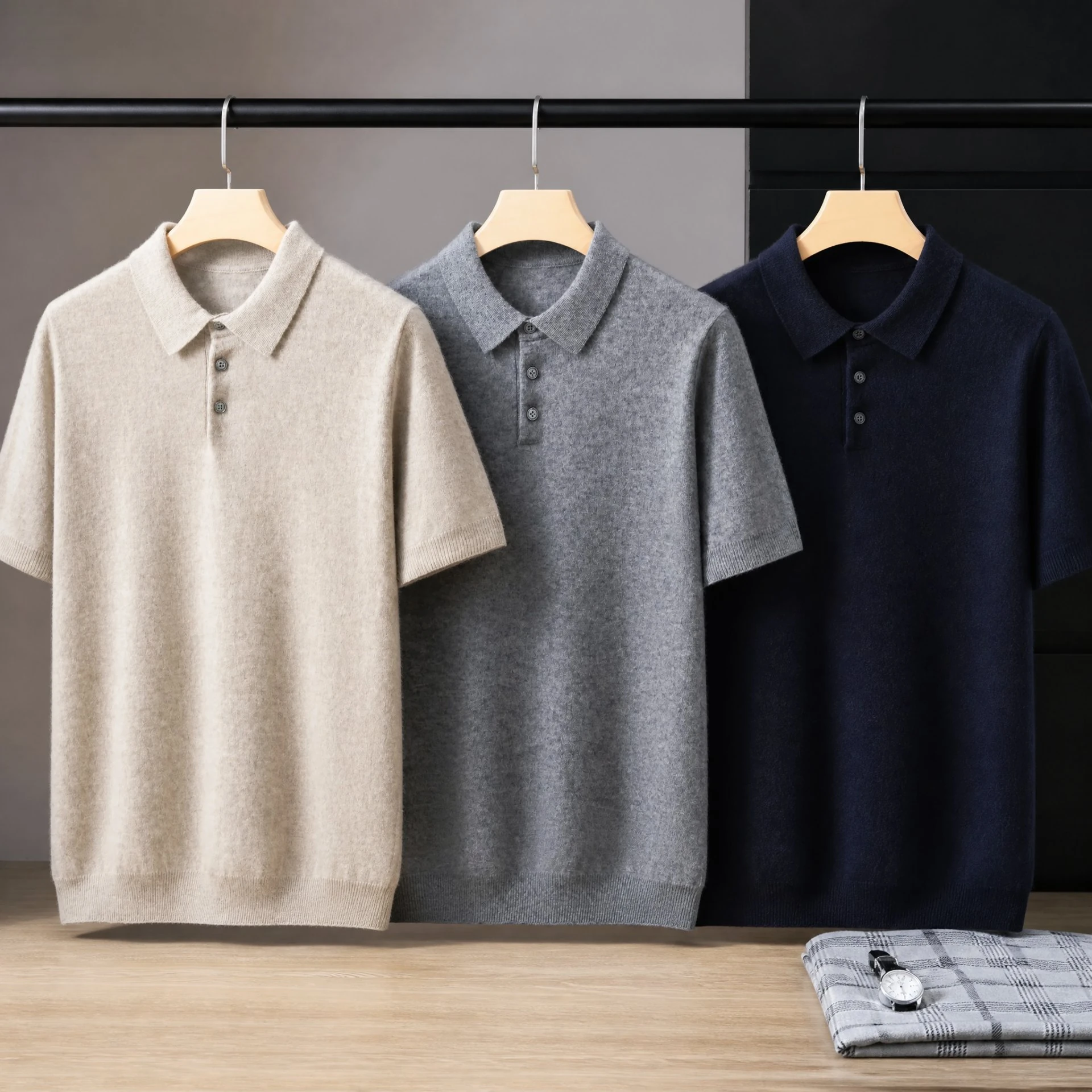
Custom Cashmere & Wool Knit Polo Shirt
A solid fine-gauge polo in a 35/65 cashmere-wool blend - the hardest thing we knit precisely because there is no pattern to hide behind.
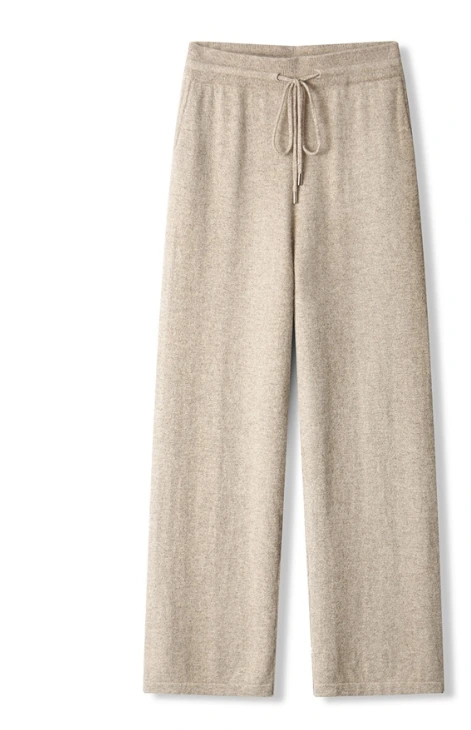
Custom 100% Cashmere Wide-Leg Knit Pants
Two-ply Inner Mongolian cashmere at 12GG — the drape of the fibre is the whole product, so the knitting has to stay out of its way.
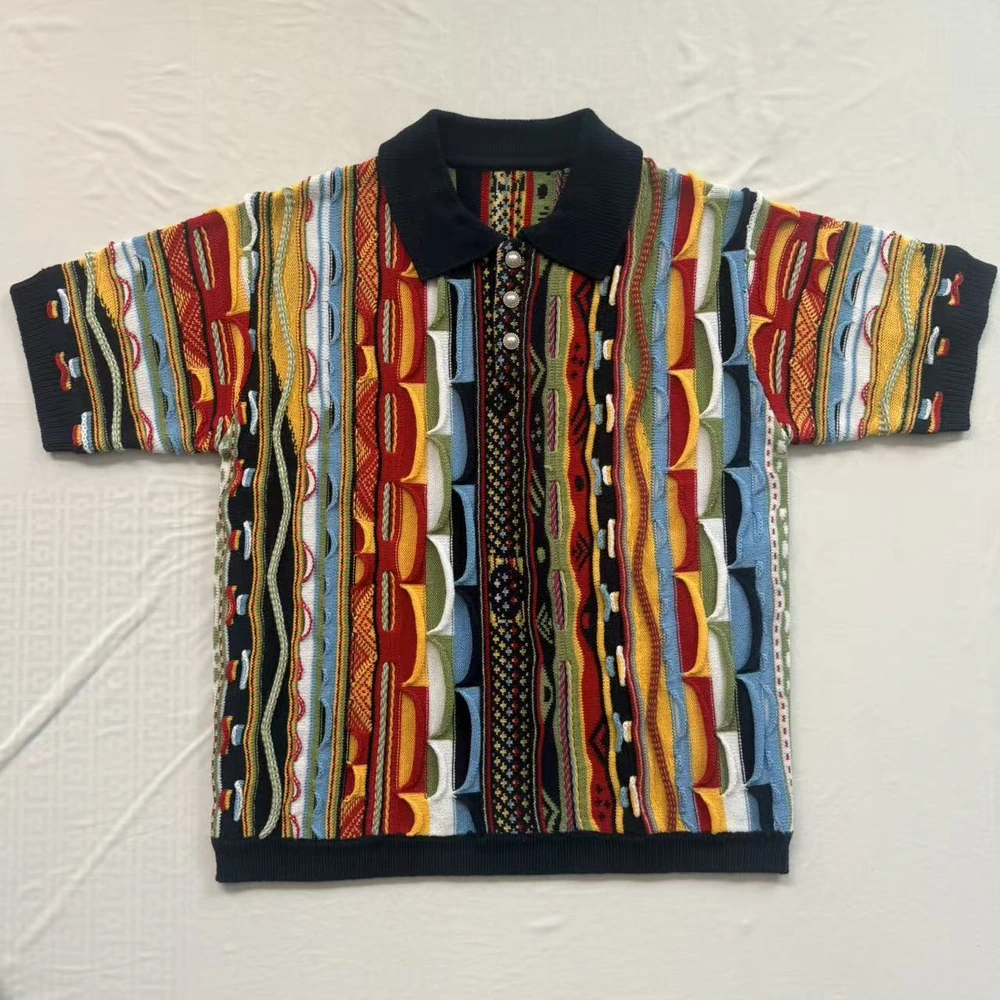
Custom Multi-Colour Jacquard Knit Polo Shirt
A short-sleeve knit polo built on a multi-colour jacquard programme — up to 13 yarn colours, against the 4-6 colour ceiling most mills quote.
Keep reading
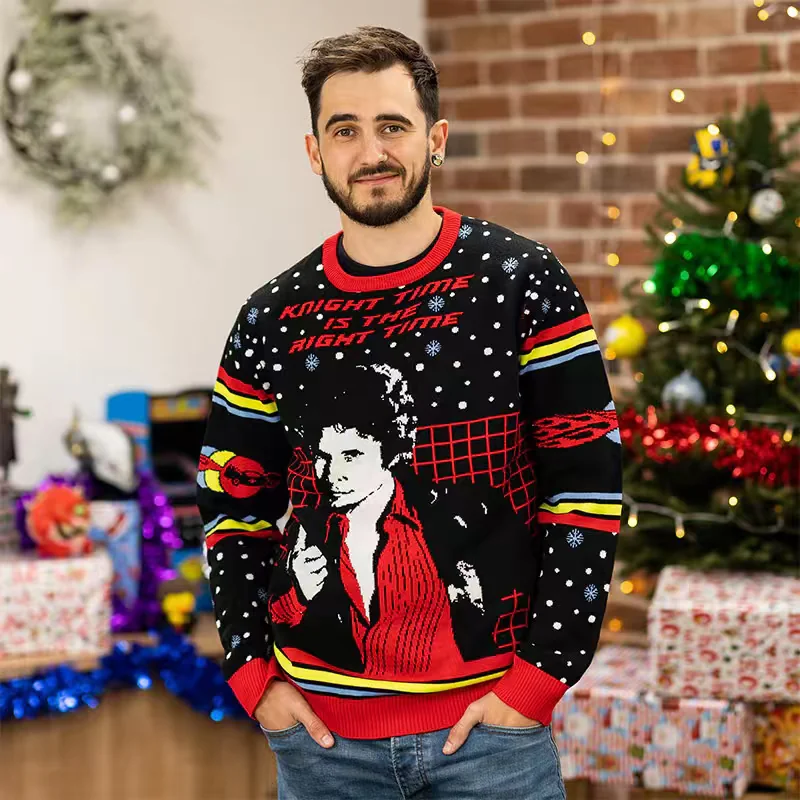
It's Time to Custom-Own Your Christmas Jumper
A short consumer-oriented overview of the custom Christmas jumper trend — design ideas, group-event tips, and the festive looks defining this year's holiday season.
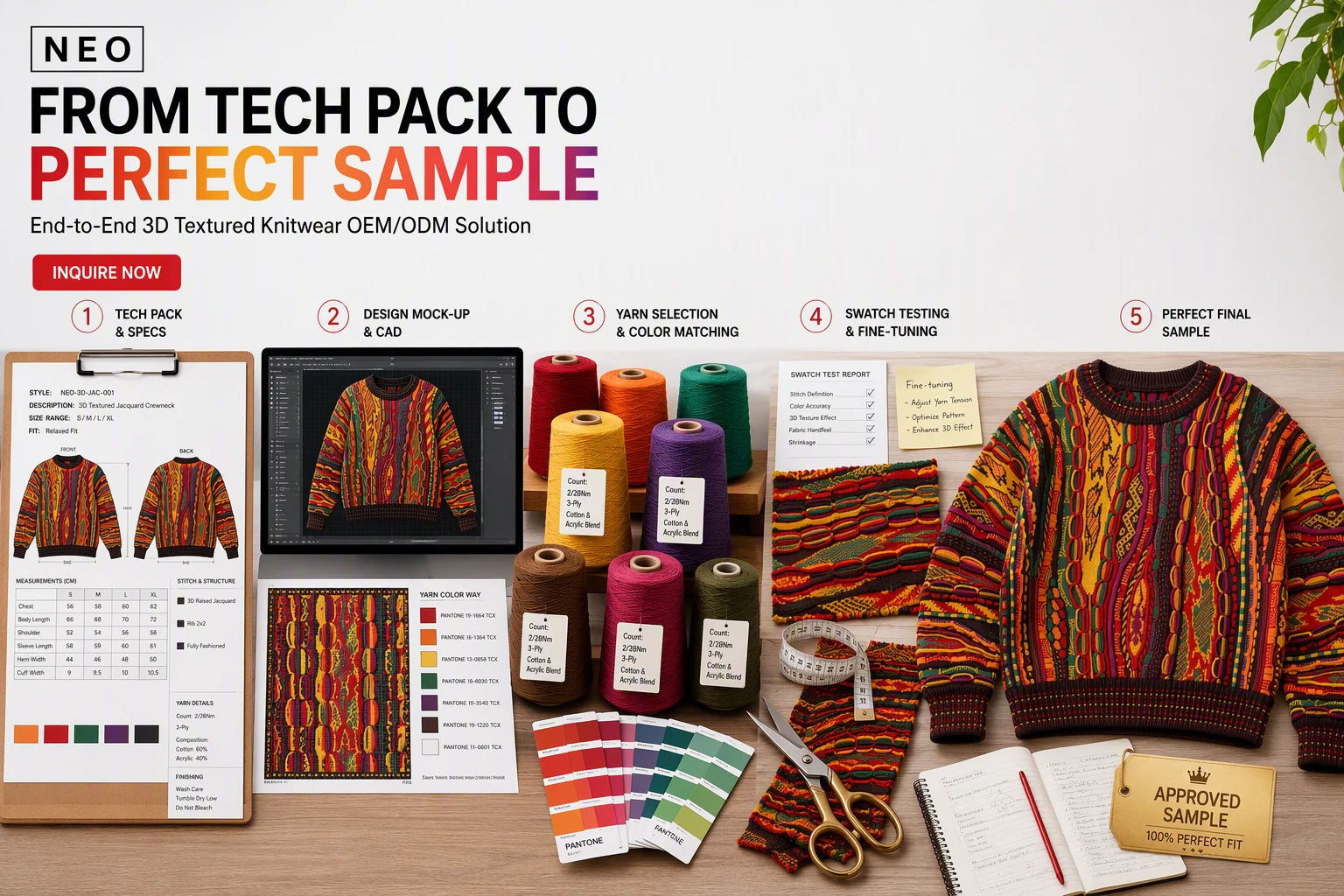
From Tech Pack to Perfect Sample: How Knitwear Sampling Actually Works
A floor-level walkthrough of the five stages between your tech pack and an approvable knit sample — mock-up and CAD programming, yarn colour matching, swatch testing, and the final PPS.
Sourcing Custom Men's Knitwear: What Separates a Knitwear Factory from a Sweater Mill
Mens knitwear briefs rarely fail on the design. They fail on gauge, size grading and reverse-side finishing — three things most price requests never ask about. Here is what to specify before you ask for a quote.
Send us the piece you were told was too hard.
Reference photo, rough sketch, or full tech pack — our Dalang technical punchers evaluate feasibility, machine gauge, yarn options, and pricing within 24 hours.