Sweater Yarn Guide: Wool, Acrylic, Cotton and the Blends Between
Fibre decides hand-feel, drape, pilling, shrinkage and care label — long before it decides price. A practical guide to what each fibre actually does in a knitted garment, and the naming rules that come with it.
For buyers and designers choosing a fibre for a production programme. Every fibre named here is available in our yarn sourcing; the question is which one your product and price point can carry.
Yarn is the largest single decision in a knitwear programme, and it is usually made last. Buyers approve a silhouette, settle a graphic, agree a gauge, and then ask what fibre fits the budget. That order is backwards. Fibre determines how the garment feels, how it drapes, whether it pills, how much it shrinks in the wash, and what the care label is legally allowed to say.
It also determines whether your marketing copy is truthful. This is the part that catches brands out, and it is worth stating plainly at the top: you cannot describe a garment as cashmere, merino or wool unless the fibre content says so. A soft acrylic that imitates cashmere hand-feel is a legitimate product, but the copy has to describe the hand-feel, not the fibre.
Wool and Merino
Wool is the reference point for knitwear because of one property nothing else matches: resilience. A wool loop compresses and springs back, which is why a wool jumper recovers its shape at the elbow and a cotton one does not. Merino is simply a finer wool fibre, which makes it soft enough to wear against the skin rather than over a shirt.
- Strengths: warmth for weight, natural recovery, takes dye deeply, holds cable and relief structure crisply.
- Weaknesses: felts and shrinks under heat and agitation, can prickle at coarser grades, needs care instructions that consumers often ignore.
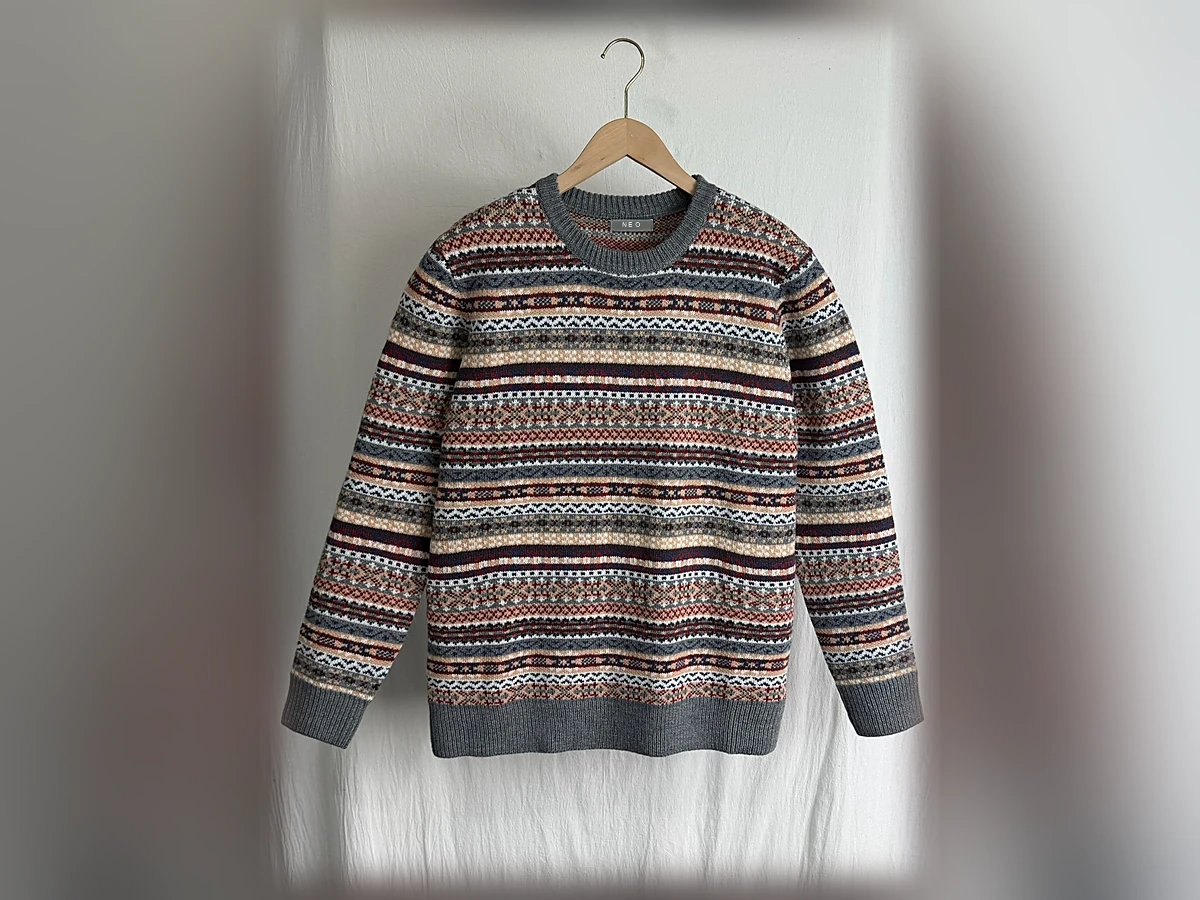
- Best for: cable knits, Fair Isle, structured cardigans, anything where the stitch definition is the point.
The shrinkage behaviour is not a defect to be engineered away, it is a property to be designed around. Wool garments are washed and blocked at the factory to set the finished size, and the care label exists to stop the customer undoing that work.
Cashmere and Cashmere Blends
Cashmere is a fine down fibre, and what you are paying for is fibre length as much as fineness. Long fibres stay put in the yarn; short fibres work their way out and pill, which is why a cheap cashmere garment can feel wonderful in the shop and look tired after a month.
This is also why blends are the commercial centre of the category. A cashmere-wool or cashmere-nylon blend can deliver most of the hand-feel at a workable price, and the nylon adds abrasion resistance where pure cashmere wears through — under the arm, at the cuff edge. The blend percentage is a marketing decision and a performance decision at the same time, and the two do not always point the same way.
Naming discipline matters here more than anywhere else in knitwear. A garment described as cashmere must contain cashmere at the percentage stated on the label. If the fibre is an acrylic engineered to imitate the hand, describe the hand — soft, downy, cashmere-like — and state the actual composition. Buyers who test incoming goods will find the difference immediately.
Acrylic
Acrylic is the workhorse of volume knitwear, and it is routinely underestimated by brands that consider it downmarket. It takes colour brilliantly and consistently, it is light, and it is machine washable, which for a gifting product or a promotional programme is often the decisive property.
- Strengths: strong, bright colour; low cost; machine washable; consistent from batch to batch.
- Weaknesses: pills more than wool, does not breathe as well, tends to hold static, and has less recovery — cuffs and necklines relax over time.
- Best for: seasonal graphics, promotional knitwear, childrenswear, anything that must survive home washing without special instruction.
The pilling is the honest limitation. It can be reduced with a tighter spin and a firmer tension, and it can be brushed out in finishing, but a soft acrylic at a loose gauge will pill. If a customer will judge the garment after ten wears, that matters more than the price difference.
Cotton and Cotton Blends
Cotton brings drape and weight. It hangs rather than holds, which makes it the right choice for spring-summer knitwear, fine-gauge polos and anything meant to look fluid. It is also the least elastic of the common fibres, so it grows — a cotton jumper that fits perfectly on day one can be a size larger by midsummer if the construction is not firm enough.
Cotton shrinks, too, and more than wool in the first wash. That behaviour has to be built into the pattern rather than corrected afterwards. Blending with a small percentage of nylon or elastane improves recovery and reduces the growing problem without changing the hand much.
Nylon, Polyester and the Small Percentages
The five to twenty per cent at the end of a composition list is doing real work and buyers often cut it to save cost. Nylon adds abrasion resistance where a garment actually wears out: socks, cuffs, the underarm of a cardigan, the heel of a slipper. It also improves shape retention in a wool blend at very low percentages.
Removing it is a false economy on exactly the products most likely to be worn hard. A sock without nylon at the heel is a sock with a hole in it.
How to Choose in Five Questions
- How will the customer wash it? If the answer is normally, in a machine, at forty degrees, the fibre list narrows sharply.
- Does the design depend on stitch definition? Cables and relief need wool or a wool-rich blend; cotton and soft acrylic blur the structure.
- What is the wear pattern? Hard-wearing points — heels, cuffs, underarms — justify a nylon percentage even in a premium blend.
- What does the care label need to say, and does the copy match the composition? Decide this before the first sample, not after the first customer complaint.
- What is the target landed cost, and which of the above can flex? Usually the answer is the cashmere percentage, not the nylon one.
One more practical note on colour. The same Pantone reference reads differently across fibres — a shade matched on acrylic will not look identical on merino, because the fibre's lustre and dye uptake both change the perceived colour. Match the colour on the fibre you are actually producing, at the yarn stage, in daylight.
Frequently Asked
Is a cashmere blend still worth calling cashmere?
It can be described as a cashmere blend, provided the percentage is stated and accurate. What it cannot be is described as cashmere without qualification. The performance also differs: a low-percentage blend behaves more like its majority fibre, so judge the garment by the composition, not the headline word.
Can a wool sweater be made machine washable?
Yes, two ways. Either the fibre is treated to resist felting, or the wool is blended with enough of another fibre to change its behaviour. Both are legitimate; both change the hand-feel slightly. What none of them do is make a wool garment safe in a hot dryer.
Why do two quotes for the same design differ so much?
Almost always the yarn, not the labour. The same silhouette at the same gauge can be knitted in a standard acrylic or in a merino-cashmere blend, and the yarn cost difference is larger than any other line in the costing. Before comparing two prices, compare the two compositions.
If you have a fibre in mind and a target cost, tell us both. The useful answer is which composition gets closest to the hand you want at the price you can carry — not a quote for a fibre you did not ask for.
Looking to manufacture Christmas jumpers at scale?
Skip the print-on-demand platforms. Send us your design brief and we'll quote a direct-factory run with low MOQs, 72h sampling, and DDP worldwide delivery.
Knitwear you can manufacture right now
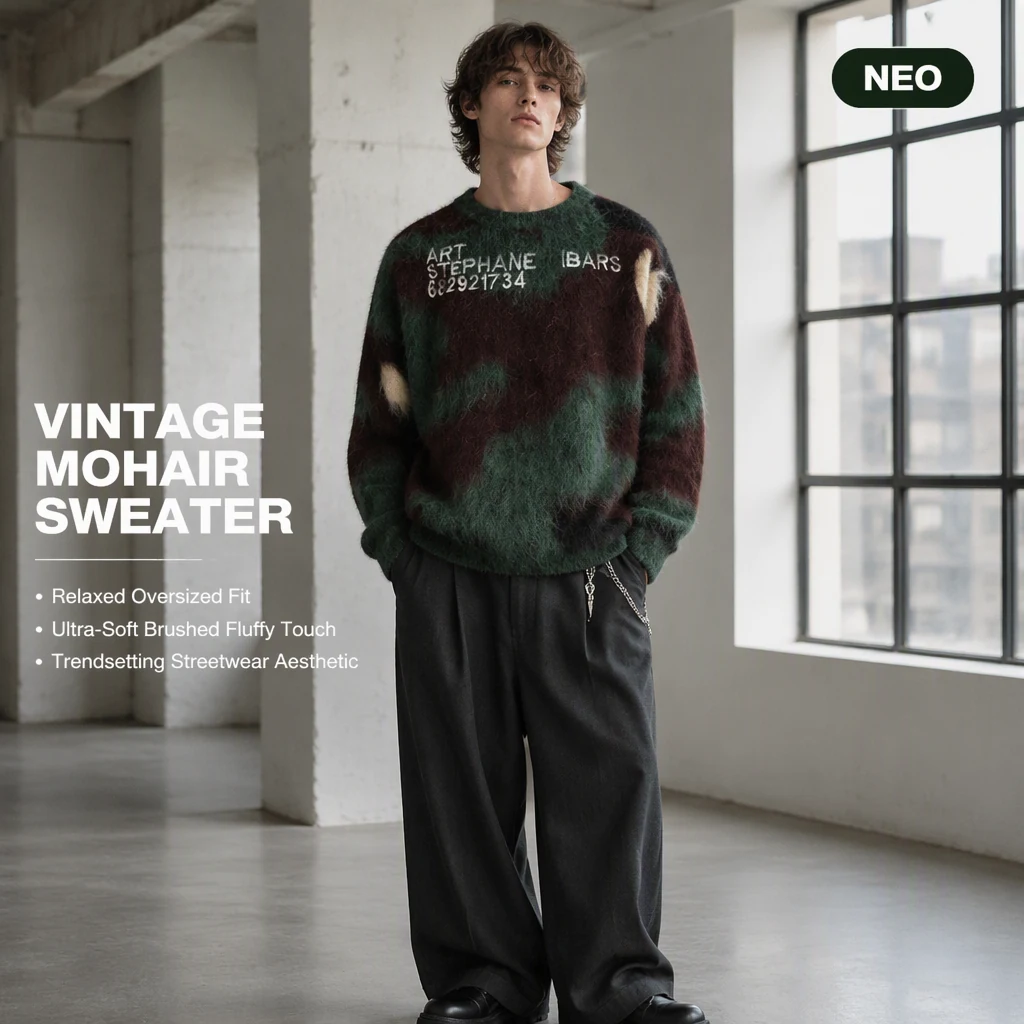
Custom Vintage Mohair Jacquard Sweater with Embroidery
Brushed fluffy mohair in an oversized silhouette — multi-colour jacquard camo ground with high-density 3D embroidered lettering.
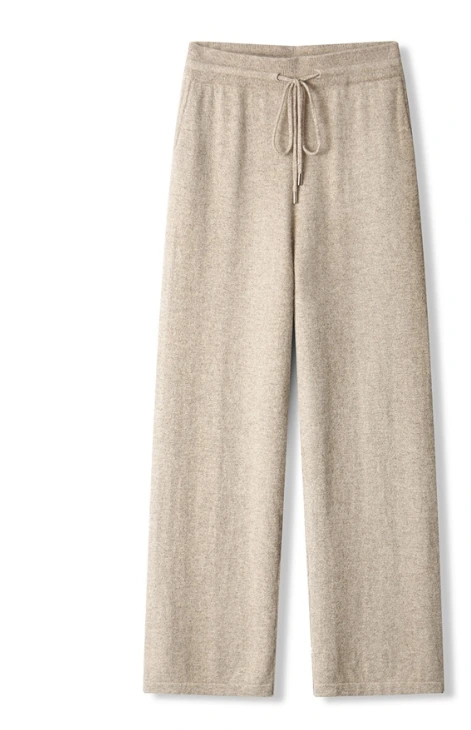
Custom 100% Cashmere Wide-Leg Knit Pants
Two-ply Inner Mongolian cashmere at 12GG — the drape of the fibre is the whole product, so the knitting has to stay out of its way.
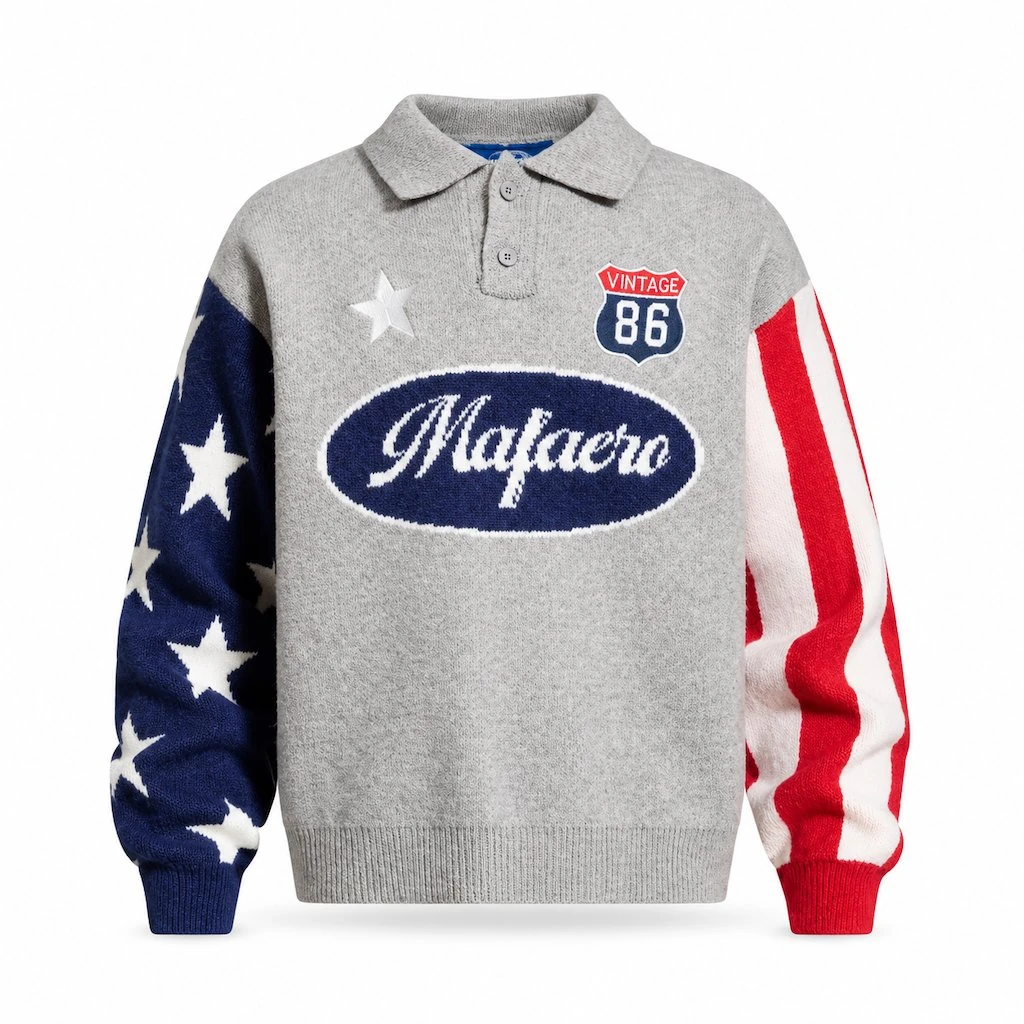
Custom Long-Sleeve Jacquard Polo Sweater
Four structures in one garment — solid heather body, two different sleeve jacquards, a chenille chest patch — every one of them re-programmed from your artwork.
Techniques behind this product
Keep reading

It's Time to Custom-Own Your Christmas Jumper
A short consumer-oriented overview of the custom Christmas jumper trend — design ideas, group-event tips, and the festive looks defining this year's holiday season.
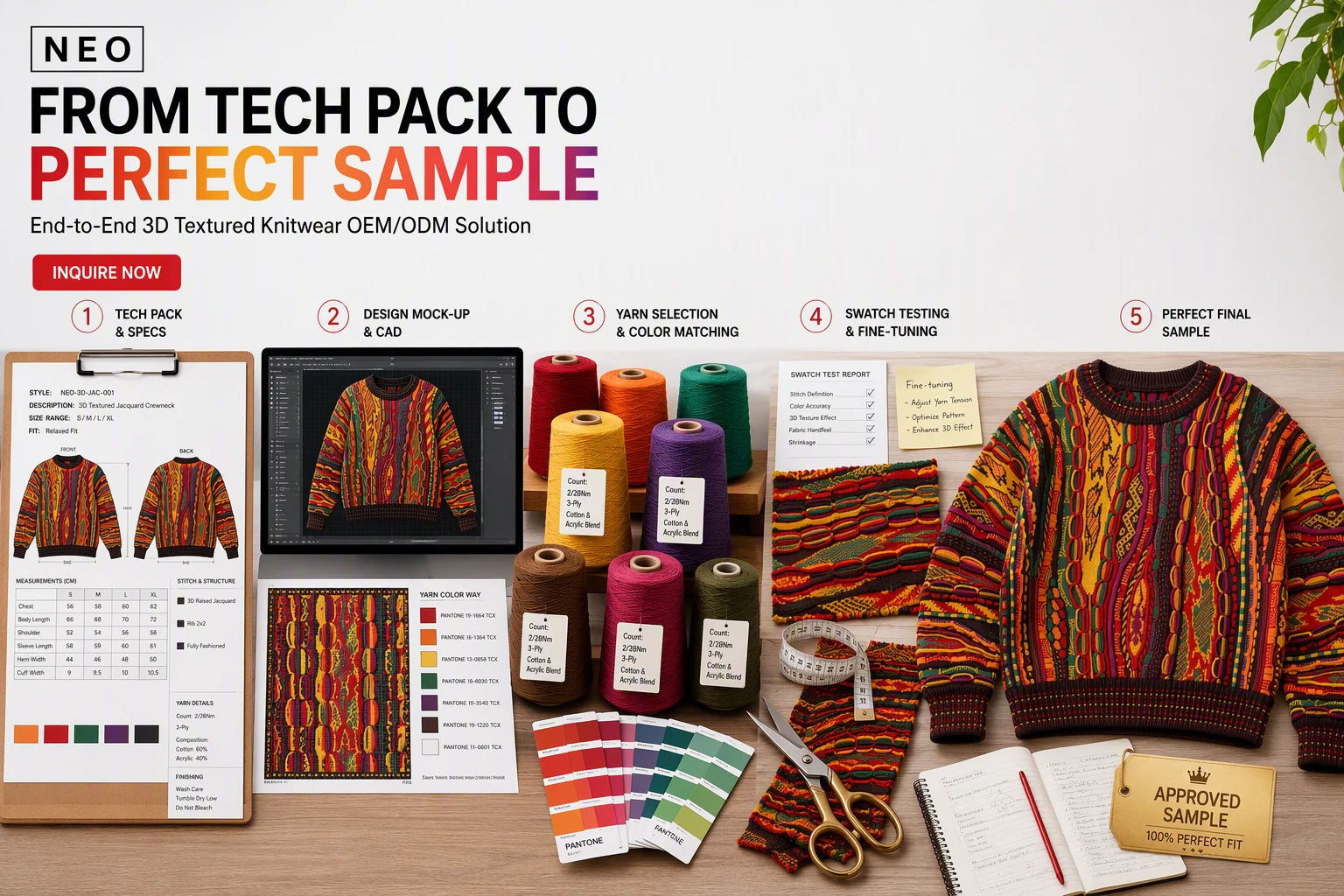
From Tech Pack to Perfect Sample: How Knitwear Sampling Actually Works
A floor-level walkthrough of the five stages between your tech pack and an approvable knit sample — mock-up and CAD programming, yarn colour matching, swatch testing, and the final PPS.
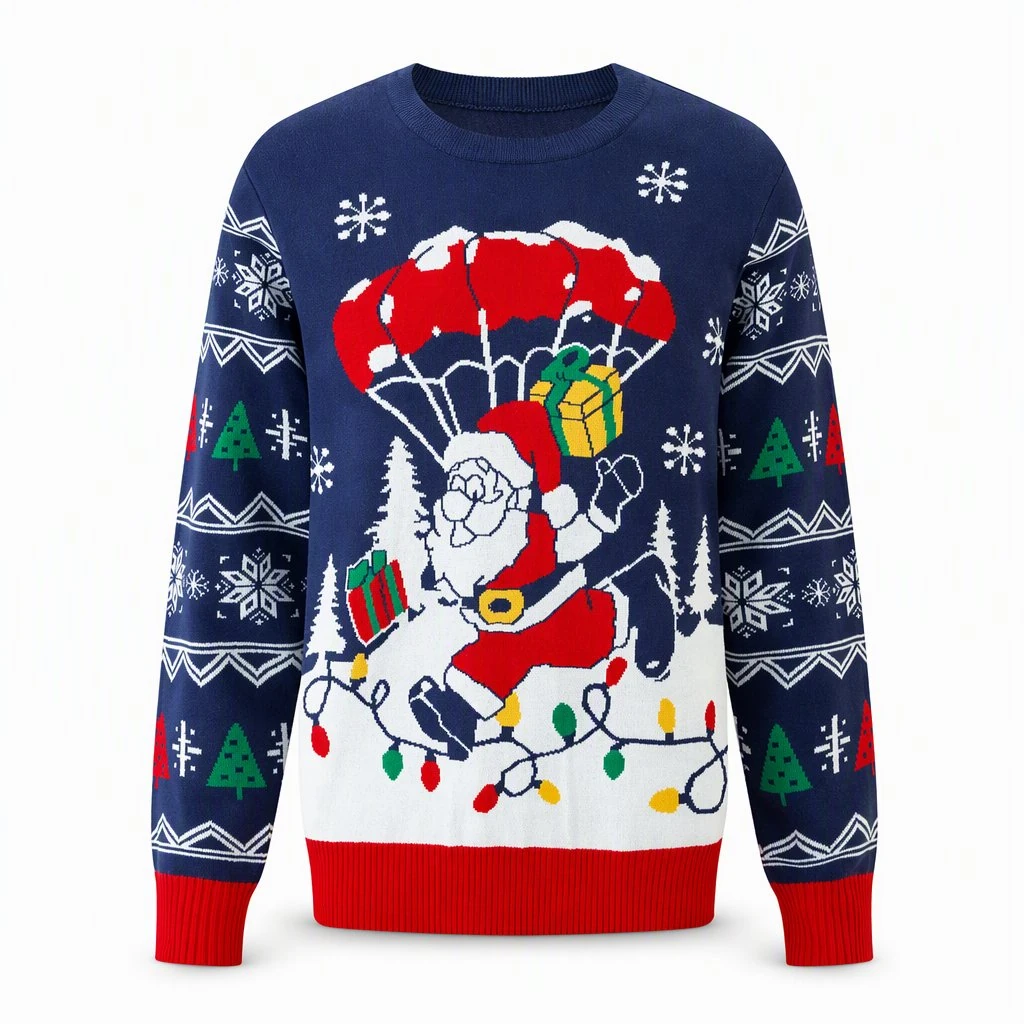
Sourcing Custom Men's Knitwear: What Separates a Knitwear Factory from a Sweater Mill
Mens knitwear briefs rarely fail on the design. They fail on gauge, size grading and reverse-side finishing — three things most price requests never ask about. Here is what to specify before you ask for a quote.
Send us the piece you were told was too hard.
Reference photo, rough sketch, or full tech pack — our Dalang technical punchers evaluate feasibility, machine gauge, yarn options, and pricing within 24 hours.