
Sweater Shrinkage: Why It Happens and How It Gets Designed In
Shrinkage is not a manufacturing defect. It is a variable that has to be measured, compensated for and then protected by the care label. Here is where it comes from and why length is the measurement that costs money.
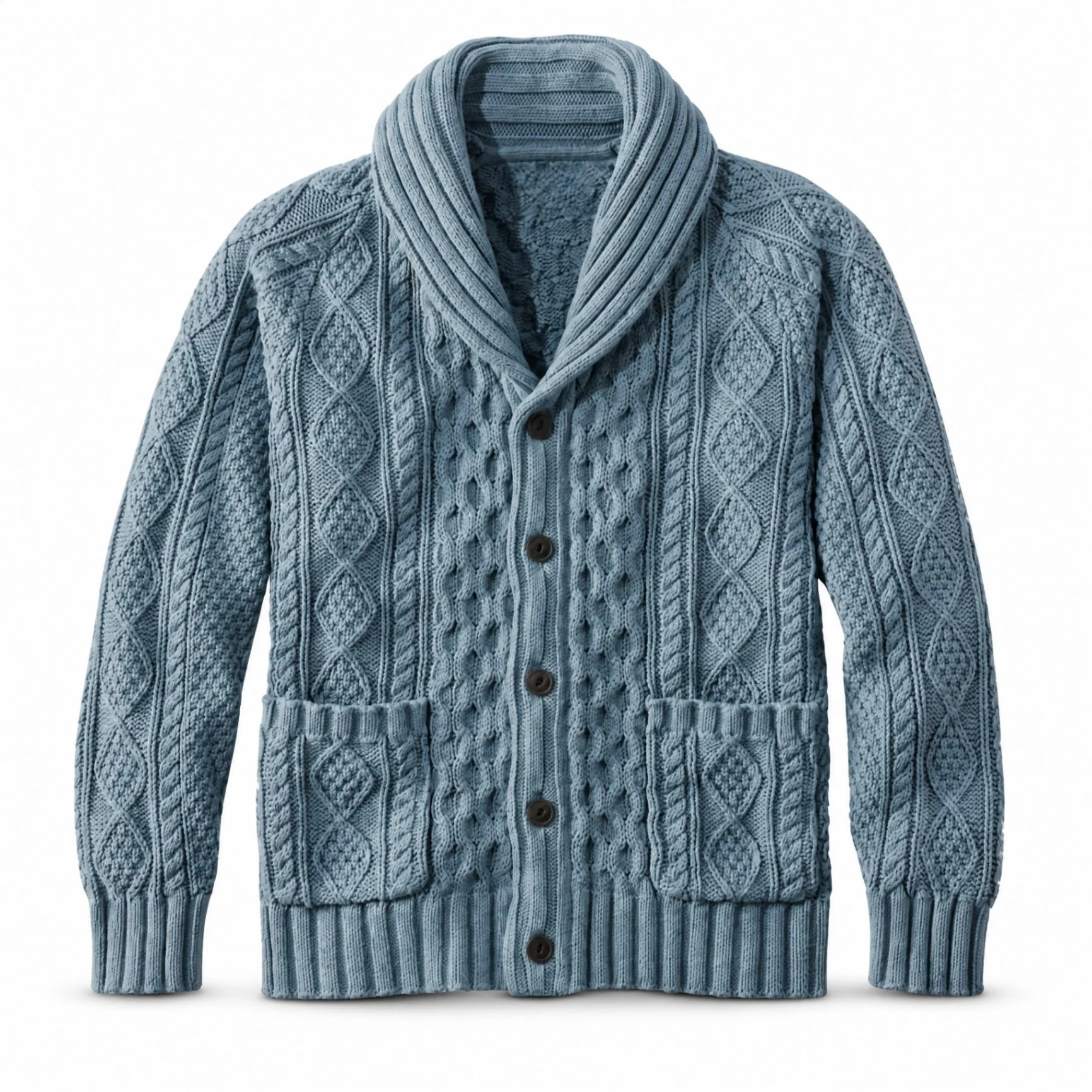
For buyers and developers dealing with fit complaints or writing a size specification. If a bulk shipment is measuring short, the cause is almost always in the finishing stage rather than the knitting stage.
A buyer receives a bulk order, measures a garment, finds it two centimetres shorter than the approved sample, and reports a fault. Sometimes that is a fault. More often it is a specification problem: the size chart described the garment as it came off the machine, and the garment the customer receives has been washed.
Knitted fabric is not dimensionally stable when it leaves the needle bed. It relaxes, and relaxing changes size. That change is not random — it can be measured, predicted and compensated for — but only if it is treated as part of the specification rather than as a surprise.
Two Different Kinds of Shrinkage
The word covers two mechanisms with completely different behaviour, and conflating them is why arguments about shrinkage go nowhere.
- Relaxation shrinkage. The yarn was under tension while knitted. Once the garment is wetted, the loops relax toward their natural shape and the fabric contracts. This happens mostly in the first wash, it is largely predictable, and washing and blocking at the factory is designed to trigger it before the garment ships.
- Felting shrinkage. Wool fibres have scales. Under heat, moisture and mechanical agitation, those scales lock together and the fabric contracts permanently. This is not predictable in the same way and it is not reversible. It is why a wool jumper put through a hot wash comes back fitting a child.
The first kind is a process step. The second kind is a customer behaviour, and the only control over it is the care label and, where the brief allows, the fibre choice.
Washing and Blocking Is Where the Size Is Decided
After knitting and linking, a garment is washed and then blocked — pinned or shaped to its intended dimensions and dried. This is the stage that converts a piece of knitted fabric into a garment with a reproducible size.
It is also why a size chart that specifies pre-wash measurements is unusable. The number you gave describes a state the garment will only be in once, briefly, before finishing. Everything downstream — the customer, the returns department, the fit model — is working with the post-wash garment.
Specify post-wash measurements, with a tolerance per measurement. That single change removes most fit disputes before they start, and it costs nothing to implement.
Why Length Costs More Than Width
Not all measurements are equally sensitive, and the difference is commercial rather than technical. Width has slack: a jumper that is slightly narrow still fits, and a body that is slightly wide still sells. Length does not. A jumper that finishes short looks wrong on the hanger, and a pair of knit trousers that finishes short is unsellable at any price.
This is why knit bottoms carry tighter length tolerances than tops, and why the pattern for a trouser is built with more length compensation. It is also why knit bottoms are harder to develop than they look: a garment with a waistband, a rise and two legs has three directions of strain, and the crotch seam takes all three at once.
Which Structures Move Most
- Rib. Highly elastic, recovers strongly, and a ribbed panel will pull itself narrower than a stockinette panel of the same stitch count. Ribbed cuffs and hems are designed around this.
- Cable and relief. The crossing and tucking consumes length — a cable panel contracts vertically compared to plain knit, which is why a heavily cabled garment needs a longer pattern to finish at the same body length.
- Jacquard with long floats. Less stable than a plain knit in both directions, and the float structure can relax unevenly.
- Fine gauge. Moves less in absolute terms, but the tolerance is also tighter because the garment is thinner and small changes are more visible.
What the Care Label Is Actually Doing
A care label is not legal decoration. It is the instruction that keeps the finished size and hand-feel intact for the life of the garment. For wool, that means low temperature, low agitation, no tumble drying, dry flat. For acrylic and cotton blends it can be more forgiving, which is one of the practical reasons volume programmes choose them.
The mismatch worth watching is a premium wool garment with a care label nobody reads. If your customer base is unlikely to hand-wash, the fibre decision has to account for that at the design stage, not in the complaint email.
How to Handle a Shrinkage Complaint
- Measure the same way both times. Flat, relaxed, after the same rest period. A garment measured straight off a hanger measures differently from one laid flat for an hour.
- Compare against the post-wash specification, not the sample as it arrived. If no post-wash spec exists, that is the finding.
- Separate relaxation from felting. If the garment is still soft and the loops have simply tightened, it is relaxation. If the surface has thickened and the stitch definition has blurred, it is felting, and the cause is in the wash, not the factory.
- Check the wash history before the production record. Felting requires heat and agitation; both come from the customer's machine.
Frequently Asked
How much shrinkage is normal?
It depends on fibre, structure and gauge, which is why a single percentage is not a useful answer. The workable approach is to agree a tolerance per measurement on the post-wash spec, then verify it on the PPS. A garment that meets its agreed tolerance is correct even if it moved from its pre-wash state.
Will it shrink again after the first wash?
A garment that has been washed and blocked has already undergone most of its relaxation. Further movement in cold, gentle washing is minimal. Under heat and agitation, wool will continue to felt — that is a different mechanism and it does not stop.
Can a wool sweater be made shrink-resistant?
Yes, either by treating the fibre to reduce felting or by blending it. Both change the hand slightly and neither makes a wool garment suitable for a hot dryer. If machine washability is a hard requirement rather than a preference, an acrylic or cotton-rich blend is usually the more honest route than a treated wool.
If you are seeing a measurement drift between sample and bulk, send us the post-wash numbers from both. Nine times out of ten the pattern is fine and the specification was describing the wrong moment in the garment's life.
Looking to manufacture Christmas jumpers at scale?
Skip the print-on-demand platforms. Send us your design brief and we'll quote a direct-factory run with low MOQs, 72h sampling, and DDP worldwide delivery.
Knitwear you can manufacture right now
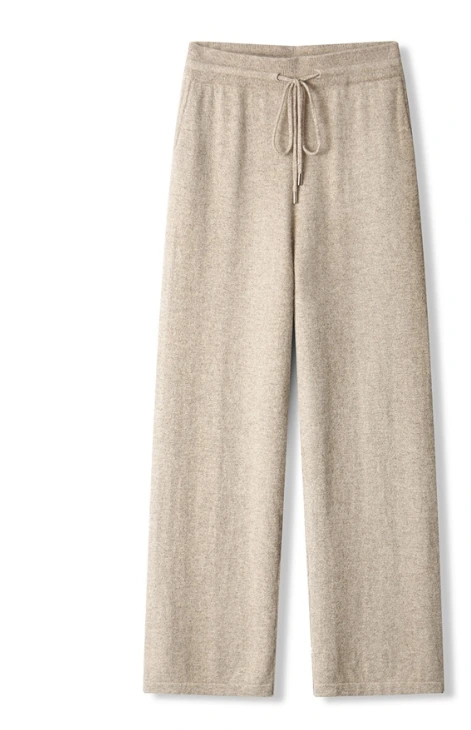
Custom 100% Cashmere Wide-Leg Knit Pants
Two-ply Inner Mongolian cashmere at 12GG — the drape of the fibre is the whole product, so the knitting has to stay out of its way.
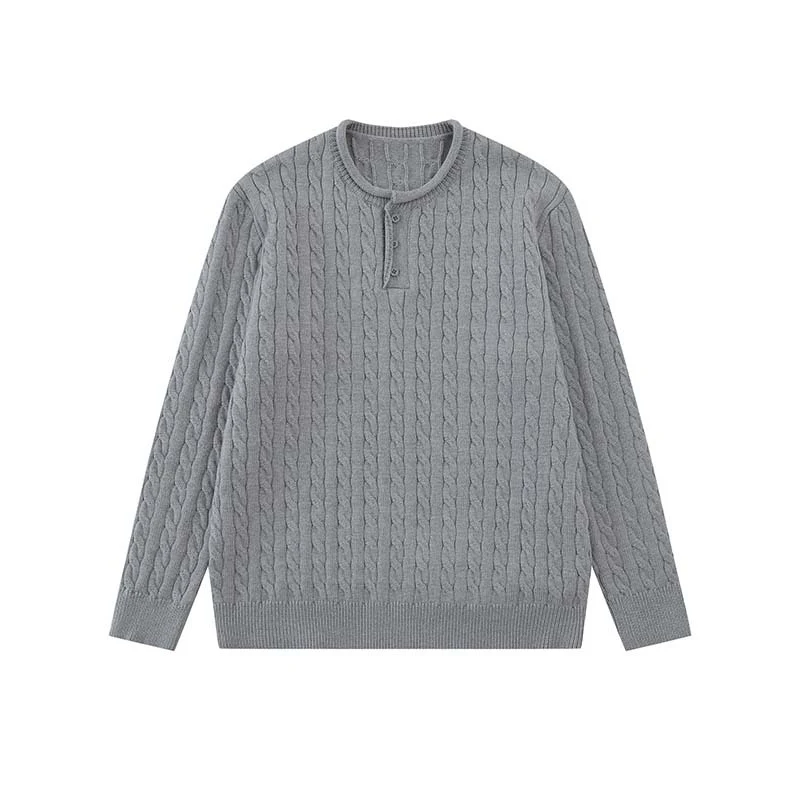
Custom Cable Knit Henley Sweater
Grandad-collar cable sweater with a three-button placket — the easiest cable silhouette to put your brand on.
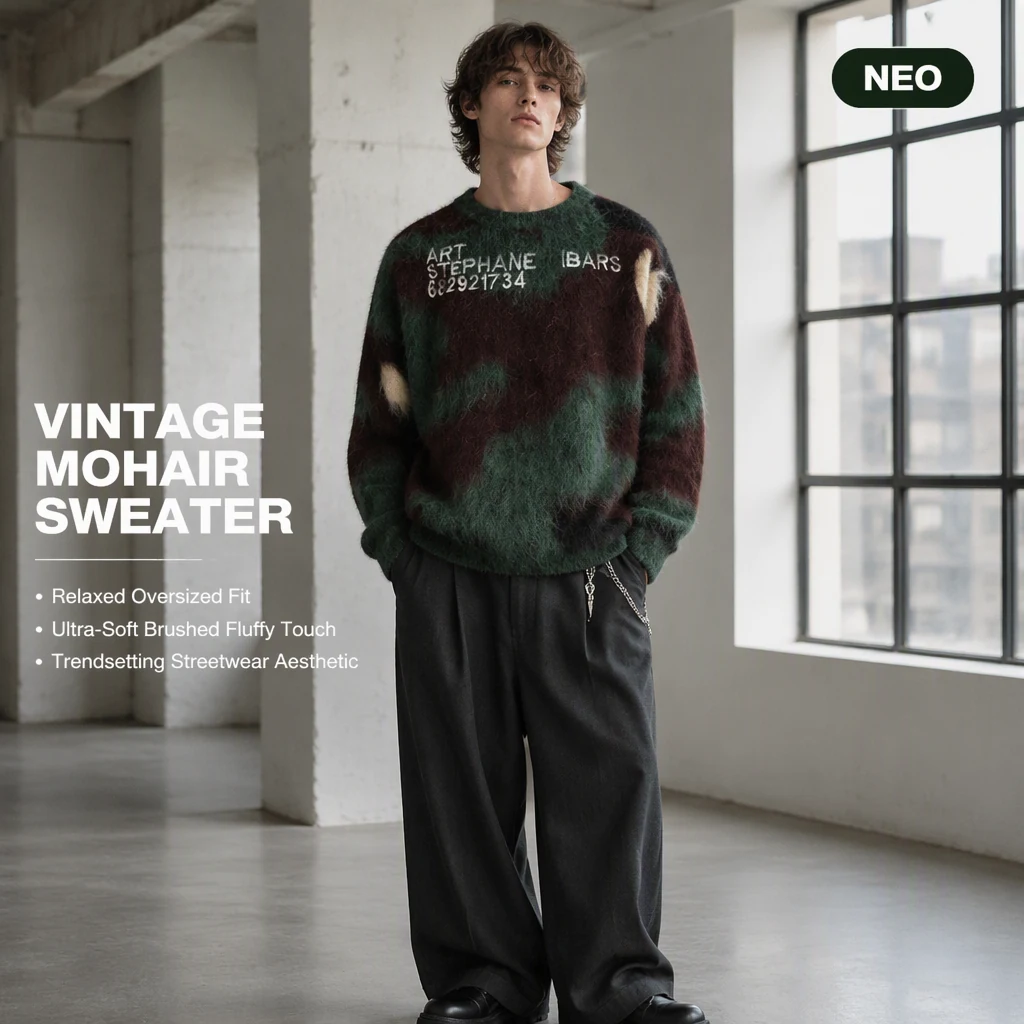
Custom Vintage Mohair Jacquard Sweater with Embroidery
Brushed fluffy mohair in an oversized silhouette — multi-colour jacquard camo ground with high-density 3D embroidered lettering.
Techniques behind this product
Keep reading
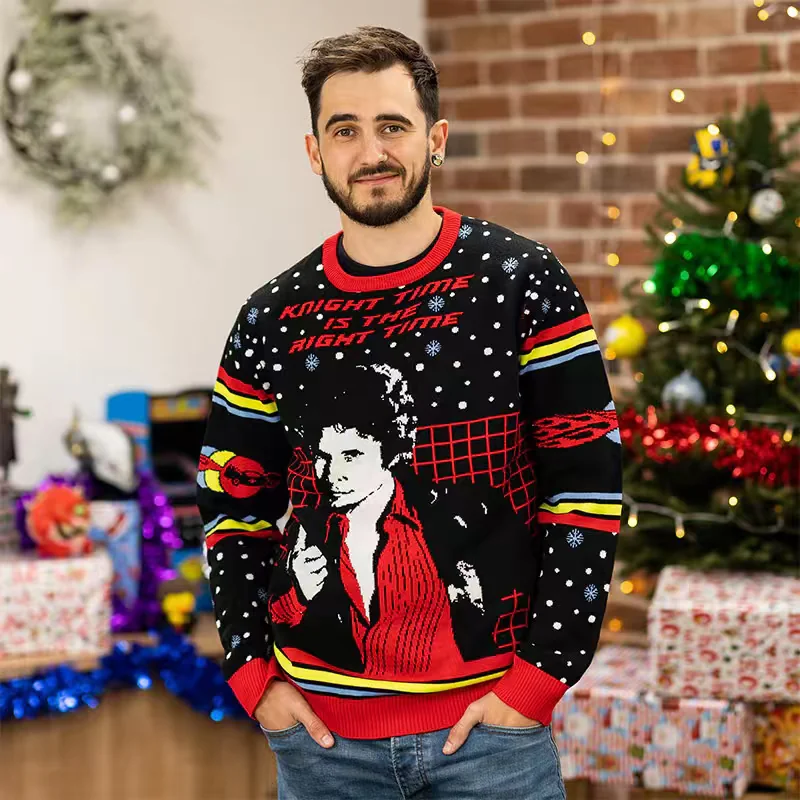
It's Time to Custom-Own Your Christmas Jumper
A short consumer-oriented overview of the custom Christmas jumper trend — design ideas, group-event tips, and the festive looks defining this year's holiday season.
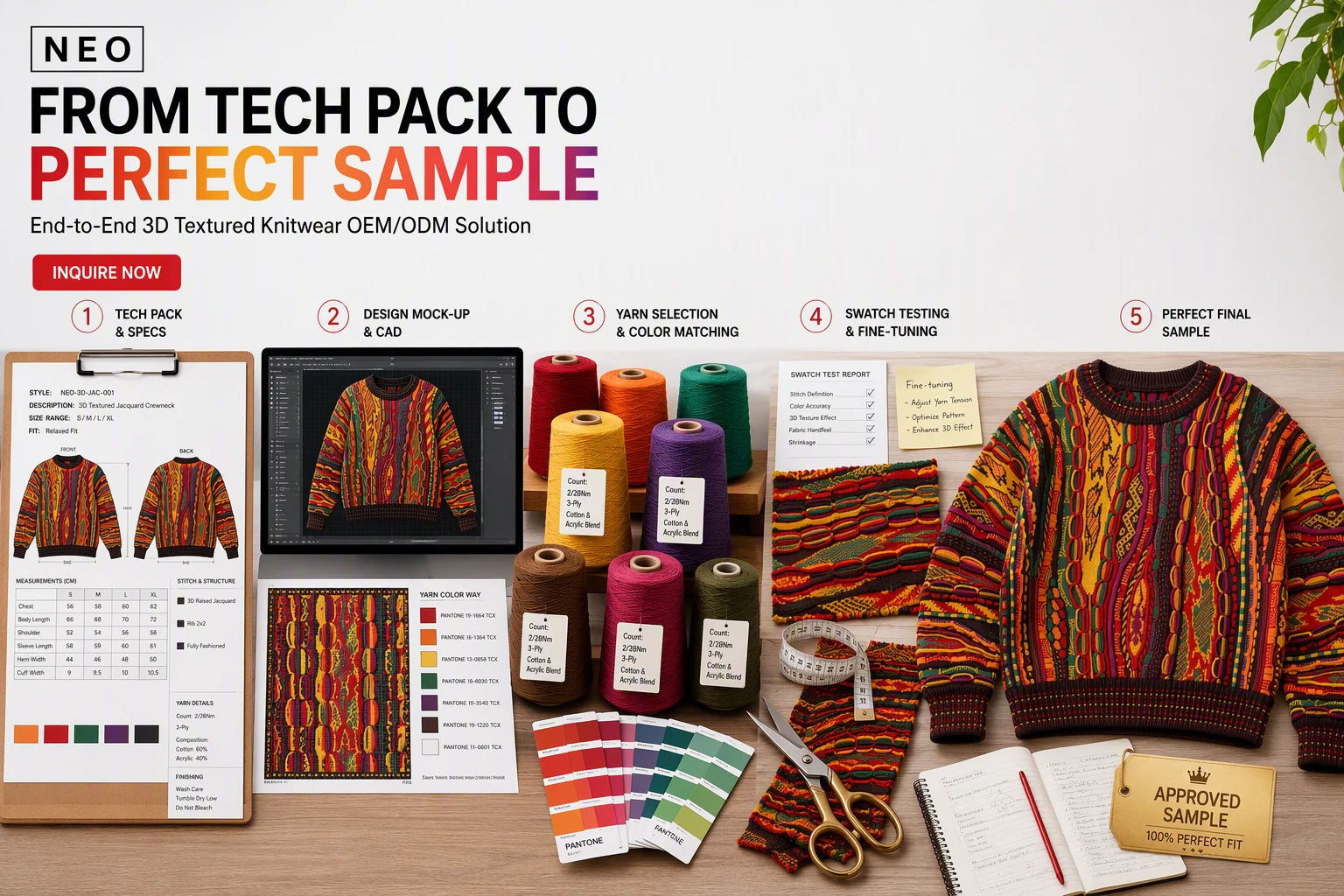
From Tech Pack to Perfect Sample: How Knitwear Sampling Actually Works
A floor-level walkthrough of the five stages between your tech pack and an approvable knit sample — mock-up and CAD programming, yarn colour matching, swatch testing, and the final PPS.
Sourcing Custom Men's Knitwear: What Separates a Knitwear Factory from a Sweater Mill
Mens knitwear briefs rarely fail on the design. They fail on gauge, size grading and reverse-side finishing — three things most price requests never ask about. Here is what to specify before you ask for a quote.
Send us the piece you were told was too hard.
Reference photo, rough sketch, or full tech pack — our Dalang technical punchers evaluate feasibility, machine gauge, yarn options, and pricing within 24 hours.