Sweater Gauge Chart: What 3GG to 16GG Actually Changes
Gauge is resolution, not quality. The same sketch knitted at 3GG and 14GG produces two different garments — different weight, different minimum motif size, different cost. Here is the working range and what each step buys you.
For buyers and product developers specifying knitwear. Gauge is the first number to agree on, because it decides almost everything that comes after it.
Gauge is the number of needles per inch on the knitting bed, written as GG. Three gauge means three needles per inch, fourteen means fourteen. Buyers often treat a higher number as better, the way thread count is treated in bedding. It is not a quality grade. It is a resolution, and resolution is a design decision with consequences for weight, detail, hand-feel and price.
The clearest way to see this is to imagine one flat sketch — a crew neck with a chest motif — sent to two machines. At 3GG the motif can only be built from large blocks, the garment will be heavy and sculptural, and the neckline will sit like a yoke. At 14GG the same motif can carry thin lines and small lettering, the garment will drape and read almost like a woven shirt. Neither is the correct answer. They are different products that happen to share a drawing.
The Working Range
In practice most commercial knitwear sits in five bands:
- 3GG — very chunky, hand-knit appearance, heavy per piece, large-scale motifs only. Best for statement outerwear and oversized silhouettes.
- 5GG — chunky but wearable. The classic thick winter sweater. Good for cables and relief stitches, where the structure needs room to read.
- 7GG — the workhorse. Reads as a proper winter knit, holds jacquard detail reasonably, and costs less per piece than finer gauges. Most promotional and seasonal programmes sit here.
- 12GG — the standard fine gauge for retail knitwear. Clean surface, credible for smart-casual, and the point where lettering starts to be genuinely legible.
- 14GG to 16GG — close to a woven hand. Thin, dense, dressy. Suitable for lightweight layering pieces and fine graphic work, but unforgiving about yarn quality.
Four Things Gauge Decides
When a spec arrives without a gauge, these are the four conversations that have to happen before sampling can start:
- Minimum motif size. As a working rule an all-caps character needs about three stitches to stay legible. At 7GG a letter therefore occupies a noticeable chunk of the chest. At 14GG the same letter is half the width. This single relationship kills more artwork than any other.
- Weight and drape. Gauge and yarn count together set grams per piece. A chunky garment holds its own shape and pulls at the shoulder seam; a fine garment follows the body. If the sketch shows a fluid drape and the target gauge is 3GG, the sketch is wrong, not the machine.
- Stitch definition. Cables, relief and openwork need scale to read. A bitter-gourd relief motif that looks architectural at 5GG becomes a faint texture at 12GG, because the raised structure is only a few stitches wide.
- Cost. Finer gauge is slower per course but uses less yarn. Coarser gauge is faster but heavier. The two effects partly cancel, which is why gauge alone rarely explains a price difference — colour count and manual finishing usually explain more.
The Constraint Nobody Mentions: Repeat and Total Needle Count
A jacquard or cable repeat has to divide evenly into the total stitch count around the piece. On a sweater body this is manageable, because the body is wide and the repeat can be adjusted at the side seams. On a beanie it is not. The circumference of a hat is fixed by the head it has to fit, so the total needle count is fixed too, and the repeat must divide into it exactly. A motif that does not divide leaves a visible break at the seam where the pattern fails to close.
This is why hat programmes so often come back with a slightly adjusted motif rather than the artwork as supplied. It is not an aesthetic preference. It is arithmetic, and it is worth checking before the artwork is finalised rather than after.
Where Fine Gauge Goes Wrong
The enemy of fine gauge is not precision, it is barre — horizontal bands of slightly different shade or density that appear when yarn from different batches, or with different tension, is knitted side by side. At 14GG a tone difference that would be invisible in a chunky knit becomes a stripe across the chest.
The control is procedural rather than technical: knit a fine-gauge order from a single yarn batch, and specify knot-free yarn so the fabric does not carry slubs and joins through a smooth surface. This is also why fine gauge is less forgiving of cheap yarn. The machine can hold the tension, but it cannot hide the fibre.
Where Chunky Goes Wrong
Chunky knit's failure mode is gravity. A 3GG or 5GG garment weighs substantially more, and that weight travels down the garment. Shoulder seams elongate, body length grows after washing, and a garment that measured correctly flat can hang two centimetres longer on a hanger. The fix is in the pattern — a tighter gauge at the shoulder, a firmer rib at the hem, sometimes a stabilising tape in the seam — not in the finishing.
Chunky surfaces also show irregularity. Slight variations in yarn thickness that disappear in a fine knit read as texture at 3GG, which can be desirable or can look like a fault, depending on whether it was designed in.
Our programme library spans 3GG to 14GG across jacquard, cable, relief, intarsia and fine-gauge structures. If you have a reference garment, we can usually identify its gauge from a photo and a fibre guess before a sample is made.
Frequently Asked
What gauge should a winter sweater be?
7GG is the safe default for a commercial winter sweater: it reads as substantial without becoming outerwear, and it holds jacquard detail well enough for most seasonal graphics. Move to 5GG if the design leans on cables or relief structure, and to 12GG if the brief is a lighter layering piece.
Can a logo be knitted at one centimetre wide?
At 12GG and finer, usually yes for simple letterforms. At 7GG a one-centimetre mark is roughly three stitches across, which is enough for a shape but not for text. Below that, embroidery on a knitted panel is the more reliable route — the knit provides the surface and the embroidery provides the resolution.
Does a chunkier gauge look bigger on the body?
It adds visual mass, yes. A 3GG garment in the same measurements reads considerably bulkier than a 12GG one, because the surface stands away from the body and the seams are thicker. If the silhouette is already oversized, going coarser usually needs a corresponding reduction in ease rather than an increase.
If you are not sure which band your design belongs in, send the flat and the reference garment you want it to feel like. Gauge is the cheapest thing to get right at the start and the most expensive to change later.
Looking to manufacture Christmas jumpers at scale?
Skip the print-on-demand platforms. Send us your design brief and we'll quote a direct-factory run with low MOQs, 72h sampling, and DDP worldwide delivery.
Knitwear you can manufacture right now
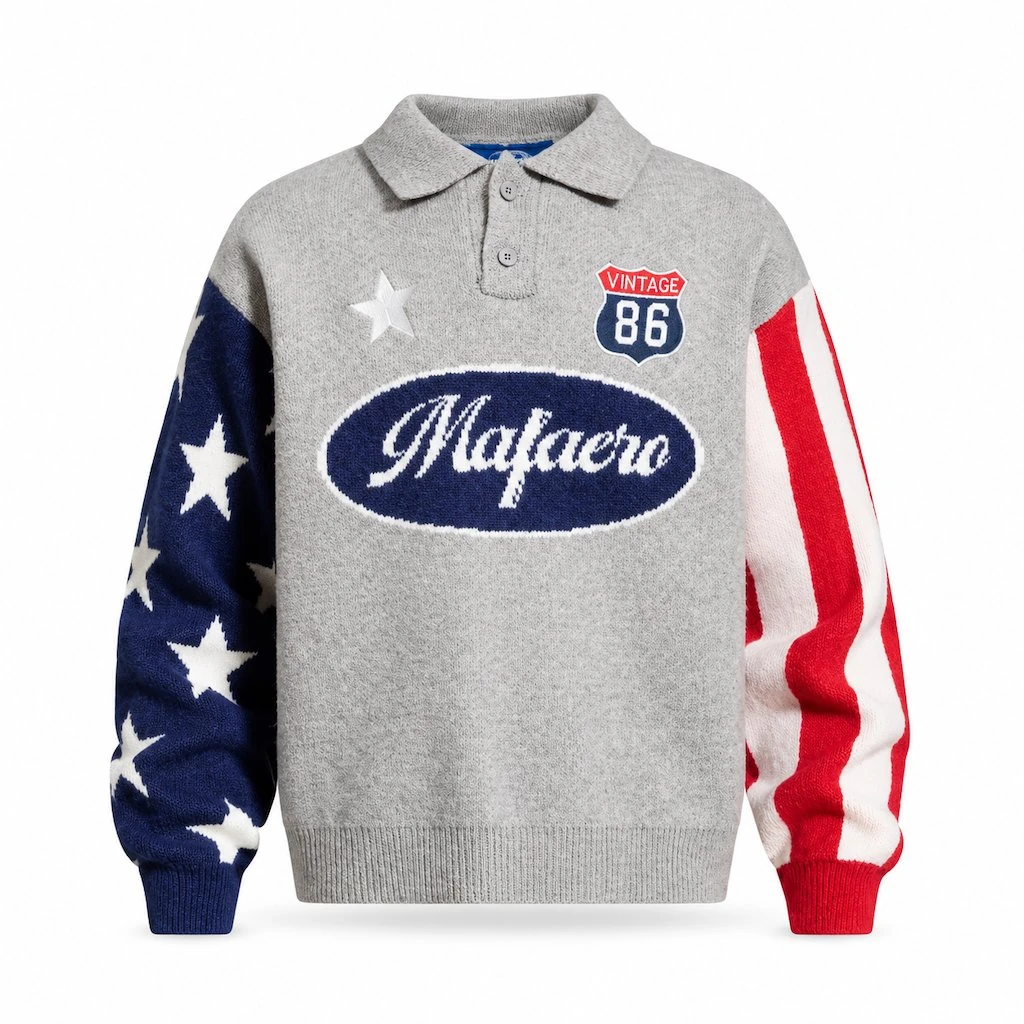
Custom Long-Sleeve Jacquard Polo Sweater
Four structures in one garment — solid heather body, two different sleeve jacquards, a chenille chest patch — every one of them re-programmed from your artwork.
Heavyweight Knitted Fleece Hoodie
Plush brushed fleece hoodie with reinforced double-layer hood and custom embroidery.
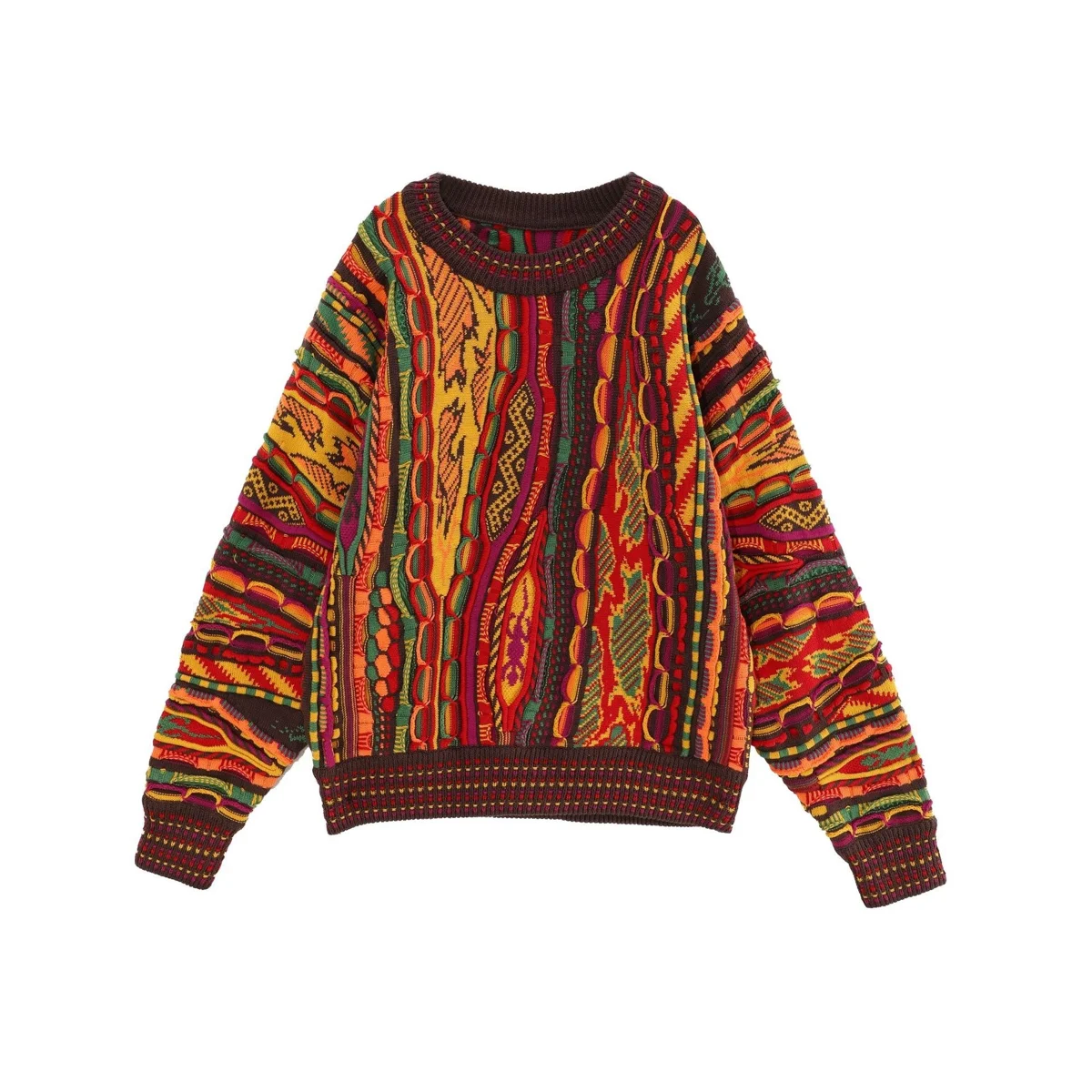
Custom Retro 3D Multi-Texture Knit Sweater
Jacquard, 3D relief and cable braid combined in one programme — the brief most factories decline to quote.
Techniques behind this product
Keep reading
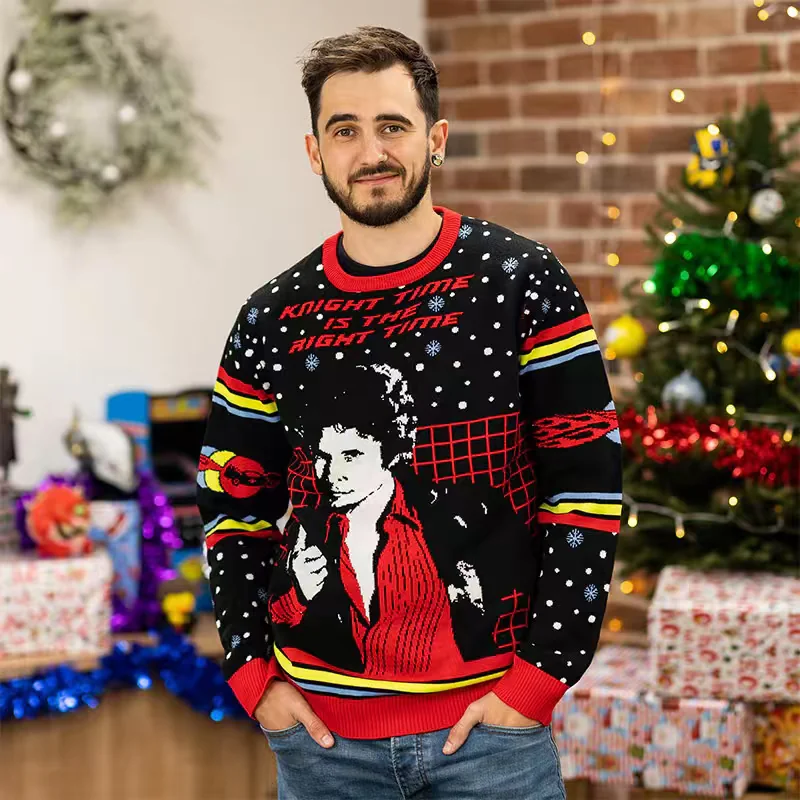
It's Time to Custom-Own Your Christmas Jumper
A short consumer-oriented overview of the custom Christmas jumper trend — design ideas, group-event tips, and the festive looks defining this year's holiday season.
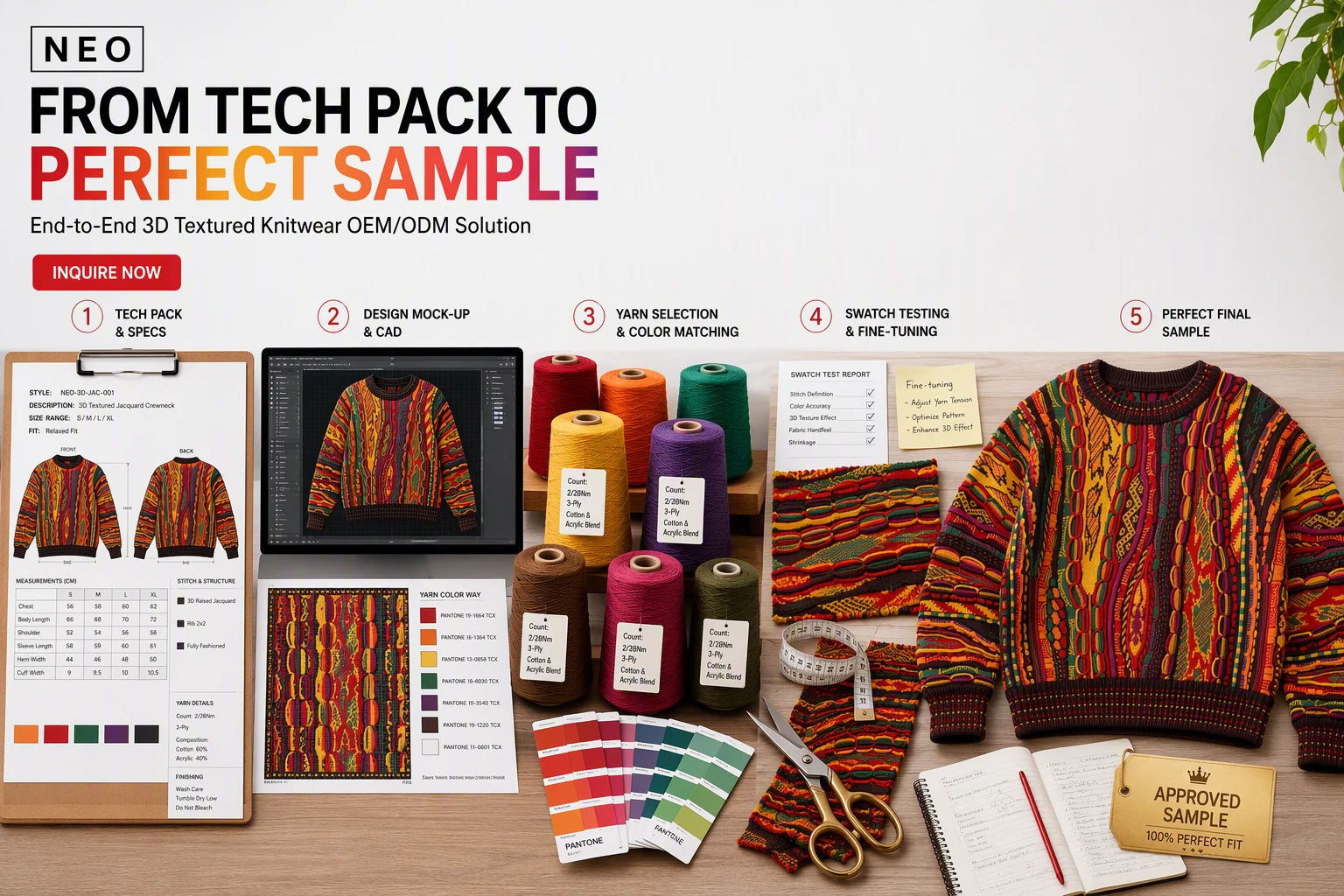
From Tech Pack to Perfect Sample: How Knitwear Sampling Actually Works
A floor-level walkthrough of the five stages between your tech pack and an approvable knit sample — mock-up and CAD programming, yarn colour matching, swatch testing, and the final PPS.
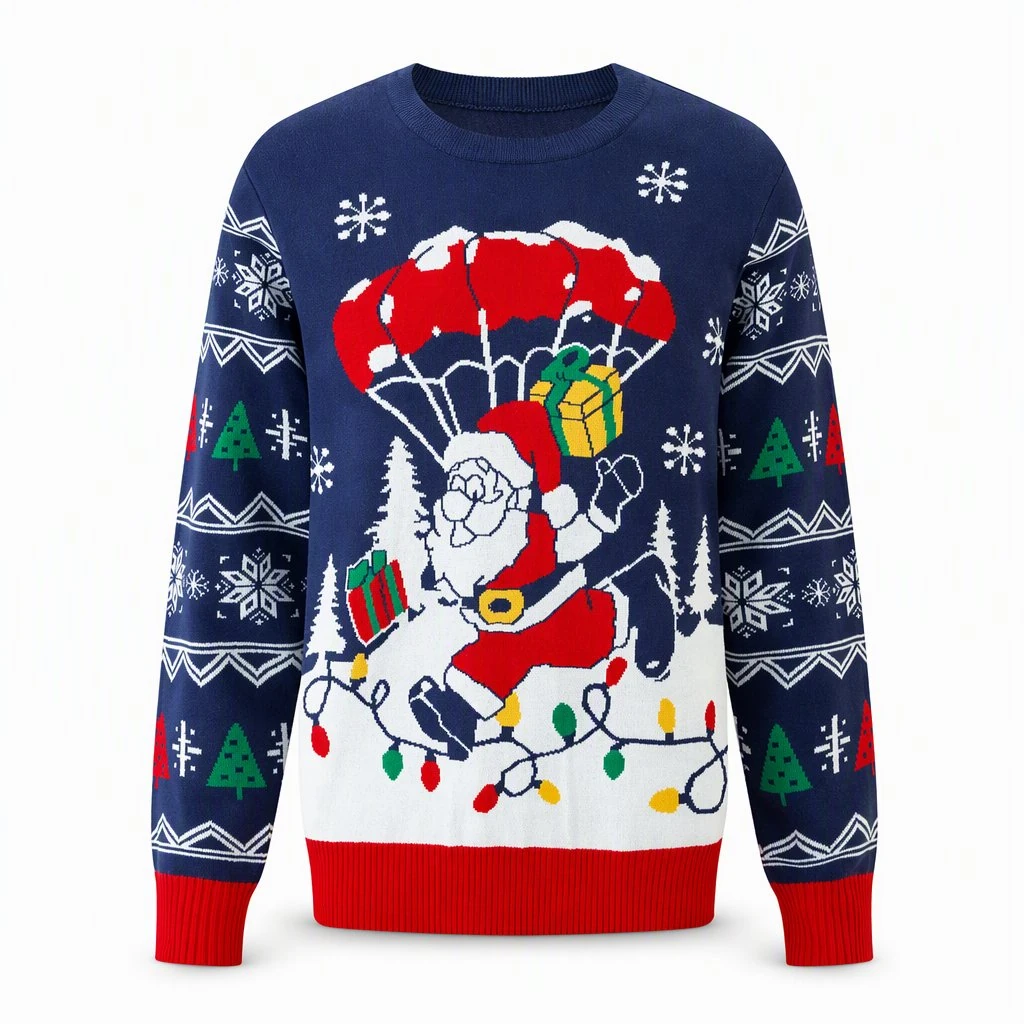
Sourcing Custom Men's Knitwear: What Separates a Knitwear Factory from a Sweater Mill
Mens knitwear briefs rarely fail on the design. They fail on gauge, size grading and reverse-side finishing — three things most price requests never ask about. Here is what to specify before you ask for a quote.
Send us the piece you were told was too hard.
Reference photo, rough sketch, or full tech pack — our Dalang technical punchers evaluate feasibility, machine gauge, yarn options, and pricing within 24 hours.