Custom Knitted Hot Water Bottle Cover
A wine sleeve holds a bottle by gravity. This one has to hold a kilo of boiling water when the customer picks it up by the fabric — so the rib neck, not the pattern, is the product.
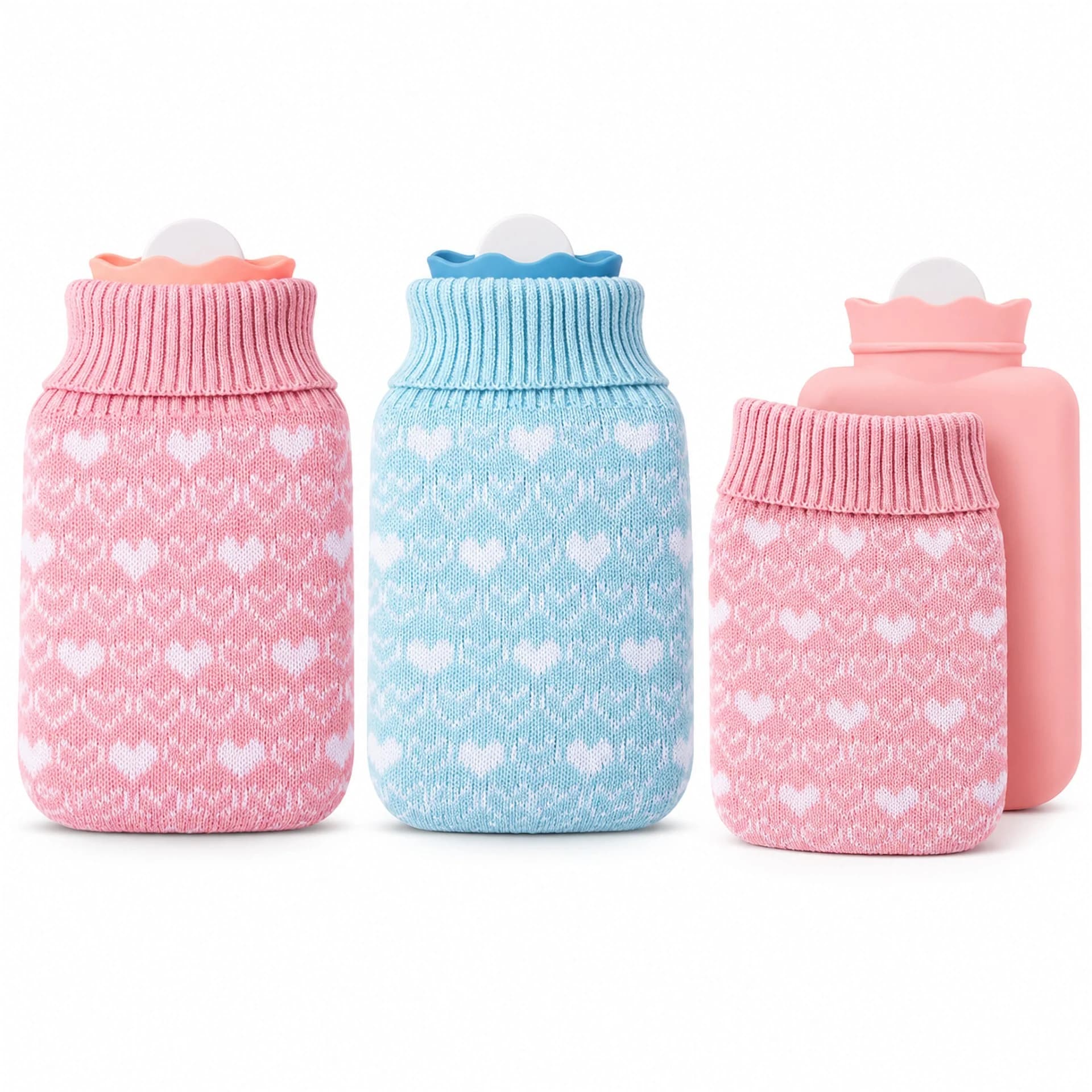
Everything about this piece is decided by one fact the wine sleeves in this range never face: the insert gets lifted, carried and slept against, and it weighs around a kilo when full. A knitted wine sleeve is a presentation garment — the glass holds itself in and the sleeve only has to look right. A hot water bottle cover has to retain. That work is done entirely by the ribbed neck, because it is the only part of the cover that grips anything: the body is a loose bag over a flat, pillow-shaped silicone or rubber bottle, and the moment the neck releases its grip the bottle slides down and out of the cover while it is full. It is worth saying plainly, because the trade sells this product on its pattern and its colour, and the failure that gets a product returned happens at the neck.
So the neck is specified, not styled. It is a high-elastic rib — 2x2 on the sample shown — knitted at a diameter smaller than the cap it has to pass, so that it opens over the cap and the shoulder and then closes down behind them. Two numbers matter and neither is the body size. The first is recovery rather than stretch: any rib opens wide enough once, and the question is what it measures after fifty cycles, so we cycle the neck on a mandrel and re-measure before the sample ships. The second is the height of the neck tube against the height of the cap. Too long and the knit buries the cap, so a customer holding a full bottle has to fish boiling water out from under a cuff; too short and the neck rolls down onto the shoulder and the grip is gone. The neck is also the one dimension that does not scale across S, M and L. Caps are the same across insert sizes, so the neck stays at one diameter while the body grades — grade the neck along with the body and the large size becomes the one that drops bottles.
The body is a double layer: two knitted panels joined at the sides and the base, which is what the anti-scald claim rests on, and it changes the making rather than just the weight. Two layers means four thicknesses of knit plus a seam at each bottom corner, and that corner is exactly where a filled bottle puts its weight, so the seam is overlocked and taped rather than run as a plain join. The inside layer is also the layer that faces 90 °C water, so every jacquard float on the reverse has to be short enough to stay put: a long float bridges the hot surface, snags on the cap threads and pulls the face out of shape as the yarn relaxes. We hold floats inside five needles on a two-colour ground and use a ladder or bird's-eye backing beyond that, which is why the heart repeat on the sample is evenly spaced instead of drawn freehand. The polka-dot colourway in the gallery is the same body and the same two-colour jacquard with a single separation change, so it ran without a new programme — the dots simply invert between ground and figure across blue, pink and cream grounds. That is the cheapest way for a buyer to run a two-pattern range: one block, one gauge, one carton specification, two separations.
One material fact is rarely volunteered: acrylic's glass transition sits within about ten degrees of boiling water. Fill the same cover from a kettle every night and the knit gradually relaxes — it does not shrink, it grows, and a cover that was snug in October is loose by February. That is not a knitting fault and it cannot be programmed away; it is a yarn decision. Acrylic is what makes this item soft and cheap, a cotton-rich blend holds its dimensions far better across a season, and wool only makes sense when the programme is positioned on warmth rather than price. Colour carries the same honesty: a white motif on a pink ground is the least forgiving combination in the range, so anti-pilling and colourfastness-to-water are set before a colourway is approved, not after the first container. On compliance, be careful what you print. BS 1970, the old British standard for rubber and PVC hot water bottles, has been withdrawn and not replaced, and it never covered the knit cover anyway; Australia's mandatory standard still names BS 1970:2006 as its benchmark for the bottle itself. The cover is a comfort layer and a retention device. If you want to market it as anti-scald, that is a surface-temperature claim on the bottle and cover together, and it has to be measured on the assembly — tell us the words you intend to print and we will tell you what has to be tested before they go on the bag.
Packing runs as a retail unit: the cover in a frosted zip bag with a printed belly band or a kraft hangtag, barcode on the bag, and export cartons sized to the finished weight rather than to a nominal count. The branding in our photographs is a mock-up placeholder — the woven label, the bag print and the hangtag are your artwork, and we either knit your mark into the jacquard or sew in your own woven label.
Technical Specifications
| MOQ | 300 pcs / design |
| Sampling | 72 hours |
| Production | 2-3 weeks |
| Gauge | 12GG on the sample shown; 7GG for a chunkier hand |
| Yarn | 100% acrylic knit as stated on the technical sheet; cotton-rich and wool-blend options on request |
| Weight | Approx. 80 g / pc at 21.5 × 13.5 cm — the figure the export carton count is built from |
| Sizes | 500 ml / 1,000 ml / 2,000 ml inserts; the 2 L standard measures 21.5 × 13.5 cm (8.46 × 5.31 in), and the neck stays at one diameter across all three because caps do not grow with the insert |
| Thermal | Thickened double-layer body over a single rib neck — a comfort and slow-release layer, not a certified scald barrier |
| Colours | Six stock shades (Blush Pink, Sky Blue, Lavender Purple, Mint Green, Cream White, Charcoal) plus Pantone match; the polka-dot colourways invert ground and dot across blue, pink and cream |
| Care | Hand wash recommended; 30 °C gentle cycle in a laundry bag at most, no tumble dry |
| Packing | Frosted zip bag, kraft hangtag, barcode, export master carton |
Why Brands Order This Silhouette From Us
- The rib neck is the retention device, cycled on a mandrel and re-measured before the sample ships — it is the part that lets a full bottle drop
- Neck diameter stays constant across S, M and L; only the body grades, because the cap does not grow with the insert
- Double-layer body with overlocked and taped base corners — that corner carries a full bottle's weight
- Inside-face floats held within five needles, so nothing bridges the 90 °C surface or snags the cap threads
- Neck tube cut to the cap height, so a full bottle can be unscrewed without digging the knit out of the way
- Removable cover; hand wash recommended, 30 °C gentle cycle in a laundry bag at most — the rib recovers, which is the entire reason for a rib
- Six stock shades plus Pantone matching; hearts, polka dots, stars or knitted text on one two-colour jacquard — the polka-dot versions are a separation change, not a new programme
- Packed as a retail unit — frosted zip bag, hangtag, barcode, export carton sized to the 80 g finished weight
- Real-time ERP portal tracking: live PPS, bulk knitting, and QC inspection photos
- Custom brand packaging: woven neck labels, care tags, and biodegradable bags
Frequently Asked Questions About Custom Knitted Hot Water Bottle Cover
Related Knitwear Silhouettes
Same category or produced in matching craft techniques
Custom Knitted Wine Bottle Sweater with Sleeves
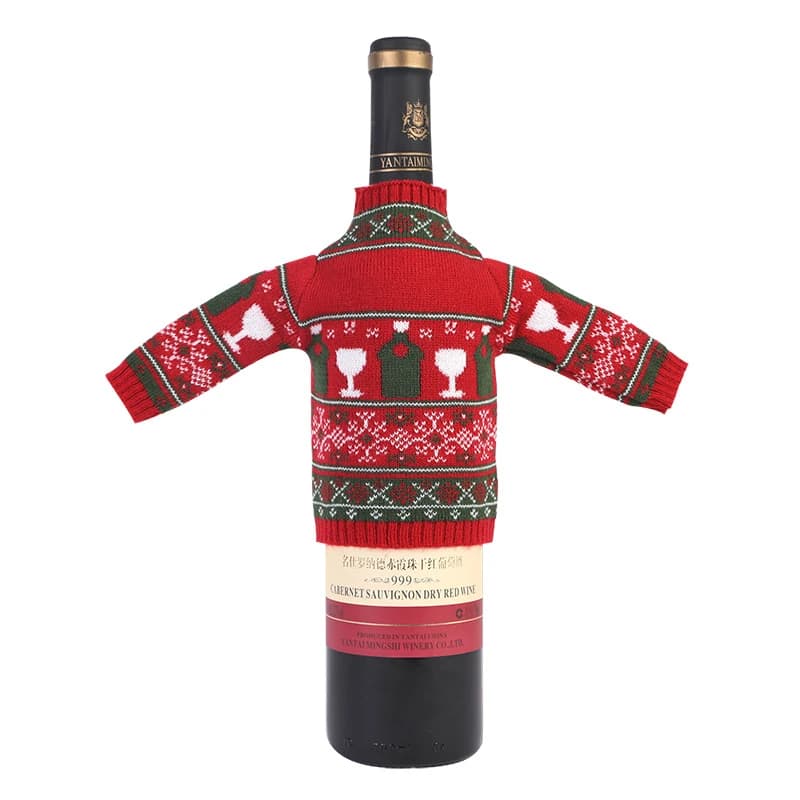
A bottle cover shaped like an actual jumper — two empty sleeves, a cone-fitted shoulder yoke and jacquard bands that run unbroken from body to cuff.
Custom Knitted Wine Bottle Hat & Scarf Set
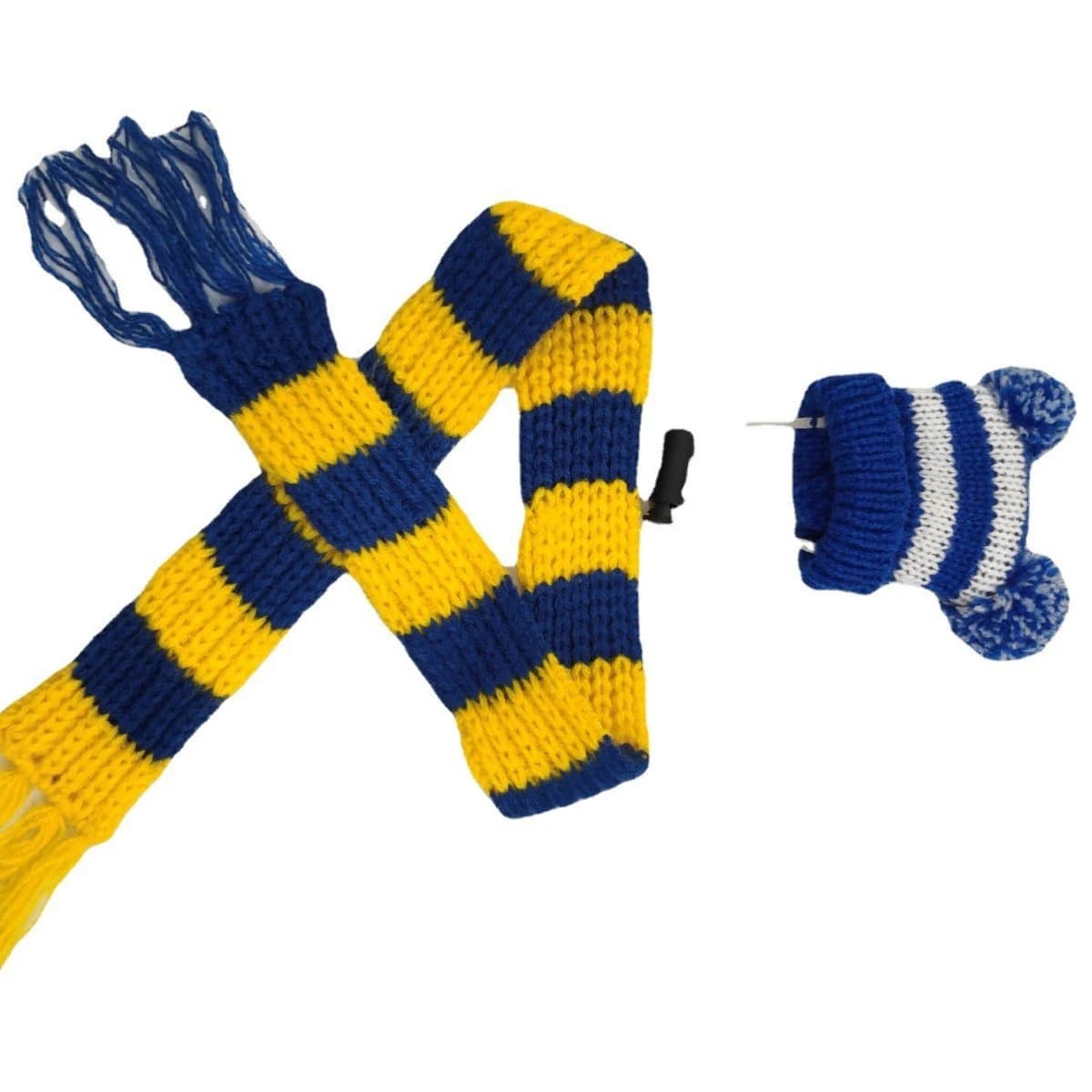
A tiny beanie on the neck and a fringed scarf down the shoulder — the only bottle dressing in our range that leaves the label completely uncovered.
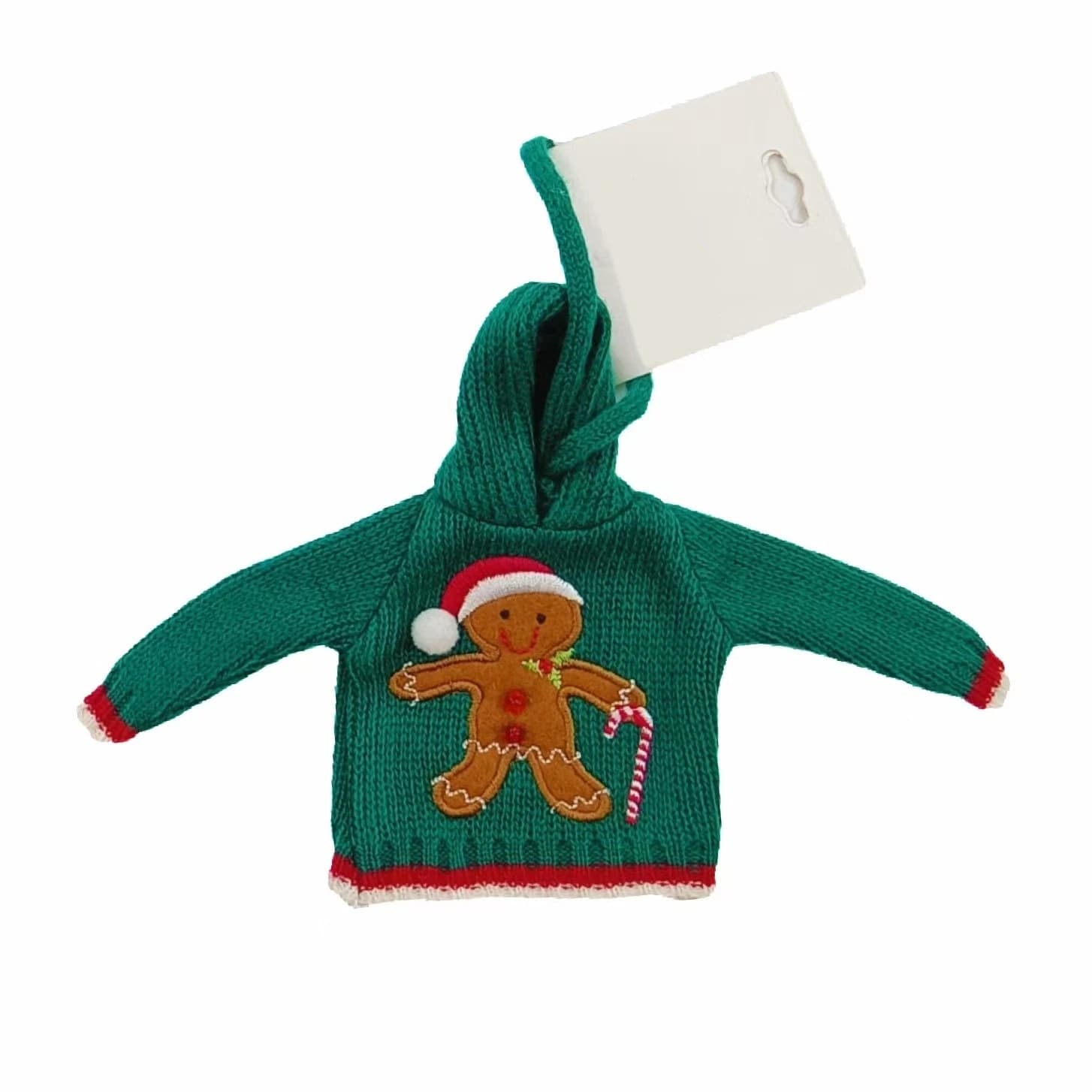
Custom Knitted Mini Sweater Ornament & Gift Tag
Palm-sized knitted sweaters that make a bottle, a hamper or a tree read as branded.
Read this before you brief this style
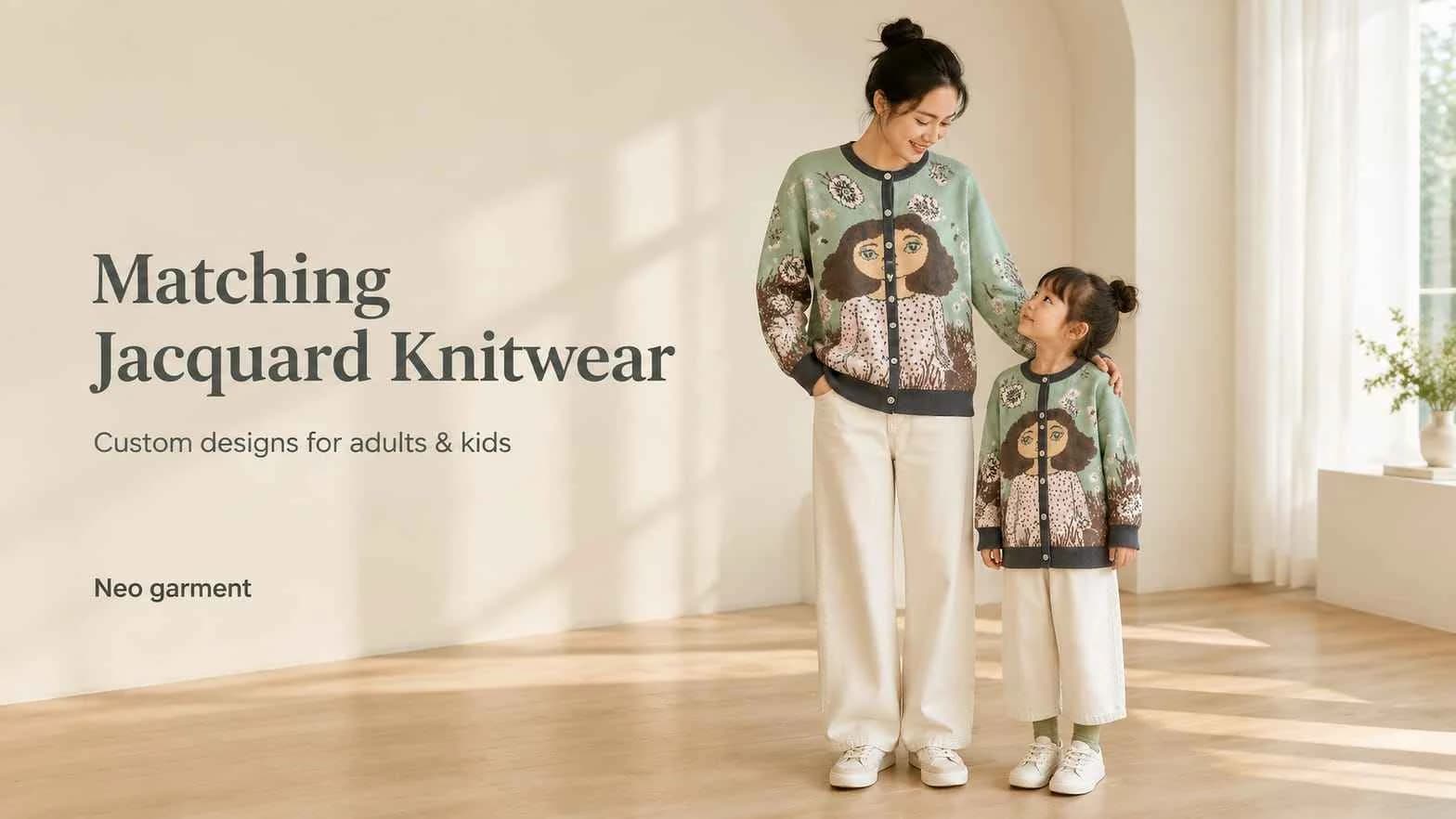
Matching Kids and Adult Knitwear: The Scale Decision
Two garments that have to read as one design across a 1.4x difference in stitch resolution. The motif-scale decision that sets chart count, gauge, colour lots and the minimum — and the five checks worth writing into a spec.
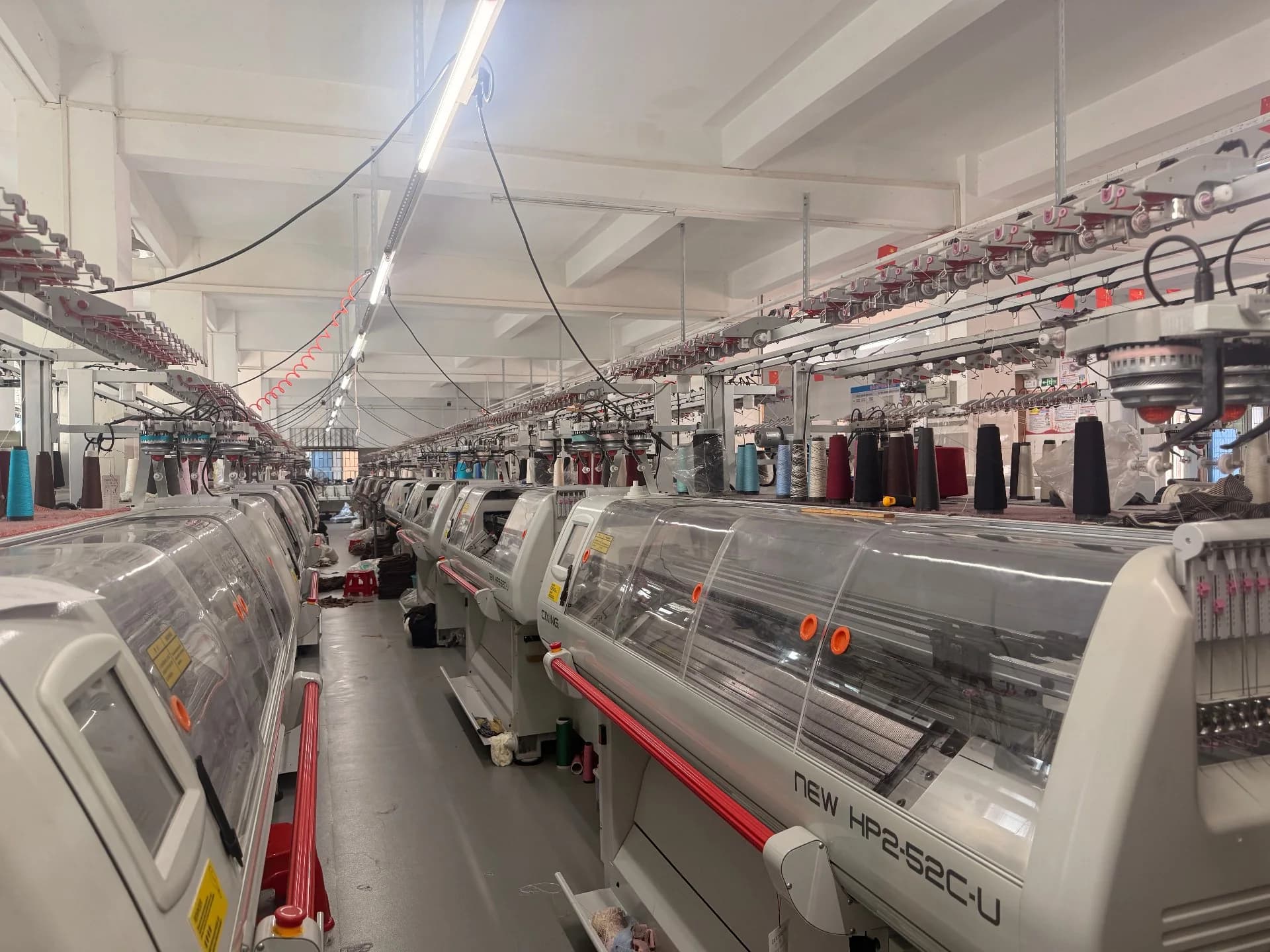
What a Flat Knitting Line Actually Produces in a Day
Machine count is not output. A look inside a working flat-bed line — what those trays actually hold, why one sweater is five to seven pieces, and how to turn a capacity claim into a number you can plan around.
Request a Custom Quote for Custom Knitted Hot Water Bottle Cover
Tell us your target quantity and custom requirements. Direct factory pricing within 24 hours.
Send us the piece you were told was too hard.
Reference photo, rough sketch, or full tech pack — our Dalang technical punchers evaluate feasibility, machine gauge, yarn options, and pricing within 24 hours.