
What a Knitwear Tech Pack Needs That a Woven Pack Does Not
A woven tech pack describes a shape to be cut from fabric. A knitwear pack has to describe the fabric itself, which means gauge, course counts, shaping and what happens to the garment after washing.
For product developers and buyers writing or reviewing a knitwear specification. If you already have a pack and want it checked before sampling, send it over — reading it takes less time than a sample round.
Most tech packs are written by people who learned on woven garments, and it shows. A woven pack is essentially a description of a shape: cut this panel, sew it here, use this fabric. It works because the fabric is a purchased input that already exists.
In knitwear the fabric does not exist until the machine makes it. Gauge, stitch structure, course count and yarn all create the material at the same time as they create the garment. A pack that specifies a silhouette and a size chart but leaves those four open is not a specification, it is a wish, and the sample that comes back will be one of several possible garments.
The Nine Items a Knitwear Pack Should Contain
- A flat sketch per colourway. Not a rendered illustration — a flat, with seam and trim positions marked. A photo of a similar garment works as a supplement, never as the drawing.
- A measurement chart with post-wash figures. This is the point packs most often get wrong; see below.
- Gauge, stated as a number. Three, five, seven, twelve, fourteen. If you do not know, state the reference garment's hand-feel and let the factory propose one.
- Stitch structures by panel. Plain body, ribbed hem, cable panel on the centre front, jacquard band across the chest. Each panel is a separate instruction.
- Pantone references for every colour, including trims, and a note on which are critical.
- Artwork files at a resolution that can survive knitting, with the pattern repeat stated explicitly.
- Seam and finish specification. Fully fashioned linked seams versus cut-and-sew changes both the look and the cost.
- Trims and branding: main label, care label, hangtag, buttons, zip, any woven tape. Include artwork and placement.
- Packing and destination. Polybag or not, fold method, carton marks, and the destination country for duty and labelling requirements.
Post-Wash Measurements, Not Flat Measurements
A knitted garment changes dimensions when it is washed and blocked. That is not a defect — it is how the final size is set. If your size chart describes the garment as it comes off the machine, the finished product will not match it, and the argument will happen at the wrong end of the process.
Specify the measurements you want after washing, and state the tolerance you will accept on each. State it per measurement, not as a single blanket figure, because body length and chest width do not behave the same way. Length is the one that costs money: a jumper that finishes two centimetres short is a nuisance, a pair of knit trousers that finishes two centimetres short is unsellable.
The Arithmetic Nobody Puts in the Pack
Two numbers have to agree before a jacquard or cable design can be knitted, and neither usually appears in the tech pack: the pattern repeat and the total stitch count of the panel it sits on.
On a sweater body there is some slack, because the repeat can be absorbed at the side seams or the panel can be widened slightly. On a sleeve or a beanie the count is much tighter, and on a beanie it is effectively fixed by the circumference the hat has to fit. A repeat that does not divide into the total leaves a visible break where the pattern fails to close.
If your artwork has a repeat, write it down as a number of stitches and rows. It saves a round of questions and, on hats and socks, it often saves a redraw.
What the Reverse Side Is Allowed to Look Like
This is a knitting-only question that almost no pack answers, and it decides the method. A jacquard carries floats across the back. On a closed crew neck nobody sees them; on an open cardigan, a scarf, or a garment likely to be worn loose and inside out, they are visible and they snag.
Write one line into the pack: reverse side visible or not. If it is visible, the choice narrows to intarsia, a bound float structure, or a double-layer construction, and the cost changes accordingly.
Grading Notes for Knitwear
Grading a knit is not scaling a cut pattern. Stitch counts have to land on whole needles, and shaping happens by transferring stitches rather than by trimming seam allowance. Two practical consequences for the pack:
- Give the grade rule per measurement, or give a full chart per size. A single sample size plus a percentage instruction is not enough — the percentage will not divide cleanly into needles.
- Decide early whether the design keeps the same motif scale across sizes or scales with the body. Both are legitimate. A chest motif that stays the same size on a size XL looks proportionally smaller, which is sometimes intentional and sometimes not.
The Three Things Most Often Missing
Across the packs we receive, the same three gaps recur, and each one costs about a round of sampling:
- No post-wash measurement chart, so fit is judged against a number that will not survive the first wash.
- No repeat arithmetic, so artwork is approved at a scale the machine cannot knit cleanly on the target panel.
- No reverse-side requirement, so a jacquard is specified for a garment that will show its floats.
Frequently Asked
Can you work without a tech pack?
Yes, from a reference garment plus a photo. It is common and it works, but expect one clarification round on measurements, because a garment in hand gives us construction and hand-feel but not the fit you want for the full size range.
Can a rendered mock-up be used as the specification?
As a design reference, yes. As a specification, no. A render shows appearance; it does not carry gauge, course counts, stitch structure or shrinkage behaviour. The render is what the garment should look like, the pack is what it should be.
Who should write the tech pack?
Whoever owns the fit and the commercial intent — usually the brand's product developer. A factory can complete the technical sections, and often does, but the tolerances and the target customer experience have to come from the brand. If we write the whole thing, we are guessing at what you are willing to accept.
If you have a pack and want to know whether it will survive a sample round, send it before the artwork is finalised. Reading it takes an hour; discovering the gap takes three weeks.
Looking to manufacture Christmas jumpers at scale?
Skip the print-on-demand platforms. Send us your design brief and we'll quote a direct-factory run with low MOQs, 72h sampling, and DDP worldwide delivery.
Knitwear you can manufacture right now
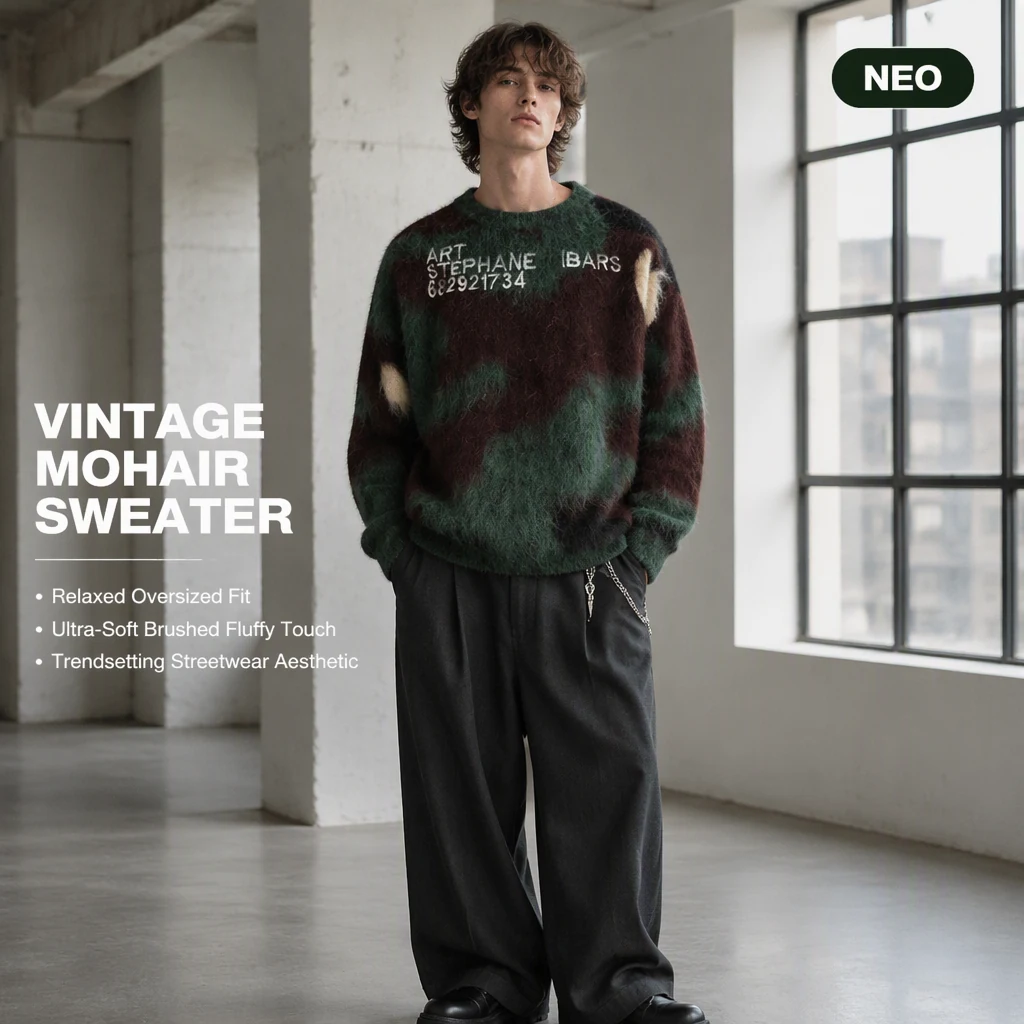
Custom Vintage Mohair Jacquard Sweater with Embroidery
Brushed fluffy mohair in an oversized silhouette — multi-colour jacquard camo ground with high-density 3D embroidered lettering.
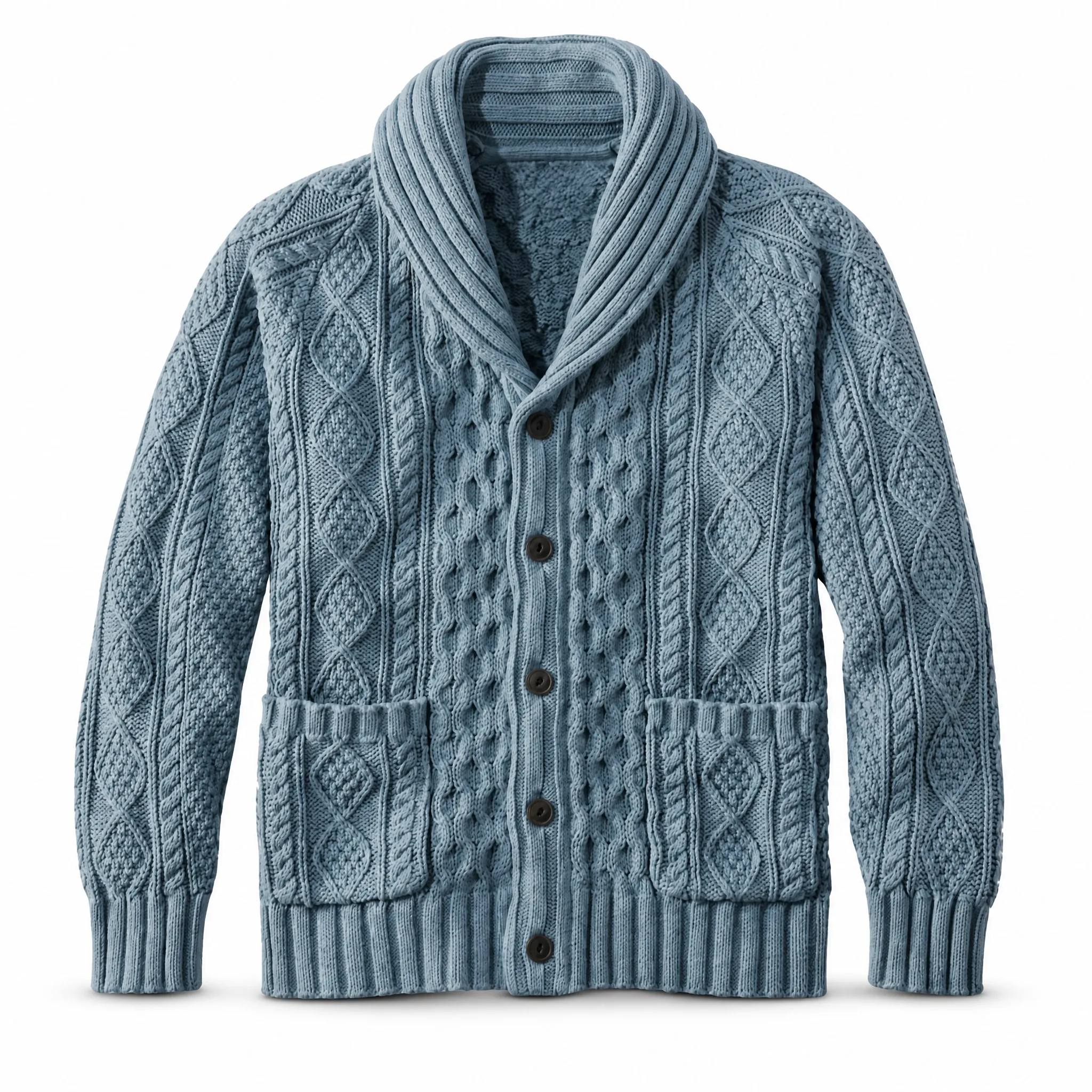
Custom Shawl Collar Cable Knit Cardigan
Chunky cable-and-diamond cardigan with a fully fashioned shawl collar — knitted as structure, never cut and sewn.
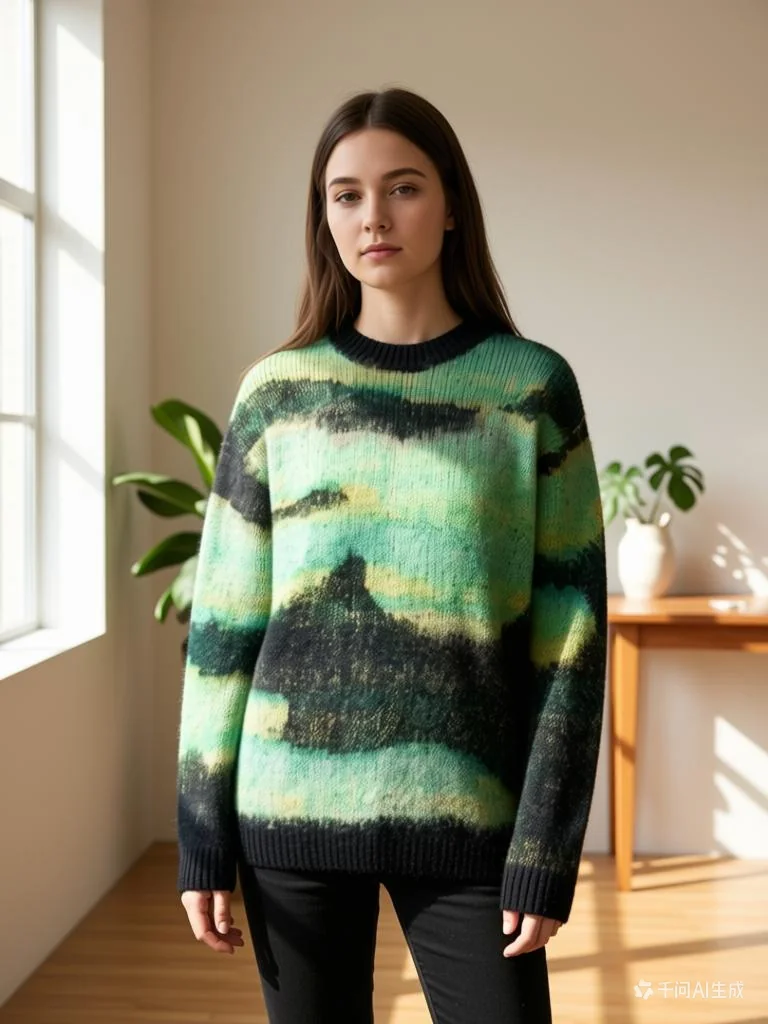
Custom Jacquard & Ribbed Knit Beanie
Your logo knitted directly into the fabric with optional pom-poms or leather patches.
Techniques behind this product
Keep reading
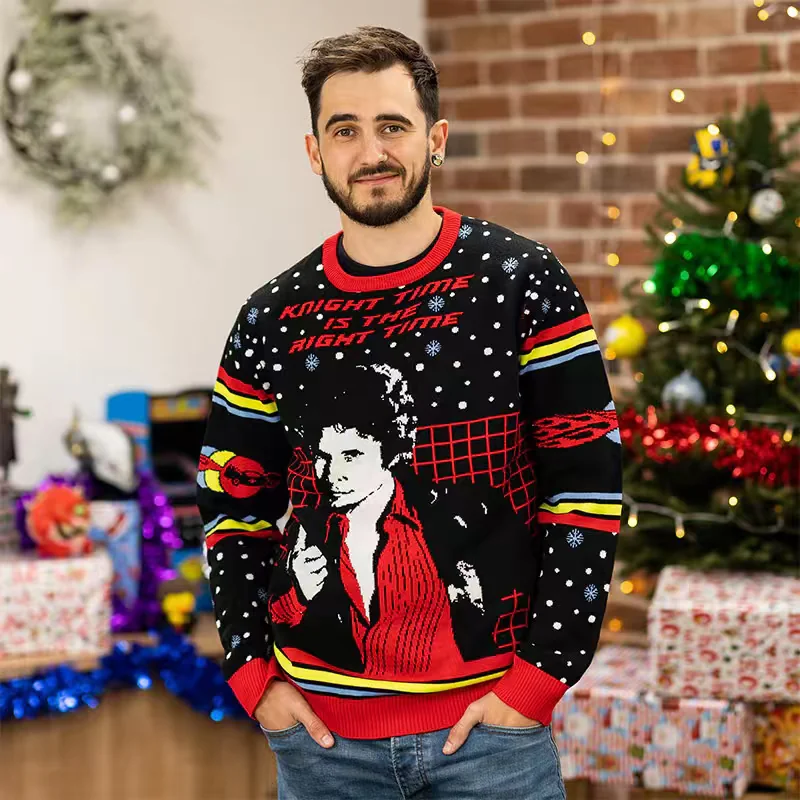
It's Time to Custom-Own Your Christmas Jumper
A short consumer-oriented overview of the custom Christmas jumper trend — design ideas, group-event tips, and the festive looks defining this year's holiday season.
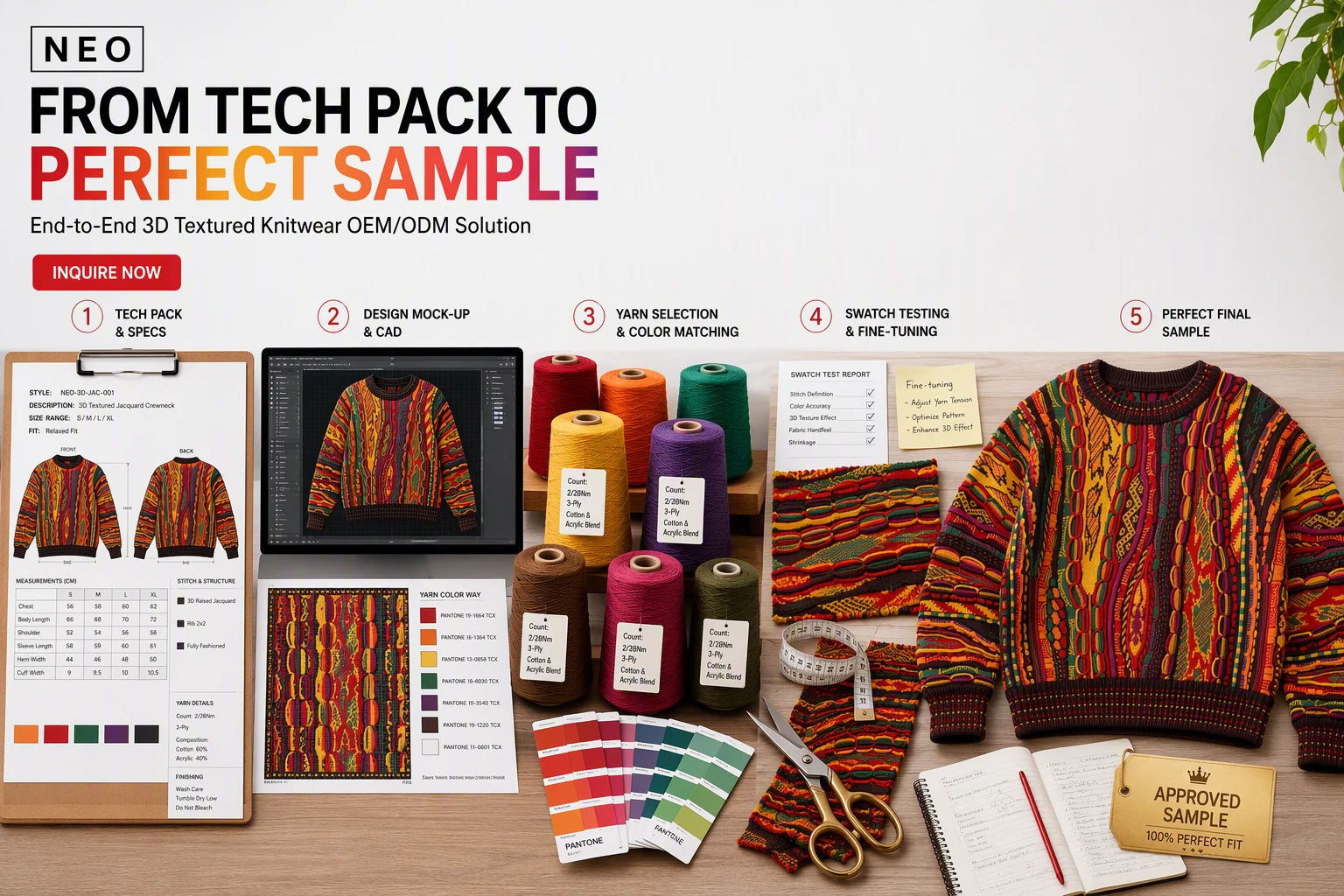
From Tech Pack to Perfect Sample: How Knitwear Sampling Actually Works
A floor-level walkthrough of the five stages between your tech pack and an approvable knit sample — mock-up and CAD programming, yarn colour matching, swatch testing, and the final PPS.
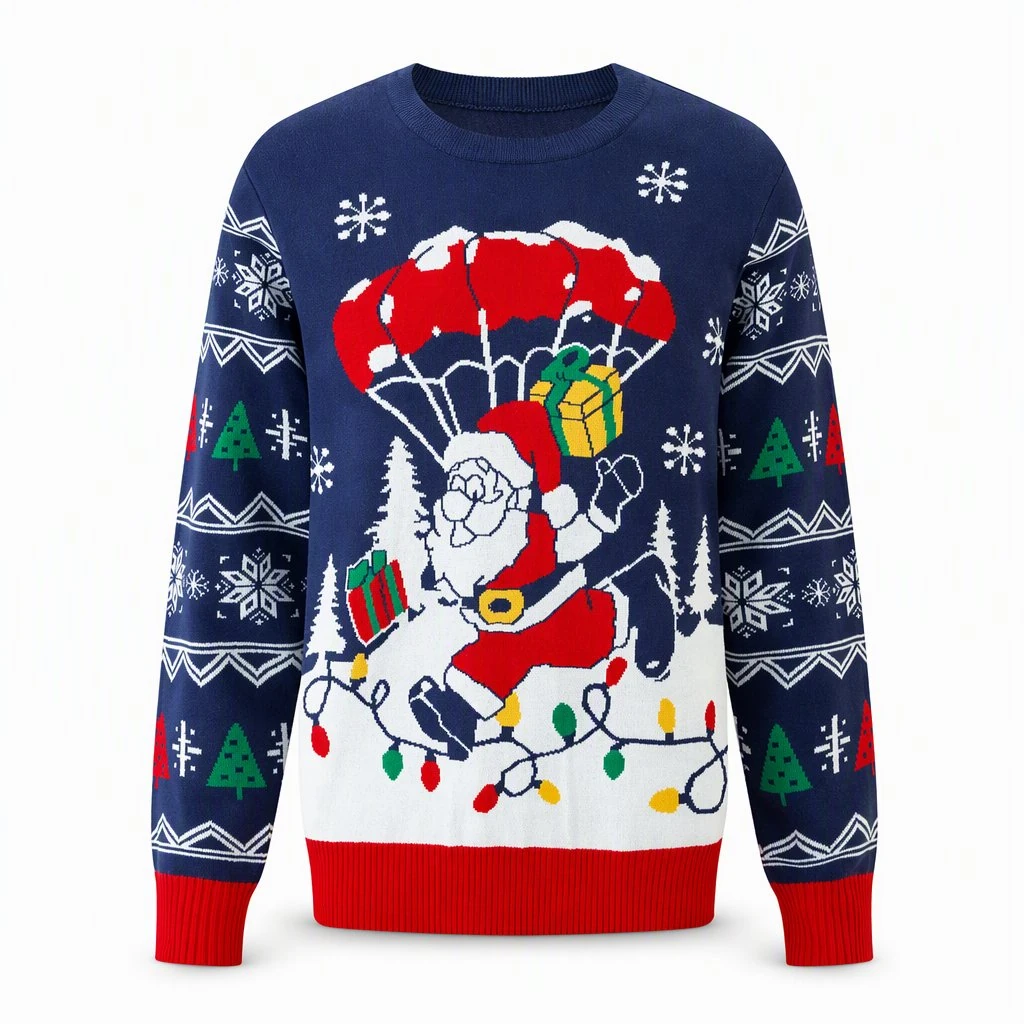
Sourcing Custom Men's Knitwear: What Separates a Knitwear Factory from a Sweater Mill
Mens knitwear briefs rarely fail on the design. They fail on gauge, size grading and reverse-side finishing — three things most price requests never ask about. Here is what to specify before you ask for a quote.
Send us the piece you were told was too hard.
Reference photo, rough sketch, or full tech pack — our Dalang technical punchers evaluate feasibility, machine gauge, yarn options, and pricing within 24 hours.