
Knitwear Lead Time: Where Three Weeks Goes, and What Makes It Six
Production takes two to three weeks after the pre-production sample is approved. Everything a buyer experiences as a delay happens in the five stages before that clock starts — and in three predictable places after it.
For buyers planning a production calendar. This article is about the timeline from brief to delivered carton, not about shipping transit times, which depend entirely on destination and mode.
Every factory quotes the same sentence in a slightly different way: two to three weeks for bulk production. Buyers hear three weeks and put it in a calendar against their launch date. Then something happens, and the order lands five or six weeks later, and the conversation turns into a dispute about whose timeline was wrong.
The misunderstanding is almost always about where the clock starts. Two to three weeks is measured from pre-production sample approval, not from the purchase order. Between the PO and the PPS sit five stages that can each absorb a week, and most of them are decided by how complete the brief was on day one.
The Five Stages Before the Clock Starts
- Spec clarification. Flat sketches, measurements, colour references and construction notes are read and questions are raised. A complete tech pack closes this in a day or two; a single sketch with no gauge can loop for a week.
- Programming. The design becomes a machine file. Reusing an existing programme structure is fast; building a new jacquard band or relief sequence from zero is not, because it has to be proved on a swatch before it is trusted.
- Yarn sourcing. Stock colours are a phone call. A new Pantone on a specific fibre means a dye batch, and a dye batch has its own queue.
- Sampling. Three days once yarn is in hand, assuming the programme is sound. The first sample is also where fit problems surface, and a fit correction means a second round.
- PPS approval. The sample goes to the buyer, measurements are checked, comments come back. Every day this sits in an inbox is a day the production calendar does not move.
For a straightforward style with a complete brief and stock yarn, all five together can be under two weeks. For a new multi-colour jacquard with a newly dyed palette and a buyer who needs two fit rounds, the same five stages take five weeks before knitting a single bulk piece.
The Three Variables That Actually Move the Date
Within bulk production itself, three things dominate. Everything else is noise:
- Yarn availability, above all. This is the single largest lever and the one buyers most often treat as a formality. A stock shade can start on Monday. A dyed-to-match shade has to be dyed, and no amount of pressure on the knitting floor changes that.
- Programme reuse. A silhouette that already exists in the programme library starts production with no development risk. A new structure spends its first days proving itself, and a failed swatch costs a day each time.
- Manual finishing volume. Linking, hand-sewn trims, pom-poms, embroidery and intarsia panelling are per-piece labour. Their capacity is people, not machines, so a run of a thousand pieces with heavy handwork queues behind every other order using the same hands.
Why Adding 500 Pieces Sometimes Costs No Time
Buyers are often surprised that a quantity increase is accepted without a date change, while a colour addition pushes the delivery back a week. The logic is the same as the MOQ logic, seen from the other side. Once a machine is set up and running, extra pieces are just more run time. A thousand pieces on a plain body does not take twice as long as five hundred, because setup is a fixed block.
A new colourway, by contrast, is a new setup: threading, tensioning, a swatch to confirm density, then a partial run to check shade continuity against the approved sample. That is a genuine stop on the machine, and stops are what schedules are made of.
Why Washing and Blocking Is on the Critical Path
Knitted garments do not come off the machine at their final size. They are washed and blocked to relax the structure and set the finished measurements, and that process is what makes the size chart reproducible. It is also a queue: a shared finishing house batches work, and a batch that misses today's load waits for tomorrow's.
Keeping washing and blocking in-house removes that queue from the critical path. It is one of the less visible reasons a factory can hold a two-to-three-week promise that a trading company quoting the same numbers cannot — the trading company is waiting on somebody else's batch schedule and finding out about it at the same time you are.
Seasonal Capacity Is Not a Myth
Autumn is the bottleneck of the knitwear year. Holiday programmes, winter drops and gifting orders all converge on the same weeks, and machine time is finite. The same order that takes three weeks in June can take five in October, not because anything went wrong, but because it is queued behind everything else.
If your product is Christmas-timed, the date that matters is not the delivery date, it is the date your artwork and yarn choice are locked. Orders confirmed late in the season are the ones that compress sampling and end up approving a PPS nobody is happy with.
How to Compress the Timeline Without Rushing the Factory
- Send a complete brief on day one: flat or reference garment, size chart, Pantone references, target gauge, trims list, packaging, destination country.
- Decide colour early, and ask whether an existing shade is close enough. A near-match on stock yarn can save the entire dyeing queue.
- Approve or reject the sample within days, not weeks. This is the stage where buyers most often lose time they then ask the factory to recover.
- Split the delivery rather than compressing it. Shipping the first colourway early and the rest later is usually more useful than asking for everything sooner.
- Check the calendar before the design, not after. If the launch is in November, the design needs to be locked in September.
Frequently Asked
What is the fastest you can produce an order?
For an existing structure, a stock yarn and an approved colourway, production can start almost immediately after PPS sign-off, and bulk runs in two weeks. That combination is rarer than buyers expect. When any one of the three is missing, the honest answer is three weeks or more.
When should a Christmas order be placed?
Work backwards from your on-shelf date, not the holiday itself. Retail needs stock weeks before December, which means goods in transit weeks before that, which means production finished before that. Late-summer confirmation is normal for holiday knitwear; orders confirmed in October are competing with everyone else's holiday programme for the same machines.
Can an order be expedited?
Not by jumping the queue, but often by splitting it. Starting one colourway on the machines while a second colourway's yarn is still in dyeing gets the first shipment out weeks earlier. What we will not do is promise a date that depends on another customer's order finishing early.
If you are building a calendar, send the launch date and the design together. Working backwards from a fixed date is a much more useful conversation than asking for a generic lead time and hoping it holds.
Looking to manufacture Christmas jumpers at scale?
Skip the print-on-demand platforms. Send us your design brief and we'll quote a direct-factory run with low MOQs, 72h sampling, and DDP worldwide delivery.
Knitwear you can manufacture right now
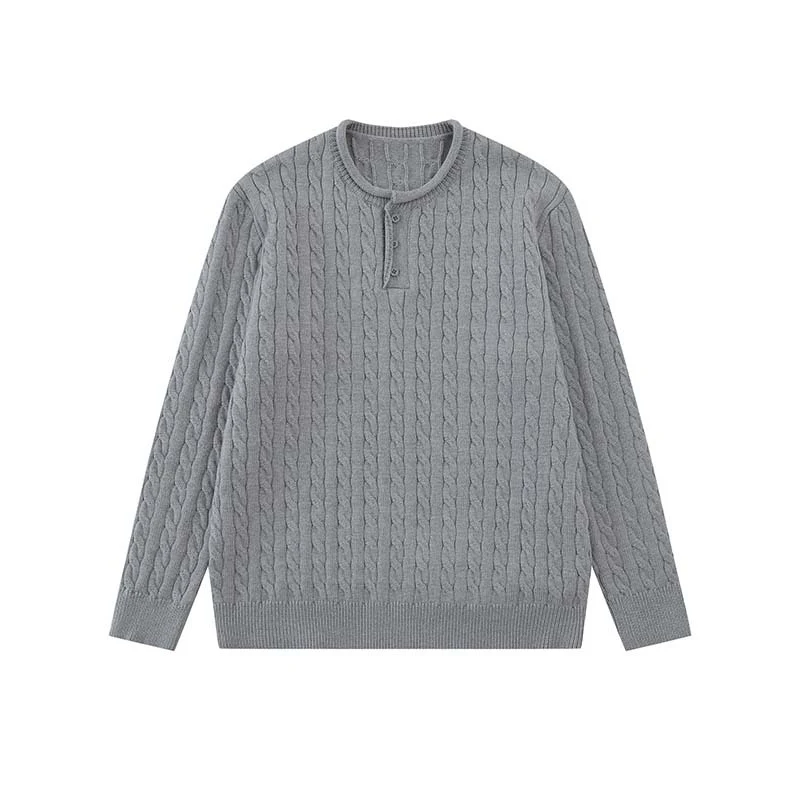
Custom Cable Knit Henley Sweater
Grandad-collar cable sweater with a three-button placket — the easiest cable silhouette to put your brand on.
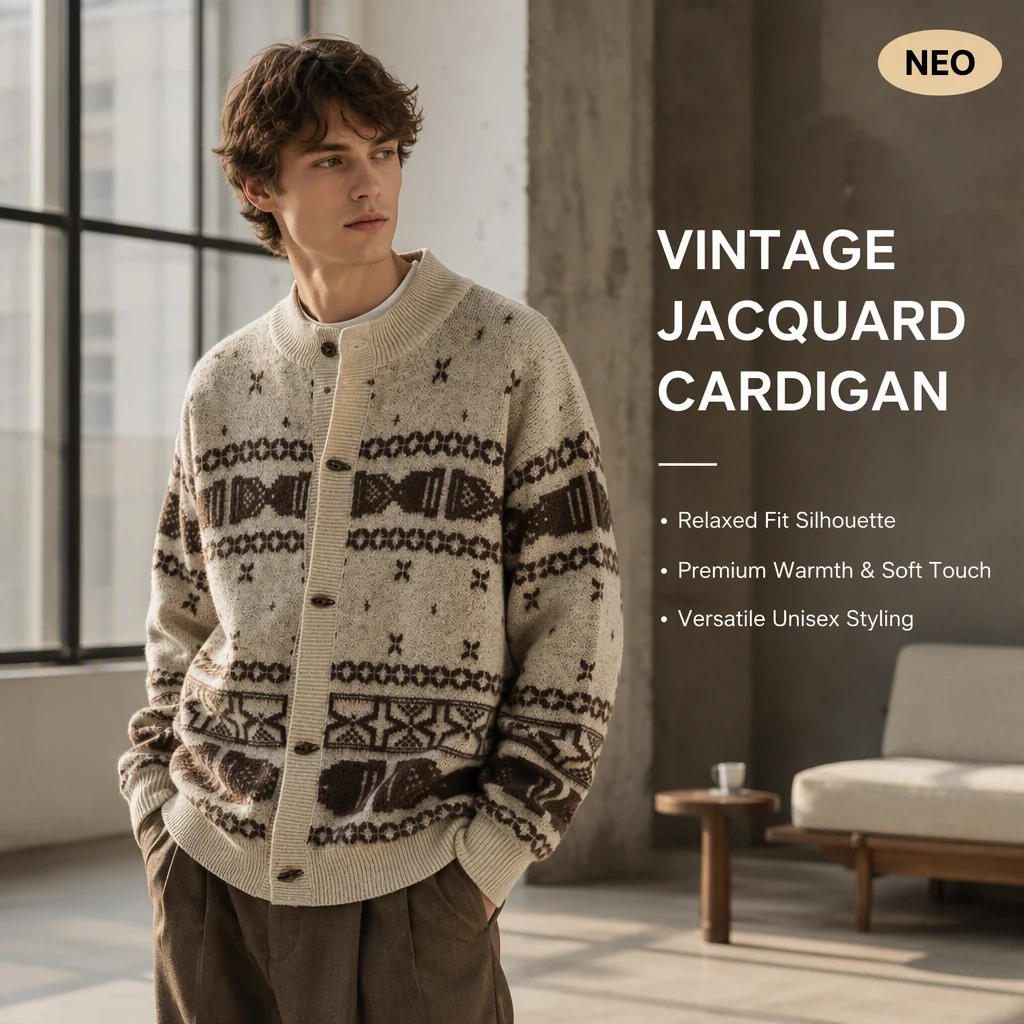
Custom Unisex Fair Isle Jacquard Knit Cardigan
Unisex banded Fair Isle cardigan knitted as true jacquard structure — relaxed fit, Pantone-matched colourways, private label ready.

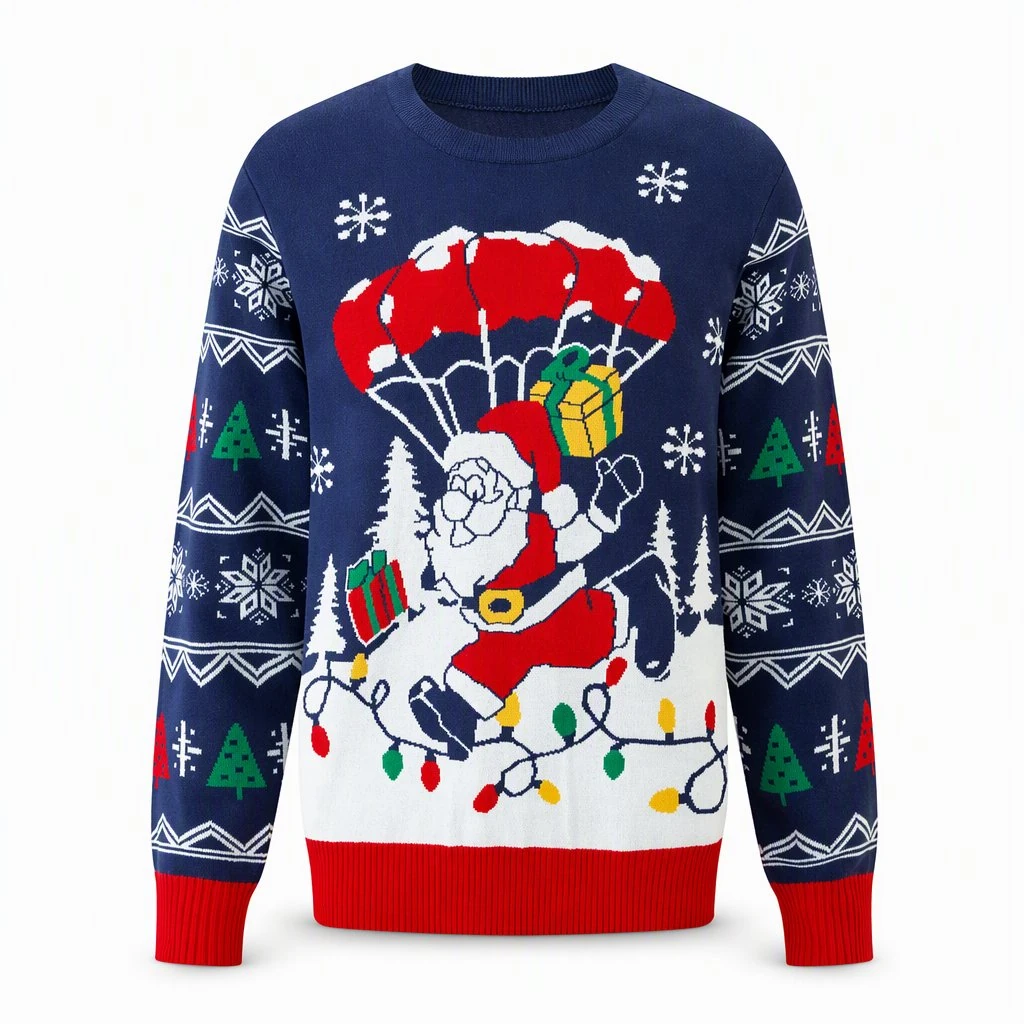
Ugly Christmas Holiday Jacquard Sweater
Vibrant festive holiday knitwear with high-density jacquard graphics.
Techniques behind this product
Multi-Colour Jacquard
CoreUp to 13 colours in one piece — standard mills stop at 4 to 6.
Rib Knit
Elastic ribbed construction with superior stretch recovery.
High-Density Embroidery
CoreDense 3D embroidery engineered not to pucker on stretch knits.
Keep reading
It's Time to Custom-Own Your Christmas Jumper
A short consumer-oriented overview of the custom Christmas jumper trend — design ideas, group-event tips, and the festive looks defining this year's holiday season.
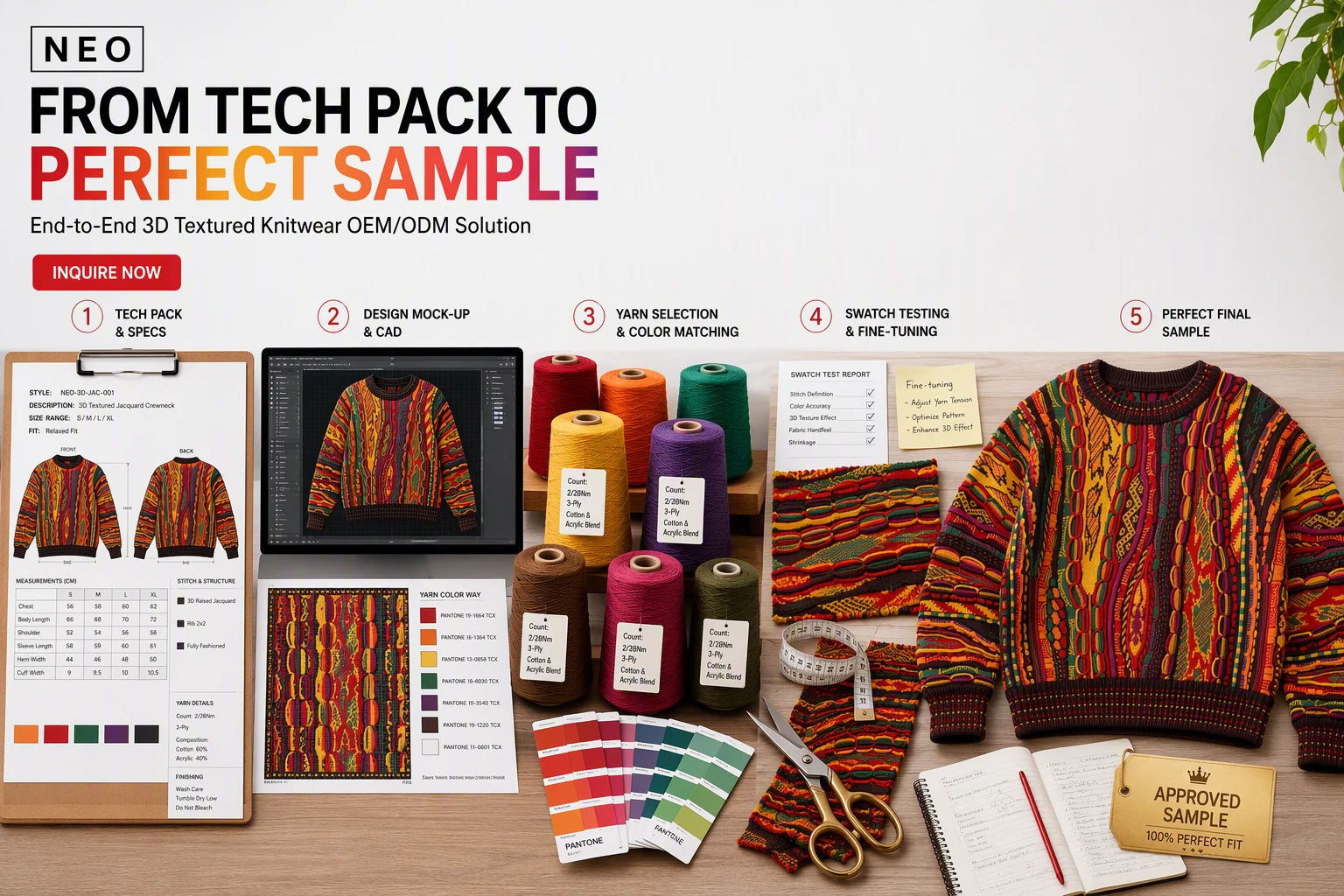
From Tech Pack to Perfect Sample: How Knitwear Sampling Actually Works
A floor-level walkthrough of the five stages between your tech pack and an approvable knit sample — mock-up and CAD programming, yarn colour matching, swatch testing, and the final PPS.
Sourcing Custom Men's Knitwear: What Separates a Knitwear Factory from a Sweater Mill
Mens knitwear briefs rarely fail on the design. They fail on gauge, size grading and reverse-side finishing — three things most price requests never ask about. Here is what to specify before you ask for a quote.
Send us the piece you were told was too hard.
Reference photo, rough sketch, or full tech pack — our Dalang technical punchers evaluate feasibility, machine gauge, yarn options, and pricing within 24 hours.