
Mending, Trimming, Pressing: The Knitwear Finishing Process Up Close
A 3D jacquard programme is won or lost after the knitting. Inside our finishing floor this week: mending, thread trimming and pressing — and why textured knits are pressed differently.
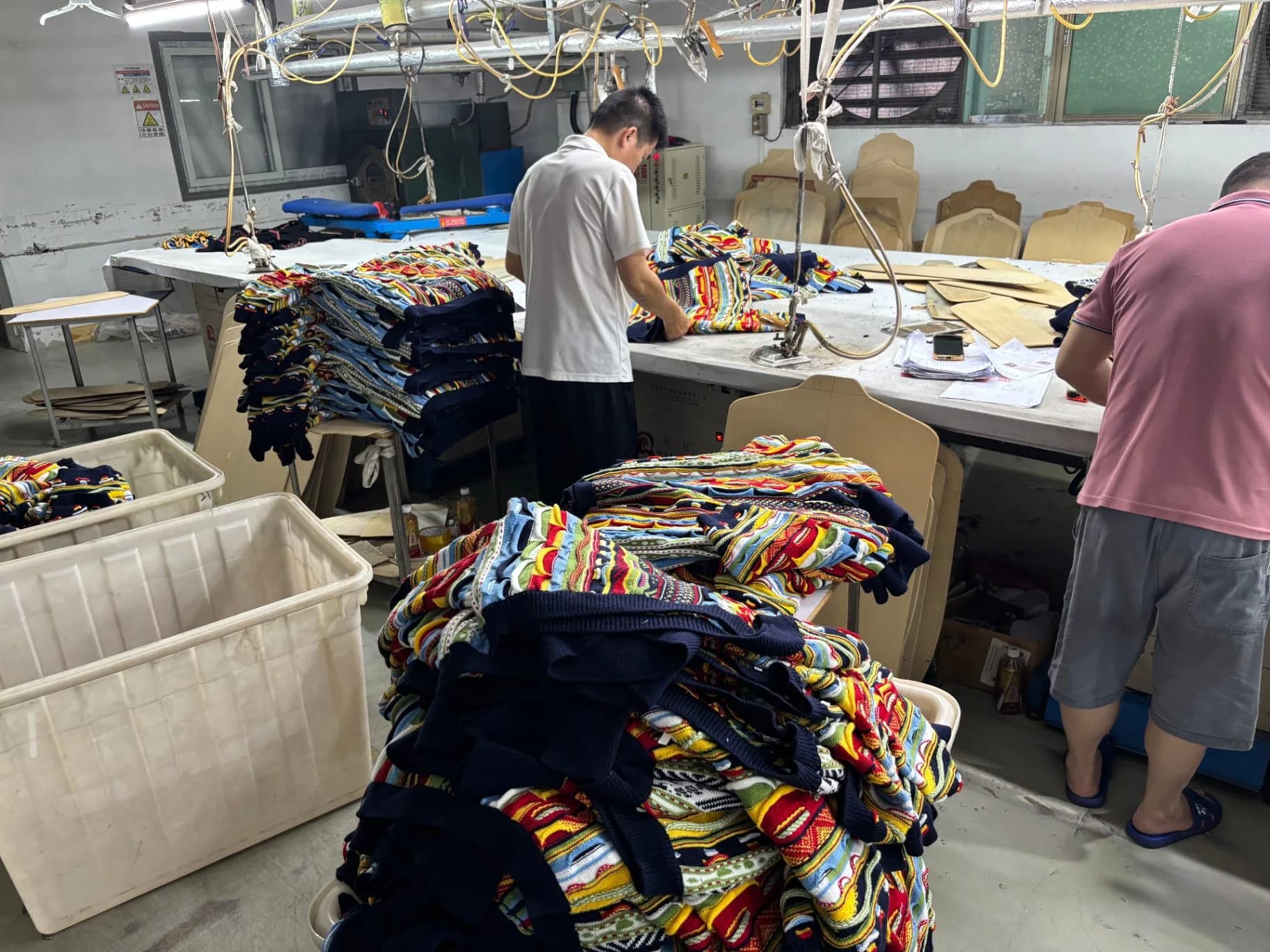
Written this week, while two multi-colour jacquard programmes with 3D bitter-gourd textured panels are going through the last stretch before packing — the photographs are our own finishing floor, taken on the day. A few weeks ago we published a piece on how 3D relief knitwear is made at the machine stage; this is the sequel, because the knitting is only half of the story. The finishing process is where the garment either keeps what the machines built or quietly loses it.
The photograph above is the honest middle of any knitwear order: bins of finished jacquard sweaters waiting to be worked through, menders at the tables, trimming and pressing behind them. Buyers see machine halls in factory tours and knitting samples in showrooms, but the finishing floor is where quality is actually banked. A thirteen-colour jacquard with engineered 3D texture leaves the machine as a promising semi-finished object; it leaves the finishing line — mended, trimmed, pressed correctly, inspected — as the product your customer wears. The gap between those two states is where most quality complaints are born, and where a disciplined factory earns its keep.
Stage One: Mending — Every Fault Caught by Eye and Needle
Mending is the most skilled job on the floor and the least visible to buyers. On a dense multi-colour jacquard, three fault families recur. Dropped or split loops — a single takedown needle catching wrong can open a run two centimetres long; the mender re-forms the loop by hand with a needle matched to the yarn, course by course, so the repair is invisible and stretches with the fabric. Float issues — a long float that escaped the programme's tie-down gets secured by hand before it can snag on a ring or a bag strap later. And yarn ends — every colour change on the machine leaves tail ends that must be tied off, never fused, because a melted end on a wash-care cycle stiffens and works loose. A mender working through a jacquard bin handles each garment inside-out and right-side-out, under a lamp, before it earns the next stage.
Stage Two: Thread Trimming — Fast Work That Is Not Careless Work
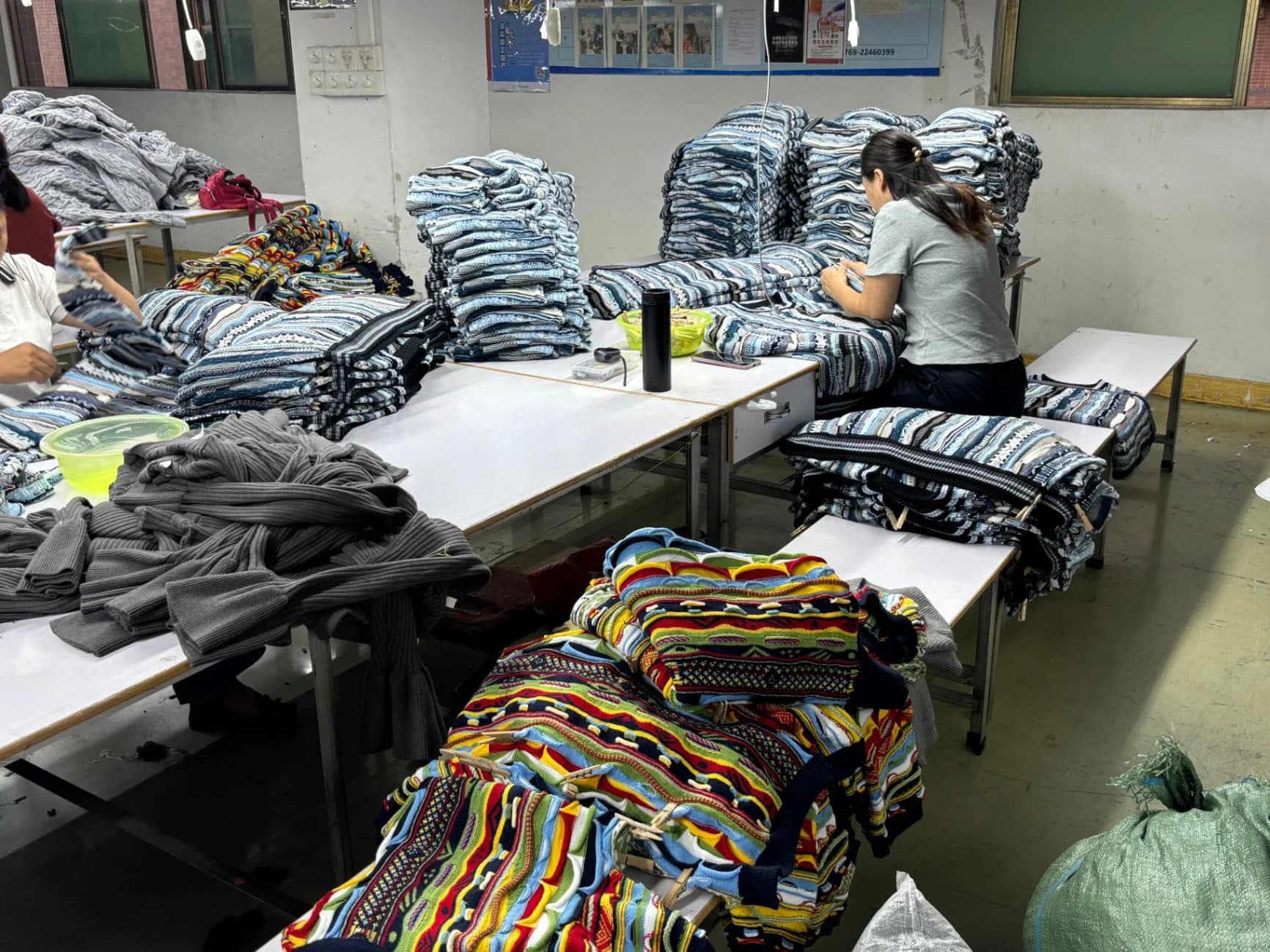
After mending comes trimming: cutting the remaining yarn ends inside and out, clearing the linking points at the armholes and side seams, and removing the small bits of waste yarn that marked panel openings during knitting. It looks like the simplest job in the building — the photograph of our trimming tables is mostly piles of finished texture and people moving steadily through them. The discipline is in what not to cut. A trimmer who nips too close takes a loop with it and starts a hole; one who leaves too much tail leaves a fuzzy end that migrates to the face of the fabric after the first wash. On a 3D textured programme the stakes are higher than on flat jersey, because the relief surface casts small shadows — a trimmed-too-short end hides in them at final inspection and shows up on the customer's sofa.
Stage Three: Pressing — Where 3D Textured Knits Are Different
Pressing is the stage most buyers never think to ask about, and it is the one that makes or breaks a relief programme. A standard flat-knit sweater is pressed face-up with steam and light pressure: it squares the garment, sets the dimension and leaves the surface smooth. Do that to a 3D bitter-gourd textured panel and you have destroyed the product — the raised, gourd-like relief is a knitted structure held out of plane by its own stitch geometry, and a hot plate flattens it permanently. There is no mending needle for a flattened texture. So textured panels are finished the other way round: steamed from the reverse side, on a shaped form or over a spacer board, with pressure kept off the face entirely, and the rib trims pressed separately so they can sit flat while the texture stays proud. The same logic runs through the whole programme — laundering, poly-bagging and carton packing all specify fold methods that do not crush the relief. This is also the answer to the most common textured-knit complaint, a sweater that arrived beautiful and went flat: somewhere in its life, someone pressed it like a plain one.
Stage Four: Final Inspection and the Rack
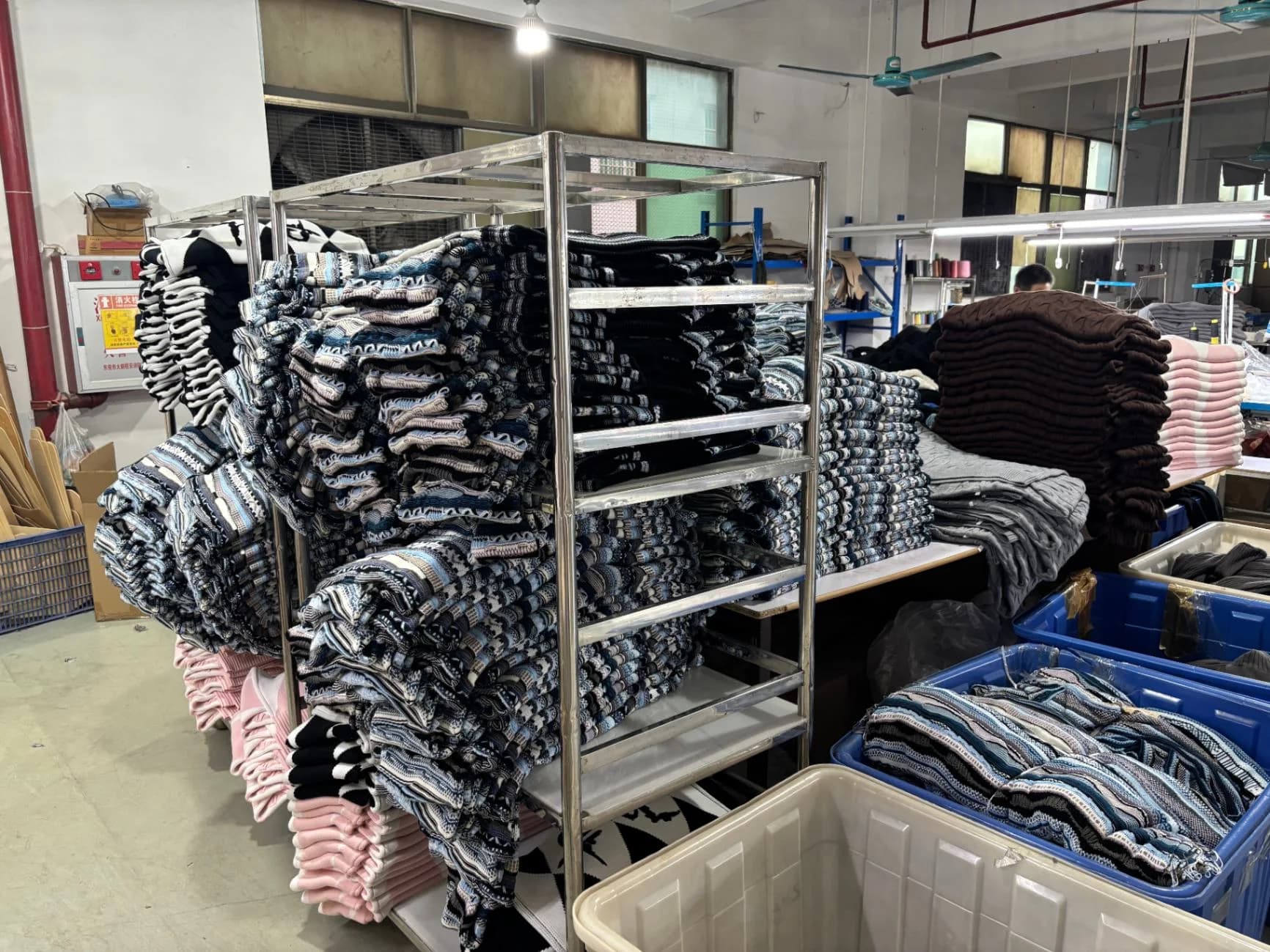
After pressing, each piece is inspected once more against the approved sample: measurements, texture definition, colour consistency across the bin, trim quality, and the labels. Passed pieces are folded to the packing spec, size-banded and racked by order — the rack in the photograph is one order, not the whole floor — and held there until the carton build, so that any late finding can be pulled, re-worked and re-inspected without touching the packed boxes. On programmes shipping FBA or DDP, the poly-bagging and labelling steps happen from these racks; we described that workflow in detail in our FBA-ready piece. The point of the rack is accountability: an order that goes from bin to rack to carton in traceable batches is an order where a problem, if one exists, is found before the ship date, not after the customer's.
What a Buyer Should Ask About Finishing
- Who mends, and with what? A mending bench with matched yarn lots and trained eyes is a capability, not a courtesy — ask how faults are recorded.
- How do you press textured knits? Any factory that answers "steam iron, face up" about a 3D relief programme is about to flatten your product; the right answer involves reverse-side steaming and forms or spacer boards.
- What does finishing add to the calendar? Mending and finishing realistically add three to five working days to a jacquard programme after knitting — a quotation that ignores them is borrowing time from your ship date.
- Can I see the floor? Any factory proud of its finishing will show it to you live on a video call, bins and racks included, no styling.
Frequently Asked
What is mending in knitwear manufacturing?
Mending is the hand repair of knitting faults — re-forming dropped or split loops, securing floats and tidying yarn ends with a needle and matching yarn, course by course, so the repair is structurally part of the fabric rather than a patch on it. On multi-colour jacquard programmes it is a quality gate that no machine step can replace.
Why did my textured sweater go flat after washing or pressing?
Almost always heat and pressure applied to the face of a 3D knitted texture. Relief structures are held out of plane by stitch geometry, and a hot plate or a hard iron flattens them permanently. Textured panels must be steamed from the reverse, over a form, with pressure off the face — and washed to the care label, not dry-cleaned at high heat.
How long does knitwear finishing take?
For a multi-colour jacquard programme at 100 to 500 pieces, plan on three to five working days from the last knitted panel to racked, packed-ready garments — mending first, then trimming, then pressing and inspection. Fine-gauge plain knits move faster; textured and jacquard programmes should never be quoted as if finishing were an afternoon.
If you are planning a 3D textured or multi-colour jacquard programme, send the artwork and quantities — we will quote the whole route honestly, knitting through finishing and packing, and the sample you approve is finished exactly the way bulk will be. That is the point of a factory that finishes its own work: nothing between the machine and the carton is outsourced to hope.
Looking to manufacture this style at scale?
Send us your design brief and we'll quote a direct-factory run with low MOQs, 72h sampling and DDP worldwide delivery, knitted on our own floor in Dalang.
Knitwear you can manufacture right now
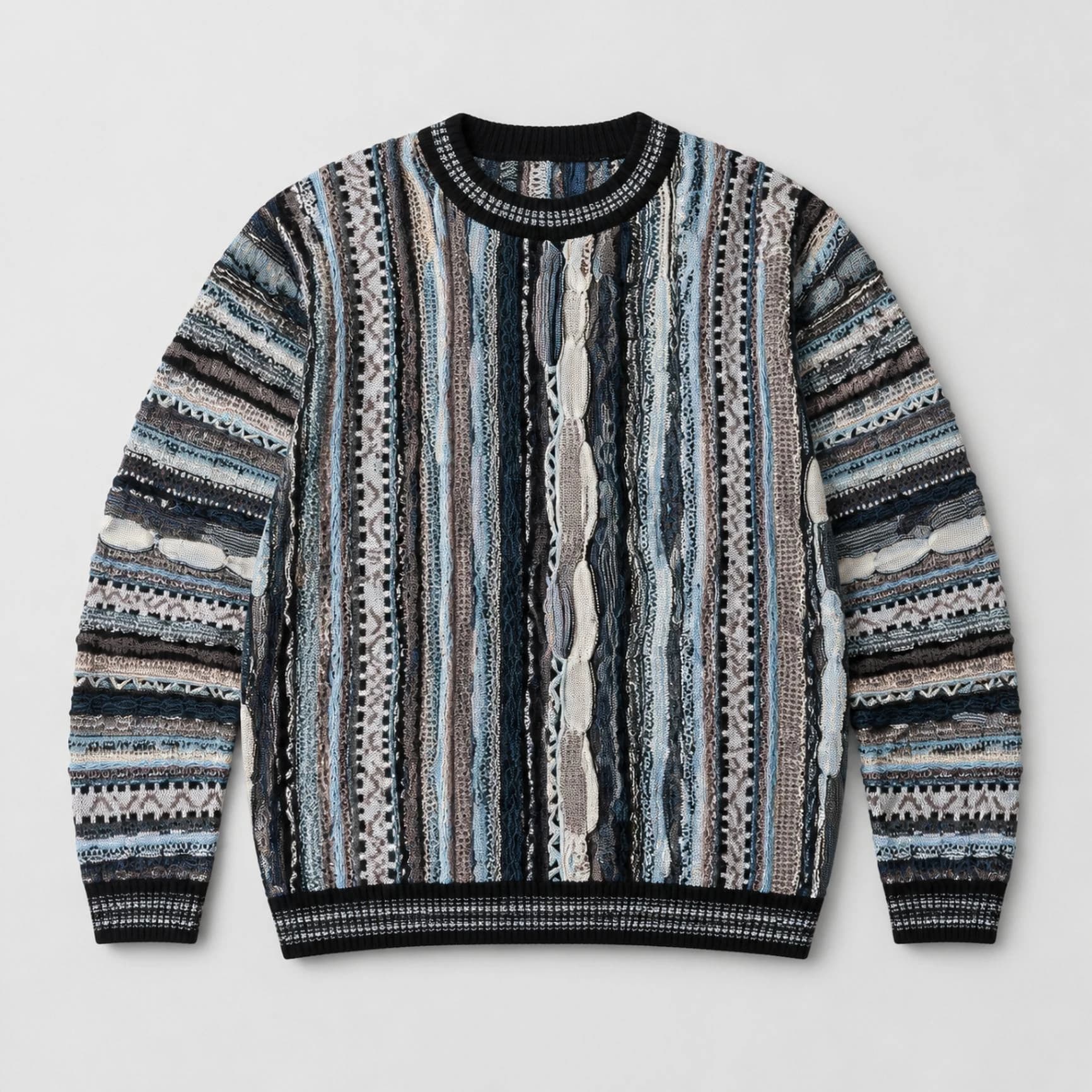
Custom Bitter-Gourd 3D Relief Knit Sweater
One crew-neck body carrying six stitch structures in a single tonal palette — the relief is knitted into the structure, not bonded onto it.
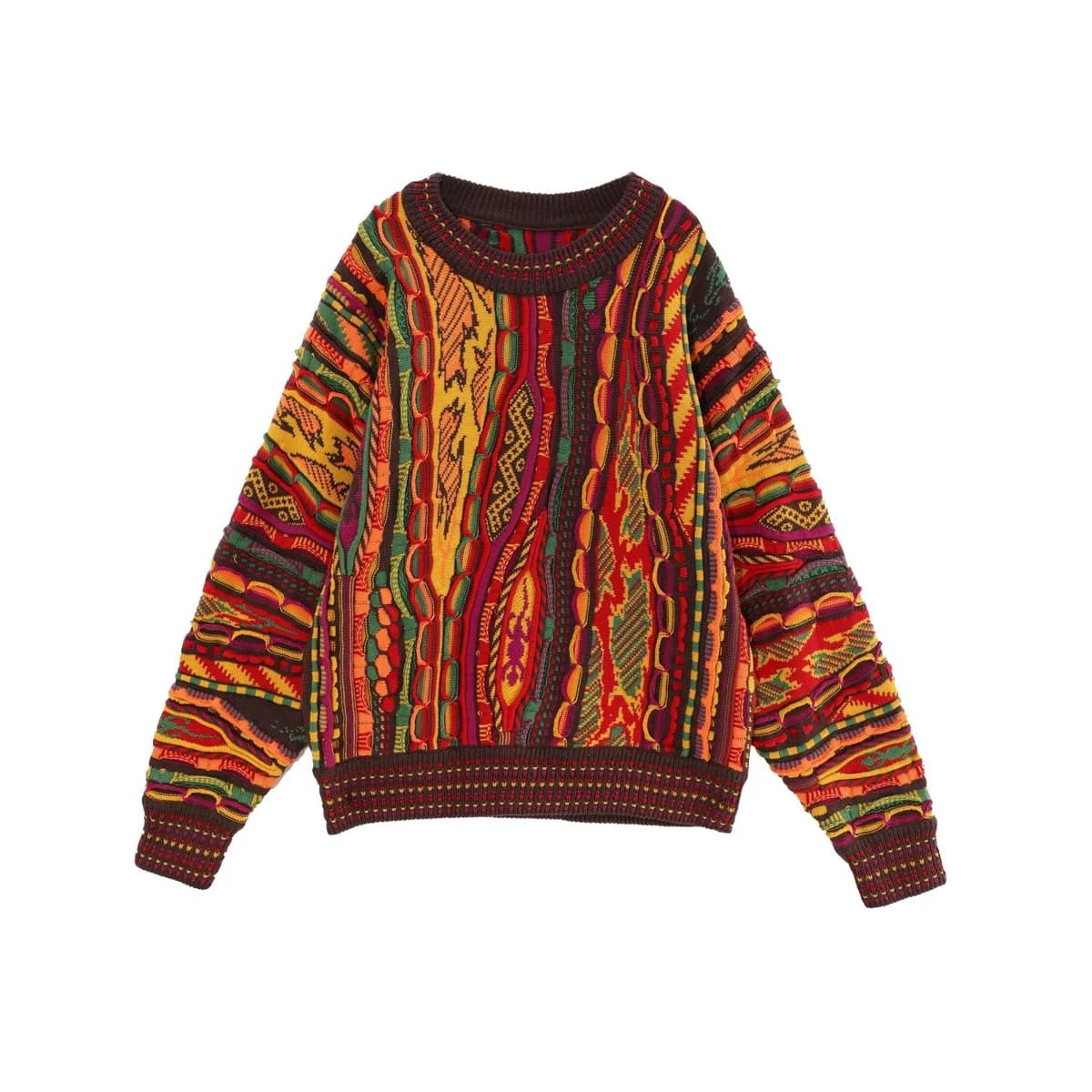
Custom Retro 3D Multi-Texture Knit Sweater
Jacquard, 3D relief and cable braid combined in one programme — the brief most factories decline to quote.
Keep reading

It's Time to Custom-Own Your Christmas Jumper
A short consumer-oriented overview of the custom Christmas jumper trend — design ideas, group-event tips, and the festive looks defining this year's holiday season.
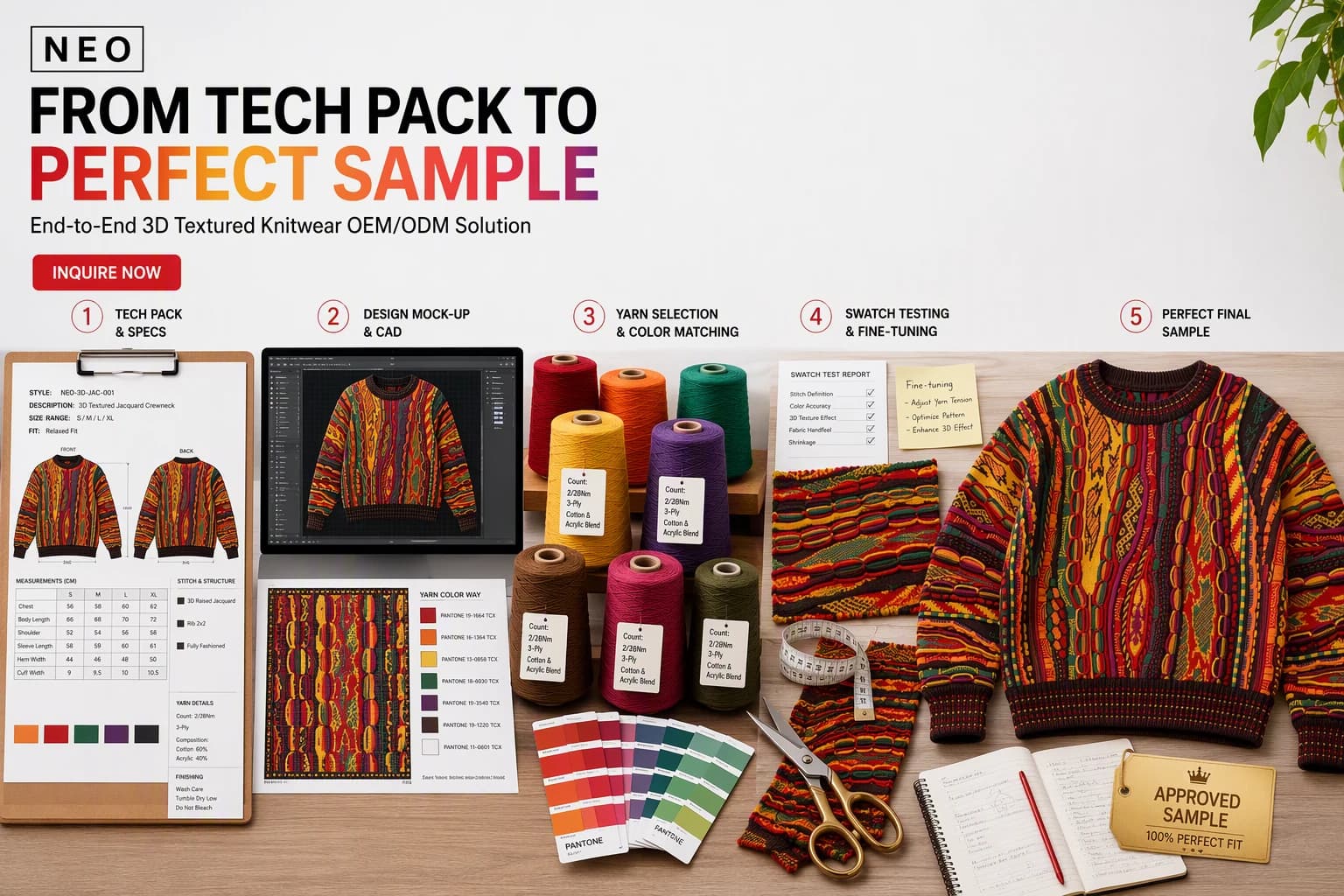
From Tech Pack to Perfect Sample: How Knitwear Sampling Actually Works
A floor-level walkthrough of the five stages between your tech pack and an approvable knit sample — mock-up and CAD programming, yarn colour matching, swatch testing, and the final PPS.
Sourcing Custom Men's Knitwear: What Separates a Knitwear Factory from a Sweater Mill
Mens knitwear briefs rarely fail on the design. They fail on gauge, size grading and reverse-side finishing — three things most price requests never ask about. Here is what to specify before you ask for a quote.
Send us the piece you were told was too hard.
Reference photo, rough sketch, or full tech pack — our Dalang technical punchers evaluate feasibility, machine gauge, yarn options, and pricing within 24 hours.