Jacquard vs Intarsia vs Embroidery: Which Knit Graphic Method
Three ways to put a graphic on a sweater, three different failure modes. The choice is decided by the shape of the colour blocks, the colour count, and what the reverse side is allowed to look like.
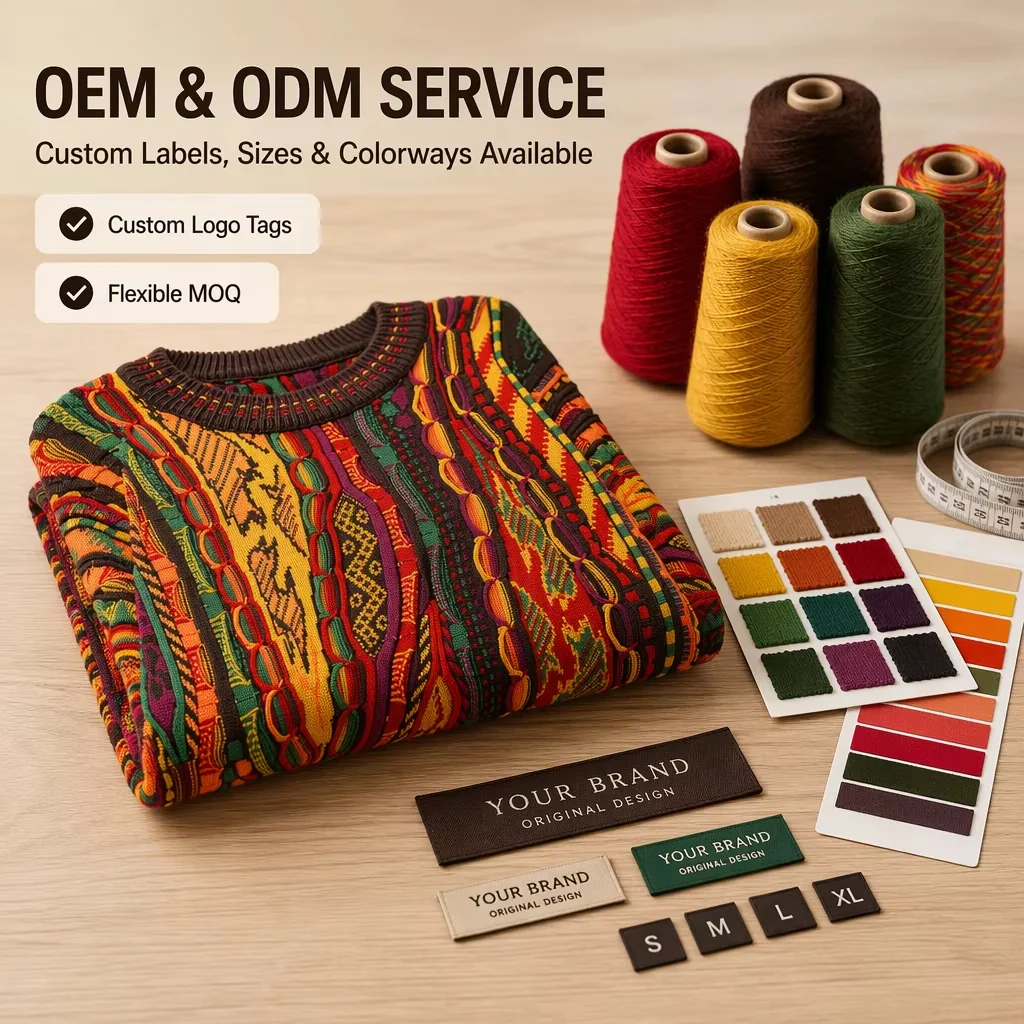
A method-selection guide for buyers and designers. Each of the three techniques has a dedicated page on this site if you already know which one you need.
The question is never which method is best. It is which method suits the graphic. A photorealistic portrait, a clean two-colour wordmark and a large cartoon character are three different technical problems, and sending all three down the same route is how a programme ends up expensive and wrong at the same time.
The useful way to separate them is by three properties: how the colour sits in the fabric, how narrow the colour blocks are allowed to get, and what happens on the inside of the garment.
Jacquard — Colour Knitted Through the Whole Row
In a jacquard, every needle in every course selects one of the available yarns. The pattern is built into the structure of the fabric itself, and the yarns not in use at a given position are carried across the back as floats. This is the most efficient way to produce an all-over or repeating graphic, because the machine does the work in one pass with no manual intervention.
- Best for: all-over patterns, chest bands, repeating motifs, Fair Isle-style colourwork, small graphics that need to sit flush with the surface.
- Colour limit: the number of yarn carriers on the machine. Thirteen colours in a single row is a realistic ceiling on our equipment, and programmes close to that ceiling are genuinely complex.
- Reverse side: floats. Long floats snag on jewellery and on each other, so float length has to be planned and bound, not left to chance.
- Failure mode: show-through. A dark float behind a light ground reads as a grey ghost of the motif, especially in a fine gauge or a loose tension.
The float plan is the part buyers never see and always pay for. A motif that requires a twelve-stitch carry needs a binding stitch partway across, and that binding stitch has to fall where it does not distort the motif above it. This is why a jacquard that looks simple on paper can cost more than a busier one: the expensive part is the reverse, not the front.
Intarsia — Colour Blocks With Their Own Yarn
In intarsia, each colour block is knitted from its own yarn package and only appears where that colour belongs. Nothing is carried across the back, so the reverse side is clean and the garment does not gain the weight and bulk of floats. The trade is handwork: yarns have to be placed and changed at every colour boundary, and the boundaries themselves have to be secured.
- Best for: large colour blocks, single-point graphics, cartoon characters, oversized logos, diagonal or curved colour splits.
- Colour limit: practical rather than mechanical. Many colours mean many packages and a lot of handling, so cost climbs with colour count even when the machine could physically manage it.
- Reverse side: clean, with visible yarn tails secured at the boundaries. This matters for open-front cardigans and for anything unlined.
- Failure mode: split seams at the colour join. Where two colours meet, the yarns have to interlock at every course. Miss one and a vertical gap opens along the boundary — and it opens after washing, not before.
This is why narrow colour blocks are the enemy of intarsia. A shape that is three or four stitches wide does not give the yarns enough room to interlock reliably, and cannot be knitted as a clean block. Thin outlines, fine lettering and hairline details belong to jacquard or embroidery, never to intarsia.
Embroidery — Stitched On After the Garment Exists
Embroidery happens last, on a finished knitted panel. It is the only one of the three that can produce fine detail in many colours, because the resolution is set by the needle, not the knitting gauge. It is also the only one that adds a material with a different lustre and a different hand from the base fabric.
- Best for: small logos, fine lettering, multi-colour crests, dense small graphics, tonal branding on a plain body.
- Technical requirement: a suitable backing or stabiliser. Knitted fabric stretches under the needle, and without support the embroidery pulls the panel out of shape and never recovers.
- Appearance risk: embroidery thread reflects light differently from spun yarn. A colour matched numerically can still read as a slightly different shade once stitched.
- Failure mode: puckering and shadowing. Too little stabiliser and the panel ripples; too dense a stitch count on a soft knit and the motif sits on top of the fabric like a patch.
The Decision in Four Questions
In practice the method is settled quickly once these four are answered:
- Are the colour areas large blocks or a repeating all-over pattern? Large blocks point to intarsia; all-over points to jacquard.
- How small is the smallest element? Anything under roughly four stitches wide cannot be intarsia. Under three stitches, jacquard struggles too, and embroidery becomes the reliable option.
- Will the reverse side be seen? On an open cardigan, a scarf or a garment worn inside out, floats are a visible defect. Intarsia or embroidery avoid the problem entirely.
- How many colours, and how many are in the same row? Past the machine's carrier count, the design has to change method or change artwork.
Cost Follows the Method, Not the Design
Buyers often assume a busier graphic costs more. It does not, reliably. What costs more is manual handling:
- A dense all-over jacquard is machine work. Once programmed, it runs at machine speed, so a complicated pattern in a limited palette can be cheaper than a simple one with many packages.
- A large intarsia graphic is handwork at every boundary. The unit cost tracks the number of colour changes, not the visual complexity.
- Embroidery is priced on stitch count and placement. A small left-chest mark is cheap; a full-back panel is not, and a full-back panel on a chunky knit needs heavier stabiliser again.
The expensive mistake is mixing methods inside one price expectation. A jacquard band, an intarsia character and an embroidered logo on the same garment are three separate operations, three setup costs and three quality risks. It is a legitimate design, but it is not a single-method budget.
Frequently Asked
Can a photograph be knitted?
Not as a photograph. It can be approximated as a pixelated colour map, which is what a high-colour jacquard actually is. The limit is the carrier count, so a photographic image has to be reduced to a workable palette first. The result reads as knitwear — deliberately coarse, graphic — not as print.
Is thirteen colours enough?
For most commercial graphics, yes. Traditional Fair Isle uses four to six. The designs that need more are usually portraits or licensed illustrations, and those are better served by reducing the palette than by adding carriers.
Does the graphic wear off?
No, because in jacquard and intarsia the colour is the yarn — there is nothing applied to the surface to wear. Embroidery does not wear off either, though a dense motif on a soft knit can abrade the fibres underneath over long use. The risks with all three are structural, not decorative: floats, split seams and puckering.
If you have artwork and are unsure which route it belongs on, send the file with the finished garment size. The answer is usually determined by the smallest element in the design, which we can measure in minutes.
Looking to manufacture Christmas jumpers at scale?
Skip the print-on-demand platforms. Send us your design brief and we'll quote a direct-factory run with low MOQs, 72h sampling, and DDP worldwide delivery.
Knitwear you can manufacture right now
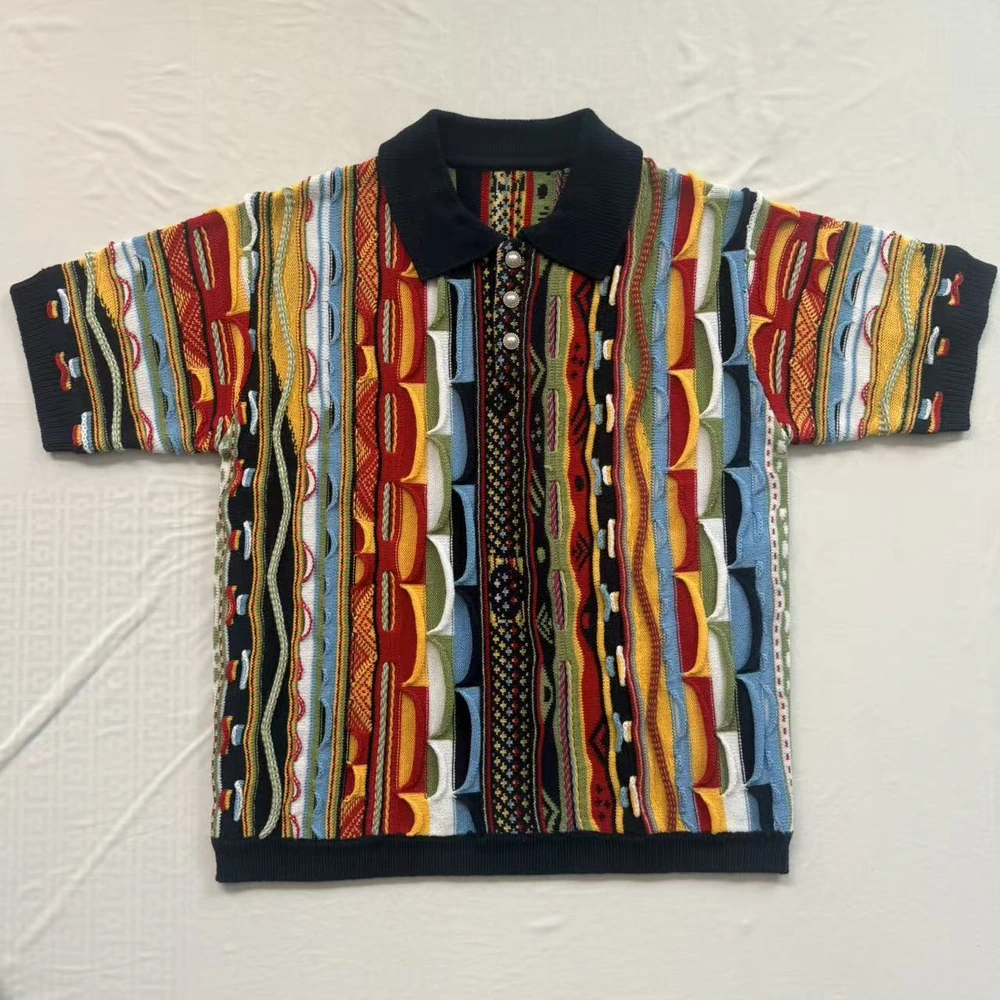
Custom Multi-Colour Jacquard Knit Polo Shirt
A short-sleeve knit polo built on a multi-colour jacquard programme — up to 13 yarn colours, against the 4-6 colour ceiling most mills quote.
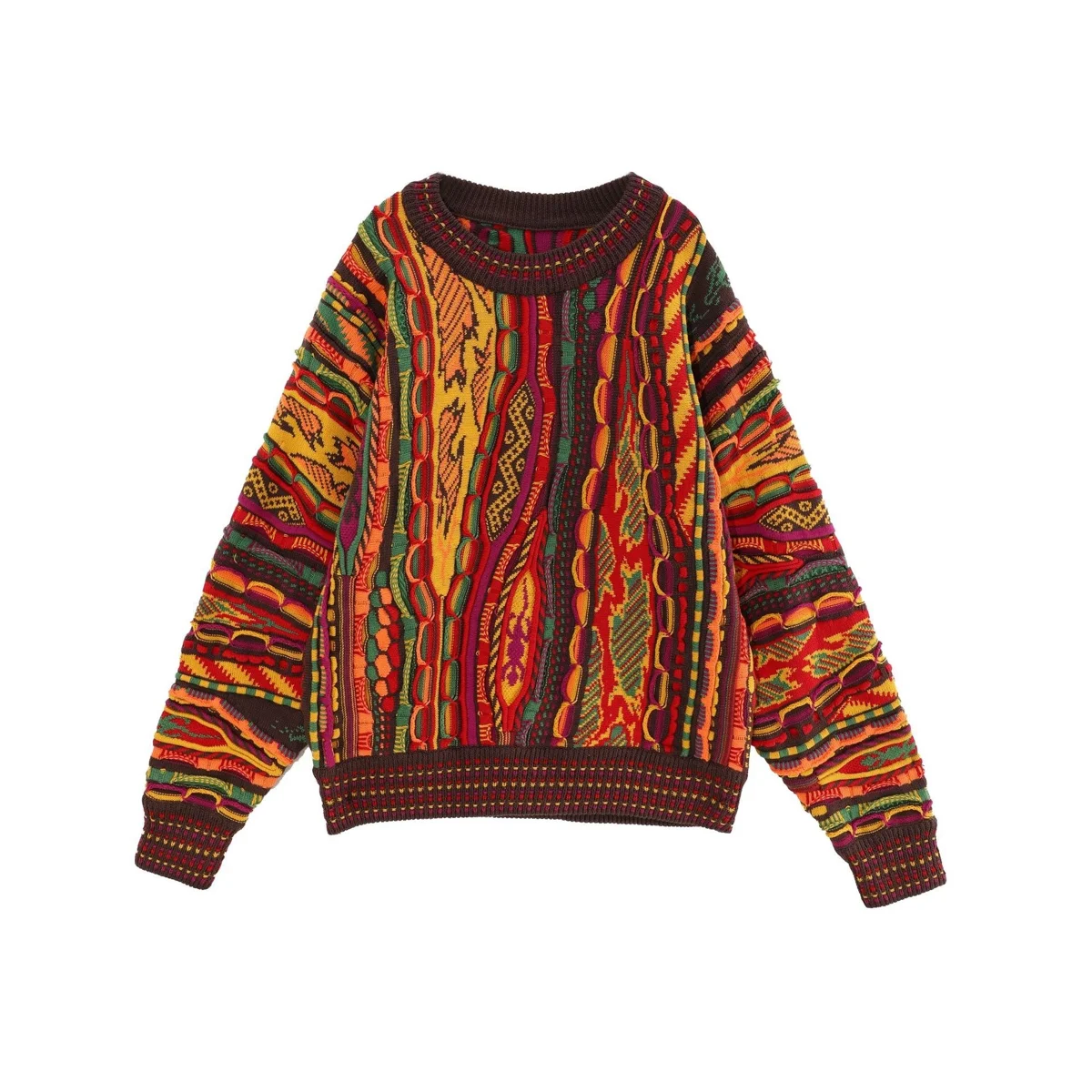
Custom Retro 3D Multi-Texture Knit Sweater
Jacquard, 3D relief and cable braid combined in one programme — the brief most factories decline to quote.
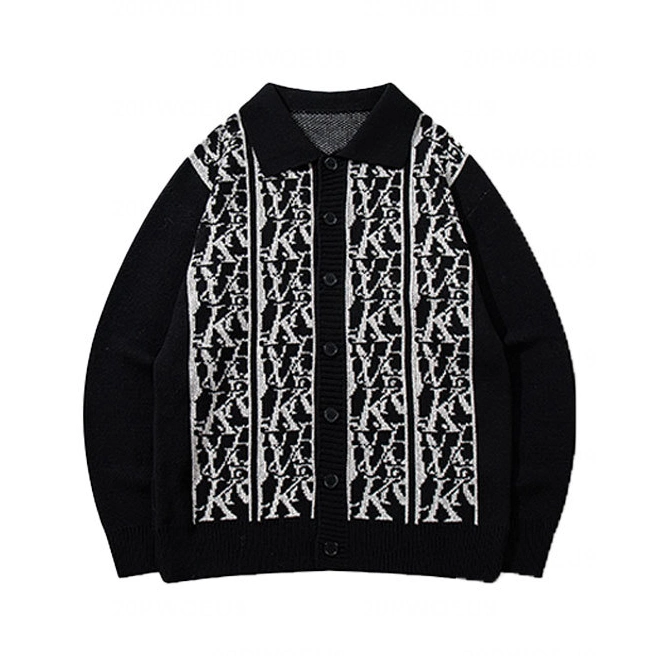
Custom Monogram Jacquard Polo Cardigan
Your mark rebuilt on the stitch grid, not traced — so the monogram still reads at three metres instead of turning into noise at 12GG.
Techniques behind this product
Multi-Colour Jacquard
CoreUp to 13 colours in one piece — standard mills stop at 4 to 6.
Intarsia
Solid colour blocks knitted side-by-side with zero back floats.
High-Density Embroidery
CoreDense 3D embroidery engineered not to pucker on stretch knits.
Keep reading
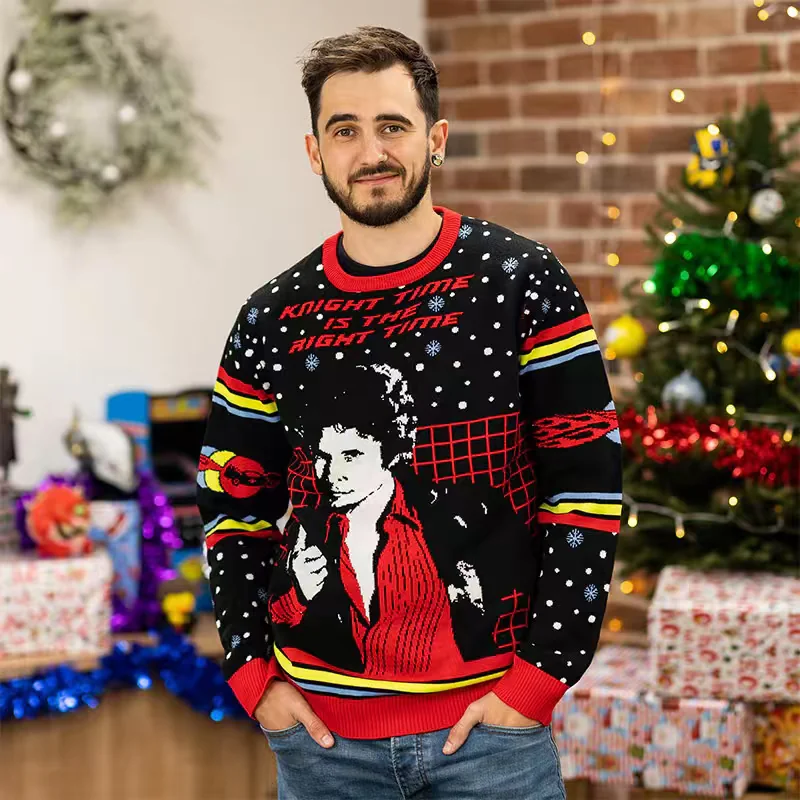
It's Time to Custom-Own Your Christmas Jumper
A short consumer-oriented overview of the custom Christmas jumper trend — design ideas, group-event tips, and the festive looks defining this year's holiday season.
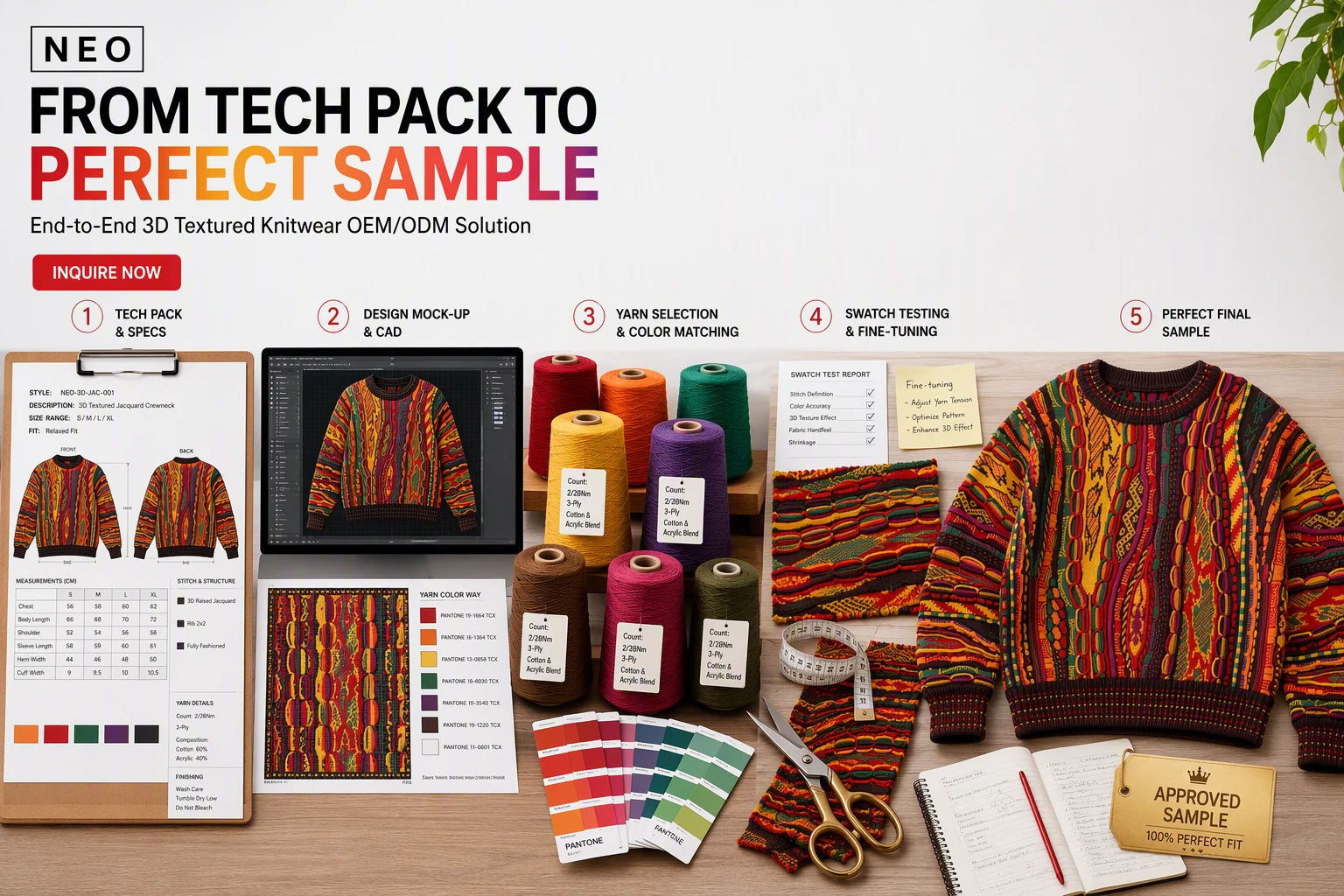
From Tech Pack to Perfect Sample: How Knitwear Sampling Actually Works
A floor-level walkthrough of the five stages between your tech pack and an approvable knit sample — mock-up and CAD programming, yarn colour matching, swatch testing, and the final PPS.
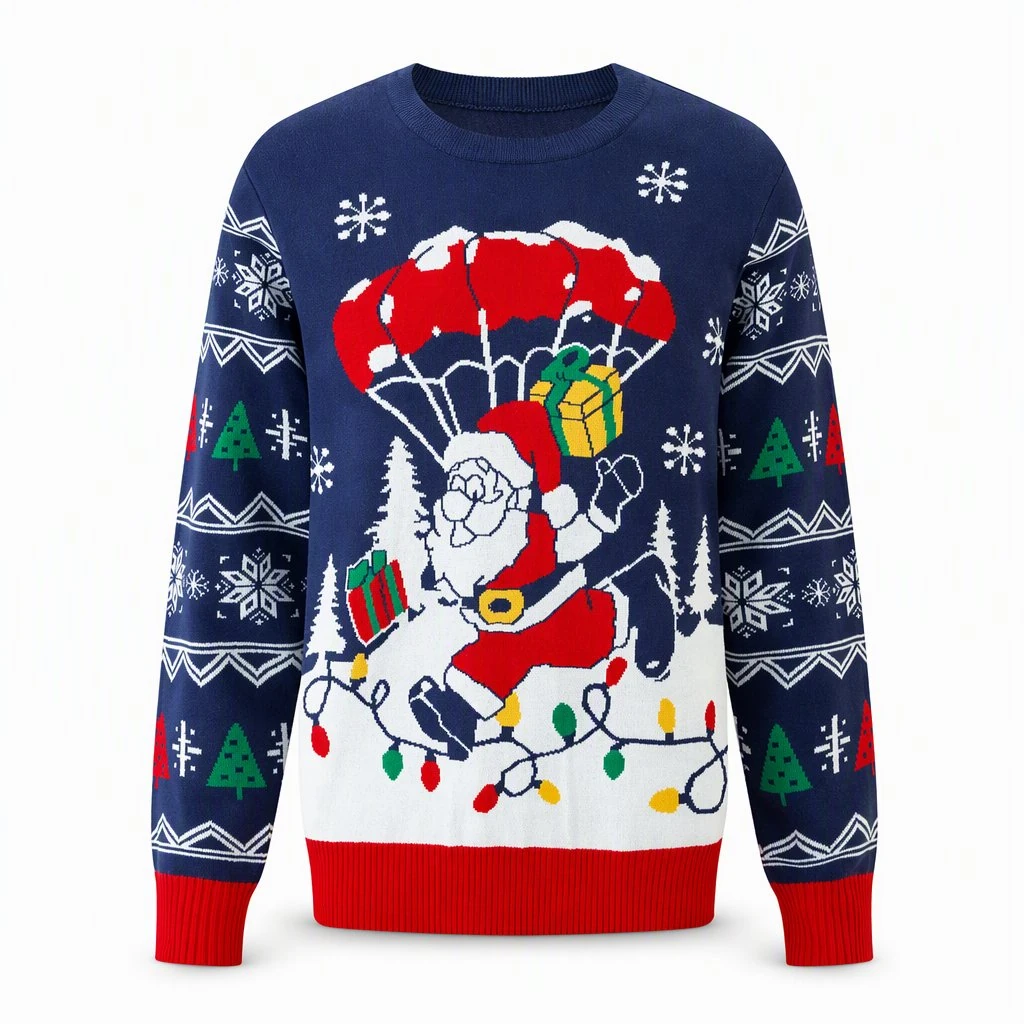
Sourcing Custom Men's Knitwear: What Separates a Knitwear Factory from a Sweater Mill
Mens knitwear briefs rarely fail on the design. They fail on gauge, size grading and reverse-side finishing — three things most price requests never ask about. Here is what to specify before you ask for a quote.
Send us the piece you were told was too hard.
Reference photo, rough sketch, or full tech pack — our Dalang technical punchers evaluate feasibility, machine gauge, yarn options, and pricing within 24 hours.