How 3D Relief Knitwear Is Made: Inside a Bitter-Gourd Programme
The texture that reads as sculpted applique on a hanger is knitted course by course on a flat machine. What the yarn carriers, the transfer sequences and the takedown roller are each doing, and which three numbers decide the price.
For buyers and designers specifying a 3D textured knit for the first time. It explains what is actually happening on the machine, so the next brief you write lands closer to what a sample room can hold.
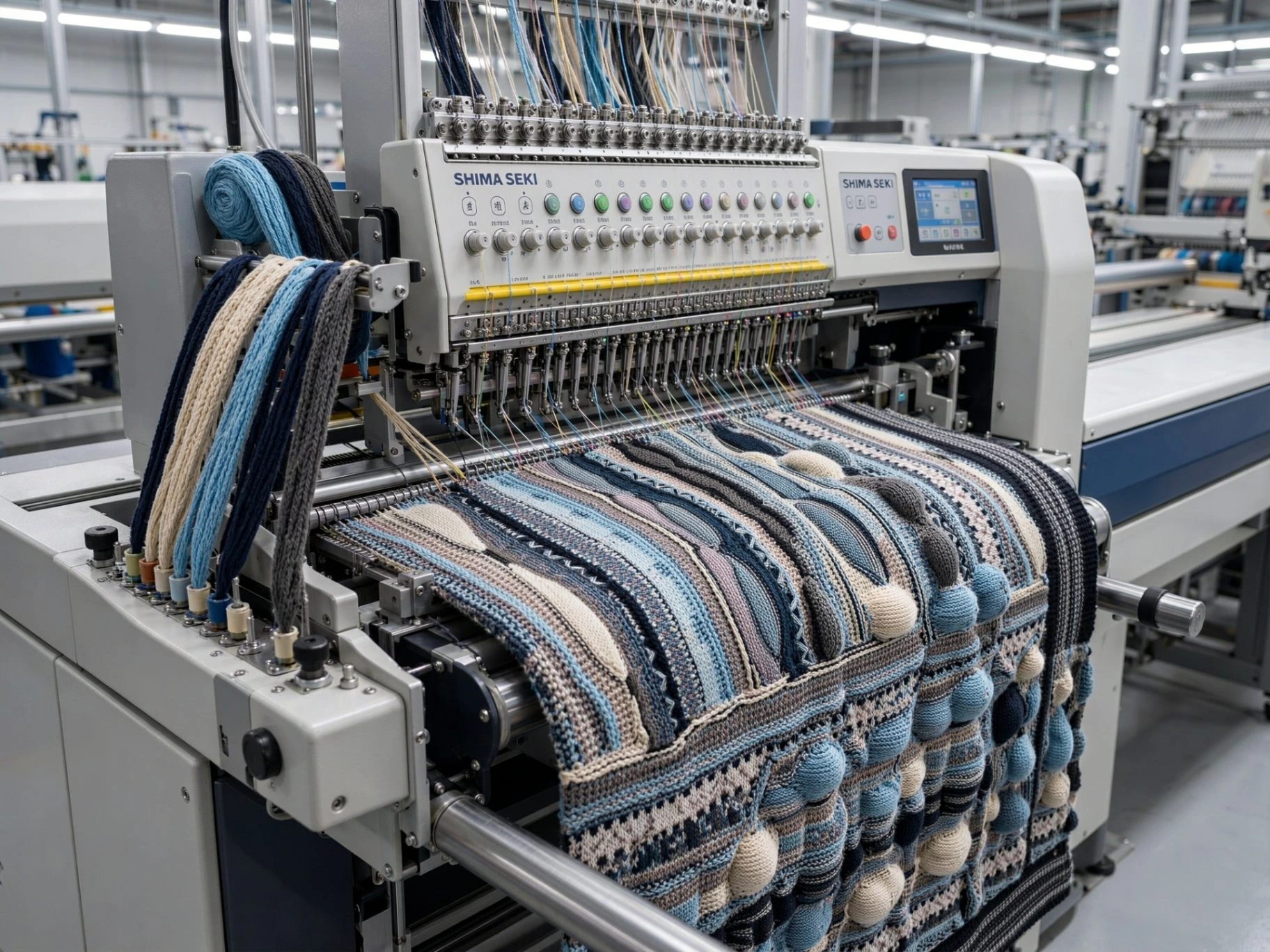
A three-dimensional knit looks, on a hanger, like something applied to a surface. It is not. Every raised pod, every stepped band and every hollow between them is knitted in sequence on a flat machine, one course at a time, on the same needle bed that knits the flat fabric around it. Nothing is bonded, pressed, embossed or stitched on afterwards.
What the Machine Is Actually Doing
Read the machine from the top down and the sequence stops being mysterious. Yarn packages sit above the carrier rail. Each carrier travels across the bed laying yarn into selected needles. The needles knit, hold, tuck or transfer according to the programme. The finished fabric is pulled away downwards and held at tension. Four components, four levers on cost and quality.
- Yarn carriers. Every colour used in a single course needs its own carrier. A flat machine holds a fixed number of them, commonly eight to sixteen depending on bed width and machine class, and that number rather than the artwork is the practical ceiling on colours per pass.
- The needle bed. Needles are selected individually. A knit stitch, a held stitch, a tuck and a transfer are not different machines, they are different instructions to the same needle.
- Transfer sequences. On a relief structure, groups of stitches are lifted off their needles and moved onto neighbours, then held there while further courses build over them. Stack that pattern and the fabric grows upwards out of the plane instead of sideways.
- The takedown roller. Its pull is a setting, not an afterthought. Too little and the relief loses definition at the base of each tier. Too much and the raised structure is compressed before it has set.
The Yarn Path Is the Design
This is the part that surprises buyers most: colour count is a mechanical constraint before it is an artistic one. A design with six colours can usually run them in one pass, because six carriers can enter the bed together. A design with twelve cannot, unless the machine carries twelve - so the programme is split into more passes, and the garment costs more machine time even though it uses the same amount of yarn.
It is also why a catalogue claim such as up to thirteen colours needs unpacking before it means anything. Thirteen colours in one garment is routine. Thirteen colours in one course of one garment is not, and no mill is doing it. The honest version of the claim is that the design as a whole holds thirteen, with the per-course count kept to what the carrier rail can carry.
That distinction is worth testing in a supplier conversation. Ask how many colours run in a single course, and how the design is split if the total exceeds it. A supplier who can answer both is programming the style. One who repeats the total back at you is quoting from a brochure.
Where the Height Comes From
Relief depth is not bought with a thicker yarn. It is bought with transfers. Each tier of a bitter-gourd structure is a group of stitches moved, held and then built over, and each of those operations is machine minutes rather than material. Six tiers and twelve tiers can use the same yarn in the same palette; the second costs roughly twice as much to knit.
So when a buyer says make it deeper, the truthful answer is a new quote rather than a new yarn. Yarn weight sets how much mass each tier has to work with, which is why chunky sculptural relief sits at 3GG to 7GG and a finer, more commercial surface sits at 7GG to 12GG. Finer than that and each tier is carrying too little yarn to stand up on its own.
Specify relief height in millimetres against a reference garment, not in words. Deep and very deep are not instructions; 6 mm and 12 mm are, and they map onto a tier count that can be priced.
Why Both Faces Have to Be Presentable
A jacquard carries its unused colours across the reverse as floats. A relief structure built from transfers does not have to, because the yarn is consumed in the structure rather than carried behind it. That single difference decides where the fabric can be used: a relief knit can go on an open cardigan front, a turned-back cuff, a scarf or an unlined body where the inside will be seen.
It is also a cheap way to check what you are being sold. Ask for a photograph of the reverse. If the texture is knitted, the back shows the mechanics of the structure. If it is bonded or a jacquard with an applied effect, the back tells you that instead.
The Three Numbers That Set the Price
- Carriers per pass. How many colours run together. Going from six to ten may force the design into extra passes, which costs time and risks a visible break at the join.
- Tier count. How many times the relief stacks. This is the dominant driver on a textured style, and it is machine time rather than material.
- Transfer density against panel width. Transfers are counted per needle, so a body covered edge to edge in dense relief is a different machine hour from the same motif concentrated on a chest panel.
What Goes Wrong
Four failures account for most of the problems on relief styles, and all four are programme issues rather than knitting issues:
- Width drift at the boundary. Relief and flat zones run at different tensions on the same bed. If the transition stitch count is not locked, the panel drifts and the finished garment twists after washing.
- Yarn breaks on the tallest tiers. The higher the hold, the more tension the yarn sees. A soft or hairy yarn that knits cleanly on a flat panel can break repeatedly on a twelve-tier structure.
- Compression in packing. Weeks in a carton flattens the tiers. It recovers through steaming or washing and flat drying, and a tumble dryer can press it out permanently.
- Pattern lock at the panel edge. A repeat that does not divide into the panel width leaves a visible break where the motif fails to close - the same arithmetic that catches jacquard repeats catches relief.
How to Brief a Relief Style
Five things, and a brief that carries all five usually reaches a firm quote in one round:
- A reference garment or photograph alongside your artwork, with a note on which areas must stay flat.
- Relief height in millimetres, measured on the reference if you have one.
- Colours per course and colours in the design as two separate numbers.
- Whether the reverse side will be seen by the wearer.
- End use and wash route, because a garment that will be tumble dried needs a different tier structure from one that is flat dried.
None of these are unusual questions at a sample review. They are unusual in a first email, which is precisely why first emails tend to come back with a quote that carries a wide range in it.
Frequently Asked
Is 3D relief the same thing as jacquard?
No. Jacquard is about colour: different yarns appearing on the face in a programmed pattern. Relief is about dimension: the fabric itself is displaced in and out of the plane. A garment can be one, the other, or both - our multi-texture styles are both, which is why they cost more than either alone.
Can a relief programme be recoloured?
Usually yes, and it is the cheapest change available. Swapping one yarn for another in the same position does not alter the transfer sequences. Adding a colour, or moving one across a tier, does change what happens behind the face and is quoted as a programme revision.
What is the minimum order for a textured knit?
One hundred pieces per design, the same as our flat styles, because the cost of a relief programme is in the programming and the machine minutes rather than in a minimum run length. Sampling runs 72 hours from yarn stock confirmation and bulk production two to three weeks after PPS approval.
If you have a reference piece with this kind of texture and you are not certain it is knittable at your target price, send a photograph of the front and the reverse. The reverse usually answers the question before anyone books a sample slot.
Looking to manufacture this style at scale?
Send us your design brief and we'll quote a direct-factory run with low MOQs, 72h sampling and DDP worldwide delivery, knitted on our own floor in Dalang.
Knitwear you can manufacture right now
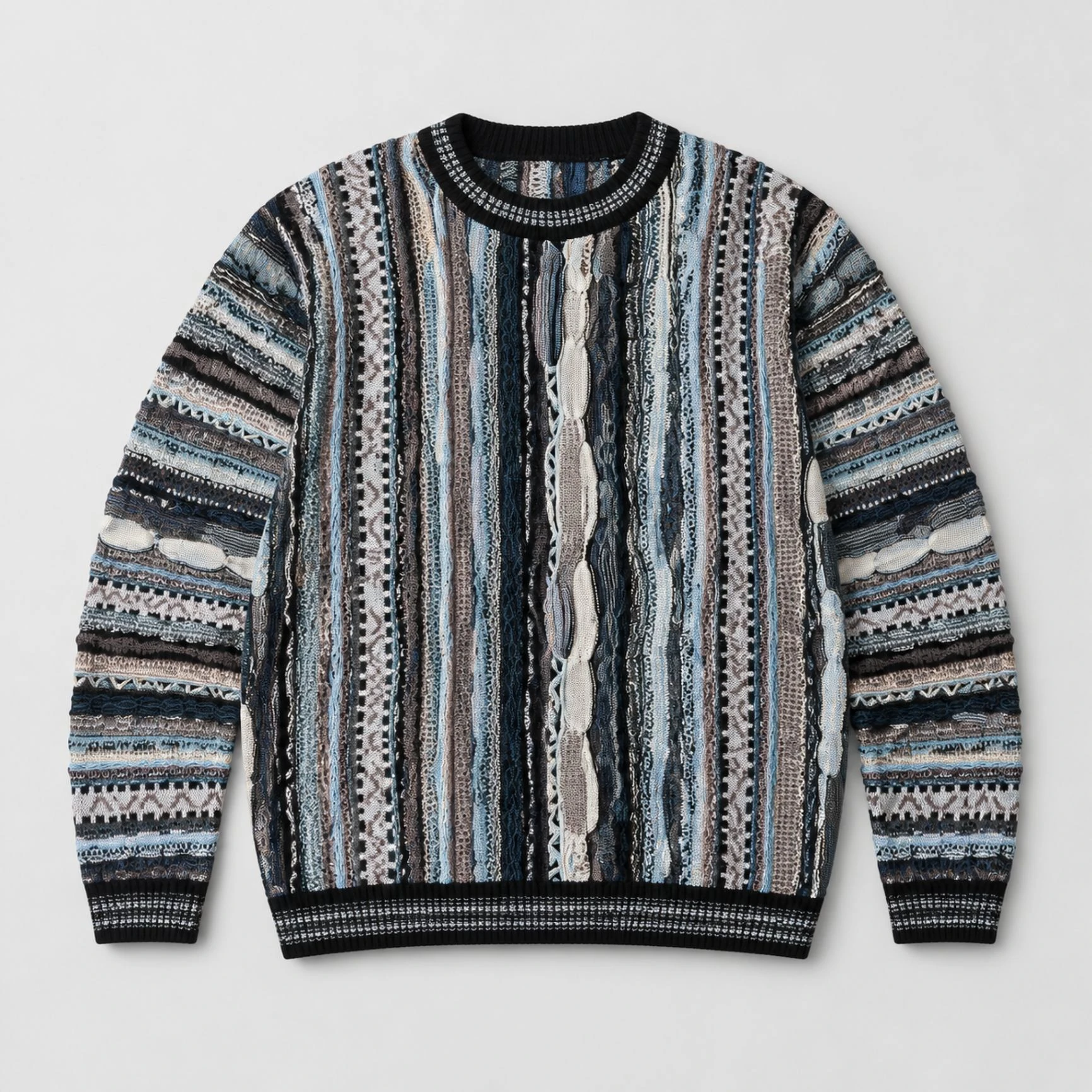
Custom Bitter-Gourd 3D Relief Knit Sweater
One crew-neck body carrying six stitch structures in a single tonal palette — the relief is knitted into the structure, not bonded onto it.
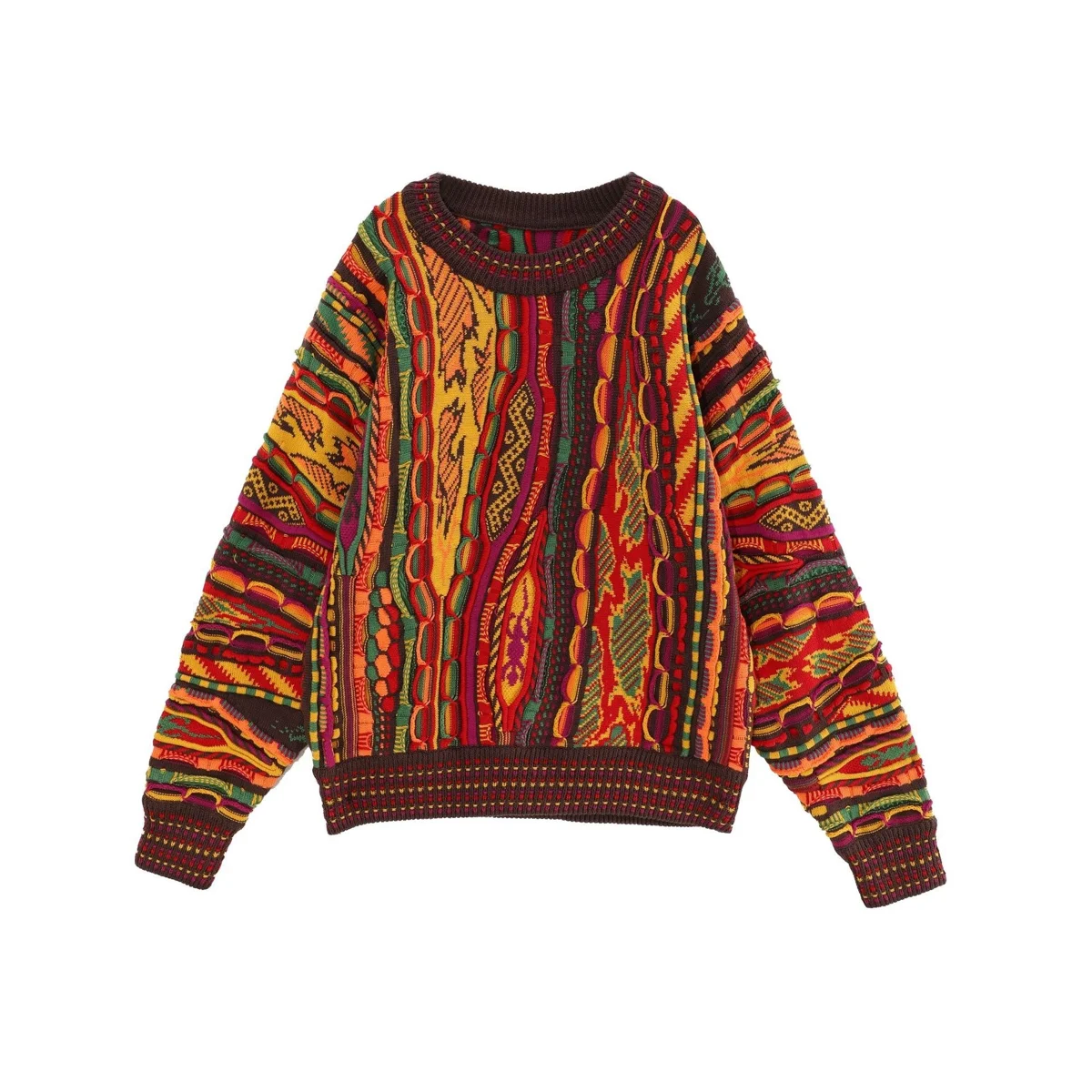
Custom Retro 3D Multi-Texture Knit Sweater
Jacquard, 3D relief and cable braid combined in one programme — the brief most factories decline to quote.
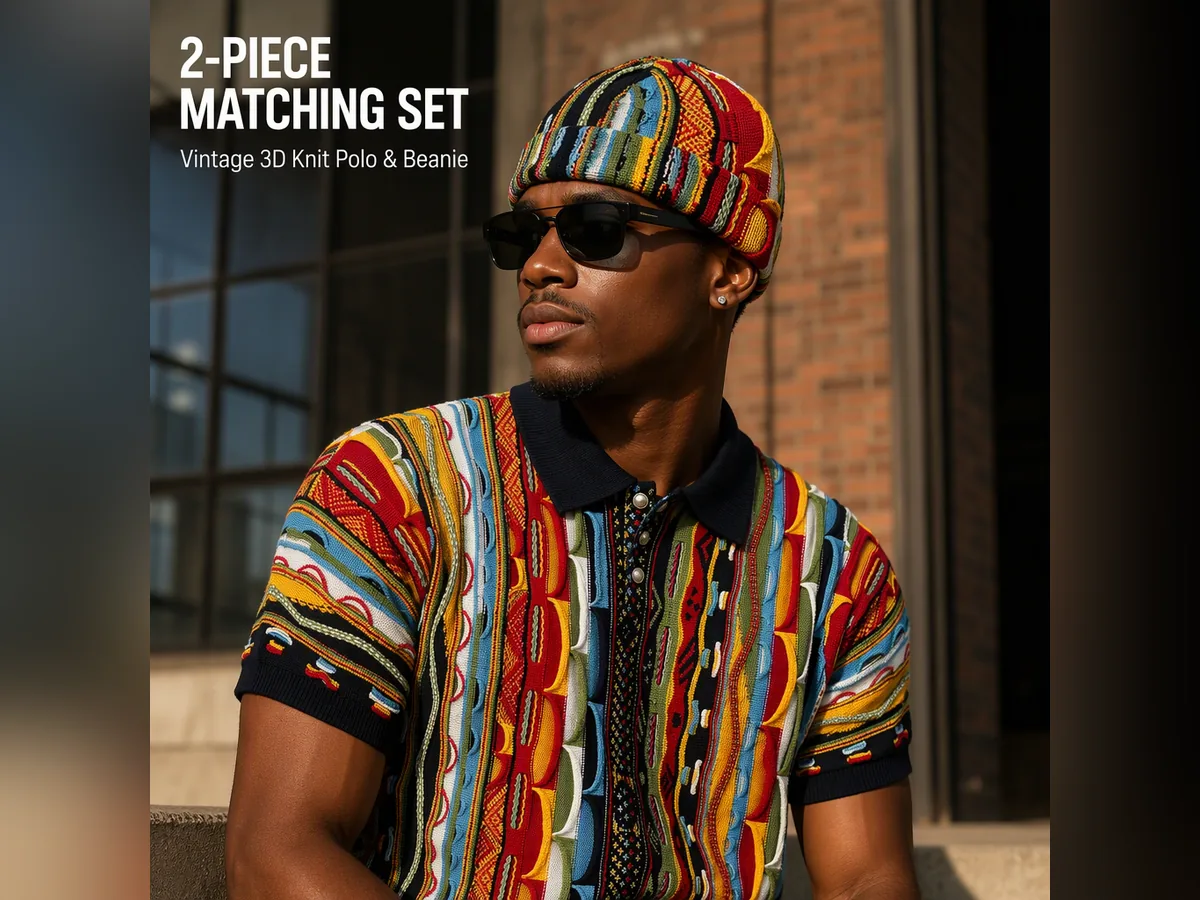
Vintage 3D Knit Polo & Beanie 2-Piece Set
One band sequence, one colourway, two SKUs — a coordinated retro set developed and shipped as a single order.
Techniques behind this product
Bitter-Gourd Relief Stitch
CoreRaised 3D textured relief, clean on both face and reverse.
Multi-Colour Jacquard
CoreUp to 13 colours in one piece — standard mills stop at 4 to 6.
Cable & Aran
Sculpted cable braids and diamond honeycomb textures.
Keep reading

It's Time to Custom-Own Your Christmas Jumper
A short consumer-oriented overview of the custom Christmas jumper trend — design ideas, group-event tips, and the festive looks defining this year's holiday season.
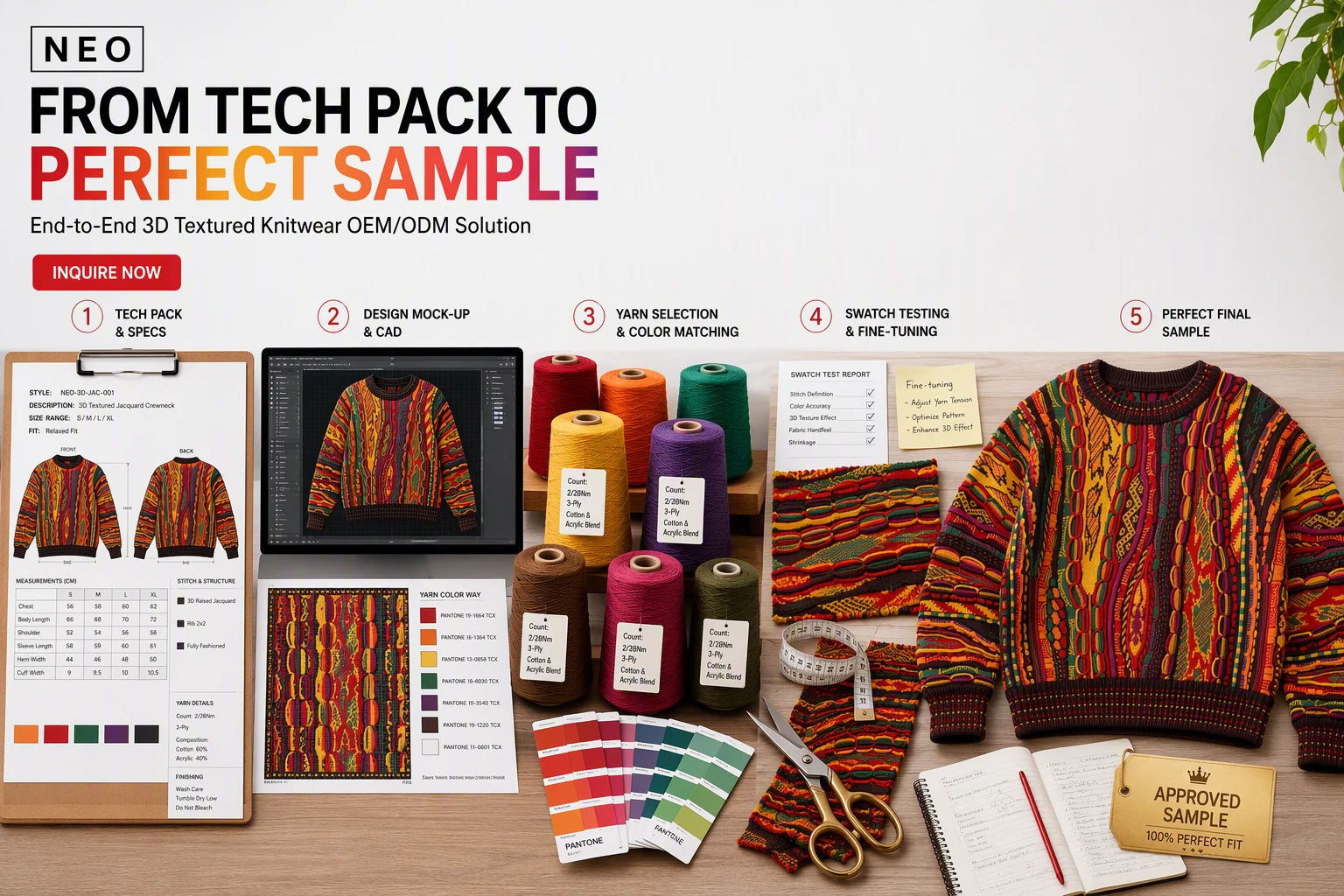
From Tech Pack to Perfect Sample: How Knitwear Sampling Actually Works
A floor-level walkthrough of the five stages between your tech pack and an approvable knit sample — mock-up and CAD programming, yarn colour matching, swatch testing, and the final PPS.
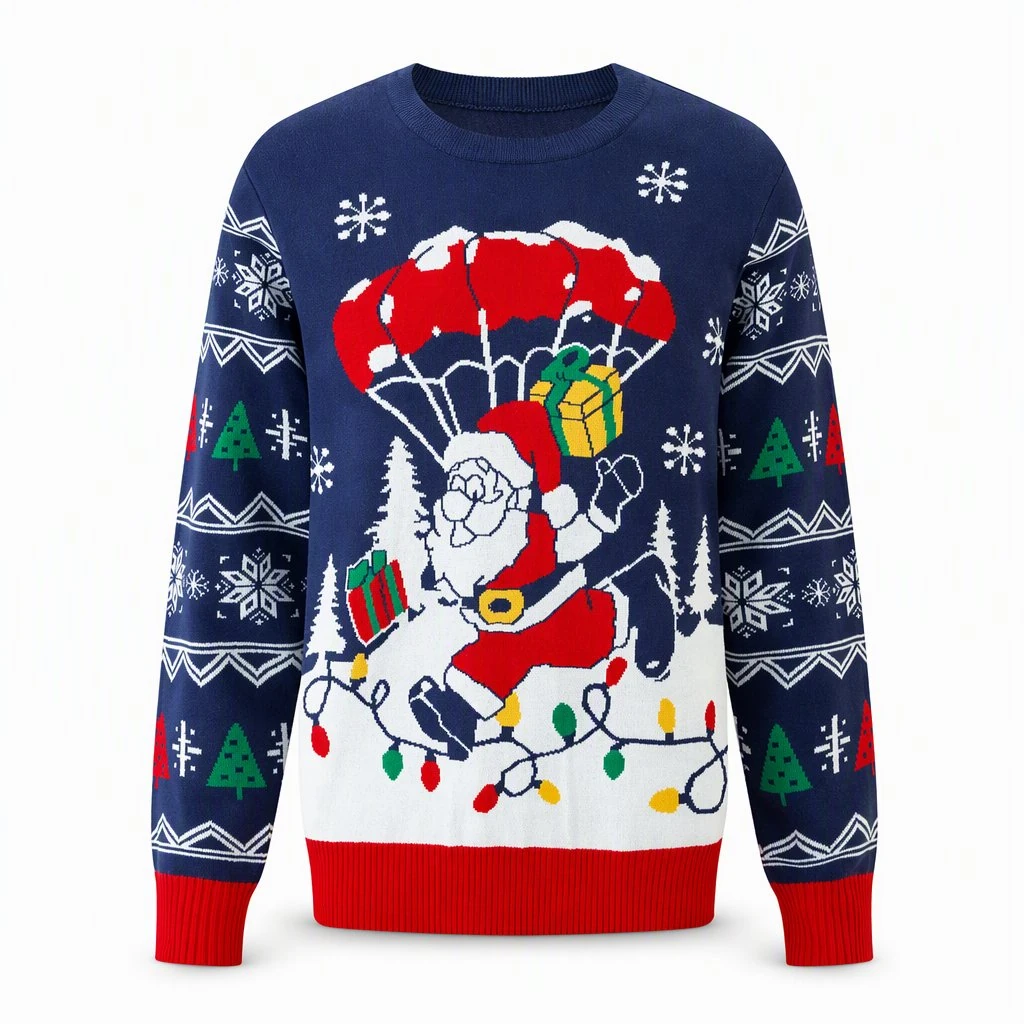
Sourcing Custom Men's Knitwear: What Separates a Knitwear Factory from a Sweater Mill
Mens knitwear briefs rarely fail on the design. They fail on gauge, size grading and reverse-side finishing — three things most price requests never ask about. Here is what to specify before you ask for a quote.
Send us the piece you were told was too hard.
Reference photo, rough sketch, or full tech pack — our Dalang technical punchers evaluate feasibility, machine gauge, yarn options, and pricing within 24 hours.