
Hand Knit Sweater Manufacturing: Where Hand Work Beats the Machine
A hand-worked cable on a machine-knitted body: what two needles and one pair of hands actually add to a sweater, why it cannot be measured against a machine tolerance, and how to specify it so it survives inspection.
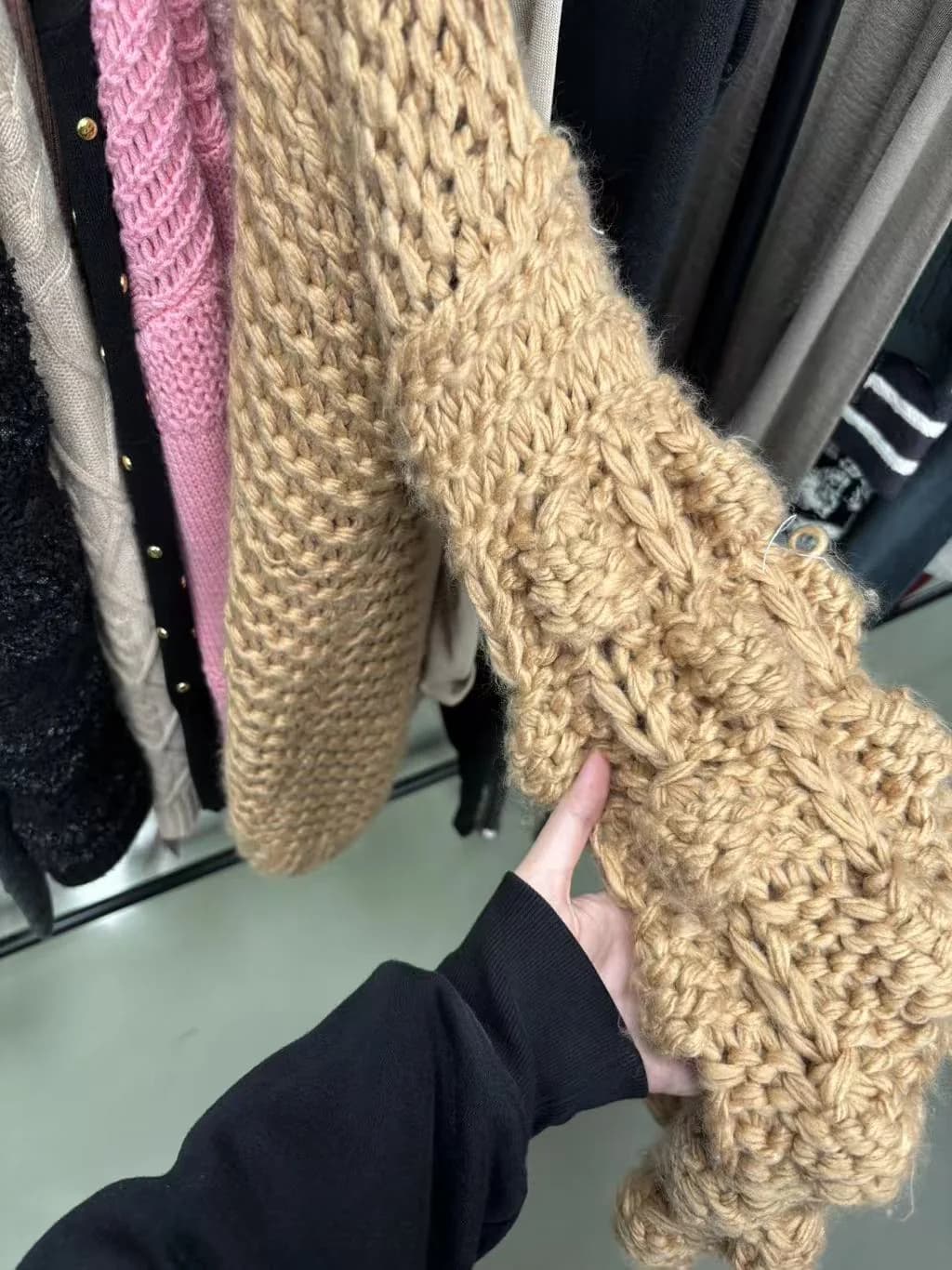
Hand work is the one thing in this workshop a machine cannot imitate, and it is deliberately not on our craft list — we do not sell it as a technique, we apply it where a style asks for it. So this post is the practical version instead: two needles, one stitch at a time, worked as a detail on a machine-knitted garment. Where it earns its cost, where it fails inspection, and how to write a brief that avoids both.
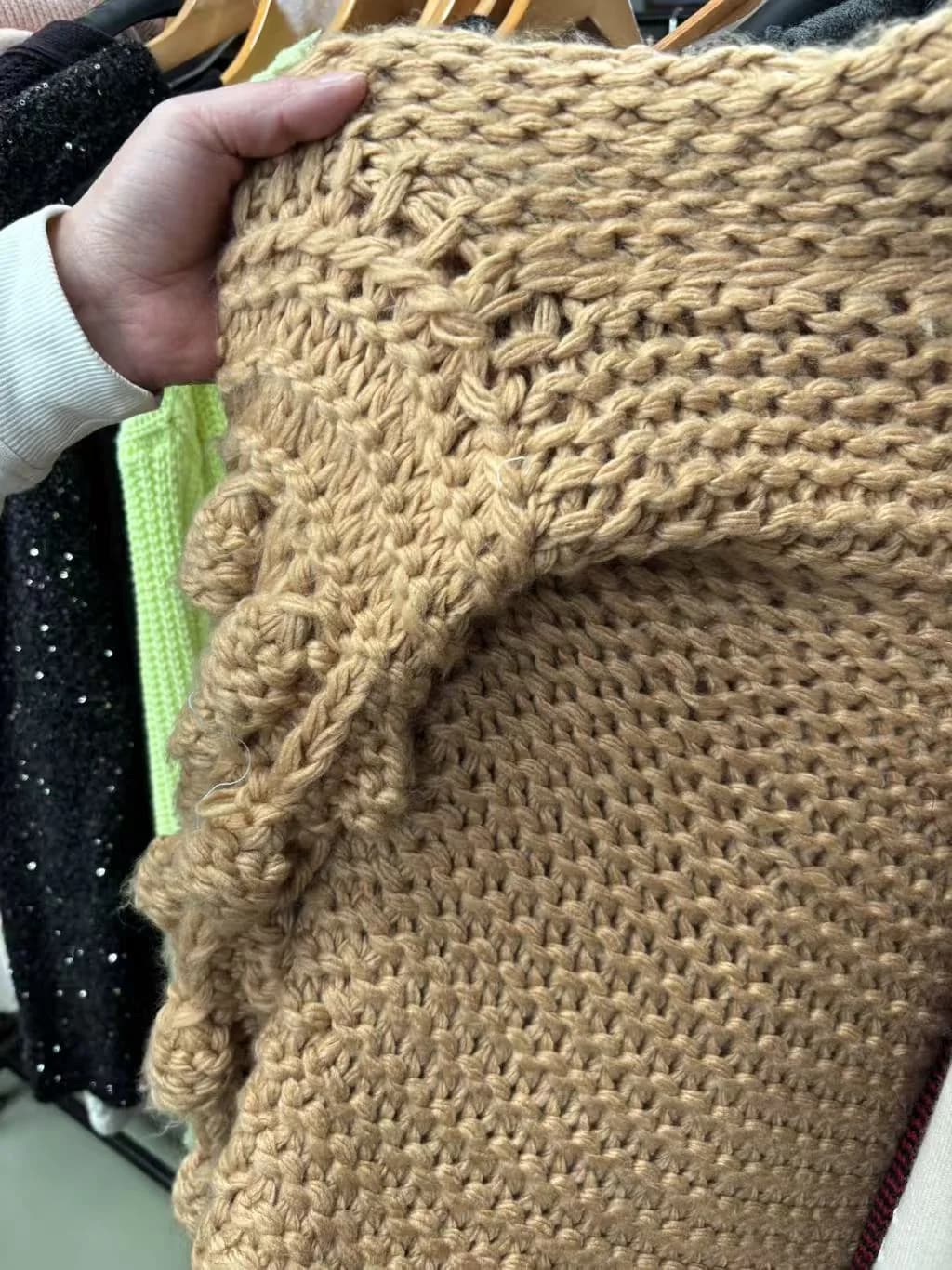
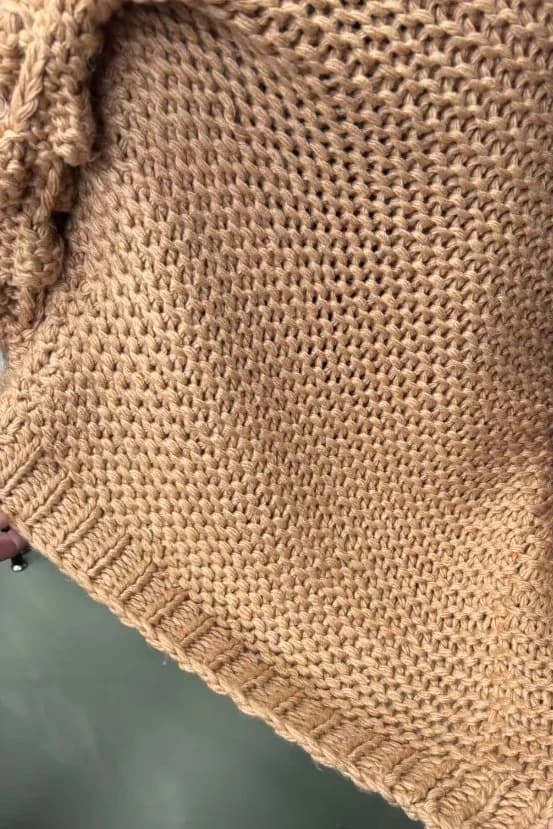
The garment in these photographs is the argument. Look at the sleeve: fat cables crossing at several different rates, loop clusters standing up off the surface, a soft halo where the yarn has been handled. Then look at the body panel behind it: uniform rows, even tension, a texture a flat machine draws without effort. Two different makers worked on one garment, and that is the whole subject here — not hand knitting as a heritage story, but hand work as a component you can specify, cost and inspect.
Two Needles Is Not One Hook
Buyers routinely use hand knitting and crochet as synonyms, and the difference decides what you can do with either. Crochet is built from one hook and a chain: loops are pulled through loops in sequence, and the fabric has a direction and a stiffness that machine knitting cannot reproduce, which is why our crochet programme lives mostly in trims and openwork. Hand knitting uses two needles and builds rows of interlocking loops — the same loop geometry a flat machine produces, only slower and by hand.
That shared geometry is the commercial point. Because a hand-knitted cable is structurally a cable and not a different fabric, it can be attached to a machine-knitted panel and read as one garment rather than as a sewn-on decoration. It also means hand work can copy a machine structure at a scale the machine bed cannot reach: the rope cable on this sleeve, at this thickness and this looseness, would need a 3gg bed and a very heavy yarn to approach it, and even then the bed would deliver a regularity that removes the reason to buy it.
Why the Body Is Machine and the Details Are Hand
Hand work is measured in hours and machine work in minutes, so the split is arithmetic before it is aesthetic. A fully hand-knitted sweater is a different product at a different price point; a hand-worked sleeve head or shoulder trim is a cost a mid-market brand can actually carry. The rule we work to is simple: hand work goes where the eye lands and where machine regularity reads as flat. Sleeve heads and shoulders, because that is where a lookbook photograph is taken. Cuffs, plackets and pocket flaps, because hands touch them. Hood edges and hem borders, because they frame the whole garment.
Placement is also structural, not just visual. A chunky hand cable carries real weight and real thickness, and putting it on the shoulder head changes how the sleeve falls and where the garment pulls; putting the same cable across the chest pulls the front. That is why hand-worked pieces are blocked on the garment rather than flat — a hand cable relaxes differently from the panel it sits on, and the difference has to be corrected on the body, not on the table.
What Hand Tension Does to a Cable
A machine cable is regular because the needle bed is: every transfer at the same tension, every crossing the same width, every row the same height. A hand cable is almost regular. Loop height drifts by a few percent, the yarn blooms from being handled, the crossing leans a little, and the resulting cable is fatter at the crown with a deeper shadow underneath. Up close it reads as made by a person; at three metres it reads as expensive. That second reading is the only reason the technique survives in a factory at all.
The same fact is the reason hand work and identical units cannot coexist. If the brief or the inspection treats variance as a defect, the programme fails before it starts — not because the work is bad, because the standard does not describe the product. The decision to make at sampling is whether the irregularity is the product or the problem. If it is the problem, buy the machine version and stop.
Hand Work Cannot Be Inspected Against a Machine Standard
Our standard knitwear tolerance is ±1cm on major points and ±0.5cm on minor ones, which assumes a machine repeated the same operation thousands of times. Applied literally to a hand-worked trim, that tolerance rejects every piece in the order, because a hand trim varies by more than that by its nature. So the specification has to change shape before production, not after: dimension becomes a band rather than a point, and the governing standard becomes the approved reference sample.
In practice that means three documents instead of one. A physical golden sample, signed and kept by both sides. An area map on the tech pack marking which zones are hand, with the cable direction drawn on it. And a written acceptance note — variation in hand-worked areas accepted within reference — so that a third-party inspector with a measuring tape does not judge hand work against a machine document and fail a good order.
Then inspect the things that do fail, strictly. The join between hand and machine, which is where the real defects appear. The anchor spacing on the trim. Whether the hand-worked yarn lot matches the body. Whether the armhole still holds its shape with the extra weight on it. Those four checks catch more than a hundred dimension readings on a cable that was never going to be symmetrical.
How to Tell Hand Work From a Machine Hand-Look
Plenty of factories sell a “hand-feel” knit that is entirely machine-made, and the price difference between the two is large, so it is worth knowing which one you are looking at. Five tells, all readable from a garment or a good photograph. Count the stitches: pick three separate areas and count the stitch columns per 10cm — a machine gives the same number every time, a hand gives three slightly different ones. Compare the crossings: a machine cable is the same width at every crossing down the panel, a hand cable is not. Turn it over: the reverse of a machine cable shows the programmed tuck structure, while the reverse of a hand cable shows the purl back of the cable itself with a slight lean. Look for joins: a knot or a spliced end in the middle of a hand-worked cable is normal, because a needle ran out; the same join in a machine panel is a defect. And look at the halo — hand handling blooms the yarn surface, while a machine panel stays crisp until it is washed.
None of that makes the machine version dishonest. A machine can now fake a convincing hand-knit look, at a fraction of the labour, and for a high-volume replenishment programme that is the correct purchase. What it cannot fake is variation between units, and that variation is the only thing the customer is actually paying for. So the useful question is not whether a sample is hand-worked, but whether the price you are being quoted supports the answer you were given.
Where Hand Work Fails in Production
- The join. A hand-worked cable is heavier and less elastic than the panel beneath it. Attached with a plain overlock it drags the panel and the armhole sags within a week of wear. It needs a stabilised seam or a knitted anchor, and that decision belongs in the pattern, not in finishing.
- Yarn quantity. Hand work consumes more yarn than the machine estimate — thicker yarn, tails, cut ends, mistakes. A five percent shortfall stops the run, because hand workers cannot switch to another dye lot mid-order without a visible shade break at the shoulder.
- The critical path. Hand hours do not compress when the machine is free. If the hand component is scheduled after knitting, the order slips by however long the hands take, whatever the machine did.
- Grading. A hand trim is not the size-M trim scaled by eight percent. It is re-worked per size, or it distorts the armhole. That is a second sampling round that buyers rarely budget for.
- Weight drift. Hand pieces vary in mass, so a size run can go heavy at the top and light at the bottom. Check garment weight per size, not measurements alone, on the first bulk.
What Hand Work Costs, Plainly
The price is hours multiplied by area multiplied by stitch size — not a rate per piece. Two of those three are in the buyer's control. Area is how much of the garment is hand: a sleeve head is affordable, a whole body is a different product. Stitch size is how big the loops are: bigger stitches mean fewer of them, so a superbulky hand cable is much cheaper per square centimetre than a fine one. The third, hours, is the workshop's problem and it does not fall with volume. Machine cable at 3gg is priced in machine minutes and gets cheaper as the order grows; hand work never does. Past a certain quantity the honest answer is to convert the detail to the machine and accept the regularity, or to keep hand on the smallest area that still carries the look.
There is also a fixed cost that does not scale down: the sample, the reference piece, the re-grade, and the extra quality conversation. On a fifty-piece capsule that is a large share of the unit price; on a thousand pieces it is noise. Hand work is therefore at its most rational on small, high-margin, hero styles — which is exactly where it appears in most of the collections we make.
Briefing Hand Work So It Passes
- Send a physical reference, or a clear close-up photograph of the hand element, with the area it covers marked on a flat drawing. Hand work is almost impossible to describe in words and quick to match from an image.
- Name the yarn. Hand tension exposes a yarn's weaknesses: plied and slightly hairy yarns hold up to repeated handling, slippery filament yarns split and the cable loses its edge. It should come from the same lot as the body.
- Decide the join. Seam type, anchor spacing, and who owns the armhole shape once the trim is on. This is the one place a hand-worked garment can be built correctly or built to fail.
- Write the acceptance rule. A dimension band plus an explicit note that variation inside the reference is accepted. Without it, the first inspection report will be a list of defects that are actually the design.
- Book the hand hours first. Sampling runs 72 hours from yarn stock confirmation and bulk runs 2–3 weeks after PPS approval on our standard programme — but that clock assumes the hand component is scheduled before the knitting, not after it.
Four situations where we advise against hand work, whatever the reference looks like: high-volume replenishment, because you will never receive identical units; fine placement graphics next to hand areas, because the hand work will move and the graphic will not; 14gg and 16gg bodies, where hand work reads as a mistake rather than a signature; and any product that promises machine-wash durability, because a hand-worked cable in a tumble dryer grows, mats and never returns. Below a certain price point hand work stops being a cost problem and becomes a credibility problem — the garment looks handmade, the price says otherwise, and the buyer notices.
If you are considering it, send the reference image, the garment area it covers, the yarn you have in mind and the quantity you are planning. We will come back with the hand hours it needs, the sampling route and whether the detail is better converted to a machine structure at your volume. MOQ follows our standard programme at 100 pieces per design, with hand-worked styles quoted per style because the limit is hand hours in the season rather than machine efficiency — sampling in 72 hours from yarn stock confirmation, bulk production 2–3 weeks after PPS approval, DDP door-to-door to US, EU, UK, AU and JP.
Looking to manufacture this style at scale?
Send us your design brief and we'll quote a direct-factory run with low MOQs, 72h sampling and DDP worldwide delivery, knitted on our own floor in Dalang.
Knitwear you can manufacture right now
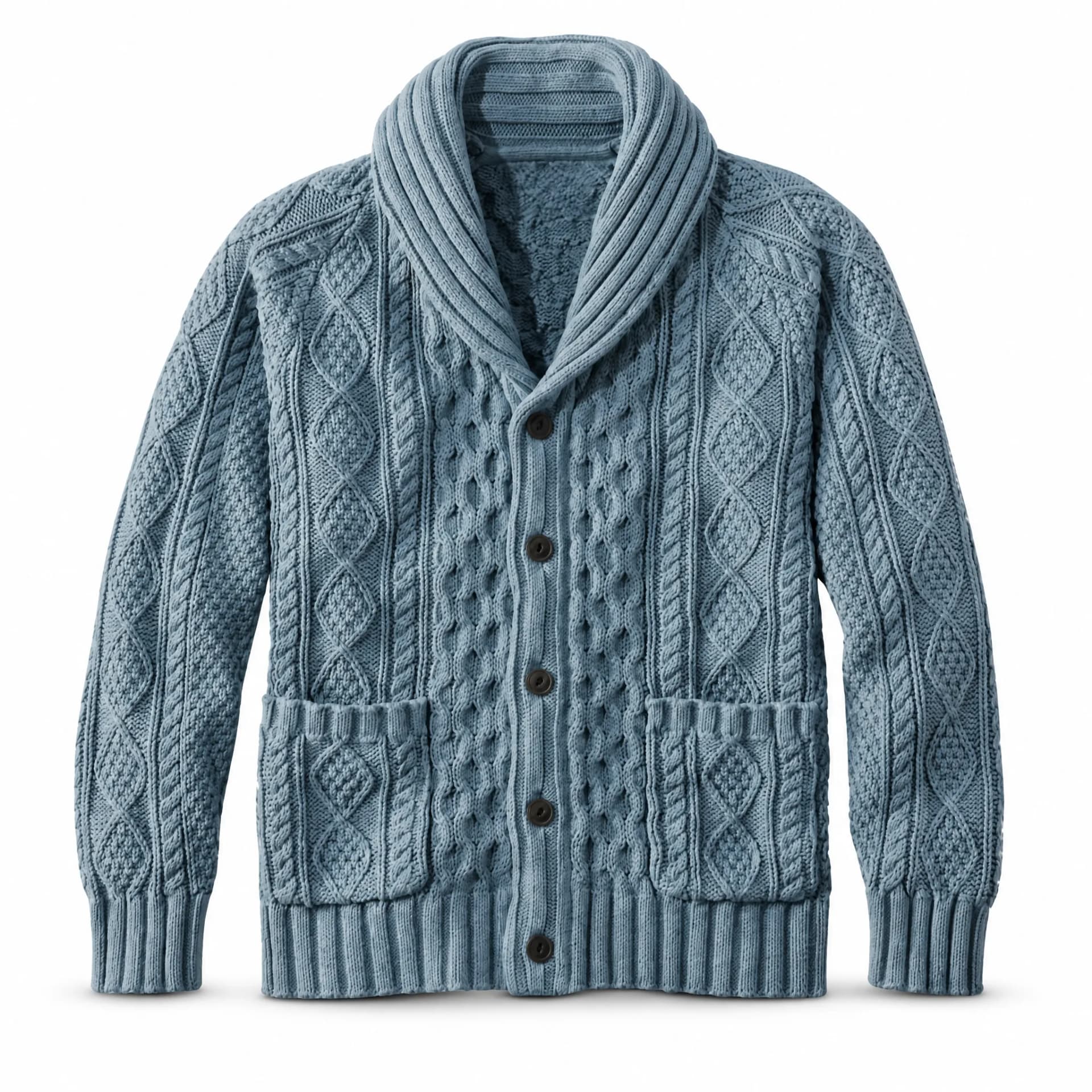
Custom Shawl Collar Cable Knit Cardigan
Chunky cable-and-diamond cardigan with a fully fashioned shawl collar — knitted as structure, never cut and sewn.

Custom Full-Zip Wavy Cable Cardigan
A fold-down rib polo collar and a full-length metal zip over a wandering wavy cable — zip-up knitwear that reads tailored, not sporty.
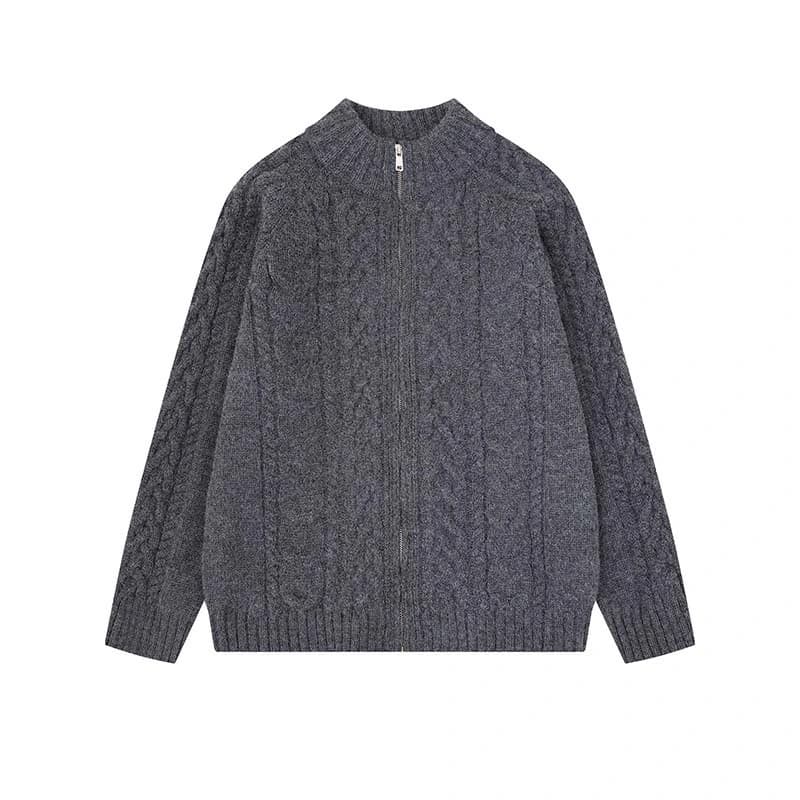
Custom Mock Neck Cable Zip Cardigan
A stand collar that stands, a raglan shoulder that carries the cable over the arm, and a chain cable body — zipped top to hem.
Keep reading

It's Time to Custom-Own Your Christmas Jumper
A short consumer-oriented overview of the custom Christmas jumper trend — design ideas, group-event tips, and the festive looks defining this year's holiday season.
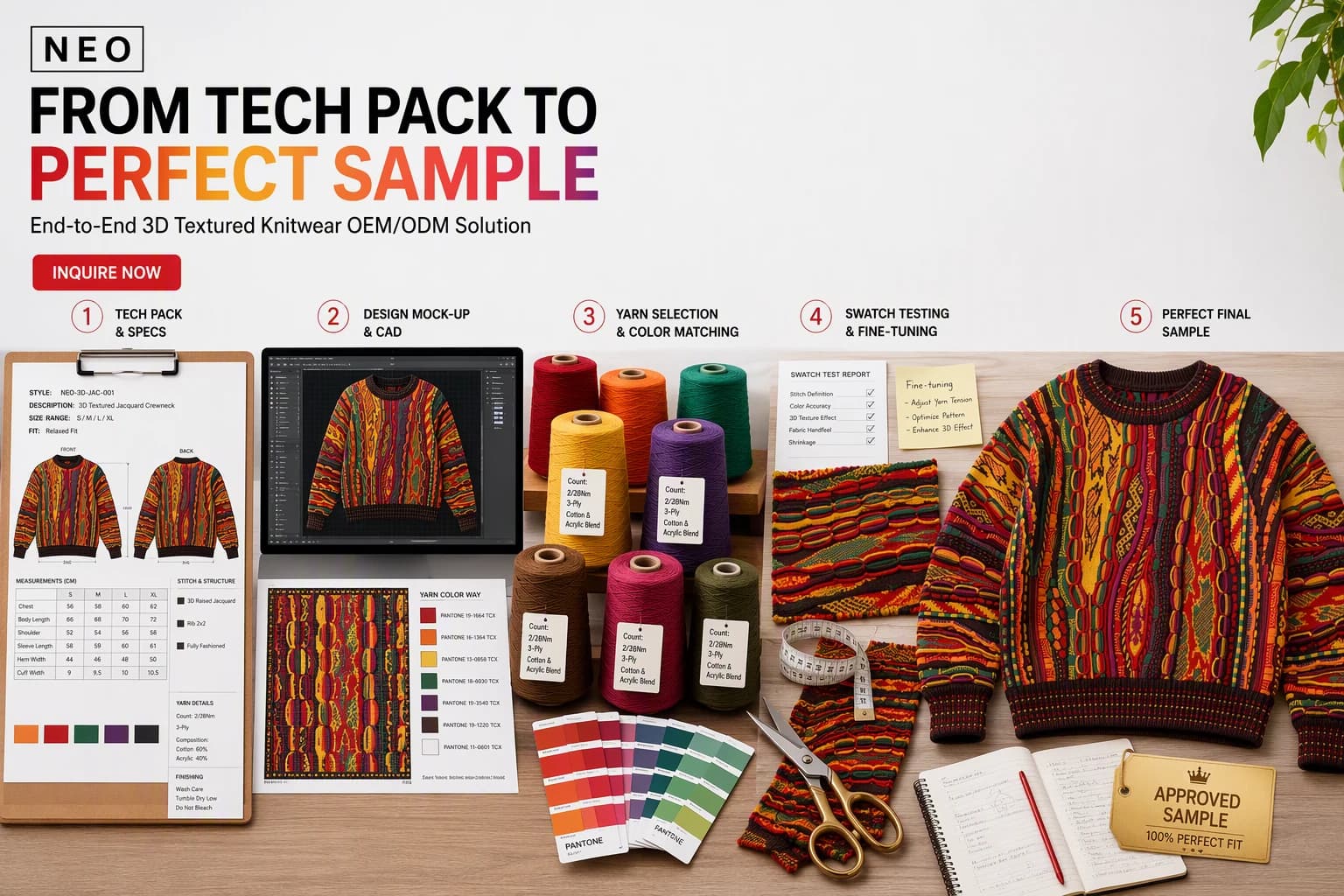
From Tech Pack to Perfect Sample: How Knitwear Sampling Actually Works
A floor-level walkthrough of the five stages between your tech pack and an approvable knit sample — mock-up and CAD programming, yarn colour matching, swatch testing, and the final PPS.

Sourcing Custom Men's Knitwear: What Separates a Knitwear Factory from a Sweater Mill
Mens knitwear briefs rarely fail on the design. They fail on gauge, size grading and reverse-side finishing — three things most price requests never ask about. Here is what to specify before you ask for a quote.
Send us the piece you were told was too hard.
Reference photo, rough sketch, or full tech pack — our Dalang technical punchers evaluate feasibility, machine gauge, yarn options, and pricing within 24 hours.