Foil Print Knitwear: How Heat-Transfer Foil Finishes a Knit Sweater
Foil print is the third way a surface effect gets into knitwear — neither knitted in nor stitched on, but heat-pressed onto the panel after it exists. Here is how the film, the adhesive and the knit structure interact, and where the process fails.
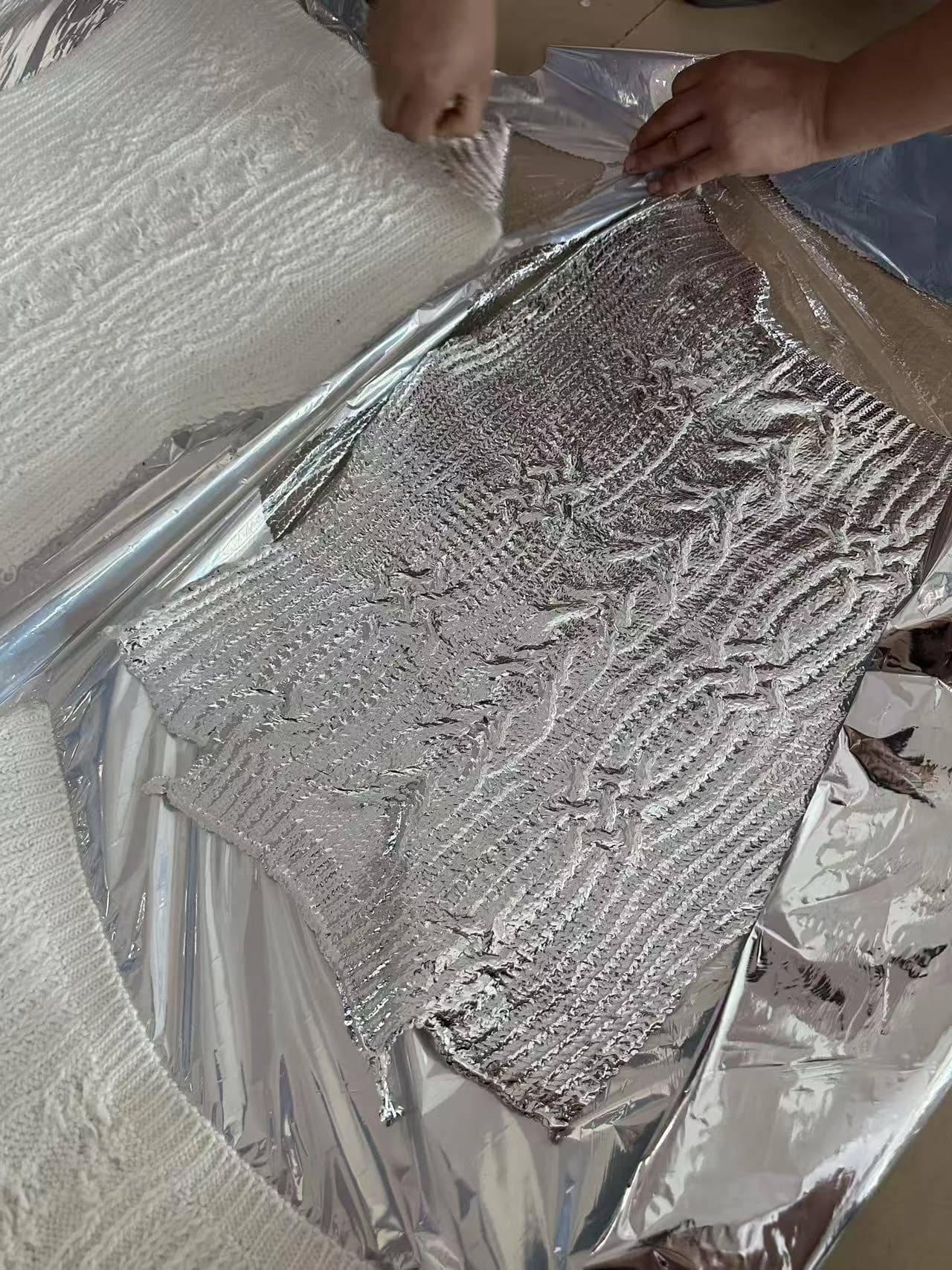
A graphic reaches a knit sweater by one of three routes. Jacquard and intarsia build it into the structure as it is knitted; embroidery stitches it on after the panel exists. Foil print is the third route: a metallised film bonded to the surface by heat and adhesive, neither knitted nor stitched. We covered the first route in Jacquard vs Intarsia vs Embroidery and the branding half of the second in our silicone badge guide. This post is about the third — how foil actually behaves on a knitted surface, which is a different problem from foil on a woven T-shirt, and the photographs in this piece are from our own finishing tables.
Foil print (sometimes called hot stamping foil, heat-transfer foil or, in factory shorthand, just the hot foil process) starts as a four-layer sandwich on a polyester carrier film: a release layer, a metallised layer that carries the shine, a colour layer, and a heat-activated adhesive that is the only part that ends up on your garment. The film is laid metallised-side down onto the knit, pressed at roughly 130-160°C depending on the fibre — lower for wool, higher for cotton-acrylic blends — and when the carrier peels away, the metal stays wherever the adhesive grabbed and leaves wherever it did not. That single sentence hides most of the difficulty, because everything that makes knitwear comfortable makes foil hard: the surface is not flat, it moves in four directions, and it cannot tolerate much heat.
Why Foil on a Knit Is Not Foil on a Woven
On a woven T-shirt, foil sits on a flat, stable, cotton surface and the whole job is temperature and pressure. On a knit, three extra variables enter. First, topology: a knitted surface is a field of loops, not a plane, so the adhesive has to bridge loop crowns rather than coat a sheet — which is why knit foil is applied to panels before linking wherever possible, pressing a flat panel on a flat bed, instead of pressing a finished garment where seams, rib borders and shoulder shaping lift the film away from the bed. Second, stretch: the foil layer itself does not stretch, so wherever it spans a wide area it will crack along the first line the knit flexes. Third, heat tolerance: wool and acrylic both carry a safe pressing window well below what a plain paper-transfer job would like, so dwell time and temperature are tuned to the yarn programme, not to the film's datasheet.
The Knit Structure Is the Design
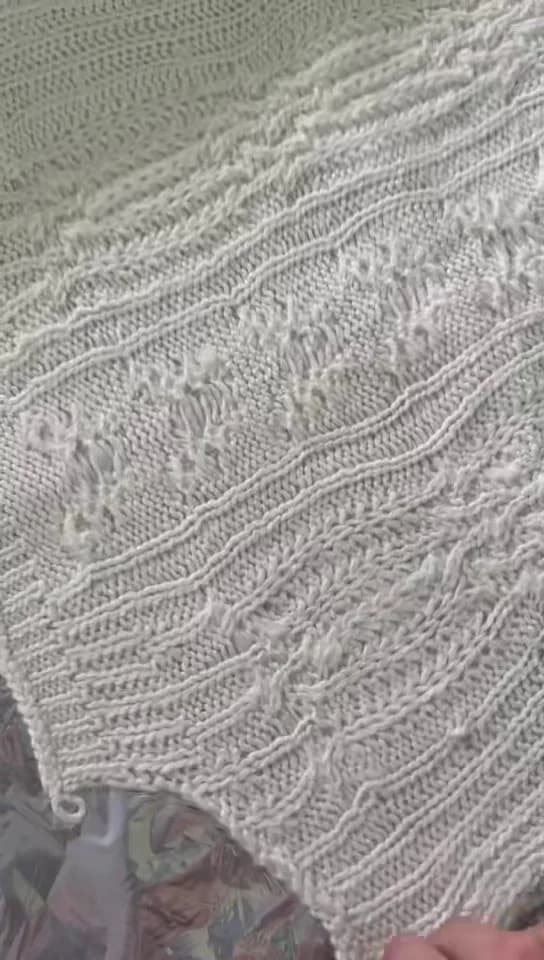
This is the part buyers underestimate and the part that makes foil worth doing on knitwear at all. A flat jersey panel takes foil like a mirror: an even, glossy metal sheet lying on the face. A cable panel does something better — the metallised layer conforms to the relief, so the rope columns read as embossed metal with the hollows staying matte and dark. The foil does not cover the knit evenly, and it should not: the contrast between crowned silver and shadowed ground is what makes the surface look like pressed metal rather than a sticker. That is why we press panels, not garments, and why the panel is laid out so the adhesive area respects the cable rhythm instead of fighting it. The same logic decides what not to foil: deep openwork, loose float jacquard and long-napped brushed faces all grip the film inconsistently and read as patchy under retail lighting.
Full Coverage Is Not the Only Adhesive Route
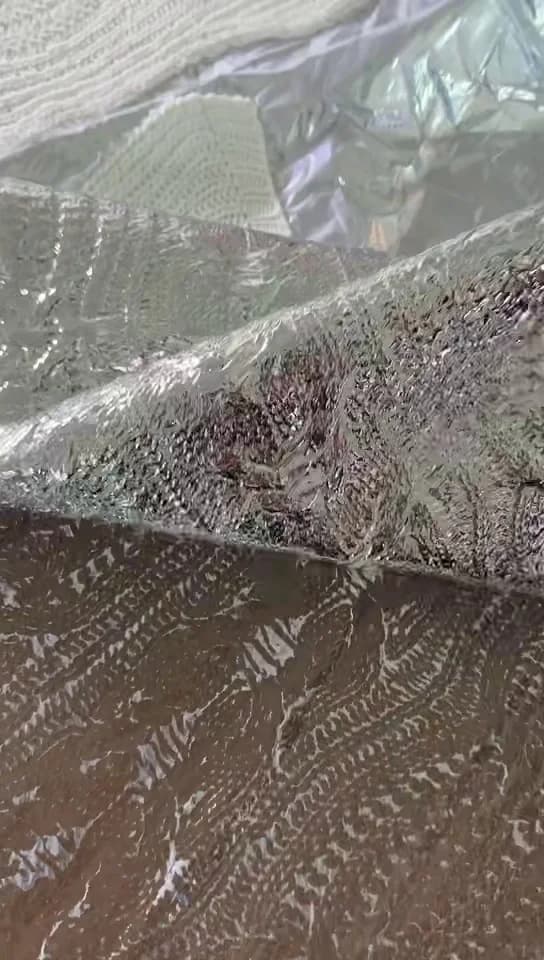
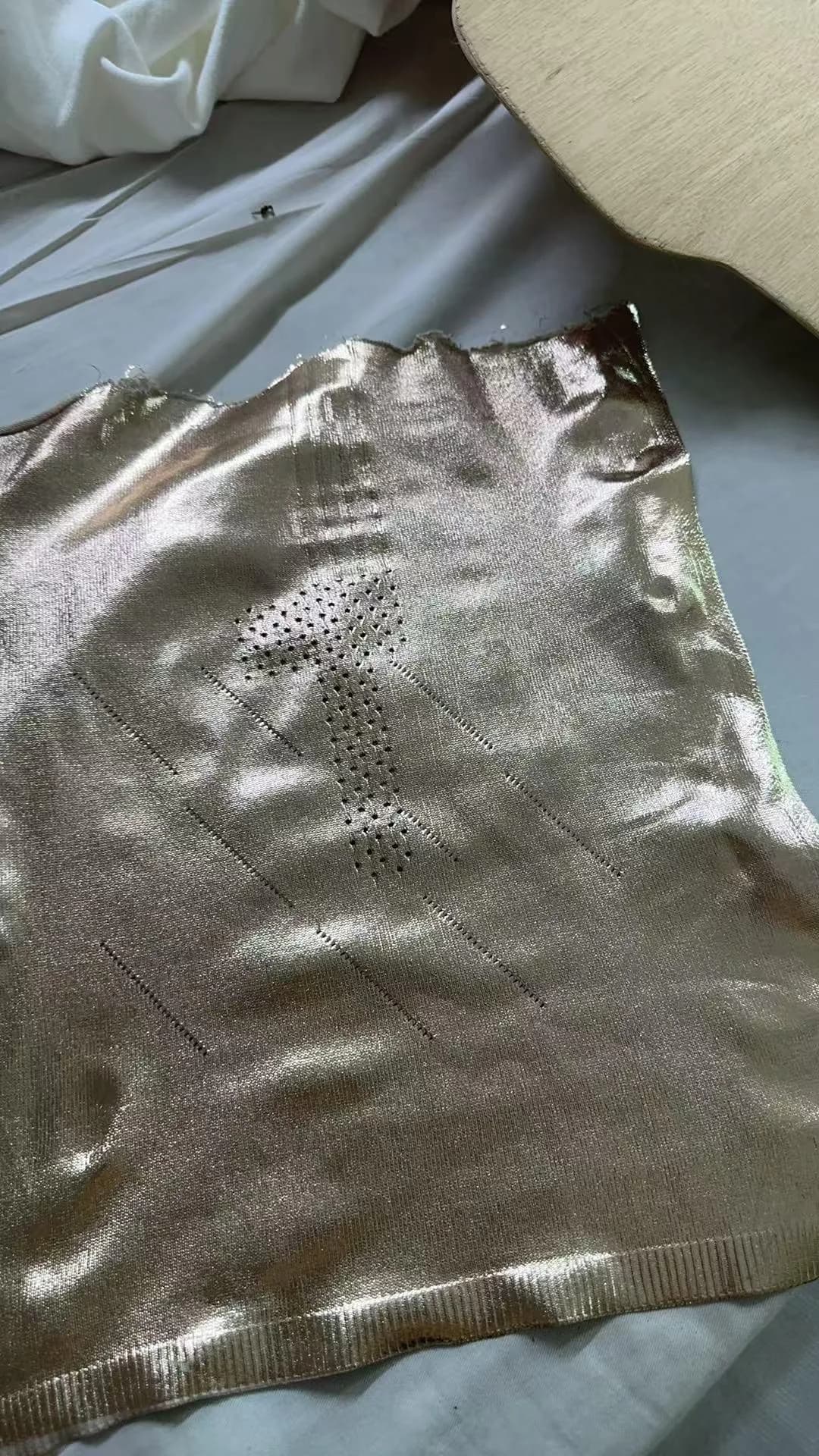
The adhesive decides both the look and the durability, and it is printed onto the knit before the film ever arrives. A solid screen-printed adhesive gives full metal coverage — the boldest read, and the most likely to crack on a high-stretch zone if the panel flexes at the wear point. A perforated adhesive — printed through a dot-patterned screen so the metal arrives as a fine grid of dots with knit showing between them — trades some mirror intensity for two real gains: the panel keeps breathing and stretching because the foil is no longer a continuous sheet, and the inevitable hairline cracks distribute across thousands of dot joints instead of running as one visible line across the chest. The gold panel in the photograph below uses exactly this route, with the perforation spacing matched to the stitch gauge so the dots sit on loop crowns rather than across them. Sprayed adhesives sit at the third point of the triangle: a gradient deposit that fades from full metal at the edge to bare knit in the middle, useful when the brief asks for a worn or gradient metal look rather than a hard-edged panel.
What Fine-Line Foil Reads Like on a Finished Garment
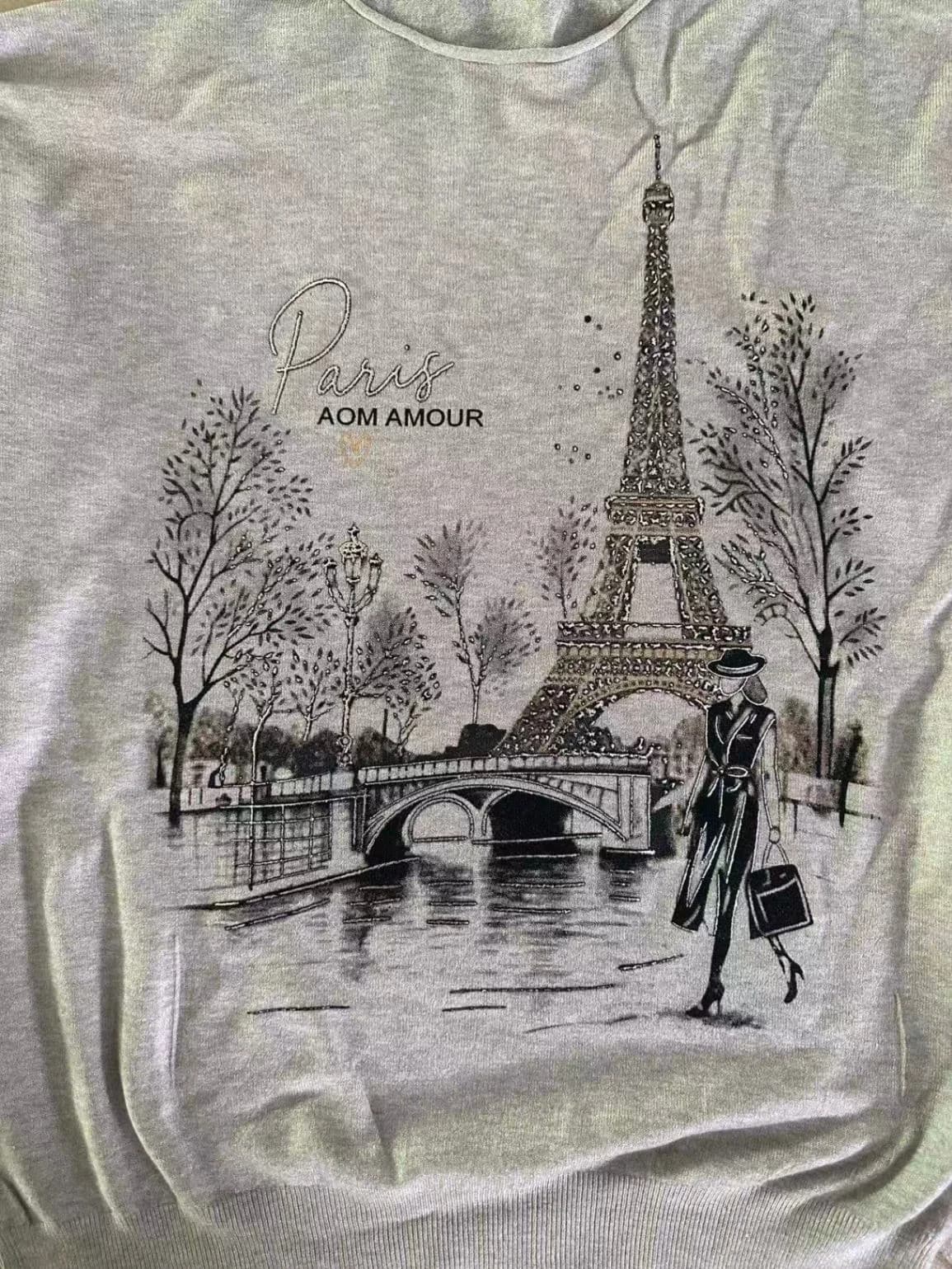
Every photograph so far has been panel-stage work, because that is where the decisions are made — but buyers rightly want to know what the process looks like worn. The garment below carries an engraved-style scene — a city skyline, a bridge, a walking figure in fine line work — pressed in a warm metallic foil onto a fine-gauge, low-relief ground. Two things are worth reading from it. First, line width: foil holds detail far finer than most buyers expect, but the artwork has to be drawn with line weights in mind — hairlines thinner than the stitch pitch start to fragment even on this near-flat ground, which is why we ask for engraving-style artwork rather than photographs as the foil source. Second, placement discipline: the motif stops well short of the neck rib and the side seams, so there is no foil edge sitting on a seam for wear and laundering to lift. A design like this is briefed exactly like the panel work above — artwork, placement, base structure — only the adhesive print is finer and the pressing window sits slightly lower, because fine-gauge faces scorch more readily than a heavy cable.
Durability Is Tested, Not Assumed
Three tests sit between a foil sample and a bulk sign-off, and every serious buyer should ask for all three on the first sample. The stretch test: the panel is pulled across its widest wear direction — chest for a fitted style, elbow and seat for sleeves and pants — and the foil is inspected for whitening and crack propagation; a perforated adhesive passes this far more often than a solid one. The wash test: the garment goes through repeated home-laundering cycles at the care label's stated temperature, because a foil that lifts at the edges after three washes will generate returns, not compliments. The peel test: a corner of the applied foil is lifted with tape to check adhesive bond uniformity across the panel — patchy bond shows up here first, long before the customer sees it. What foil will not survive should be stated on the care label rather than hoped away: high-heat tumble drying softens the adhesive layer, and dry-cleaning solvents attack the metal finish, so foil knits are washed-cold-and-lay-flat garments by design.
Briefing a Foil Programme
The decisions that matter, in the order they get made: which panel carries the foil and where its edges stop — an edge that runs into a seam or a rib border will lift; solid, perforated or gradient adhesive, which is a hand-feel and stretch decision as much as a visual one; foil colour and finish — silver and gold are stocked, holographic and matte metallic are orderable, and any of them can sit over a dyed ground; and whether the foil area replaces or combines with jacquard, because a foil zone over a quiet jacquard ground is one of the strongest premium reads available in this price band. If you are preparing a first enquiry, send the artwork with the intended placement, the base knit structure it will land on, and the care-label expectations. We press sample panels first — the peel photographs you see in this post are from that stage — so you approve the metal behaviour on the real cable before the programme moves to bulk. MOQ follows our standard knitwear programme at 100 pieces per design, sampling in 72 hours from yarn stock confirmation, bulk production 2-3 weeks after PPS approval, DDP door-to-door to US, EU, UK, AU and JP.
One caution closes the loop with our standing policy: foil reproduces whatever the adhesive prints, so the artwork is yours to own. We do not apply third-party logos or marks through a foil programme any more than we would knit them into a jacquard — the artwork you send is what gets pressed, and it is cleared with the same ownership confirmation as every other branding method on this site.
Looking to manufacture this style at scale?
Send us your design brief and we'll quote a direct-factory run with low MOQs, 72h sampling and DDP worldwide delivery, knitted on our own floor in Dalang.
Knitwear you can manufacture right now
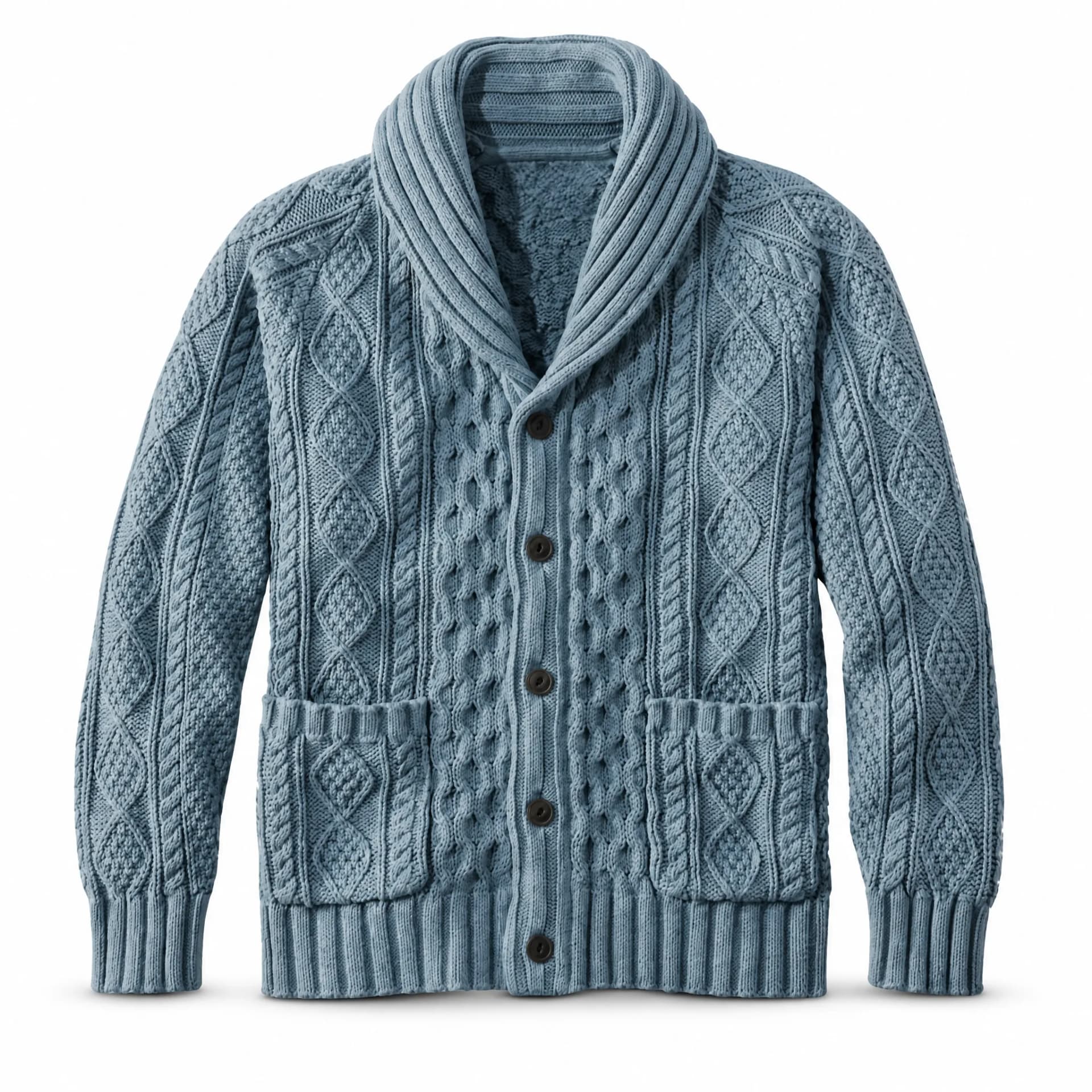
Custom Shawl Collar Cable Knit Cardigan
Chunky cable-and-diamond cardigan with a fully fashioned shawl collar — knitted as structure, never cut and sewn.
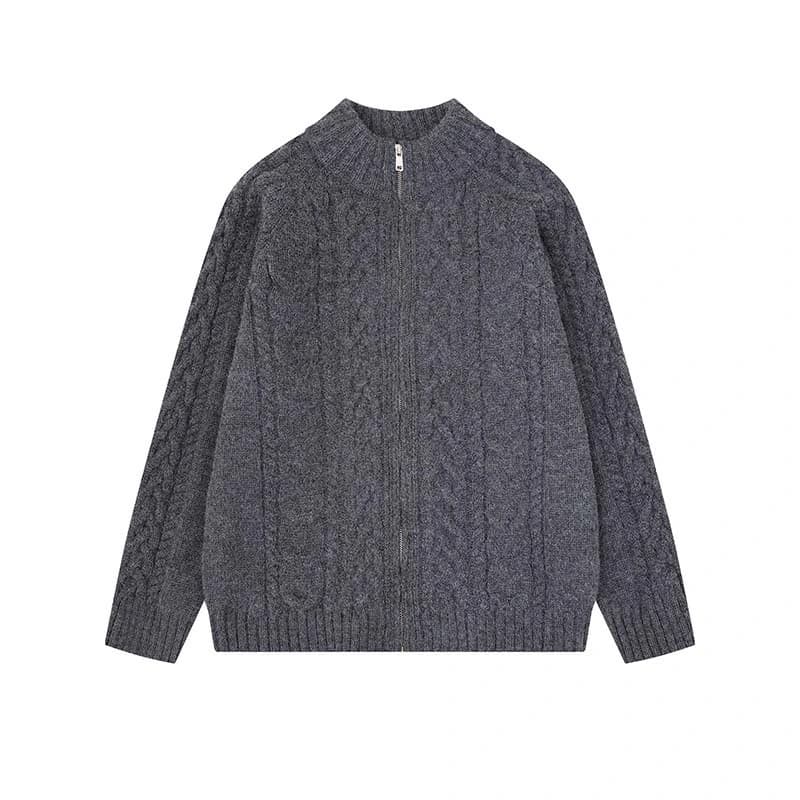
Custom Mock Neck Cable Zip Cardigan
A stand collar that stands, a raglan shoulder that carries the cable over the arm, and a chain cable body — zipped top to hem.
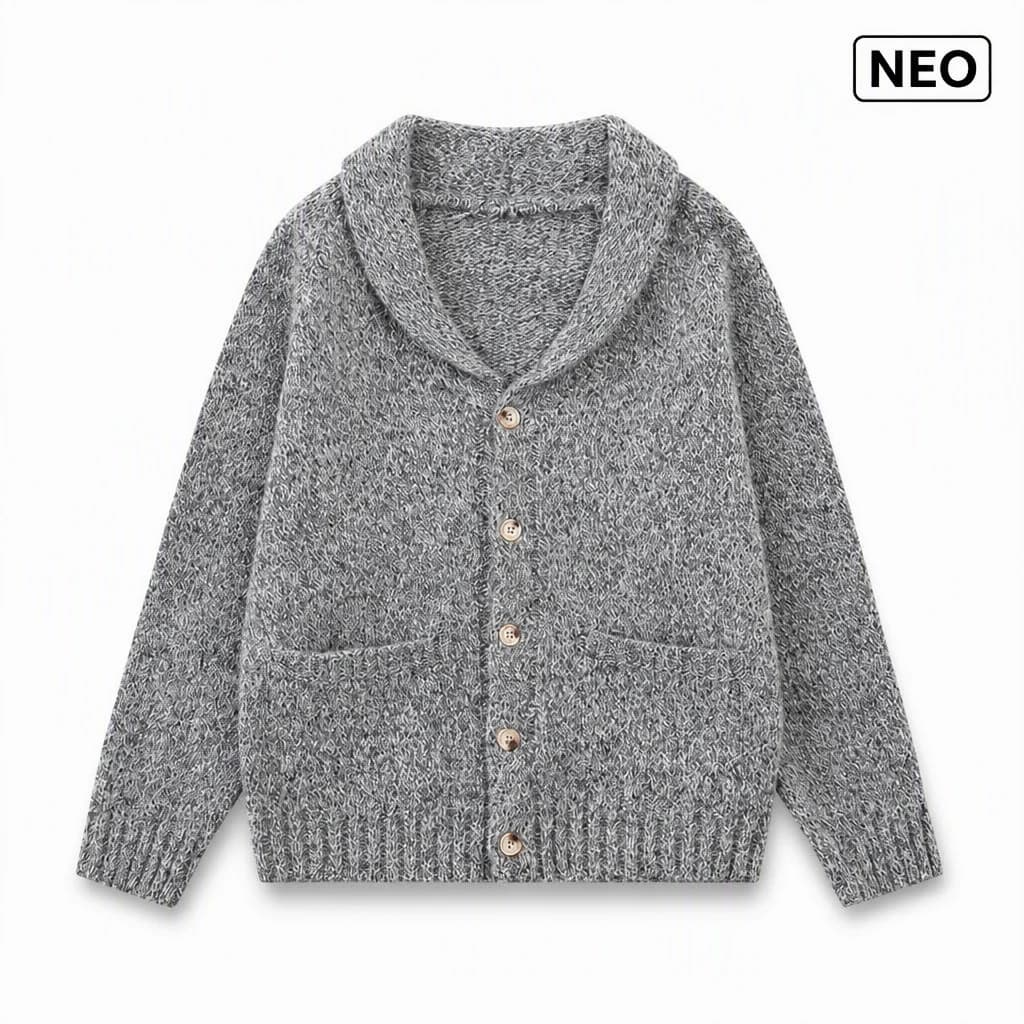
Custom Heather Melange Shawl Collar Cardigan
Smart-casual marled yarn cardigan with a ribbed shawl collar, welt pockets and horn buttons — knitted, never cut and sewn.
Keep reading

It's Time to Custom-Own Your Christmas Jumper
A short consumer-oriented overview of the custom Christmas jumper trend — design ideas, group-event tips, and the festive looks defining this year's holiday season.
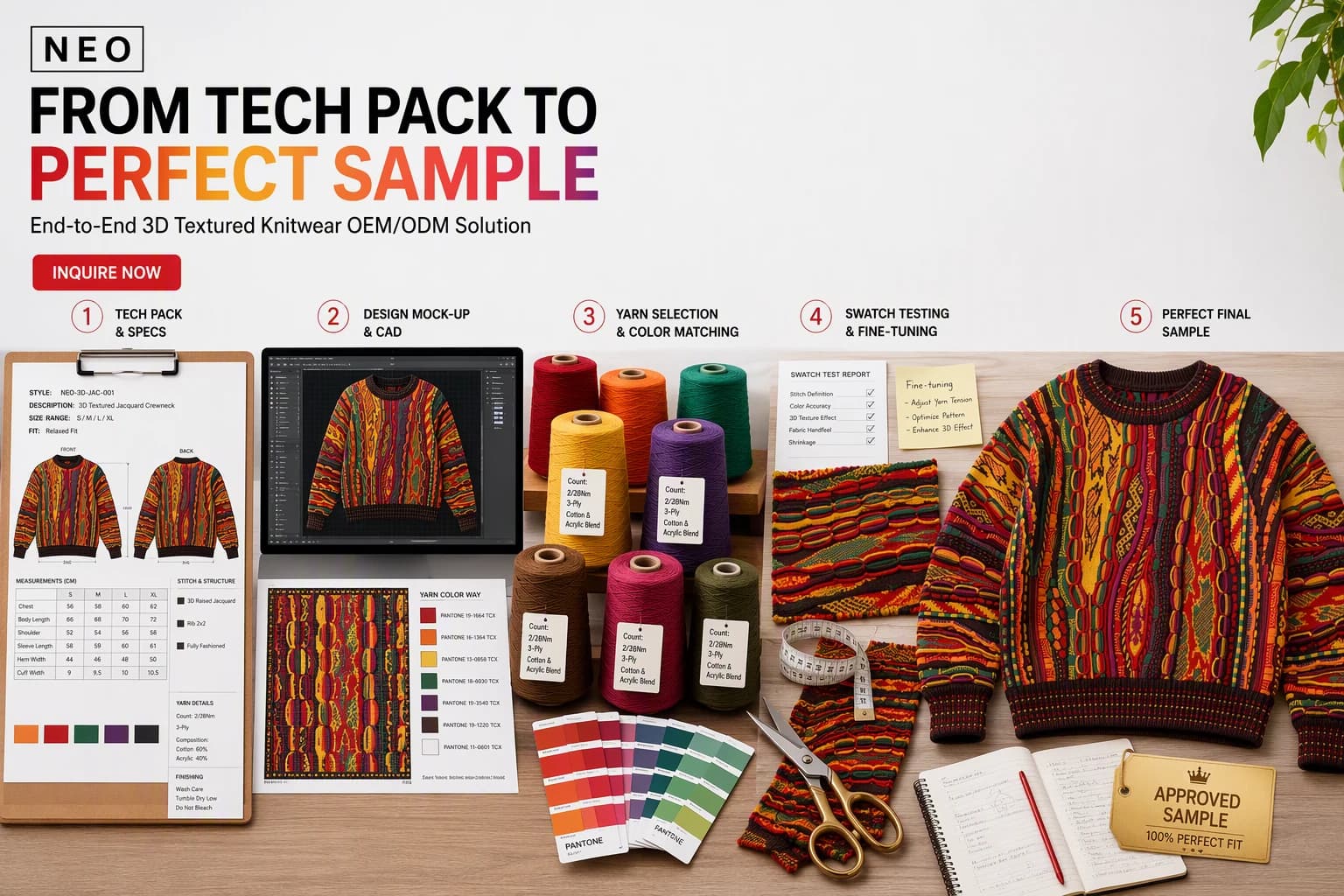
From Tech Pack to Perfect Sample: How Knitwear Sampling Actually Works
A floor-level walkthrough of the five stages between your tech pack and an approvable knit sample — mock-up and CAD programming, yarn colour matching, swatch testing, and the final PPS.
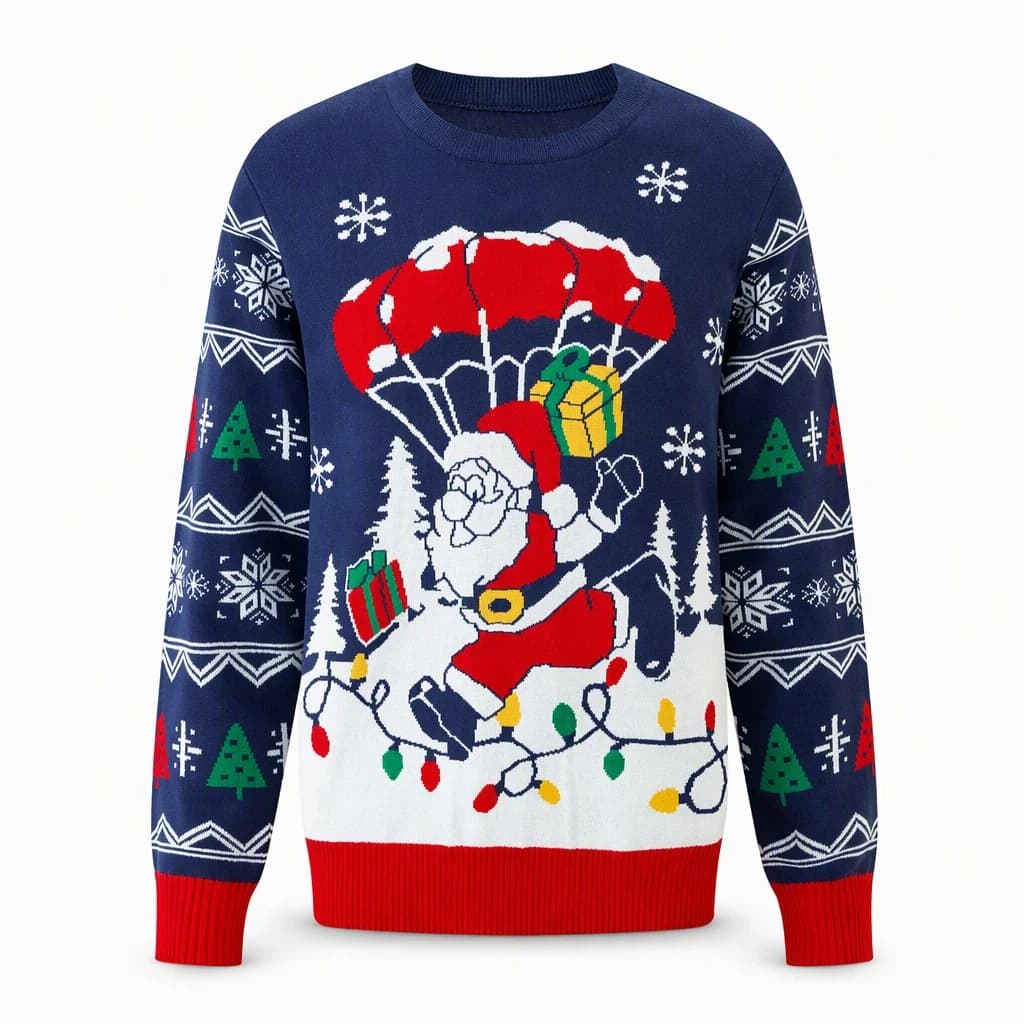
Sourcing Custom Men's Knitwear: What Separates a Knitwear Factory from a Sweater Mill
Mens knitwear briefs rarely fail on the design. They fail on gauge, size grading and reverse-side finishing — three things most price requests never ask about. Here is what to specify before you ask for a quote.
Send us the piece you were told was too hard.
Reference photo, rough sketch, or full tech pack — our Dalang technical punchers evaluate feasibility, machine gauge, yarn options, and pricing within 24 hours.