AI Generated Knitwear Design: From Prompt to Real Sample
Buyers now arrive with AI-generated design sheets instead of tech packs. Here is how a knit factory reads an AI image and turns it into a knittable brief: gauge, yarn, count, and the decisions the image cannot make for you.
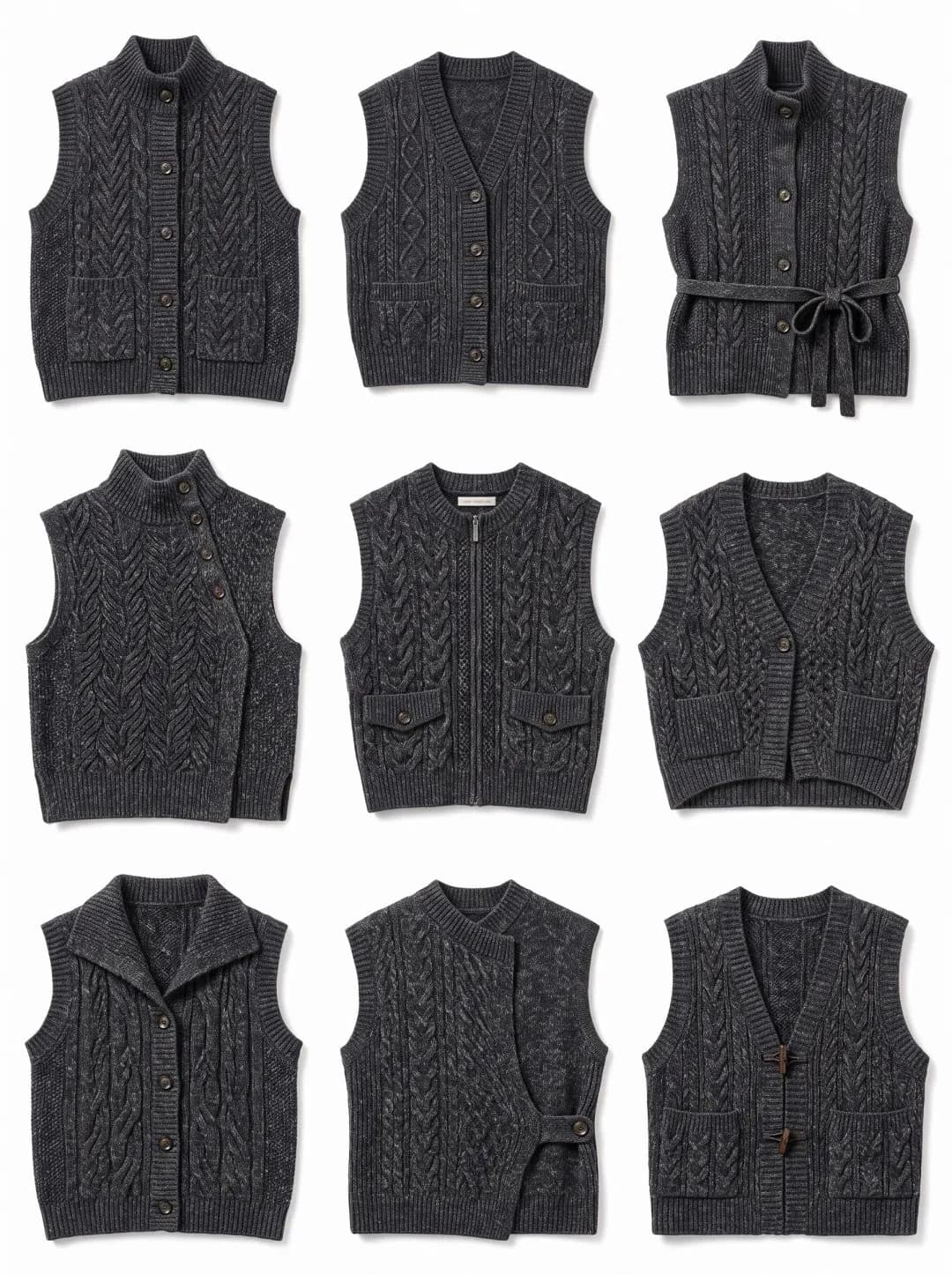
The design sheet above was generated by an AI image model, and we are showing it as exactly that — a concept sheet, not a photograph of our product. That is the point: this is what a growing share of first enquiries now look like. Nine variations of a charcoal cable-knit sweater vest, same colourway, different collars and plackets, produced in an afternoon with a prompt. The question buyers ask us is no longer "can you copy this sample?" but "I made this with AI — can you make it real?" The answer is yes, with a short technical conversation in between. This post is what that conversation covers.
An AI generated knitwear design is a picture of an outcome, not a specification. It shows the silhouette, the stitch family, the scale of the texture, the colourway and even trim details — button plackets, zips, belts, toggles. What it does not show, and cannot show, is every decision that turns the picture into a knittable garment: the machine gauge, the yarn, the yarn count, the finished weight. Those decisions are where a factory earns its role, and they are worth understanding before you send the image, because the buyers who arrive with them half-decided get accurate quotes in days instead of weeks.
What an AI Image Tells Us — and What It Cannot
The first thing we do with an AI design sheet is read it the way a pattern reader reads a sketch. In the sheet above, the stitch family is unambiguous: cable and rope cables over a reverse-stockinette ground, with rib at the armholes and hems. The scale is readable too — the cable plaits are roughly three to four centimetres wide relative to the body, which places the design in the mid-to-chunky range, not fine gauge. The heathered charcoal suggests a melange-spun yarn rather than a solid-dyed one. And the nine collar and placket variations tell us the buyer is still exploring — which is fine, because collar variants are trim decisions, not knitting decisions.
What the image cannot tell us: the actual gauge, the yarn composition, the yarn count, the finished weight, and how the garment is constructed — panels linked or knit-to-width. AI models render a plausible texture; they do not know whether the plait they drew can be knitted at the density they drew it. That mapping is our job, and it is a conversation, not a guess.
Choosing the Gauge: Matching the Machine to the Look
- 3GG (3 needles per inch): heavy chunky knits, outwear-weight cables. The sheet above knitted at 3GG would become an oversized, deliberately coarse garment of roughly 700–900 g — a different product, not a wrong one.
- 5GG: chunky but wearable. Cable plaits read bold, fabric stays supple, finished vest weight around 450–550 g. The right choice if the AI look is meant to feel rugged and oversized.
- 7GG: the closest match to the sheet. Crisp cable definition at a wearable weight, finished vest roughly 350–450 g, rib and placket details scale correctly. This is what we would sample first for the design above.
- 12GG and finer: wrong tool for this look. Cables compress into texture rather than relief, and the buttons, zip and belt details would overwhelm the fabric. Fine gauge belongs to lightweight plain and textured knits, not to rope-cable programmes.
One rule worth remembering: gauge is a readability decision. The wider the cable plait relative to the body, the lower the gauge. If your AI image shows chunky plaits on a fitted silhouette, something has to give — either the plait narrows (higher gauge) or the silhouette relaxes (lower gauge). We flag that trade-off in the first reply rather than silently knitting the version that photographed best.
Yarn and Count: What Makes a Cable Look Like a Cable
Cable definition is a yarn property before it is a machine property. Cables stand out because the plait casts a shadow across a recessed ground, and only yarn with enough resilience and twist holds that relief after finishing and washing. For a mid-gauge cable vest like the AI sheet, the standard route is a two-fold yarn on a 7GG machine — and the count is what balances the look against the weight.
- 2/26Nm wool or wool-nylon blend: the default for 7GG cables. Two 26Nm ends knitted together give full coverage at the gauge, and the nylon share adds the abrasion resistance a buttoned vest needs at the placket.
- 2/26Nm wool-acrylic melange: the budget-conscious route, and the closest match to the heathered charcoal in the AI sheet — melange spinning is exactly how that grey depth is produced. Slightly less resilient than pure wool, still fully acceptable for cable programmes.
- 2/16Nm at 5GG: if the buyer wants the chunkier interpretation. One step coarser in count, one step bolder in look.
- What we advise against: high-acrylic singles on fine gauge for cable looks. The plait flattens after the first wash and the garment reads cheaper than the design promised — the exact opposite of why the buyer liked the AI image.
Counts interlock with gauge, which is why we answer "what yarn should I use?" together with "what gauge?" rather than separately. A 2/48Nm at 7GG would need to be knitted as three or four strands and would still knit down lighter than the AI image implies; a 2/16Nm at 7GG would knit stiff and heavy. The pair — gauge plus count — is the actual specification, and it is the single biggest driver of both the quote and the finished hand-feel.
From AI Image to First Sample: Our Route
- Read and map (day 1): we translate the AI image into a knittable brief — stitch family, target gauge, yarn family, and the trim list (collars, plackets, zips, belts) pulled out as separate line items.
- Digitise the stitch (day 1–2): the cable structure is programmed against the chosen gauge, with the plait width matched to the image, and a small swatch is knitted to check density and shadow.
- Sample (day 3–7): one full-size vest in the AI colourway, or in a stock yarn if the launch is tight. The melange charcoal in the sheet is a dyed-to-match job, not a stock colour, and that difference is quoted honestly.
- Reconcile (with you): the sample and the AI image go side by side. Where AI drew something yarn cannot do — usually an impossible density or a seam the model invented — we point at it and offer the nearest knittable version. The buyer decides with a real garment in hand, not a rendering.
The honest part: not everything an AI model draws can be knitted. Most of it can, mapped to the nearest real structure — but a factory that says "yes, no questions" to any AI image is planning to quietly change your design and tell you later. We would rather have the ten-minute conversation first.
Frequently Asked
Can you knit a garment directly from an AI-generated image?
Yes — as the design input, not as a tech pack. We read the image for silhouette, stitch family, texture scale and colourway, then specify the gauge, yarn and count that make it real. Most AI designs sample within a week; the conversation about gauge and count is what makes the sample land close to the image.
What gauge is best for a cable-knit sweater vest?
For the mid-weight cable vest look common in AI-generated design sheets — plaits three to four centimetres wide, button or zip plackets, rib at the edges — 7GG with a 2/26Nm two-fold yarn is the standard route. Chunkier interpretations drop to 5GG and a 2/16Nm. Fine gauges compress cable relief and are the wrong match for this family of designs.
How do I brief a factory on an AI design?
Send the image, plus whatever you already know: target weight, yarn preference, quantity, destination market, and whether the trims (buttons, zips, belts) are fixed or open. If you only have the image, that is enough to start — the factory's first reply should be a gauge and yarn proposal with a swatch plan, not a price.
If you have an AI-generated design sitting in a folder — one image or a sheet of nine variants — send it over with a quantity and a destination market. We will reply with the gauge, yarn and count we would run it at, what the image cannot decide for you, and a sampling plan that starts from a real swatch. The design was free to generate; making it real is the part worth doing properly.
Looking to manufacture this style at scale?
Send us your design brief and we'll quote a direct-factory run with low MOQs, 72h sampling and DDP worldwide delivery, knitted on our own floor in Dalang.
Knitwear you can manufacture right now
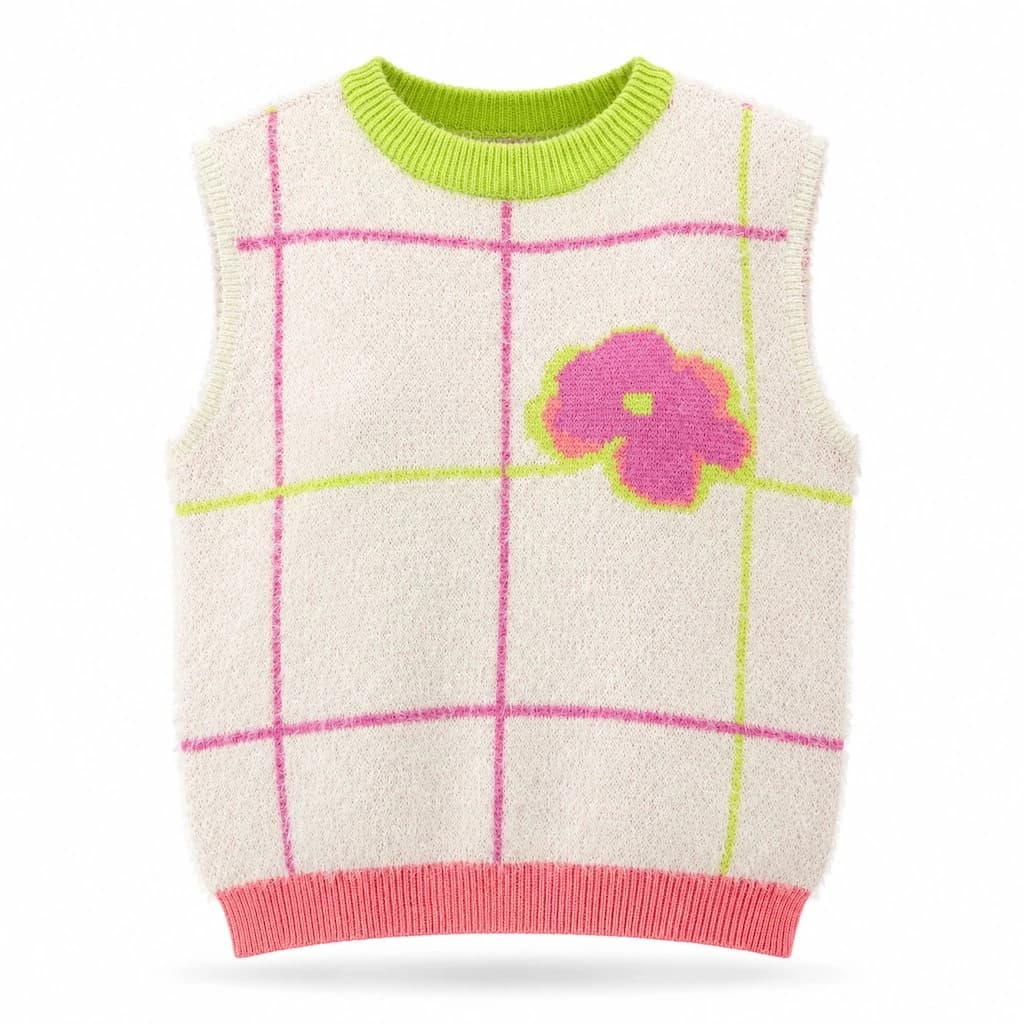
Dancing Yarn Jacquard Sweater Vest
Sleeveless sweater vest in long-hair dancing yarn, with a jacquard windowpane grid and a single floral motif.
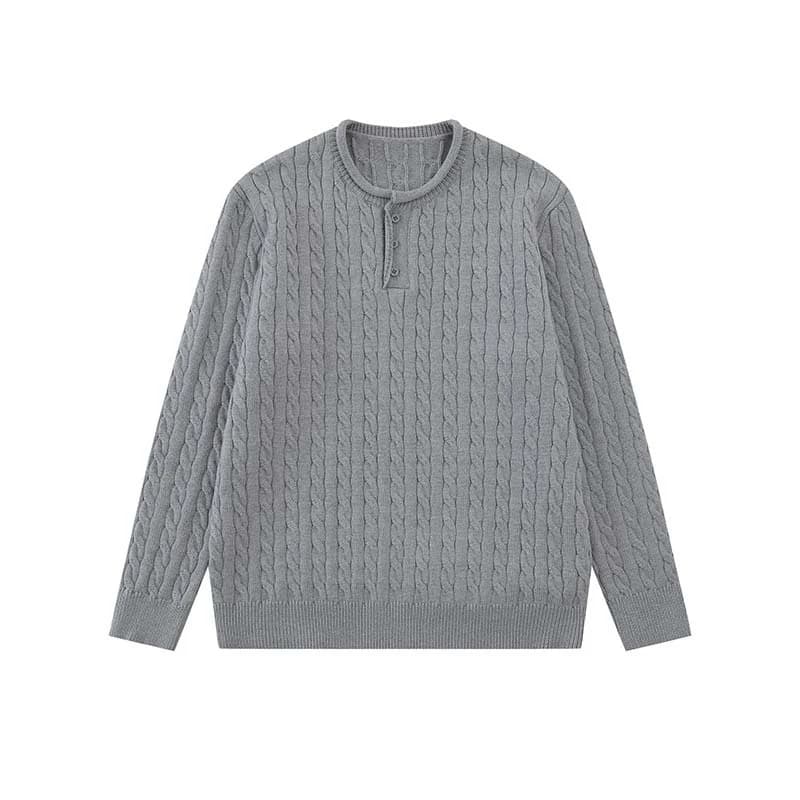
Custom Cable Knit Henley Sweater
Grandad-collar cable sweater with a three-button placket — the easiest cable silhouette to put your brand on.
Keep reading
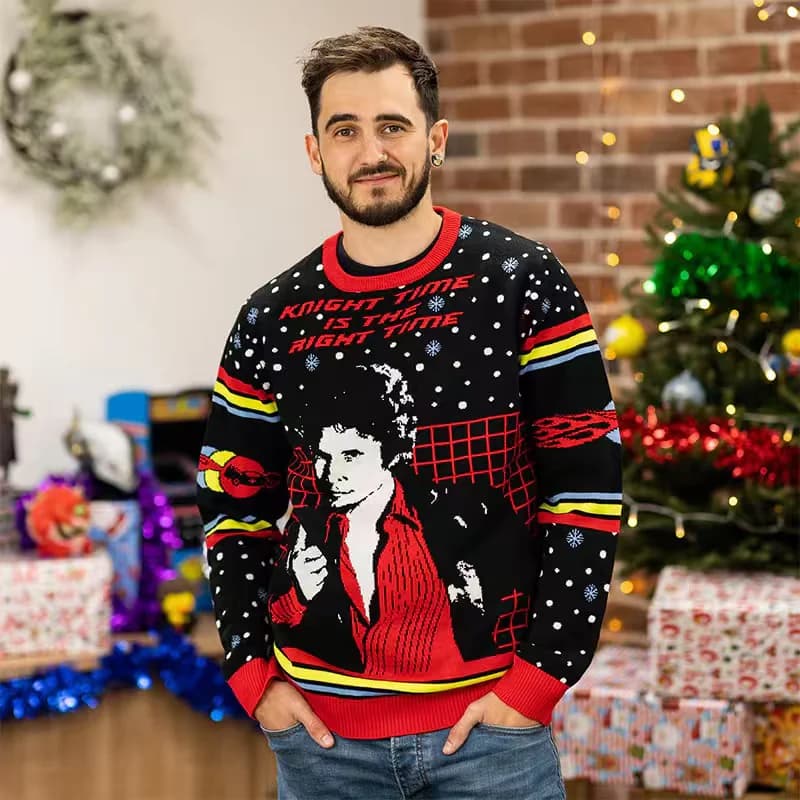
It's Time to Custom-Own Your Christmas Jumper
A short consumer-oriented overview of the custom Christmas jumper trend — design ideas, group-event tips, and the festive looks defining this year's holiday season.
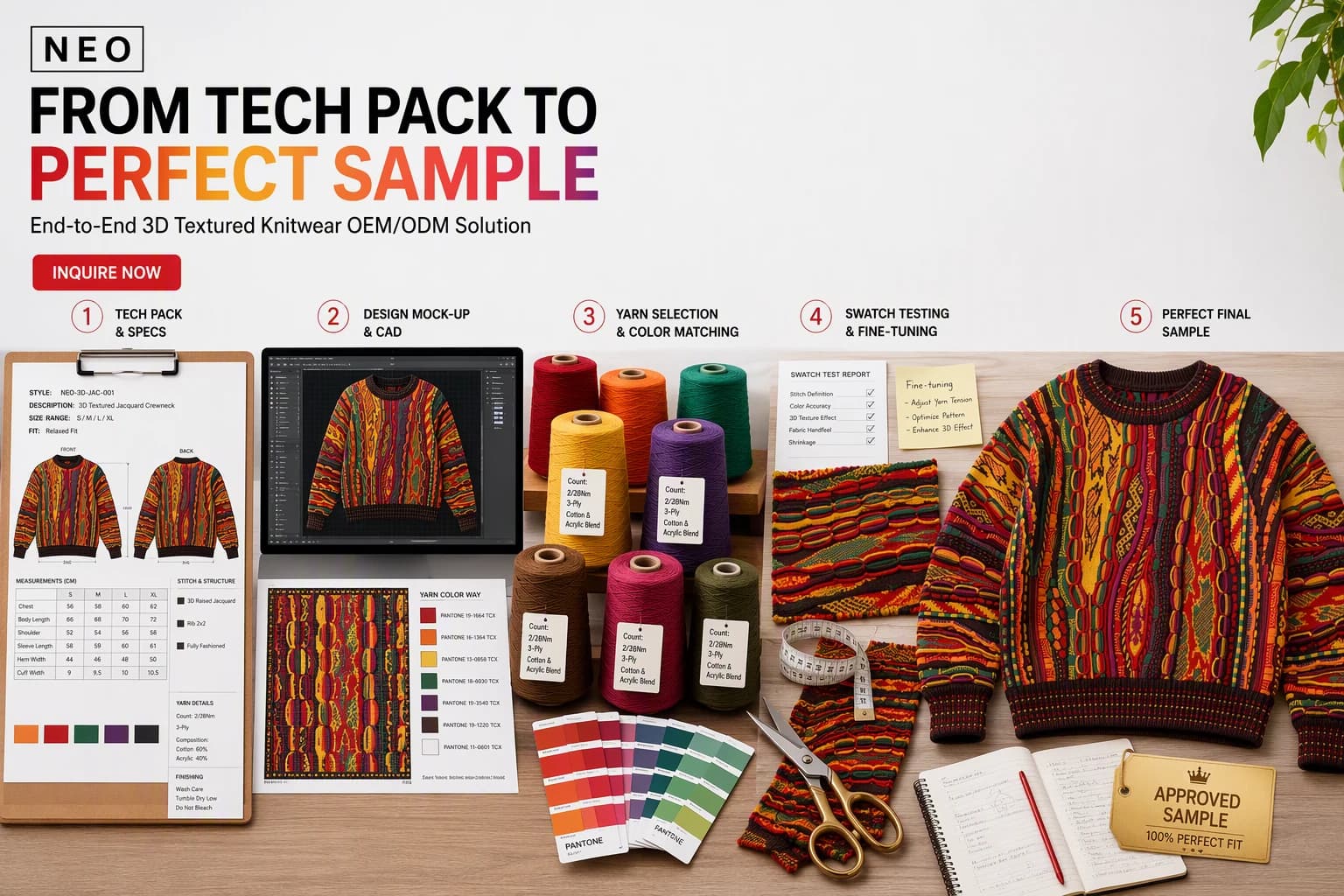
From Tech Pack to Perfect Sample: How Knitwear Sampling Actually Works
A floor-level walkthrough of the five stages between your tech pack and an approvable knit sample — mock-up and CAD programming, yarn colour matching, swatch testing, and the final PPS.
Sourcing Custom Men's Knitwear: What Separates a Knitwear Factory from a Sweater Mill
Mens knitwear briefs rarely fail on the design. They fail on gauge, size grading and reverse-side finishing — three things most price requests never ask about. Here is what to specify before you ask for a quote.
Send us the piece you were told was too hard.
Reference photo, rough sketch, or full tech pack — our Dalang technical punchers evaluate feasibility, machine gauge, yarn options, and pricing within 24 hours.