Knitwear MOQ Explained: Why 100 Pieces, and When It Moves
A minimum order is not a sales threshold, it is a machine-setup threshold. Here is what 100 pieces actually pays for, why another colour is cheaper than another style, and the three conditions that move the number down.
Written for brand owners and buyers planning a production run. If you are ordering a single personalised jumper, MOQ does not apply to you.
Every factory conversation eventually reaches the same sentence: our minimum is a hundred pieces per design. Buyers usually hear that as a commercial position, something that might be negotiated if the relationship is good enough. It is not. A hundred pieces is roughly where the fixed cost of setting a knitting machine up stops dominating the cost of the garment itself. Below that line the price per piece does not rise gradually, it rises in steps you can feel.
Understanding what those steps are is more useful than arguing about the number, because it tells you which conditions to relax when you genuinely need a smaller run.
The Fixed Block: One Setup, Four Costs
A flat knitting machine does not switch from one design to another by pressing a button. Between two styles, four things happen regardless of how many pieces come off the bed:
- Programming. The design is rebuilt as a machine file — which needle knits, tucks, transfers or drops at every course. A plain crew neck is quick. A multi-colour jacquard band, a cable panel or a 3D relief motif is a full day of programming and testing.
- Yarn threading and tension setting. Every yarn position has to be threaded and tensioned, then tuned so the fabric density lands where the spec says it should.
- Swatch verification. A panel comes off the machine and gets measured, washed and compared to the intended result before the run is allowed to continue.
- Finishing setup. Linking, washing and blocking, trim attachment and packing all have their own changeover.
Three of those four happen once per setup, not once per garment. At 500 pieces they are noise. At 50 pieces they are most of the cost. That is the entire logic behind a minimum, and it is why the honest answer to can you do fifty is not yes or no — it is yes, at a materially higher unit cost.
Why a New Colour Is Cheaper Than a New Style
This is the single most useful distinction in knitwear ordering, and it is where most costing conversations go wrong. Adding a colourway to an approved style keeps the programme intact. The machine file already knows where every needle goes; you are changing which yarn feeds a position. Changeover is threading and tension, measured in hours.
Adding a new style discards the programme. Even a small silhouette change — a different neckline depth, a dropped shoulder, a longer body — alters the course count and the shaping sequence, which means the file is rebuilt and re-verified. So a minimum usually applies per style, not per colour, with one important exception: colour count inside a single design is constrained by how many yarn carriers the machine has. Past that ceiling, the design stops being a jacquard problem and becomes an intarsia or embroidery problem, and the cost structure changes with it.
Practical translation: four colourways of one jumper is usually a single production slot. Four silhouettes at a hundred pieces each is four setups, four programmes and four sampling rounds.
Three Conditions That Move the Minimum Down
When a buyer truly needs a smaller first run, these are the levers that actually work, in order of effect:
- Use a structure we already knit. If the garment is a crew neck, a ribbed beanie, a plain scarf or an existing cable panel, the programming cost largely disappears because the file already exists and is proven. A new artwork on a known body is a far smaller ask than a new body.
- Use yarn that already exists. Stock colours and running shades avoid a dye lot minimum at the yarn supplier. A new Pantone matched to a specific fibre usually means a minimum dye batch before knitting can start at all — and that minimum is often larger than the garment minimum.
- Accept a combined run. Several colourways of one style scheduled together share a single setup. So does a mixed size ratio, because grading changes stitch counts, not the programme logic.
A fourth lever exists but is rarely worth it: simplify the construction. Dropping an intarsia panel, a hand-applied pom or a high-density embroidery block removes manual operations, and manual operations are what make short runs painful. The saving is real, but so is the change to the product.
What Pushes the Minimum Up
The reverse list matters just as much, because buyers are often surprised by a minimum higher than the one they were quoted on a different style:
- A new dye lot. Dyeing to a fresh Pantone reference carries its own batch minimum, separate from knitting.
- High colour count in a jacquard. The closer a design runs to the machine's carrier limit, the less room there is for error, and the more setup time each colourway takes.
- Heavy manual finishing. Intarsia panelling, pom-poms, hand-linked collars and dense embroidery are labour per piece, so small runs do not amortise them at all.
- Speciality yarn that has to be ordered in. Thermo-chromatic yarn, brushed mohair and unusual counts are bought against a lead time, not pulled off a shelf.
Ask This Instead of Asking for a Lower MOQ
A request to lower the minimum invites a yes or no. A brief that describes the constraint invites a solution. The four things worth stating up front:
- The quantity you can genuinely commit to for a first run, and the quantity you expect on reorder.
- How many colourways, and whether they could launch in sequence rather than together.
- Your on-shelf date, which tells the factory whether a stock-yarn path is even possible.
- Whether the silhouette can come from an existing structure, or whether it has to be new.
With those four answers, a factory can tell you which lever is available. Without them, the only safe reply is the standard minimum.
Frequently Asked
Can I order 50 pieces?
Usually yes, at a higher unit cost and with less flexibility on yarn. The fixed setup block does not shrink, so it is spread across half as many garments. What we will not do is quote fifty pieces at the hundred-piece rate and then discover the difference at the sampling stage.
Do mixed sizes count as one minimum?
Yes. Size grading changes stitch counts and shaping, not the programme logic or the machine setup. A run of a hundred pieces split across four sizes is one production slot. Splitting across four colourways is also one slot, provided the colours are within the machine's carrier capacity.
Does a second colourway double the minimum?
No, and this is the most common misconception we correct. A second colourway of an approved style is a yarn change, not a new programme. It typically adds setup time and may add a dye lot minimum at the yarn supplier, but it does not double the garment quantity.
If you are weighing a first run and the minimum is the obstacle, send the silhouette, the colour count and your launch date. The useful reply is which of the three levers applies to your case — not a discount.
Looking to manufacture Christmas jumpers at scale?
Skip the print-on-demand platforms. Send us your design brief and we'll quote a direct-factory run with low MOQs, 72h sampling, and DDP worldwide delivery.
Knitwear you can manufacture right now
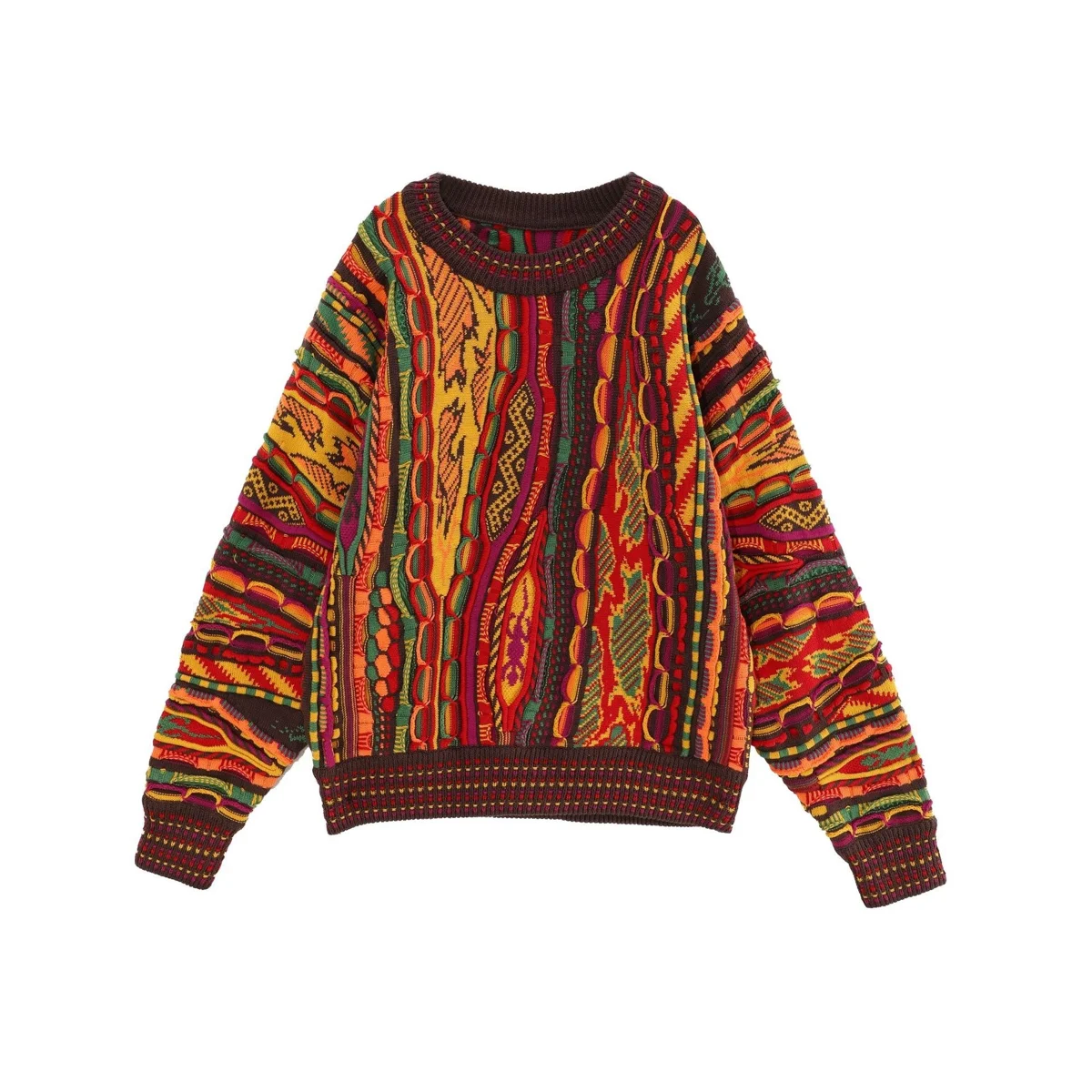
Custom Retro 3D Multi-Texture Knit Sweater
Jacquard, 3D relief and cable braid combined in one programme — the brief most factories decline to quote.
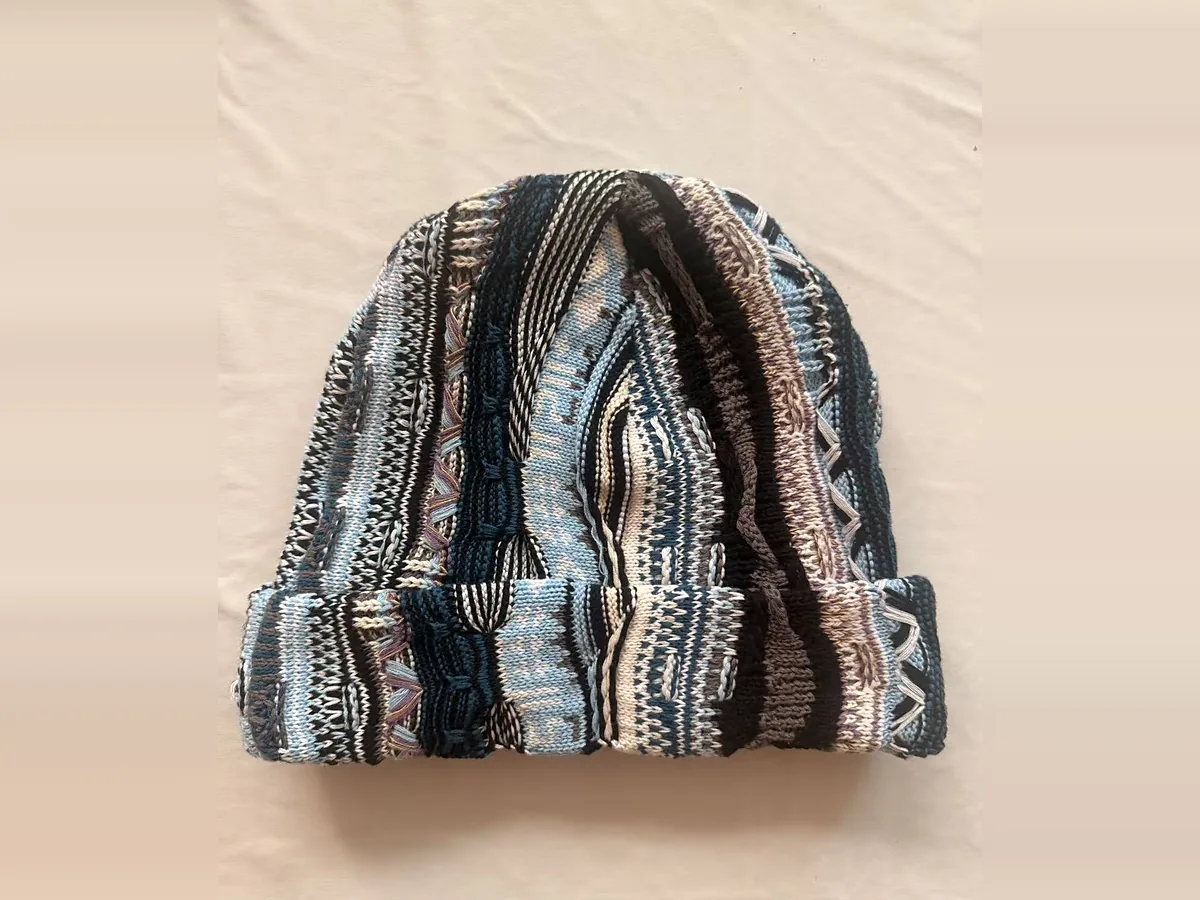
Custom Matching Intarsia Cable Knit Beanie
The sweater band sequence re-knitted to hat gauge — folded double-layer cuff, tubular no-seam crown.
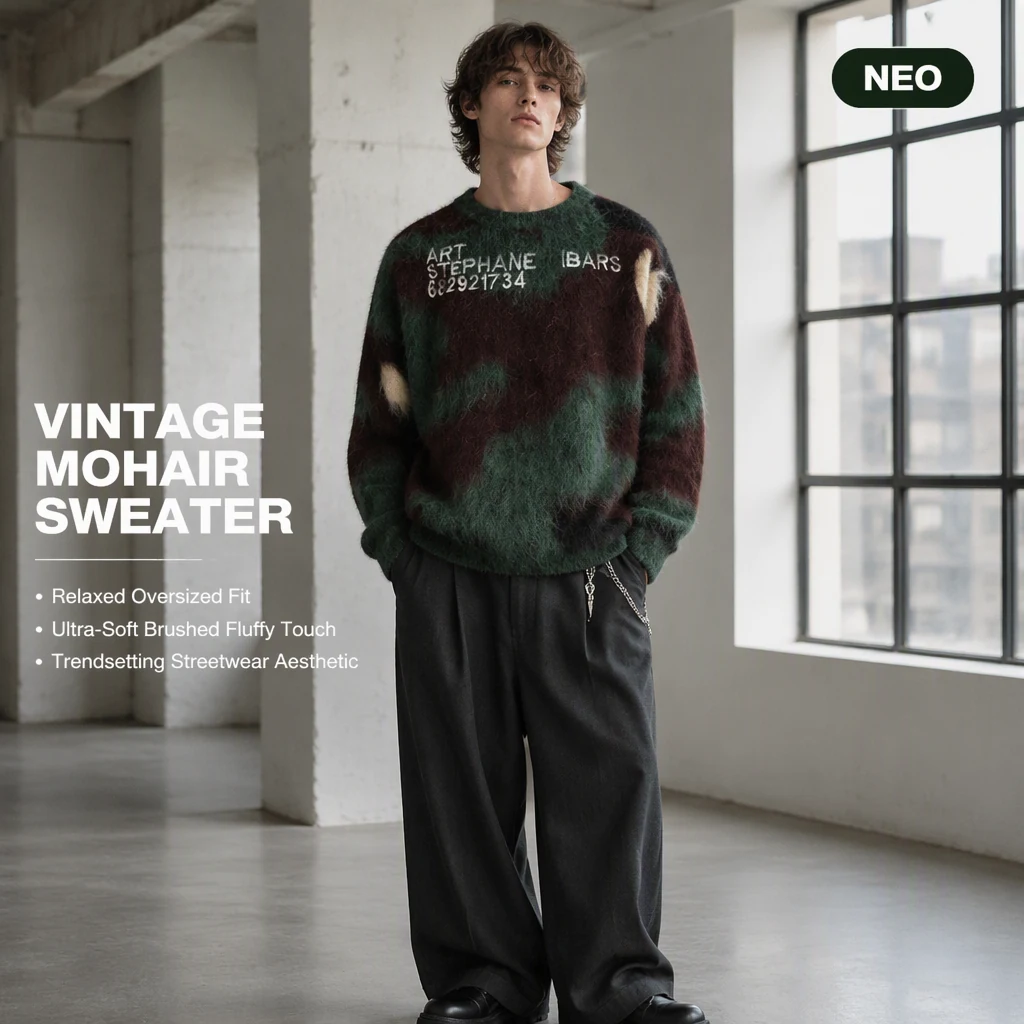
Custom Vintage Mohair Jacquard Sweater with Embroidery
Brushed fluffy mohair in an oversized silhouette — multi-colour jacquard camo ground with high-density 3D embroidered lettering.
Techniques behind this product
Keep reading
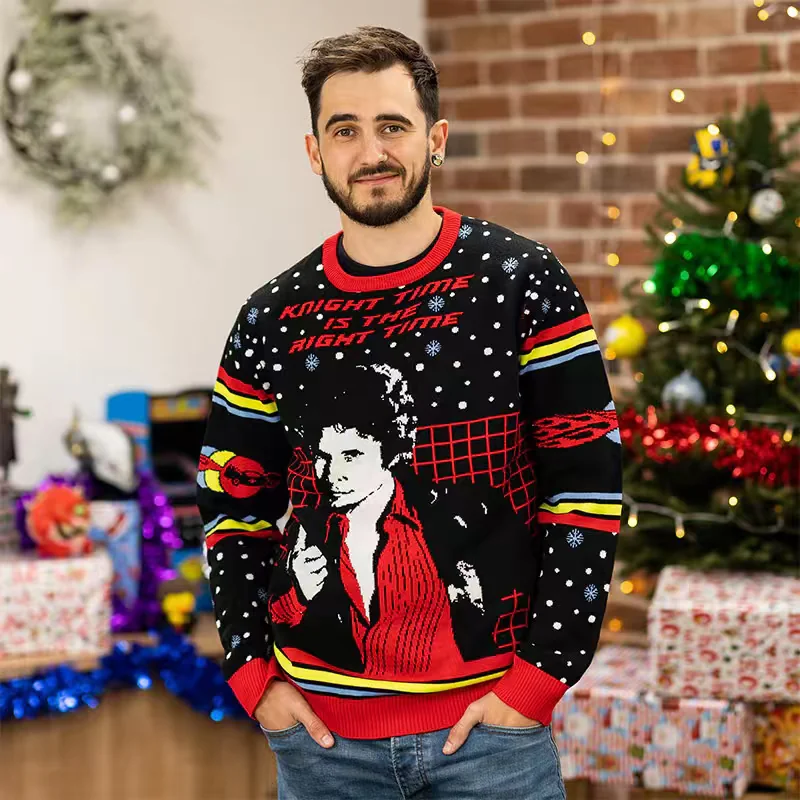
It's Time to Custom-Own Your Christmas Jumper
A short consumer-oriented overview of the custom Christmas jumper trend — design ideas, group-event tips, and the festive looks defining this year's holiday season.
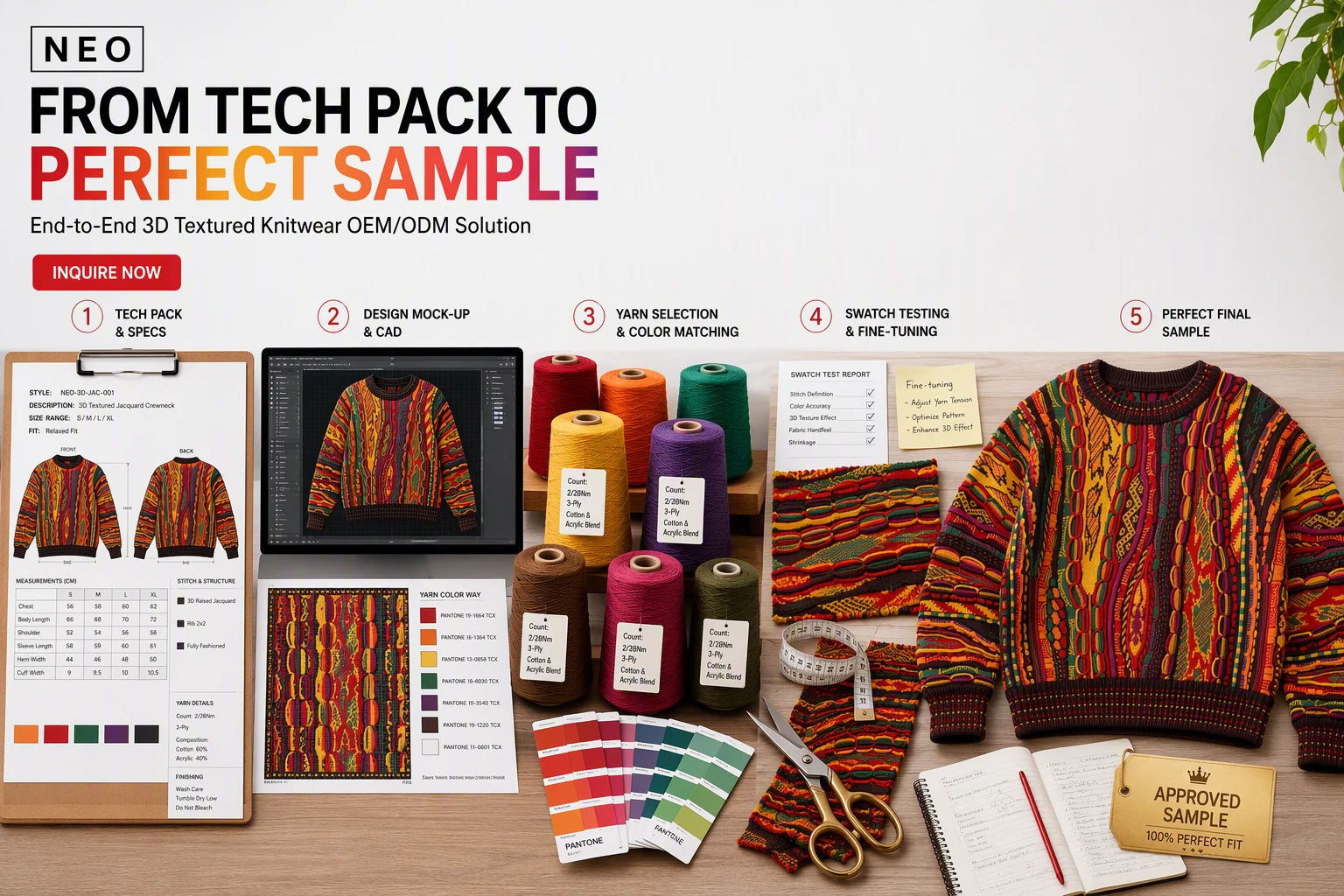
From Tech Pack to Perfect Sample: How Knitwear Sampling Actually Works
A floor-level walkthrough of the five stages between your tech pack and an approvable knit sample — mock-up and CAD programming, yarn colour matching, swatch testing, and the final PPS.
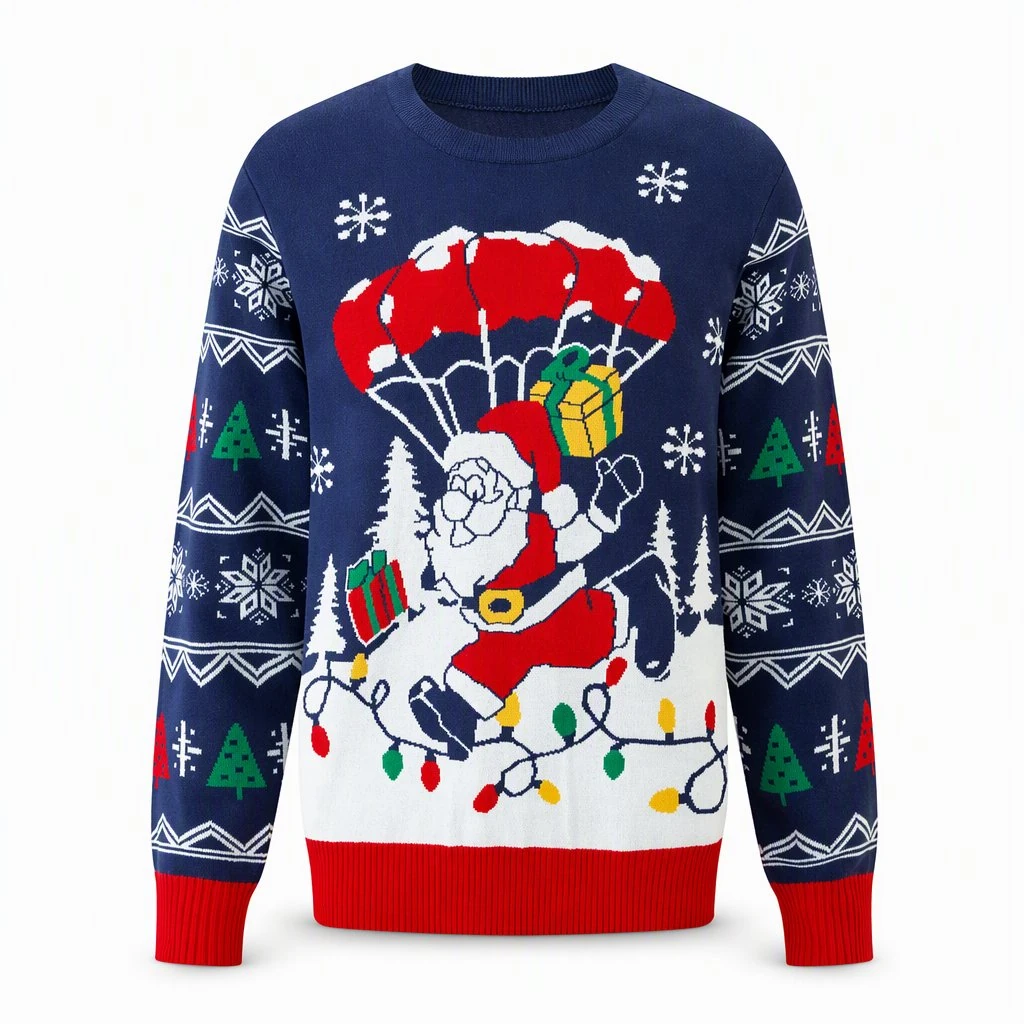
Sourcing Custom Men's Knitwear: What Separates a Knitwear Factory from a Sweater Mill
Mens knitwear briefs rarely fail on the design. They fail on gauge, size grading and reverse-side finishing — three things most price requests never ask about. Here is what to specify before you ask for a quote.
Send us the piece you were told was too hard.
Reference photo, rough sketch, or full tech pack — our Dalang technical punchers evaluate feasibility, machine gauge, yarn options, and pricing within 24 hours.