
Intarsia Knit Sweaters: What the Front and Back Look Like
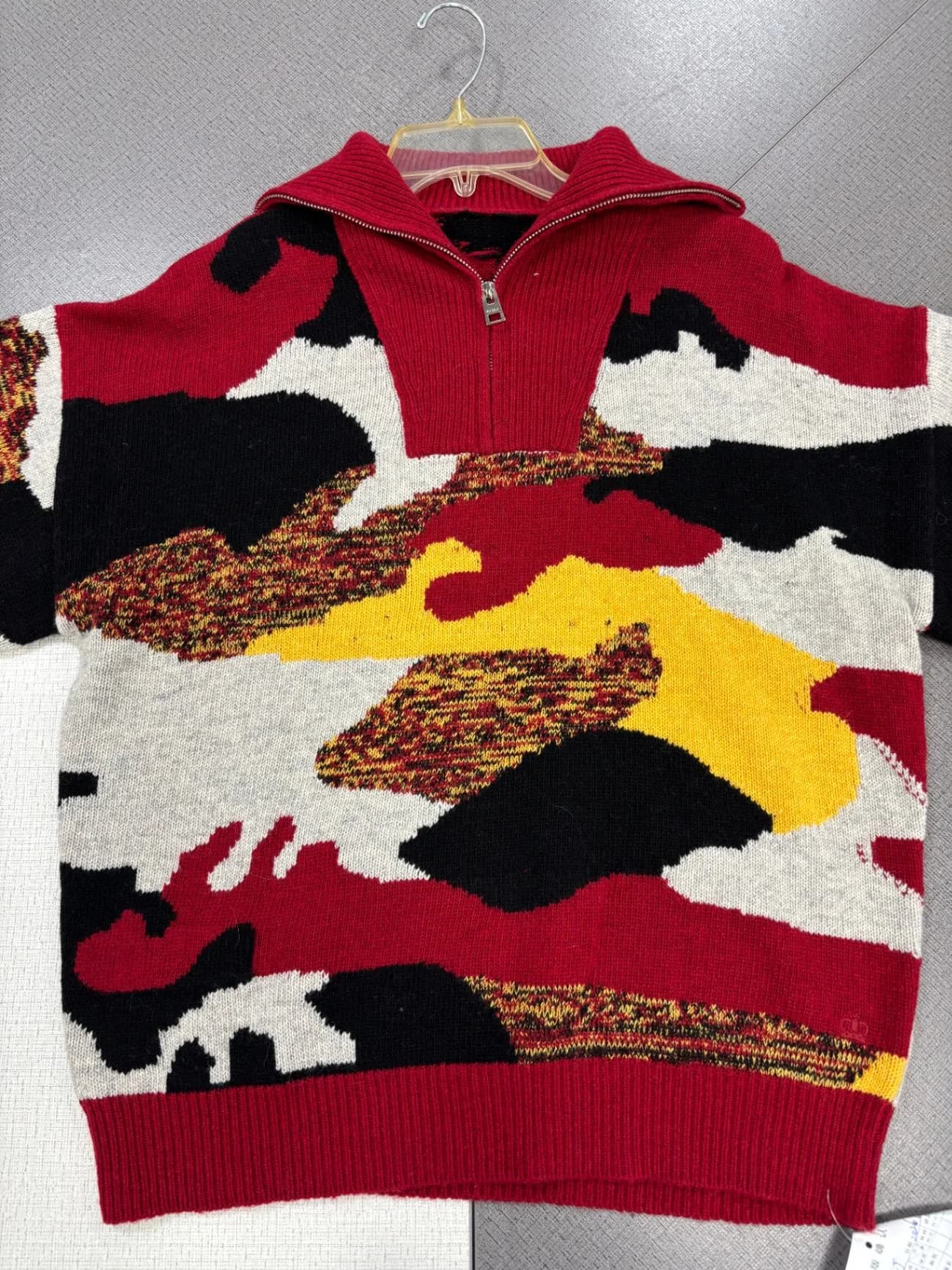
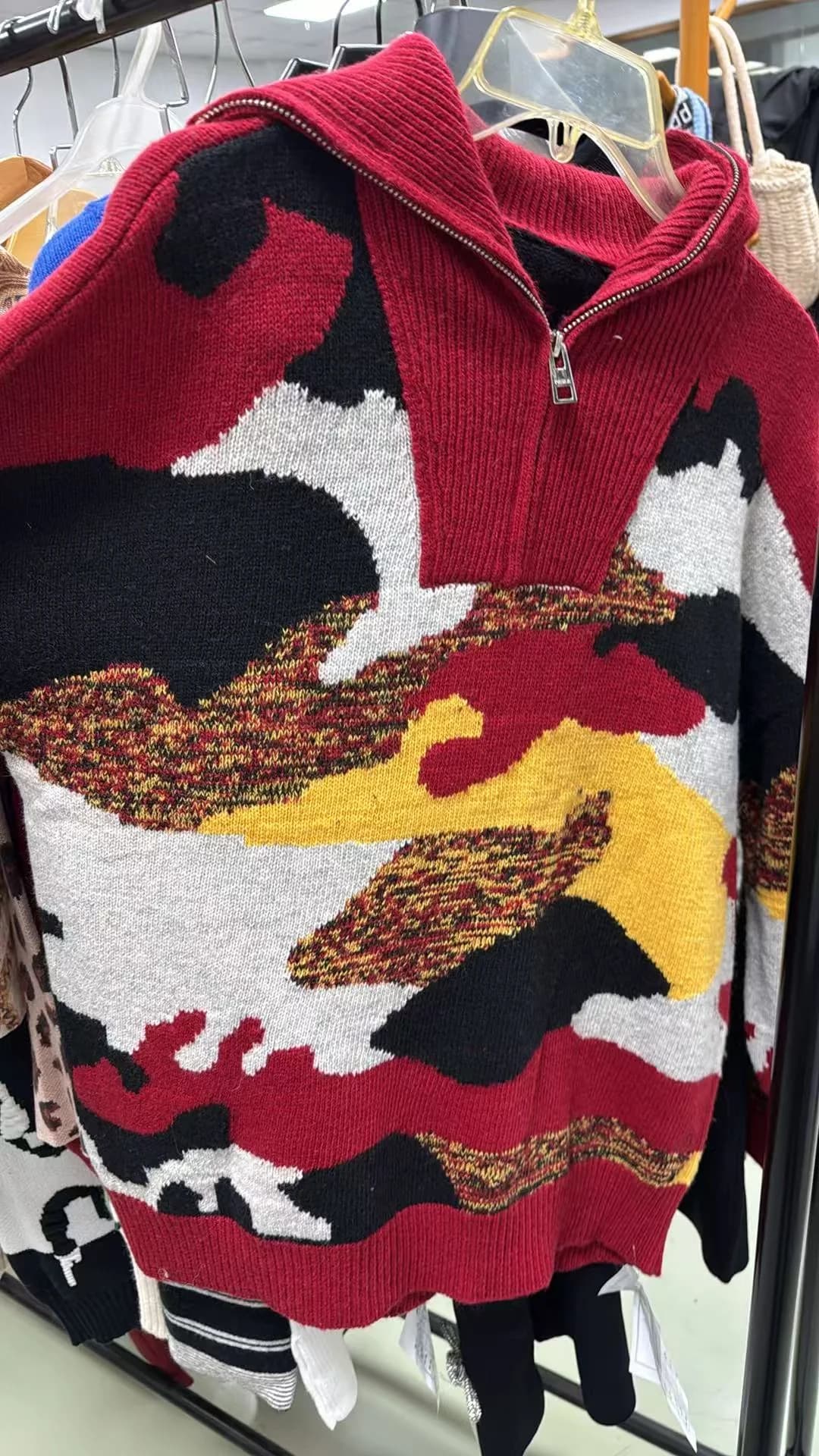
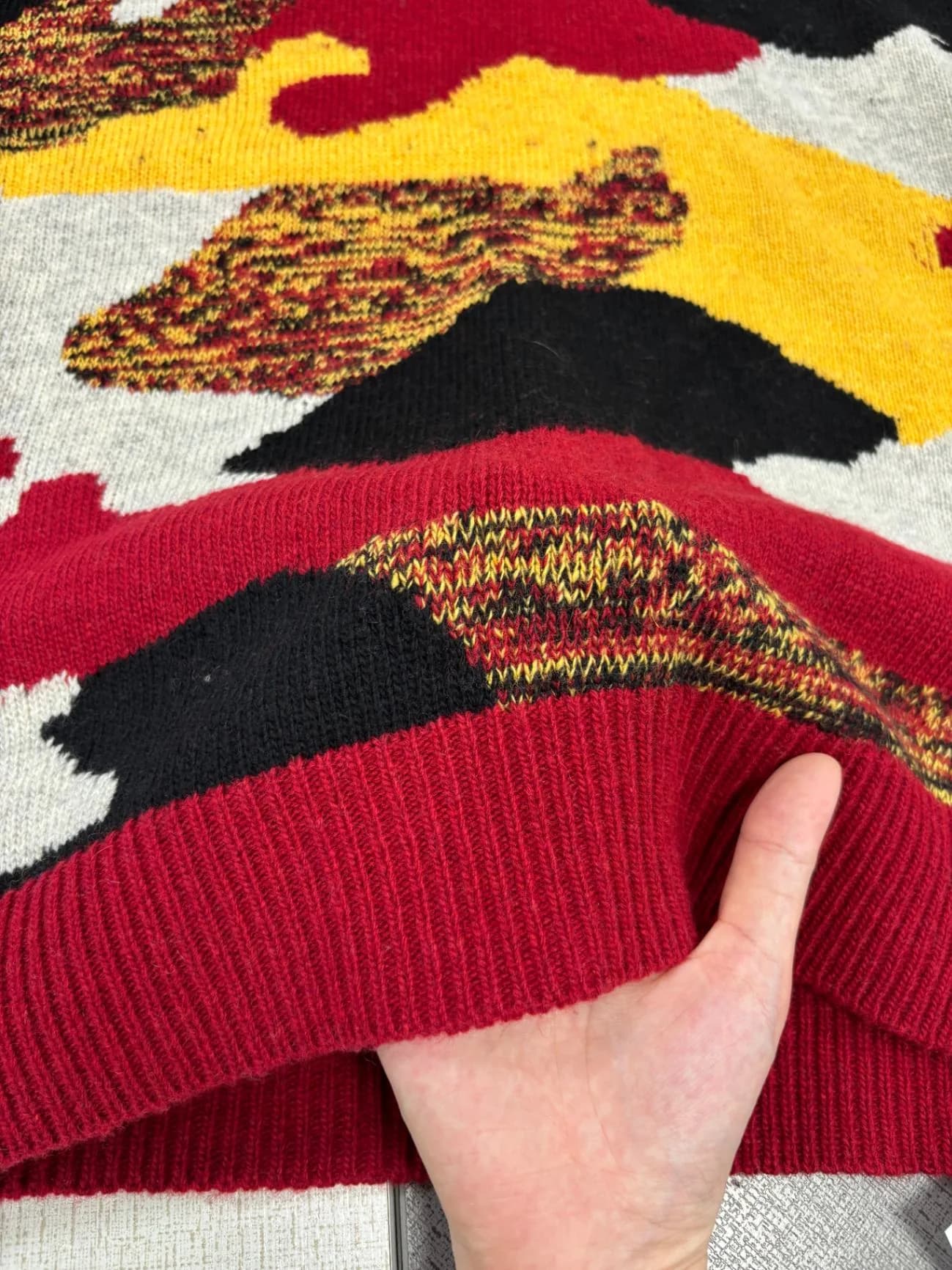
One camo-motif half-zip straight from our finishing room, photographed from both sides — the face reads as clean colour blocks, the reverse shows interlocked joins instead of floats. What an intarsia knit sweater looks like in the hand, inside and out.
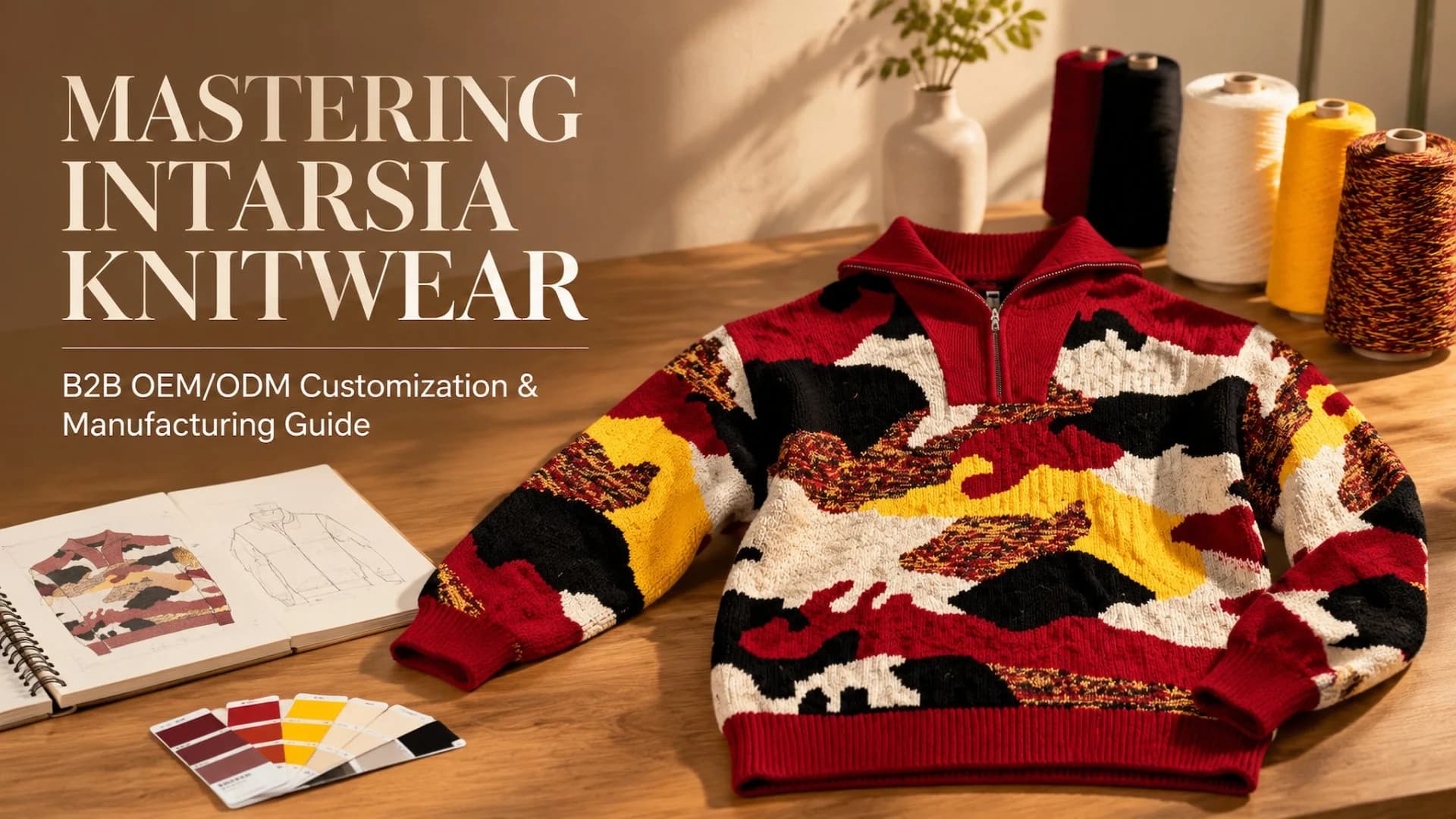
Intarsia is usually explained with diagrams — colour blocks, yarn carriers, arrows. This post shows the real thing instead: one camo-motif half-zip straight from our finishing room, photographed from the face and from the inside. If you have never bought an intarsia knit sweater before, these are the two surfaces you should learn to read — together they tell you more about the factory than any spec sheet.
The Garment: Five Colours, One Panel
The piece is an oversized half-zip with a full-chest camouflage motif in five yarns: a heather ivory ground, black, crimson and golden-yellow blocks, plus a marled space-dye yarn blending crimson, gold and black for the textured zones. The whole chest is knitted as one intarsia panel — the motif is the structure of the fabric itself, not a print sitting on top and not panels stitched together after knitting. That is the defining property of the technique: every colour area runs on its own yarn end, knitted simultaneously, so the graphic and the garment are made in the same operation.
The Outside Face Is Half the Story
On the face, intarsia looks the way people imagine knit graphics ought to look: colour edges are crisp and slightly raised, colours stay inside their own areas, and the marled space-dye blocks read as deliberate texture rather than noise. The reason is structural, not cosmetic. Because each block is knitted from its own yarn end, one colour physically cannot smear into its neighbour the way a low-contrast jacquard boundary sometimes can, and the boundary itself knits as a tight, self-contained wall of loops. That is why the shapes in this motif can swing from wide sweeping blocks to irregular camo lobes without any of them losing definition.
The Inside: No Floats, Only Interlocks
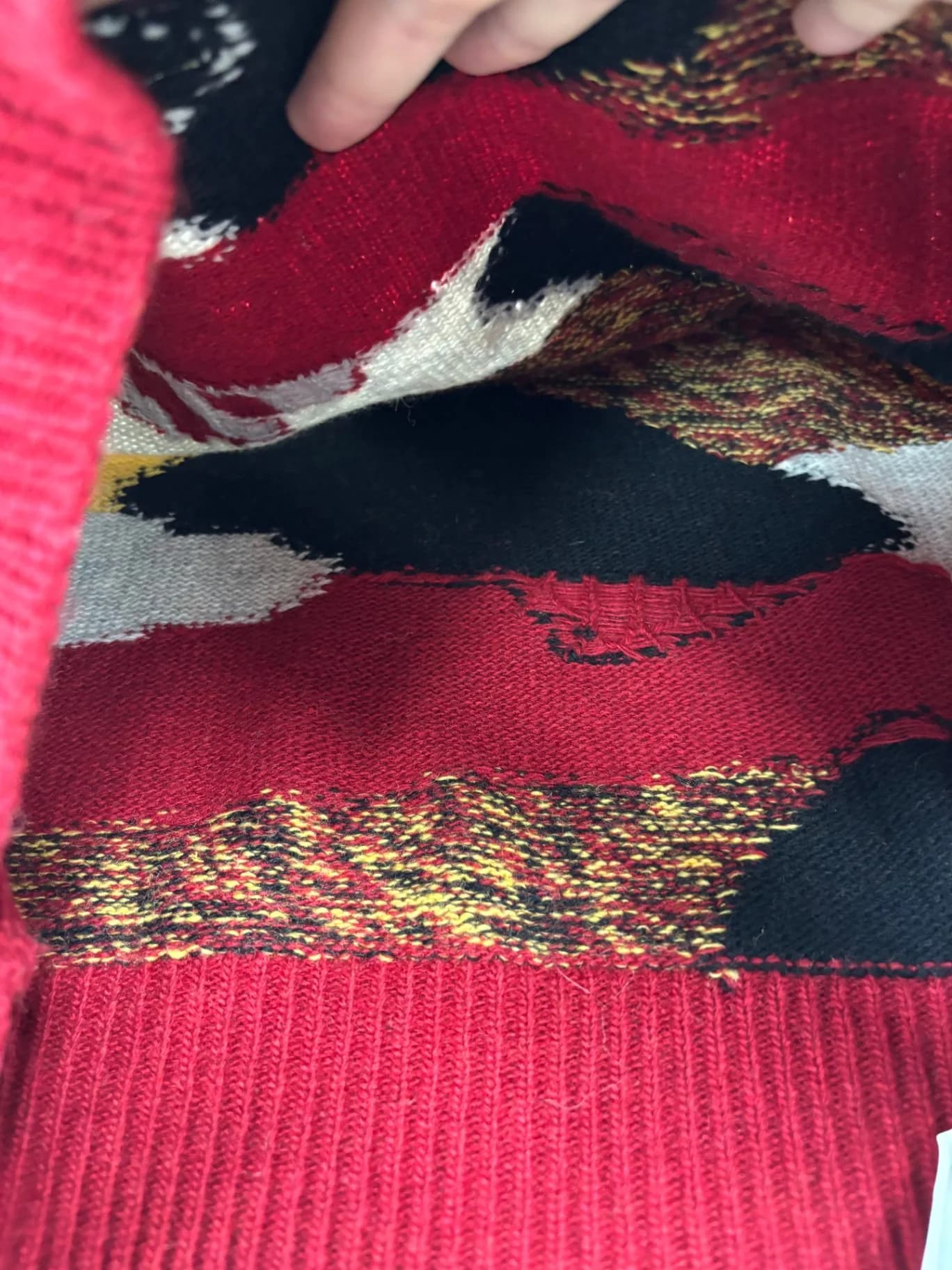
Turn the hem up and the reverse is the part buyers rarely see before they sample. There is no float layer — no yarns carried across areas where they do not belong, because no yarn exists anywhere except inside its own colour block. What you do see at every colour boundary is a short interlocked join: two yarn ends sharing the boundary course so the block stays closed. In finishing, every one of those ends is woven back by hand, which is why the count of colour changes across a design — not just its visual complexity — is what sets intarsia labour. The marled zones look identical from behind: a single space-dye yarn knitting its own block, so the colour mixing lives in the yarn, not in the machine.
Why the Reverse Matters Commercially
The inside face is not just a curiosity — it is three commercial properties at once. Weight and bulk: a jacquard carries its unused colours across the back of every area they do not appear in, and on a full-chest motif that adds a genuine second layer of yarn — measurable per piece and payable per shipment. Snag resistance: floats are what catch on jewellery, velcro and washing-machine drums; an intarsia reverse has nothing loose to catch. Comfort: with no float grid, the inside of the garment feels like plain knit against the skin, which matters for oversized fits worn over a T-shirt. One caution belongs here too: the boundary interlock is where cheap intarsia fails — a badly programmed join opens into a small vertical slit after a few washes — so the inside of the first sample is exactly where a buyer should look before approving bulk.
What It Costs and What to Send
Intarsia trades machine speed for handwork, and the bill shows up in finishing: every yarn end is woven back manually, so a design with many small blocks is materially more labour per piece than the same area in large blocks — and shapes narrower than roughly four stitches cannot interlock reliably at all. If you are briefing an intarsia knit sweater, send the artwork with the block shapes you actually want, the intended placement and the base structure, and we will flag anything the technique cannot hold before sampling rather than after. MOQ follows our standard knitwear programme at 100 pieces per design, sampling in 72 hours from yarn stock confirmation, bulk production 2-3 weeks after PPS approval, DDP door-to-door to US, EU, UK, AU and JP.
If you are still weighing intarsia against the alternatives, our Jacquard vs Intarsia vs Embroidery guide breaks the choice down by block shape and colour count, and the intarsia craft page covers gauges, yarn options and the boundary-interlock defect in depth.
Looking to manufacture this style at scale?
Send us your design brief and we'll quote a direct-factory run with low MOQs, 72h sampling and DDP worldwide delivery, knitted on our own floor in Dalang.
Knitwear you can manufacture right now
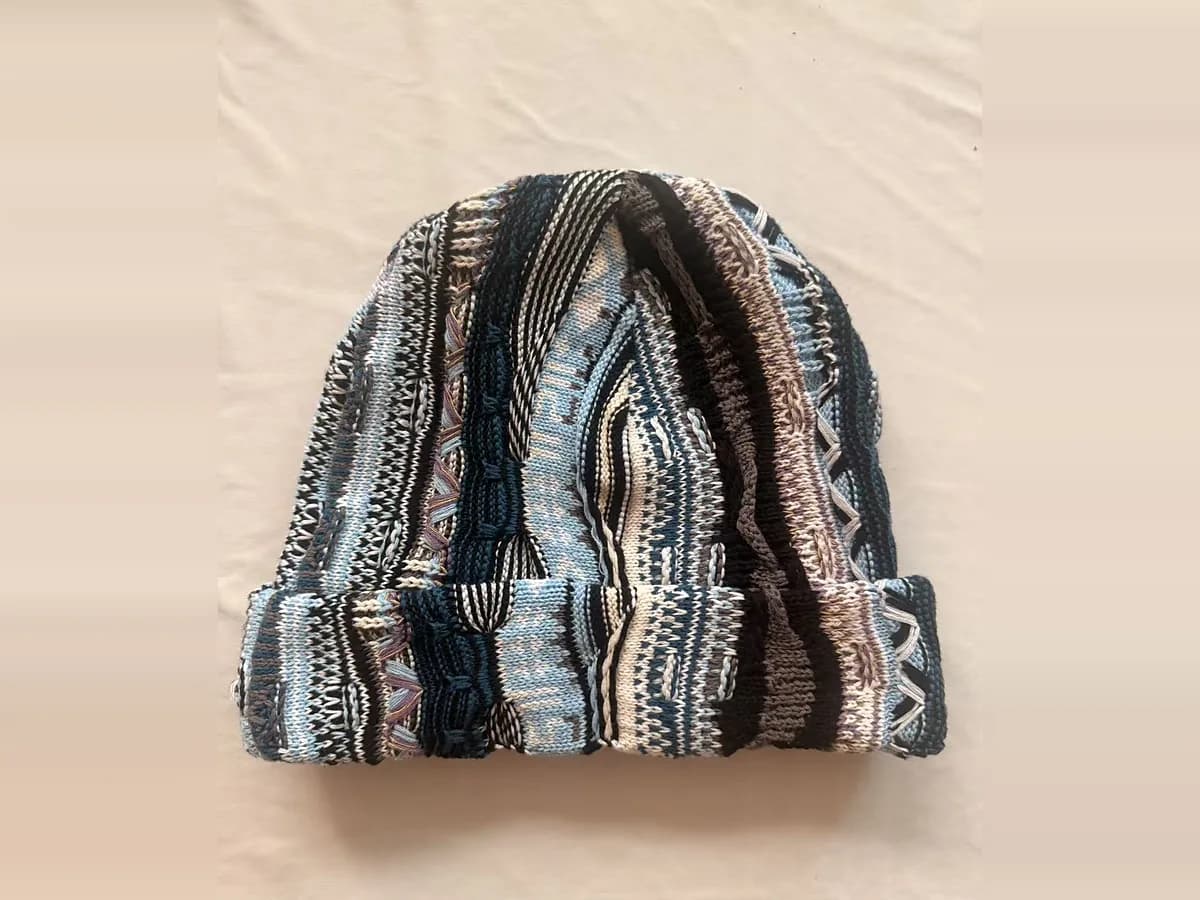
Custom Matching Intarsia Cable Knit Beanie
The sweater band sequence re-knitted to hat gauge — folded double-layer cuff, tubular no-seam crown.
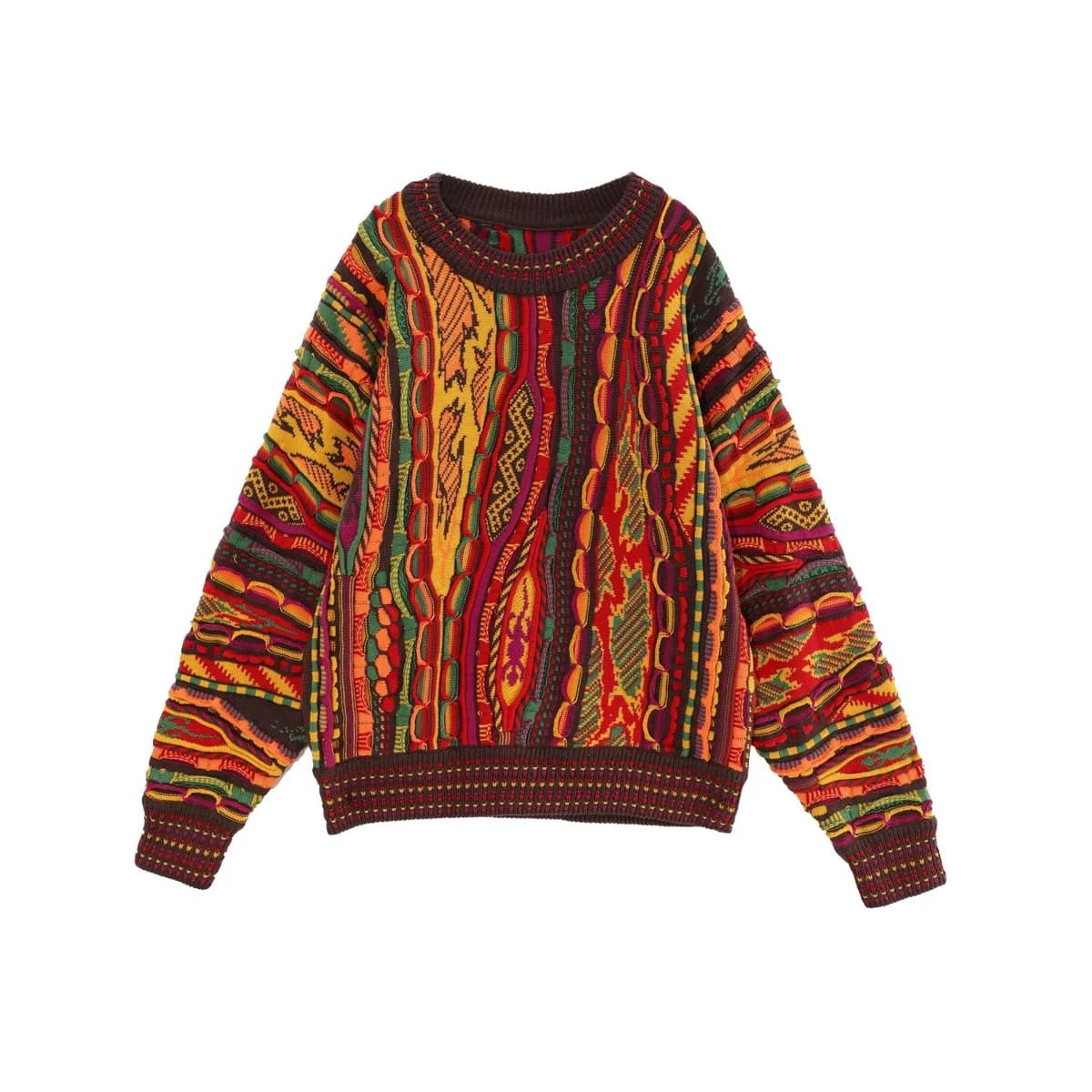
Custom Retro 3D Multi-Texture Knit Sweater
Jacquard, 3D relief and cable braid combined in one programme — the brief most factories decline to quote.
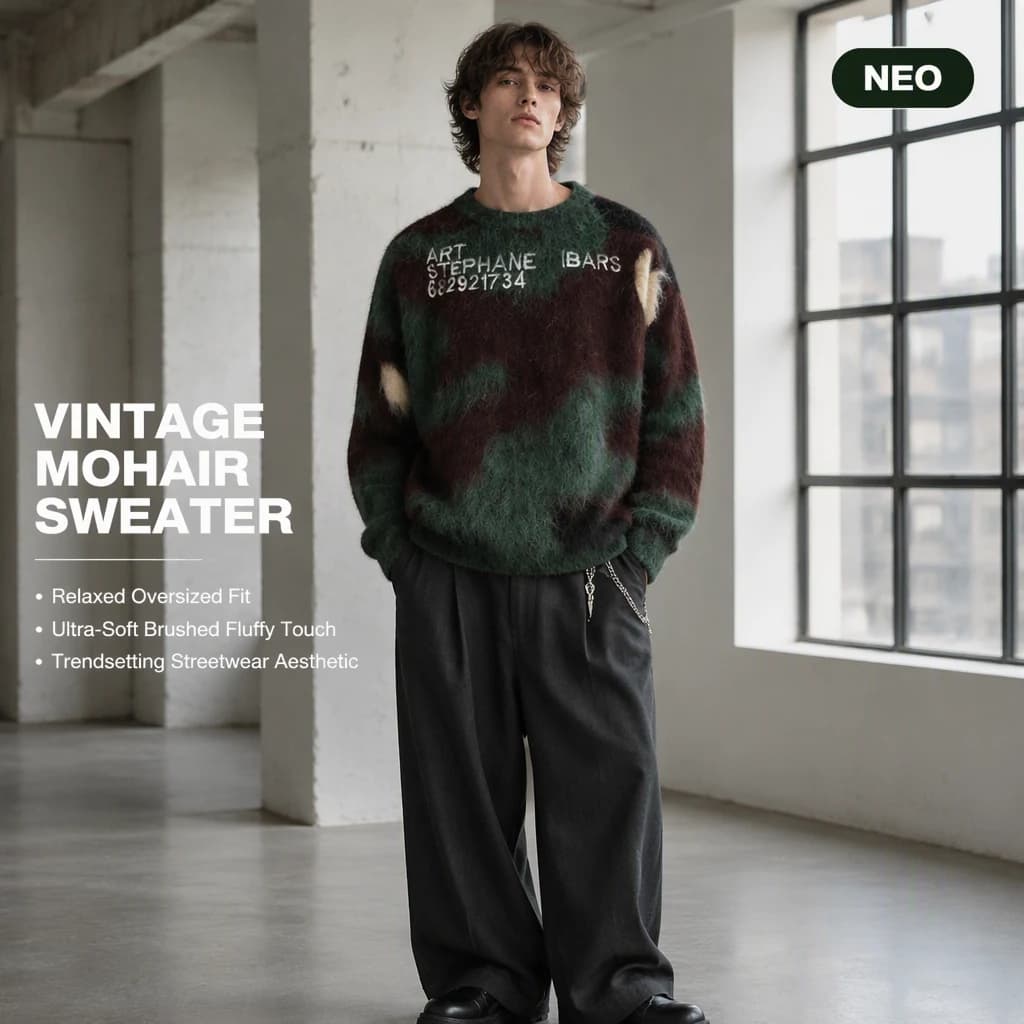
Custom Vintage Mohair Jacquard Sweater with Embroidery
Brushed fluffy mohair in an oversized silhouette — multi-colour jacquard camo ground with high-density 3D embroidered lettering.
Keep reading
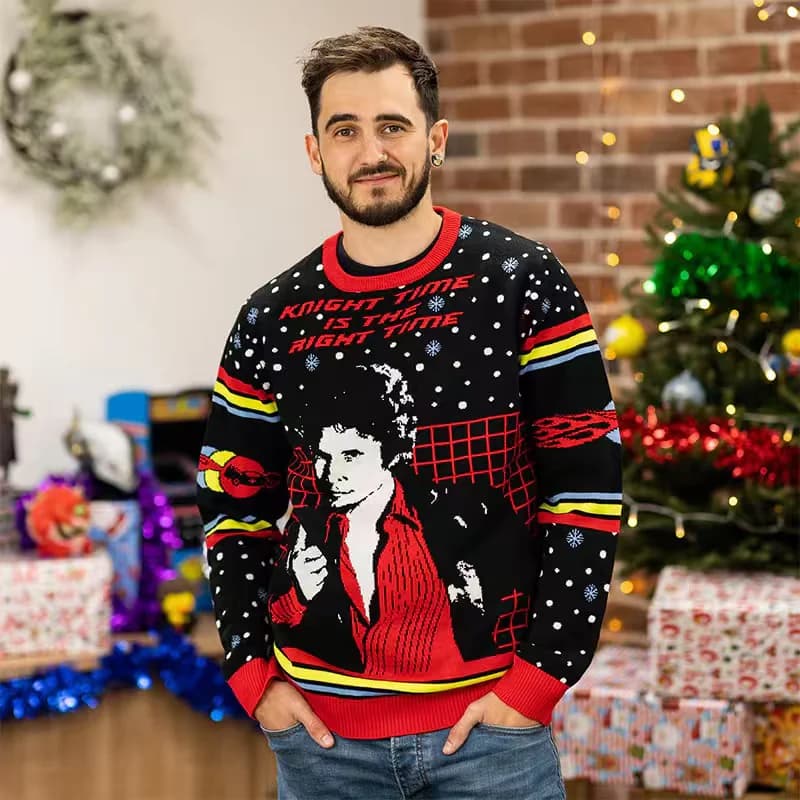
It's Time to Custom-Own Your Christmas Jumper
A short consumer-oriented overview of the custom Christmas jumper trend — design ideas, group-event tips, and the festive looks defining this year's holiday season.
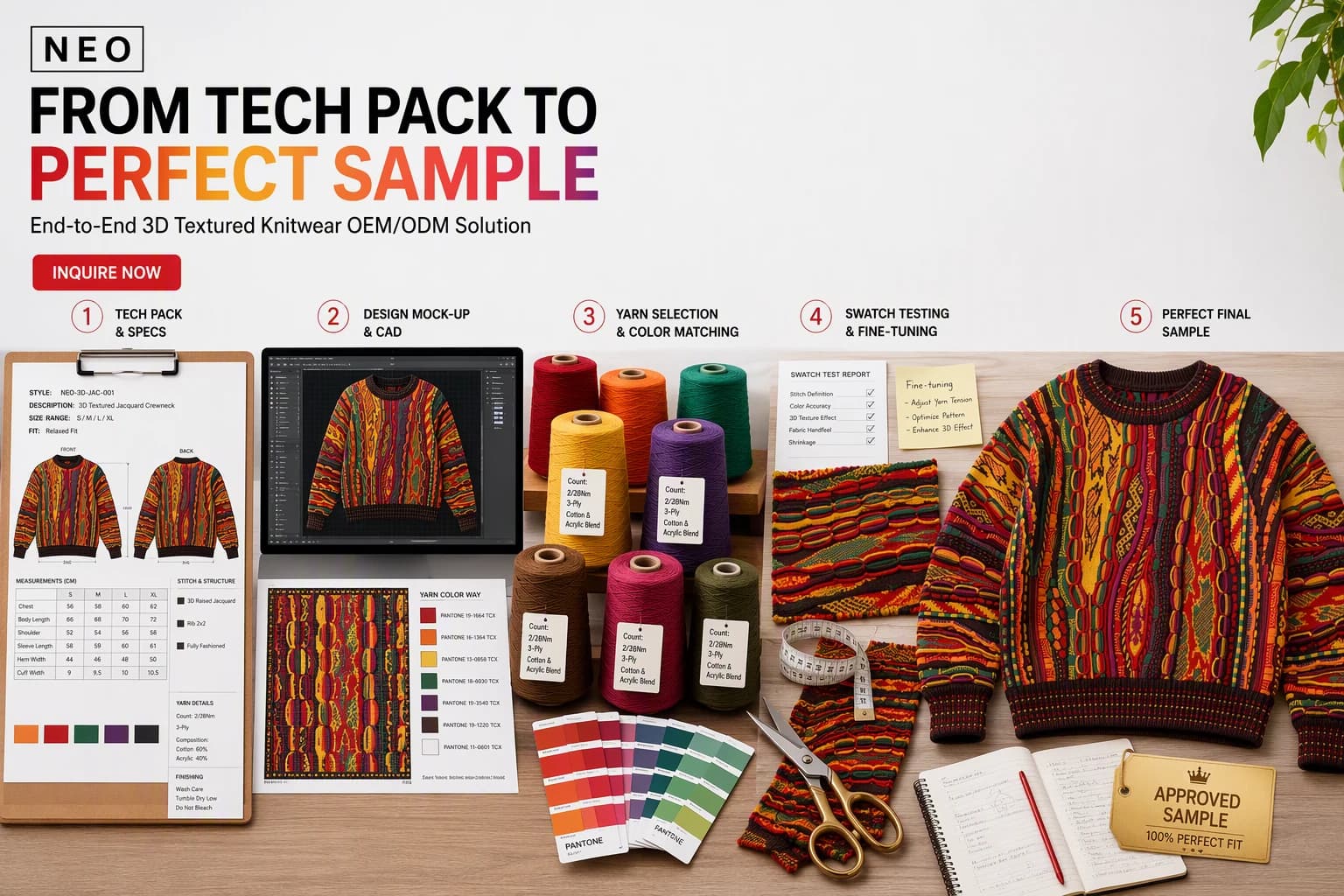
From Tech Pack to Perfect Sample: How Knitwear Sampling Actually Works
A floor-level walkthrough of the five stages between your tech pack and an approvable knit sample — mock-up and CAD programming, yarn colour matching, swatch testing, and the final PPS.
Sourcing Custom Men's Knitwear: What Separates a Knitwear Factory from a Sweater Mill
Mens knitwear briefs rarely fail on the design. They fail on gauge, size grading and reverse-side finishing — three things most price requests never ask about. Here is what to specify before you ask for a quote.
Send us the piece you were told was too hard.
Reference photo, rough sketch, or full tech pack — our Dalang technical punchers evaluate feasibility, machine gauge, yarn options, and pricing within 24 hours.