
How to Audit a Knitwear Factory: Five Stations, Six Questions
A factory tour shows you what someone arranged that morning. An audit looks at the four places money is actually spent — and at the one question a trading company cannot answer without leaving the room.
Written for brand owners, production managers and sourcing leads preparing a first or second factory visit. It is written from the inside of a knitwear factory, so you know which stations actually prove capability and which ones are stage dressing.
A factory visit and a factory audit are different exercises that happen to use the same car journey. A visit is hosted: someone walks you past a sample wall, opens a door onto a machine hall, and answers the questions you thought to prepare. An audit is adversarial in a friendly way — you are there to find the one or two facts that a supplier with something to hide cannot produce quickly. That is a shorter list than most checklists suggest, and it is almost never on the tour route.
An Audit Is Not a Tour
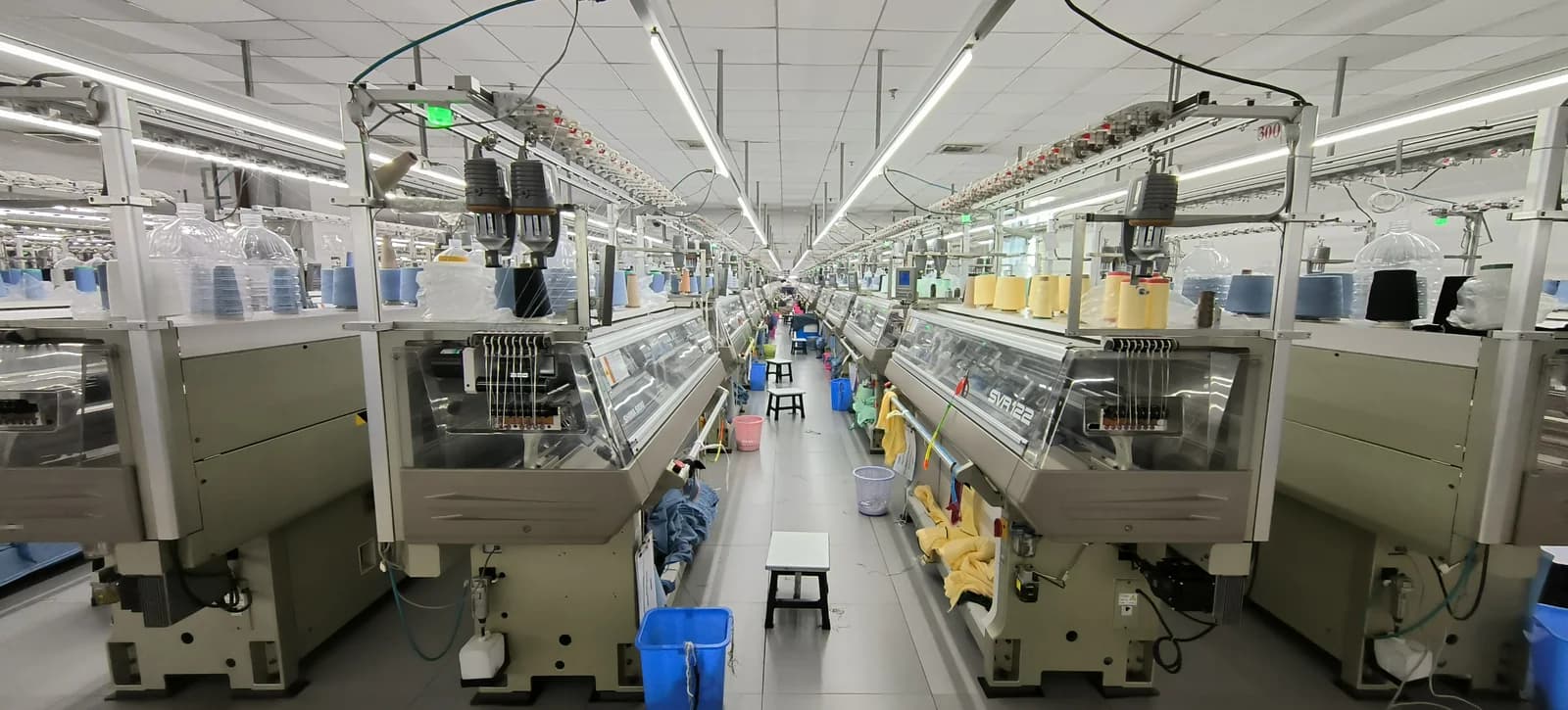
The tour route is optimised for reassurance: showroom, sample wall, a machine hall with the newest beds in front, then coffee. The audit route runs in the opposite direction, because the money in a knitwear order is spent in four places the tour tends to skip — the needle beds that will actually run your style, the desk where stitch files are programmed, the linking room where panels become a garment, and the QC bench where rejects are recorded. Everything else in the building is support.
One practical note before the list. Book the audit for a working day in a working week, not the day before a holiday, and ask to see the floor while it is running your gauge rather than during a changeover. A stopped machine proves nothing and a busy one proves very little either, but the difference in how a factory behaves when you ask to walk the floor unescorted is itself useful information.
Station One: The Needle Beds
Gauge is not a preference, it is a physical constraint, and a factory can only knit your style on beds of the right gauge. A 14GG polo cannot be made on a 3GG bed and a chunky 3GG cardigan cannot be made on a 14GG bed, so the first audit question is not how many machines a factory has but how many of them run the gauge you need. Machines in a photograph are the easiest thing in the world to borrow, and a capacity claim that cannot be tied to specific beds at a specific gauge is worth nothing.
Ask for the bed list by gauge, how many positions each gauge runs, and how many of those positions are producing this week. Then ask what happens when a bed goes down: is there in-house mechanical service, are there spares, and how long was the last unplanned stop. A factory that knits at scale will answer all three without leaving the floor, because machine availability is the number its own production manager is measured on.
Station Two: Who Punches the Stitch Files
This is the single most revealing question on the list and it takes about four seconds to ask. Every jacquard, every relief stitch and every shaped panel begins as a stitch file that has to be converted from artwork into machine instructions, and that conversion is where most design intent is lost. If the answer is that a studio elsewhere does the programming, the factory is a knitter, not a developer — which is fine if you only ever order styles that already exist, and expensive the moment you want to change a collar depth or move a motif by two centimetres.
The follow-up matters more than the answer: can you meet the person who punches the files. In our own plant the punchers sit on the same floor as the beds, which is why a motif can be moved and re-knitted the same day rather than exchanged over email for a week. A supplier who cannot put a name and a face to the programming desk is telling you how your design revisions will feel for the next three years.
Station Three: The Linking and Finishing Floor
Ask whether panels are fully fashioned and linked, or knitted to shape and cut and sewn. Both are legitimate; they produce different garments. Linking joins knitted panels stitch for stitch along a seam that disappears into the fabric, and it is the reason a good knit shoulder sits flat and holds its shape after twenty washes. Cutting a knitted panel severs the loops, so the seam needs an overlock to stop it running, which adds bulk at the shoulder and changes how the garment drapes.
Walk the linking room. If there is no linking room, there is no fully fashioned programme, whatever the brochure says. If there is one, count the operators and look at what is on their tables — a linking department busy with trims and neckbands only is a finishing room, not a fully fashioned line. Ask too how a linked seam is checked, because an badly linked shoulder is invisible on a hanger and obvious on a body.
Station Four: Yarn Stock and Lab Dips
Ask to walk the yarn store rather than look at a colour card. What you are counting is dye lots. A factory that buys yarn per order runs a different risk profile from one that holds stock, and the risk that shows up in your goods is shade variation between panels, between sizes and between the sample and bulk. A yarn store with many small lots of the same colour is not a problem in itself, but it needs to be matched to a colour-sorting discipline in cutting and linking, and you should ask what that discipline is.
Then ask how a Pantone reference becomes a knitted swatch. The honest answer involves a lab dip, a controlled light box and a signed-off standard that is kept on file for the order. Dalang, where our plant sits, is a yarn trading hub with unusually deep stock nearby, which is why we can turn lab dips in about forty-eight hours rather than a fortnight — but the audit point is not the speed, it is that a signed standard exists and that production can produce it when you ask to see it mid-order.
Station Five: The QC Bench and the Reject Bin
A QC room with nothing rejected in it is not evidence of quality. It is evidence that nobody is recording. Every production run generates seconds — dropped stitches, needle lines, shade bands, measurement drift — and a factory that cannot show you what it rejected last month either does not inspect or does not want you to see the standard it inspects against.
Ask to see the defect list for a recent order, the measurement record for a style close to yours, and what happens to a garment that fails. The most useful answer is a specific one: this fault, this cause, this change to the programme or the yarn. A factory that can narrate its own failures is a factory that has a feedback loop from QC back to knitting, which is the only version of QC that reduces defects rather than sorting them.
The Six Questions That Expose a Trading Company
- Which beds will knit my style, at what gauge, and how many of them are producing this week?
- Who converts my artwork into a stitch file, and can I meet them before I approve the sample?
- Do you link your panels or cut and sew them, and may I see the room where that happens?
- What is the longest float in my design, and how will you tie it in without printing through the face?
- Which yarn source is behind my Pantone, and what is the minimum quantity for a lab dip?
- What did you reject last month, and what did you change as a result?
A trading company can answer the first, third and fifth from a folder, because they are facts about a factory it buys from. The tell is the second and the sixth. Programming and rejects both live inside a building, they are messy, and they cannot be reconstructed from a brochure without inventing them. If the answers to those two arrive late, arrive vague, or arrive as a promise to check with the technical team, you have learned what you came to learn.
What an Audit Cannot Tell You
An audit cannot tell you whether your order will be prioritised in a busy month, whether the sample room is being honest about what bulk production can hold, or whether the factory's definition of an acceptable defect matches yours. Those three questions are answered by a sample, then by a first order, then by a second order placed while the first is still on the water. The audit's job is narrower and still worth the trip: it tells you whether a sample is worth paying for.
Frequently Asked
Is a video walkthrough a substitute for an audit?
No, but it is a useful filter. Ask for a live video call rather than a recorded clip, and ask the camera to stop at the machine that will run your gauge and at the linking tables. A recorded video is edited; a live call has to answer the question you actually asked. Use it to decide whether the trip is worth making, not to replace the trip.
Should the audit happen before or after the sample?
Both, and for different reasons. Before, it tells you whether the supplier can physically make the style and whether their programming sits in-house — the two things that decide whether a sample will mean anything. After, it tells you whether the sample was made on the beds and by the people who will make bulk, which is a different question and the one buyers most often skip.
How long should an audit take?
Half a day on the floor as a minimum, and that assumes a single product category. A forty-five minute walk is a tour with a different name. The stations that take time are the ones where you are reading records rather than looking at equipment — the stitch file desk, the QC bench, and the yarn store on a colour-sorting day.
The short version: audit the places where the work happens, ask the two questions that cannot be answered from a folder, and treat a factory that narrates its own reject rate as the safer partner than one that claims not to have one.
Looking to manufacture this style at scale?
Send us your design brief and we'll quote a direct-factory run with low MOQs, 72h sampling and DDP worldwide delivery, knitted on our own floor in Dalang.
Knitwear you can manufacture right now

Ugly Christmas Holiday Jacquard Sweater
Vibrant festive holiday knitwear with high-density jacquard graphics.
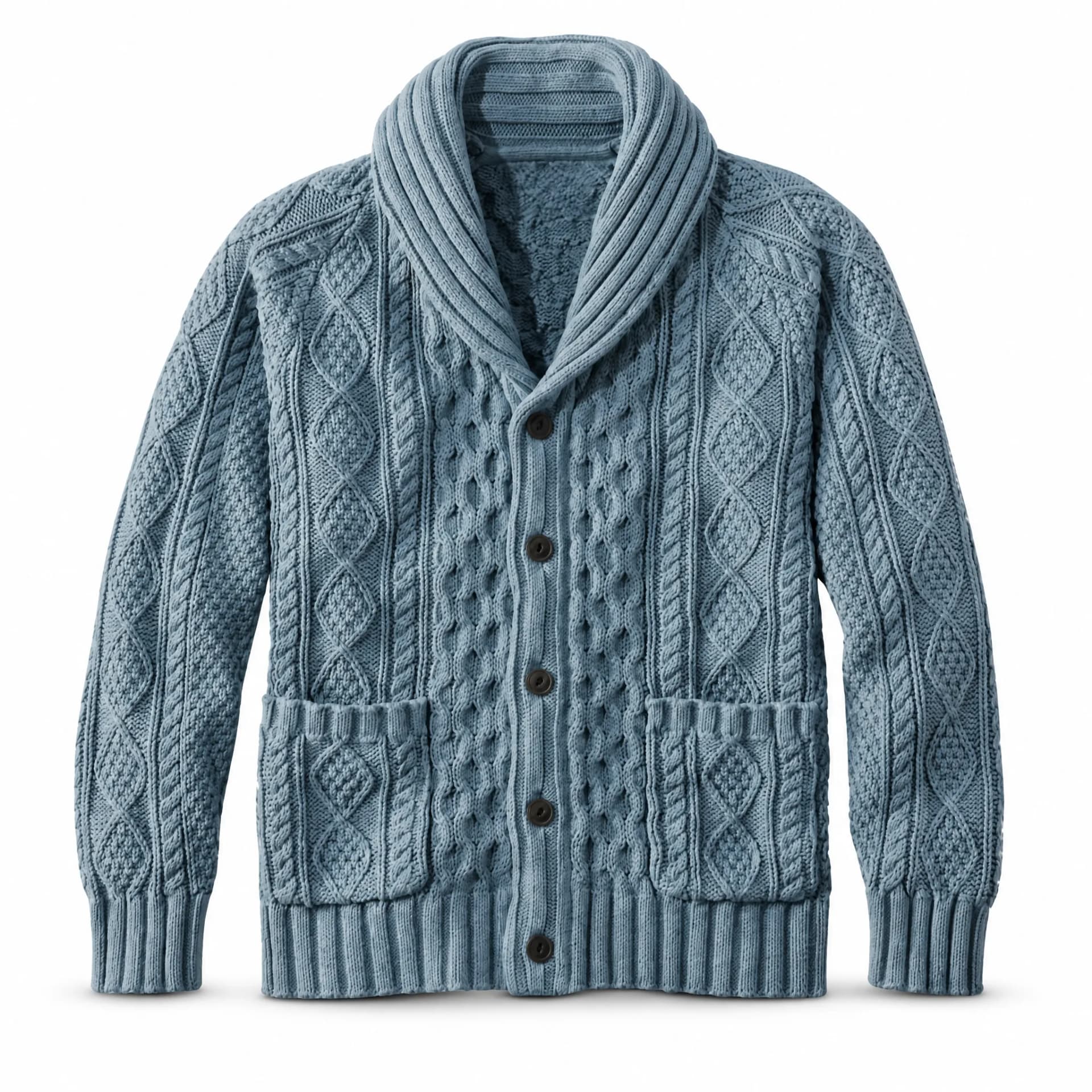
Custom Shawl Collar Cable Knit Cardigan
Chunky cable-and-diamond cardigan with a fully fashioned shawl collar — knitted as structure, never cut and sewn.
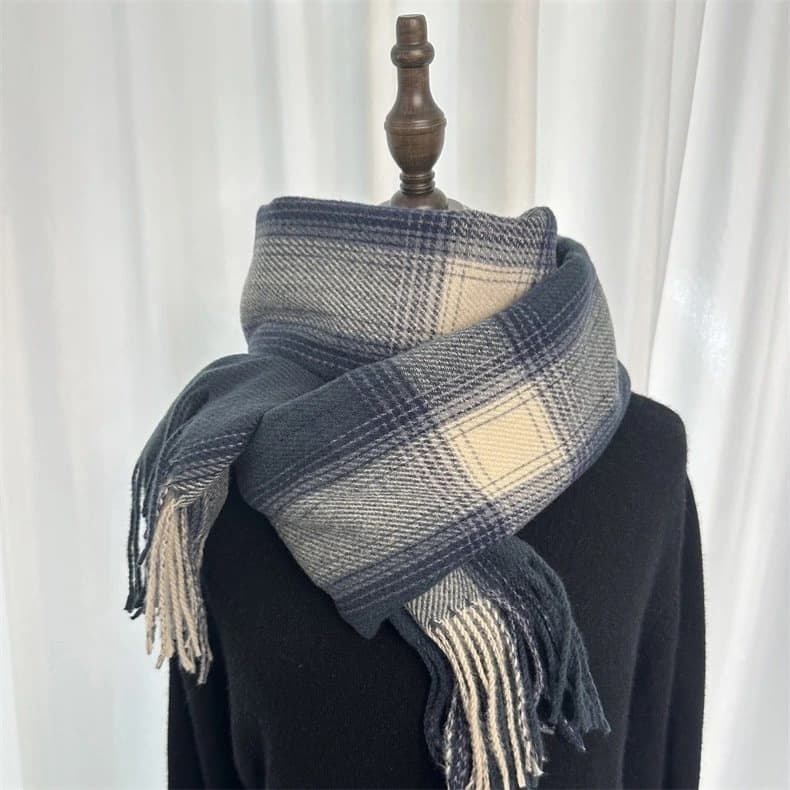
Custom Tartan & Jacquard Knit Scarf
A tartan is not a pattern you paste on. On a knit it is a grid of stitches, and the grid is not square.
Techniques behind this product
Keep reading
It's Time to Custom-Own Your Christmas Jumper
A short consumer-oriented overview of the custom Christmas jumper trend — design ideas, group-event tips, and the festive looks defining this year's holiday season.
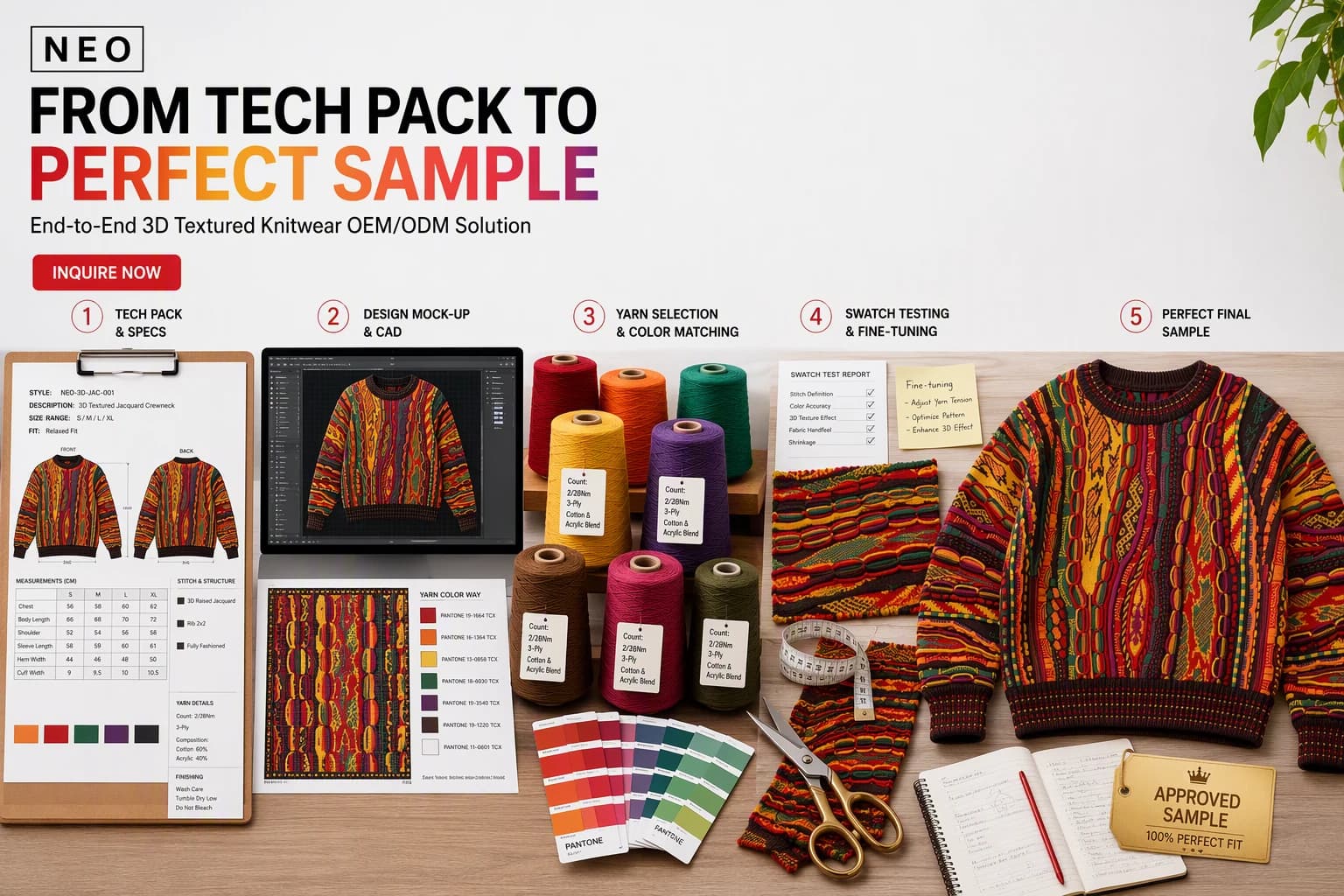
From Tech Pack to Perfect Sample: How Knitwear Sampling Actually Works
A floor-level walkthrough of the five stages between your tech pack and an approvable knit sample — mock-up and CAD programming, yarn colour matching, swatch testing, and the final PPS.

Sourcing Custom Men's Knitwear: What Separates a Knitwear Factory from a Sweater Mill
Mens knitwear briefs rarely fail on the design. They fail on gauge, size grading and reverse-side finishing — three things most price requests never ask about. Here is what to specify before you ask for a quote.
Send us the piece you were told was too hard.
Reference photo, rough sketch, or full tech pack — our Dalang technical punchers evaluate feasibility, machine gauge, yarn options, and pricing within 24 hours.