How Many Colours Can a Jacquard Sweater Have?
The number buyers ask about is the total in the artwork. The number that sets the price is how many colours share a single row. On the same design those two answers can differ by a factor of three.
For designers and buyers whose artwork has just come back from a factory with a comment about colour count. It explains what that comment means mechanically, so the next revision is a decision rather than a guess.
There are two honest answers to this question and they are not the same number. A jacquard sweater can carry a large number of colours across the whole garment — ours run to thirteen — but any single row of knitting can only carry as many colours as there are yarn carriers feeding that row. The first number is the one in your artwork file. The second is the one on your quotation. Confusing them is the most common reason a design gets priced twice and looks the same both times.
The Short Answer
Most volume mills quote a ceiling of four to six colours per design, and that figure is really a statement about carriers rather than about taste. On a flat knitting machine each colour in a course needs its own yarn carrier positioned at the bed, and the carrier rail is a fixed length. Some positions are permanently reserved for rib, trims and separating yarn, because those have to knit whether or not the design calls for them. What remains is the budget.
Thirteen is our ceiling, and it is not a marketing number — it is the count of carrier positions left on our beds once the rib and trim positions are reserved. A design that uses thirteen colours across the garment but never more than five in any single course is comfortable and cheap to knit. A design that puts eight colours into the same course forces the programme into additional passes and roughly doubles machine time for the same stitch count. Same garment, same colour list, materially different price.
Why Carriers Set the Limit, Not the Artwork
Think of the carriage as a shuttle that crosses the bed once per course, dragging the carriers that are knitting in that course with it. Colours not knitting in that course are parked. If your design needs eight colours in the same horizontal band, the machine either needs eight live carriers at that moment or it needs to make several passes, each laying a subset of the colours. Extra passes are extra machine minutes on a machine that costs real money per hour, and they also raise the risk of tension faults where a later pass disturbs stitches already laid.
This is why the practical design rule is horizontal discipline. Stacking colours vertically costs nothing, because the carriers change over between bands while the machine is already repositioning. Scattering many colours sideways across one band is what gets expensive, and it is exactly what pictorial artwork does by default. A portrait, a busy character graphic or a landscape photograph will ask for far more colours per row than a geometric pattern of the same visual weight.
Floats: The Cost Hiding Behind the Face
Every colour that is not knitting on the face is carried behind it as a float, and floats are where a cheap jacquard announces itself. A float that runs long enough will catch on a watch strap, a ring or a fingernail, and once it snags the loop pulls and the face distorts permanently. Long floats also add weight and bulk to a garment whose yarn content was specified as though it were plain knit.
The standard fix is to tie long floats into the reverse face at programmed intervals. That works, and it is not free: every tie-in stitch costs machine time and adds a small amount of bulk exactly where the fabric should be softest. On a fine gauge there is a second penalty, because a dense tie-in schedule can print through to the face and show as faint dimples under a light-coloured ground. This is why a pale-ground design with dark floats is more expensive than the same design on a dark ground, and why a supplier who quotes both at the same price has not costed the float.
Three Ways to Fit More Colour Into the Same Budget
- Move colour into bands. If two of your colours only ever appear in the lower third, they never share a course with the colours in the yoke, and the row budget is untouched. Redesigning scattered motifs into stacked bands is often the whole fix.
- Trade hue for tone. Several tones of one family photograph as a richer garment than the same number of unrelated saturated colours, and a tonal step can frequently be achieved inside one yarn family rather than by adding a carrier. Reviewers read depth, not colour count.
- Replace the last two colours with texture. A relief stitch, a blister or a tuck structure creates local shadow that does the work of a colour, and it costs machine time without consuming carriers. On the styles where buyers ask us for more colour, this is usually the better answer.
When Colour Is the Wrong Answer
At retail distance — across a shop floor, inside a thumbnail, on a marketplace grid — texture reads as more expensive than colour. A single-colour sweater with a deep relief structure looks like a higher-priced garment than a six-colour flat jacquard of the same visual busyness, and it is usually cheaper to knit. That is the trade most buyers miss: they spend the colour budget to buy attention when the same money spent on structure would buy perceived quality.
The architecture of the design also decides which technique you are actually asking for. Where colours sit in distinct adjacent blocks with a clean reverse, the job is intarsia rather than jacquard, and intarsia has its own constraint — every colour boundary has to interlock as the carriage reverses, and every yarn end has to be woven back by hand, so the count of colour changes rather than the count of colours becomes the cost driver. Our comparison of jacquard, intarsia and embroidery covers how to choose between the three; this article is only about the colour budget once jacquard is the answer.
How to Check Your Artwork Before You Send It
Three checks catch most of the problems before a quote is wasted. First, count the colours in each horizontal band rather than the total in the file — the maximum per band is the number that matters. Second, measure your longest float in stitches and ask what the tie-in schedule will be. Third, look at the ground colour: if it is pale and the floats are dark, expect either a third blocking colour or visible tie-in texture, and price it accordingly.
Frequently Asked
Does a higher colour count mean a better-looking sweater?
Rarely. Past a certain point extra colours add cost faster than they add impact, because the eye resolves a garment at retail distance into a few dominant masses. Four well-placed colours in tonal steps usually out-reads ten scattered ones, and the four-colour version leaves budget for a better yarn or a deeper structure.
Can a photographic gradient be knitted in jacquard?
Not as a smooth gradient. Jacquard produces discrete blocks of colour, so a gradient has to be approximated by stepped bands or by blending two yarns in a programmed dither pattern — and at a normal viewing distance the dither reads as noise rather than as tone. If a photographic source is the brief, the honest answer is usually a simplified posterised version at five or six colours, or a different technique entirely.
Is thirteen colours a hard limit for every design?
It is a limit on carriers, so it applies to any design that wants thirteen colours live in the same course. A design that spreads its colours across stacked bands is bounded by the per-row count, not by the total, and in practice a garment can look considerably more colourful than its row budget suggests. The mechanism is the same one that lets a traditional two-colour-per-row Fair Isle sweater display eight or ten colours on the shelf.
The working summary: count your colours per band, not per file, ask what float length the factory will tie in and at what cost, and keep two of your colour positions in reserve for the revision you will inevitably want after the first sample.
Looking to manufacture this style at scale?
Send us your design brief and we'll quote a direct-factory run with low MOQs, 72h sampling and DDP worldwide delivery, knitted on our own floor in Dalang.
Knitwear you can manufacture right now
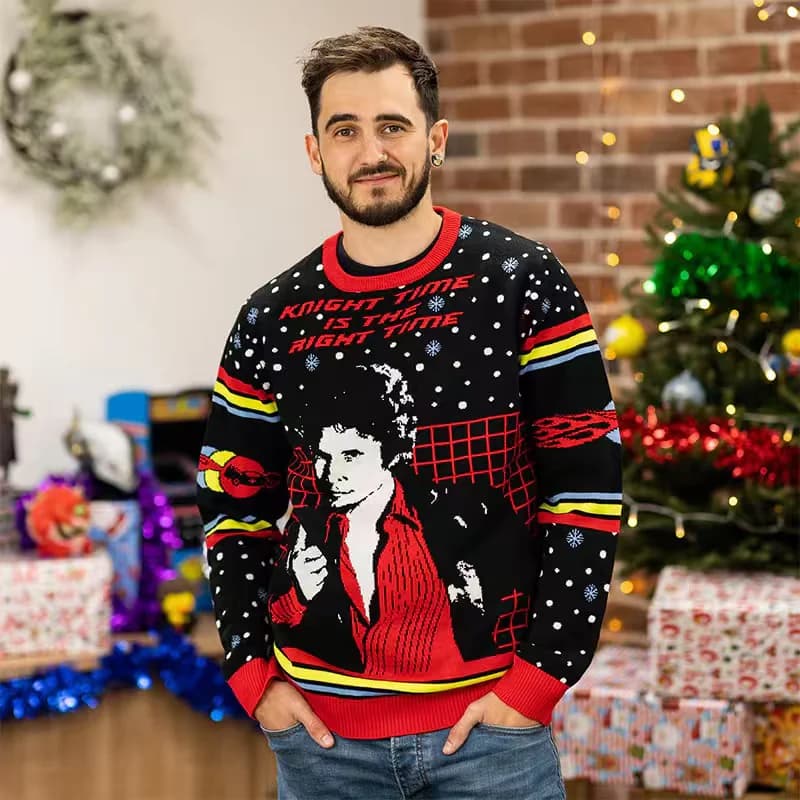
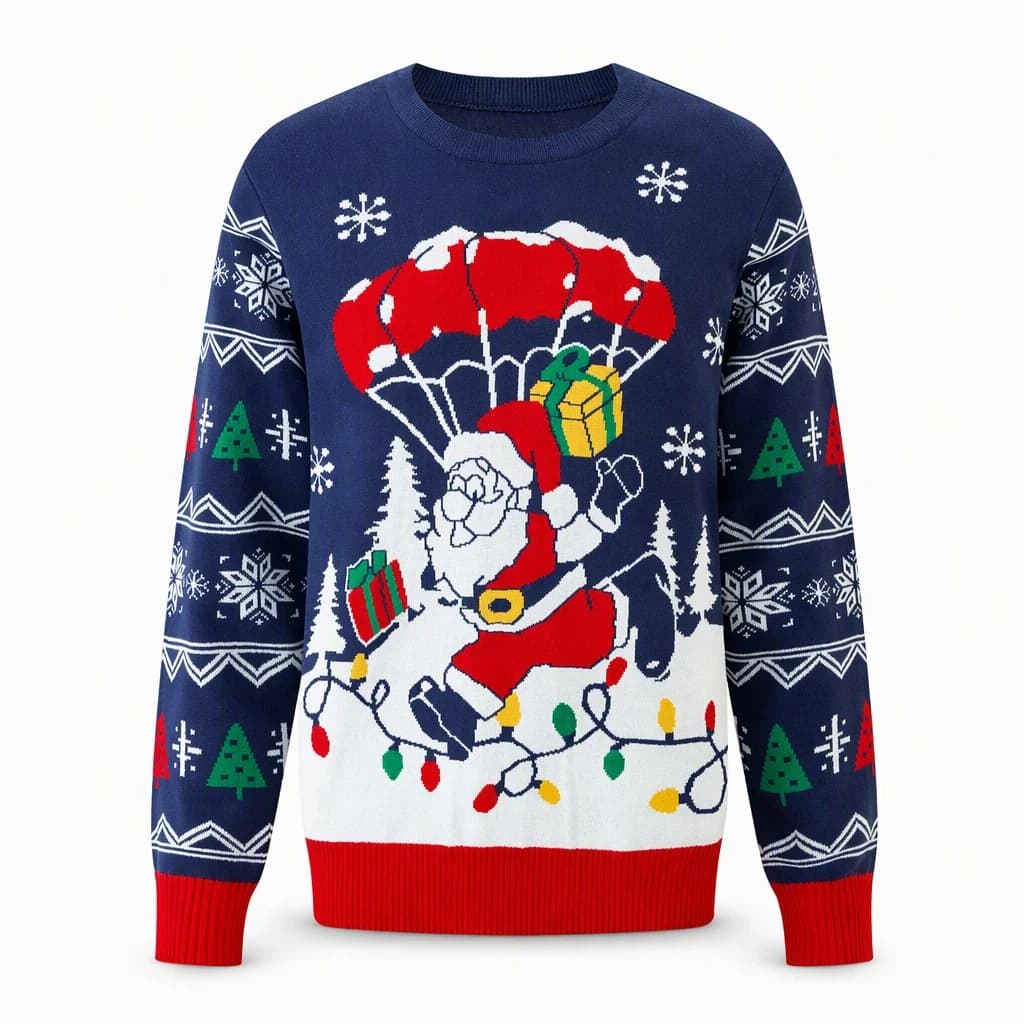
Ugly Christmas Holiday Jacquard Sweater
Vibrant festive holiday knitwear with high-density jacquard graphics.
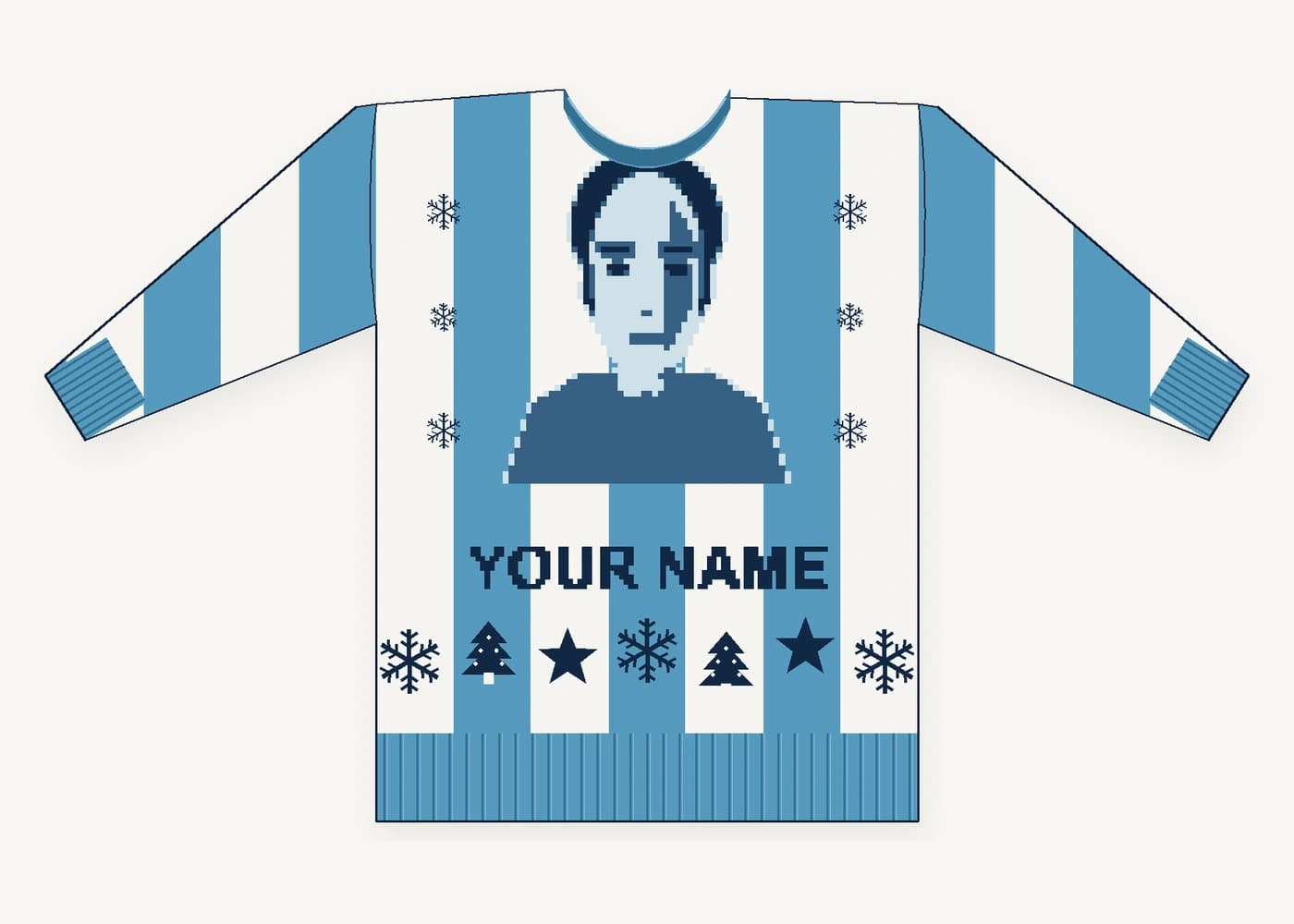
Custom Portrait Knit Christmas Jumper
The only build where the artwork is a photograph: one face re-drawn onto a 100 x 104 stitch grid, three yarns of shading plus the ground, and the rest of the panel kept deliberately quiet.
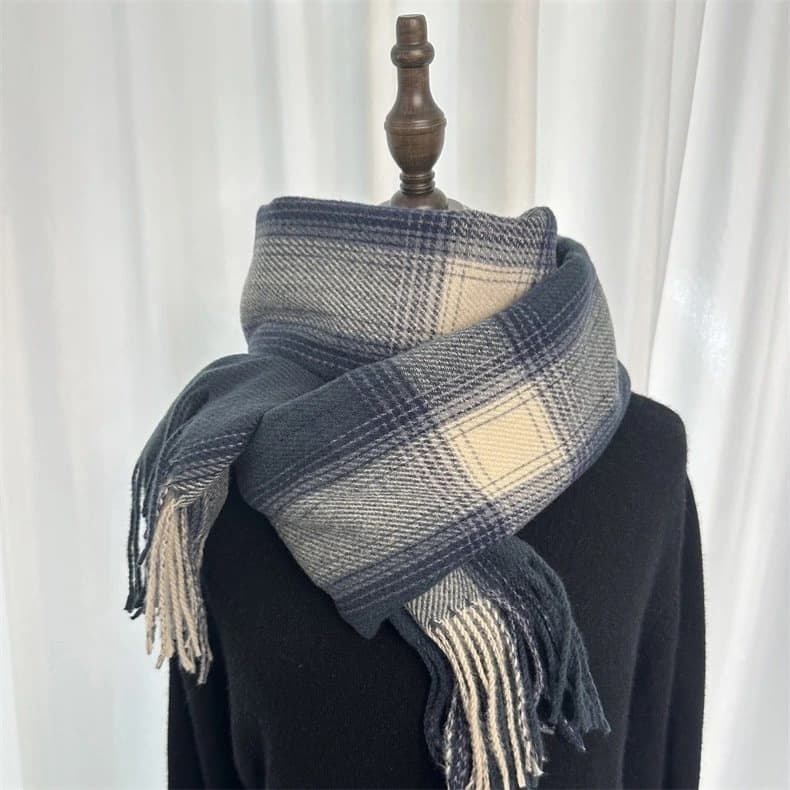
Custom Tartan & Jacquard Knit Scarf
A tartan is not a pattern you paste on. On a knit it is a grid of stitches, and the grid is not square.
Techniques behind this product
Keep reading
It's Time to Custom-Own Your Christmas Jumper
A short consumer-oriented overview of the custom Christmas jumper trend — design ideas, group-event tips, and the festive looks defining this year's holiday season.
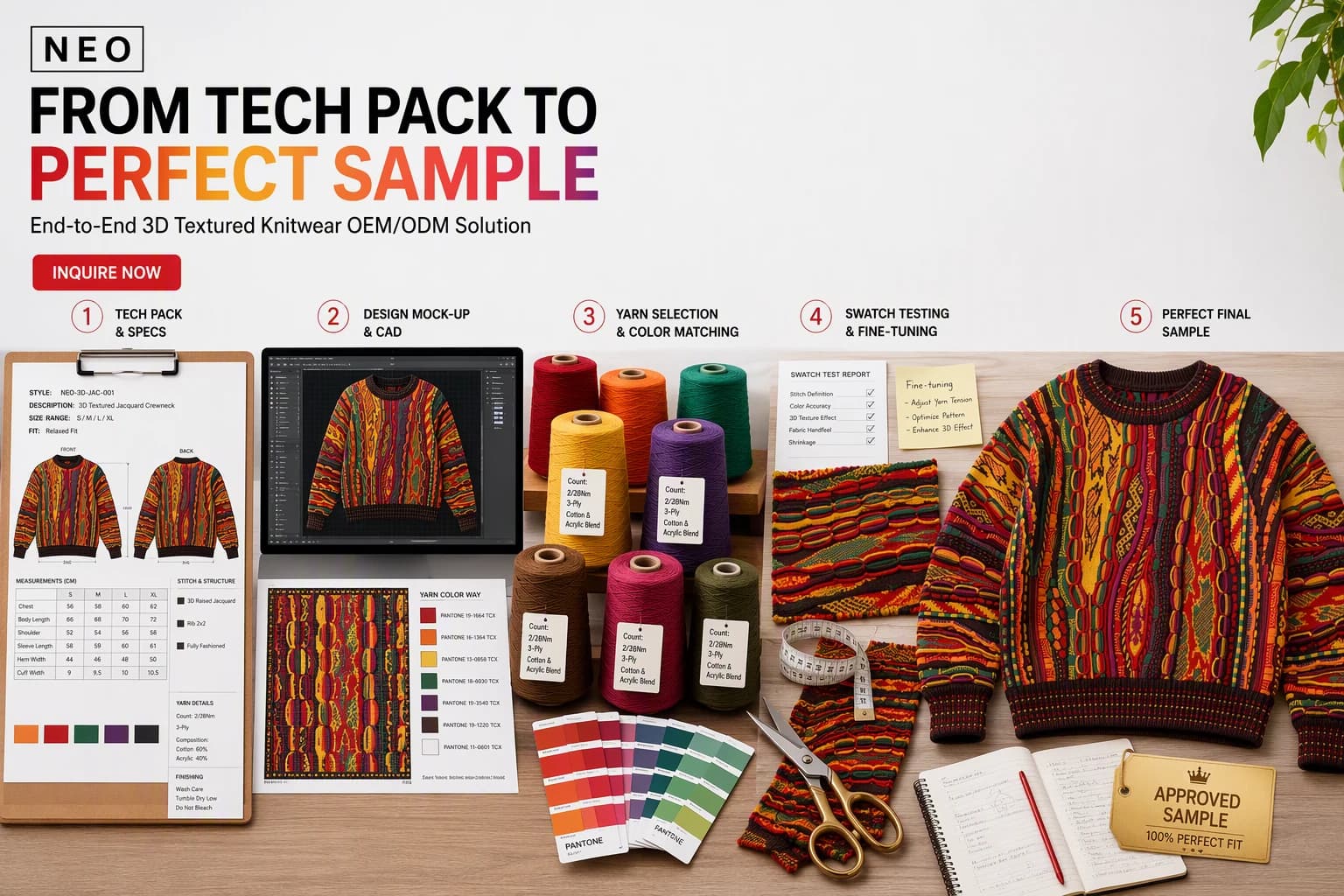
From Tech Pack to Perfect Sample: How Knitwear Sampling Actually Works
A floor-level walkthrough of the five stages between your tech pack and an approvable knit sample — mock-up and CAD programming, yarn colour matching, swatch testing, and the final PPS.
Sourcing Custom Men's Knitwear: What Separates a Knitwear Factory from a Sweater Mill
Mens knitwear briefs rarely fail on the design. They fail on gauge, size grading and reverse-side finishing — three things most price requests never ask about. Here is what to specify before you ask for a quote.
Send us the piece you were told was too hard.
Reference photo, rough sketch, or full tech pack — our Dalang technical punchers evaluate feasibility, machine gauge, yarn options, and pricing within 24 hours.