
How a Sweater Sample Is Made: Notes from the Sample Room
A blue melange cable cardigan, three pages of a sample master's handwritten worksheet, and the arithmetic that turns a design into stitches. A close look at the hand-knit prototype stage most buyers never see.
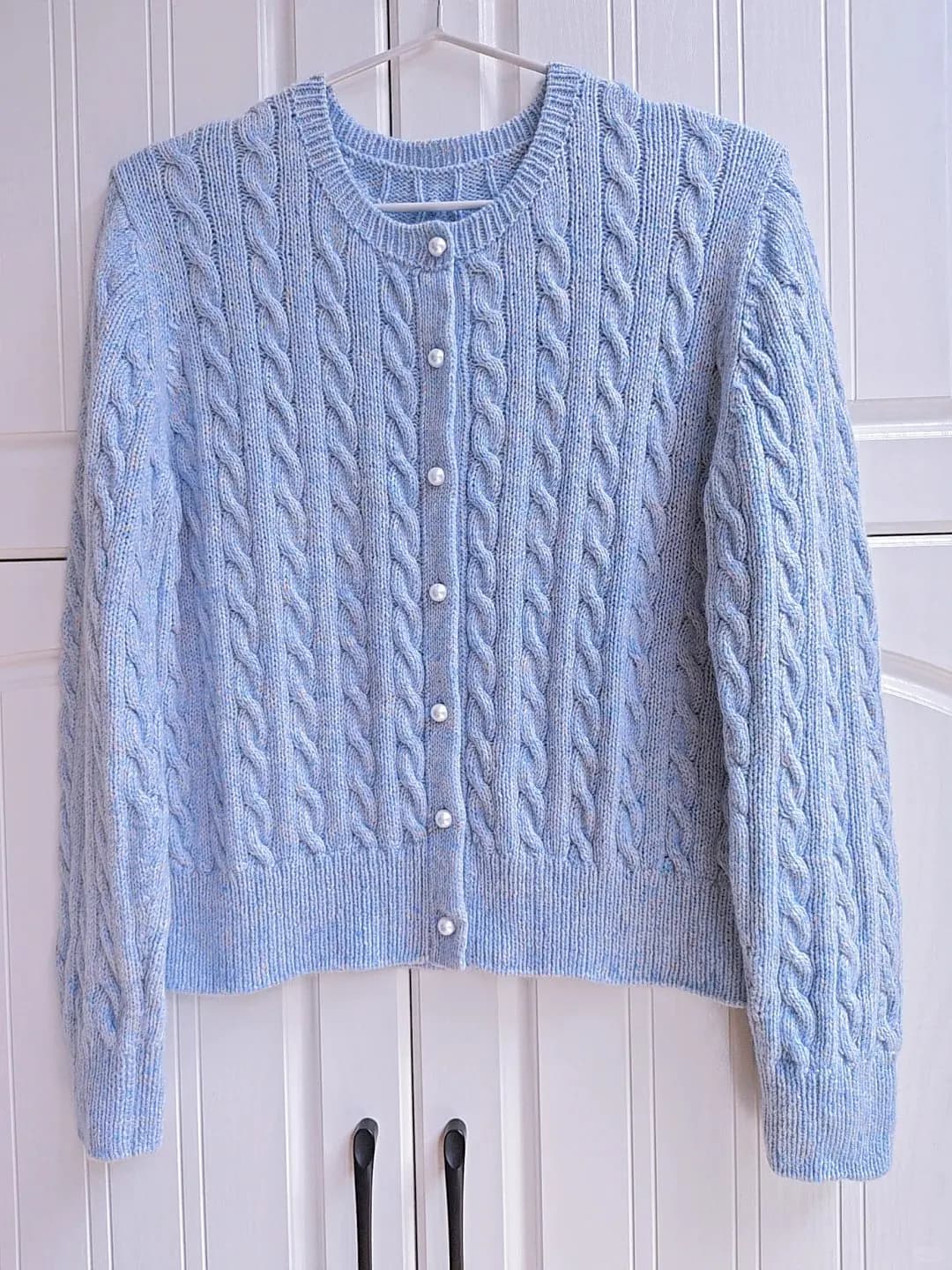
Written this week, from the sample room. The cardigan above is a women's cable-knit cardigan in blue melange with pearl buttons — and the two pages photographed below are the sample master's actual worksheet, reproduced in her own hand. We wrote an earlier piece about the knitwear sampling process as a timeline — what happens between a tech pack and an approvable sample. This post goes one level deeper: the notebook itself, where a design stops being a picture and becomes stitch arithmetic. Most buyers never see this stage; it is the most honest thing we can show you.
Every knitted sample passes through a person most buyers never meet. Not the designer who drew the inspiration, not the salesperson who quoted the order — the sample master, who decides how a picture becomes loops. Before any machine is programmed for a new style, she works the style out on paper and, for cable and texture programmes, often knits the first prototype by hand: needle by needle, checking the stitch structure, the cable repeat and the fabric hand before committing yarn and machine time. This week's notebook holds exactly that — a full worksheet for a cable cardigan. Here is how to read it, because knowing how a sweater sample is made is what lets you brief a factory in a language that produces accurate quotes.
The First Line Is Always the Gauge
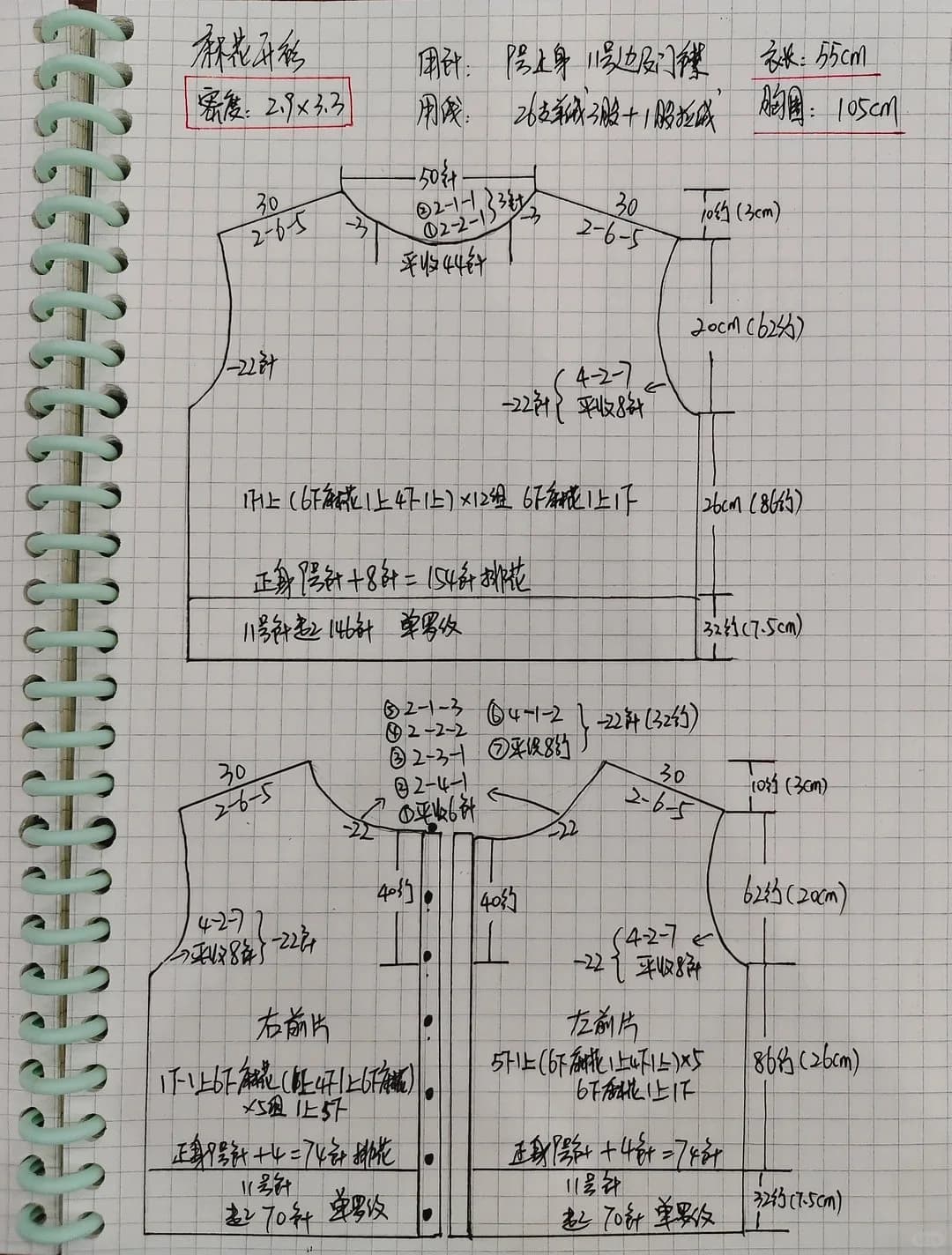
Look at the top of the worksheet page above: 2.9 x 3.3, boxed in red. That is the density — 2.9 stitches and 3.3 rows per centimetre — measured from a gauge swatch knitted before anything else happened. Every number on these pages is derived from it. The garment is specified at 55 cm length and 105 cm chest; multiply chest by stitches-per-centimetre, allow for the cable pattern's draw-in, and you get the stitch counts written across the diagram: 146 stitches for the back, 70 per front panel, cast on over size-11 needles in single rib. If the gauge had come out at 2.7 instead of 2.9, every one of those numbers would change. This is why a serious sample room knits the swatch first and why "gauge 2.9 x 3.3" is the first thing a worksheet records.
The yarn is written there too: a 26s-count wool knitted in three ends, plied with one end of a brushed-effect yarn — that fourth end is what gives the finished cardigan its soft, heathered halo in the photograph. Yarn choice and gauge are decided together: the same design knitted in pure three-end wool would read crisper and colder, with less of the bloom that makes this one look expensive.
Reading the Shorthand: 2-1-3, 2-6-5, 4-2-7
The marginal numbers all over the diagram look like code, and they are: knitting shorthand for shaping. The armhole note 2-1-3 means decrease one stitch every two rows, three times. 2-6-5 at the shoulder means decrease six stitches every two rows, five times — a rapid shoulder slope. On the sleeve page below, the increase schedule runs 8-1-11 (add one stitch every eight rows, eleven times), then 6-1-4, then 1-1-9 into the armhole curve, where shaping accelerates row by row. Written out, that curve is why a set-in sleeve cap sits flat on the shoulder instead of puckering. Nobody photographs this part of a sample; it is the invisible half of the fit.
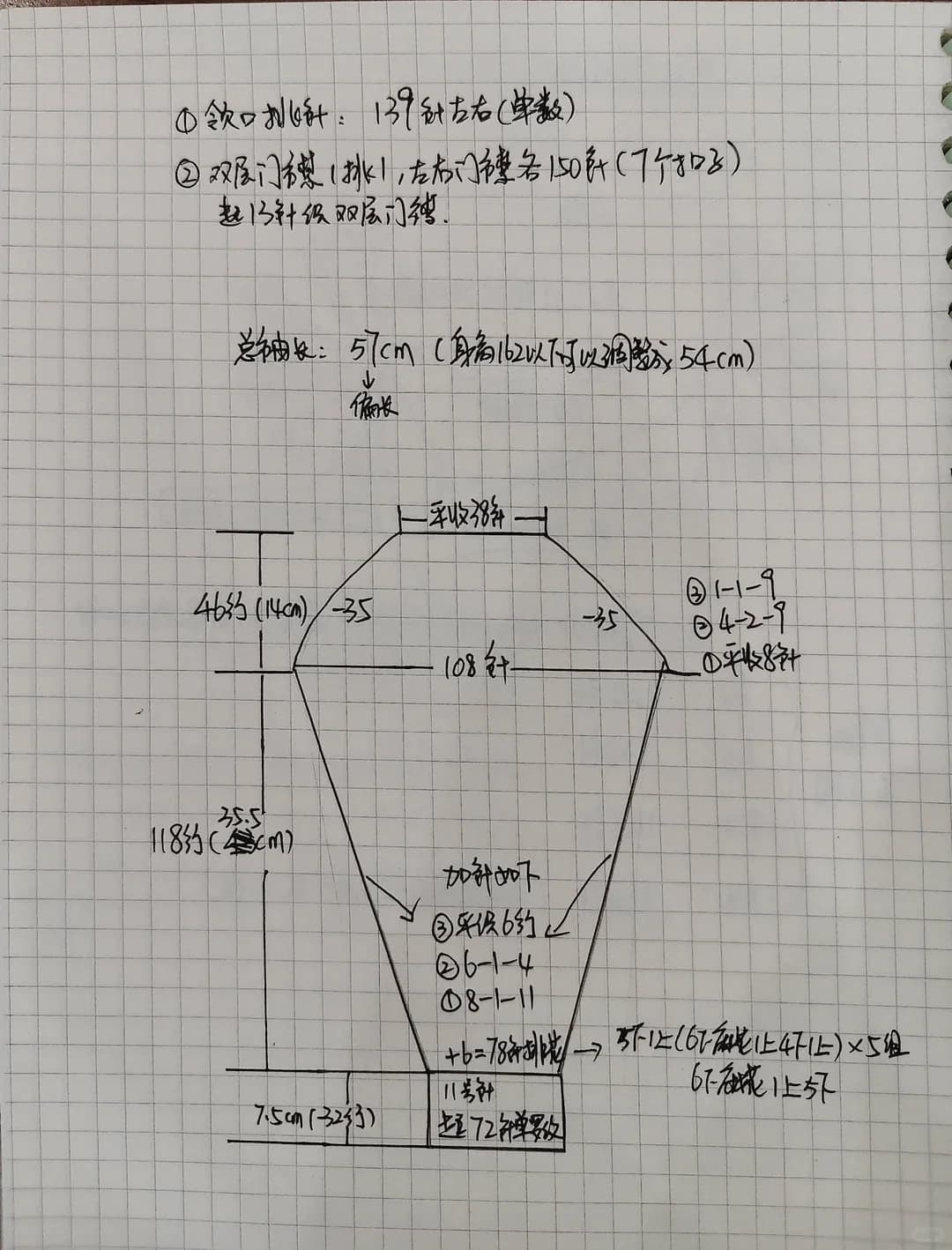
The sleeve page also records the negotiations: total sleeve length 57 cm, with a note that for a 162 cm wearer it can come down to 54. This is what a worksheet is for — it is where a spec, a body and a yarn meet and disagree, and where the disagreement gets settled before machines run. A buyer who sends arm measurements and wearing-height assumptions in the brief gets this arithmetic done to their numbers instead of to a default.
Collar and Placket: The Arithmetic of the Details
The button placket on this cardigan is a double-layer construction, and the worksheet counts it precisely: neckline picked up around 139 stitches (odd number, so the cable symmetry lands centred), each placket half 150 stitches, seven buttons spaced to the millimetre down the front. The cable itself is specified as a 2.9 x 3.3 cm repeat, five and a half full plaits across the body plus one — that odd extra plait is not a mistake; it is how the cable panel is centred on the chest. Counting stitches for trims sounds like bookkeeping, but it is exactly the stage where cheap samples fail: a placket picked up at the wrong stitch count ripples forever, and no amount of pressing fixes it.
From the Notebook to the Machine Programme
Why hand-knit a prototype at all in a factory full of machines? Because a hand-knit swatch of a cable programme shows what the structure really does — how much the plaits draw the fabric in, how the brushed yarn blooms after handling, whether the pearl-button placket lies flat — without first spending programming hours. Once the worksheet proves the arithmetic, the same numbers are translated into the digital pattern and the machine programme, and the sample goes to knit on the machine in days. The hand stage is short, but it is where a new cable style either earns its numbers or goes back to the notebook. On this cardigan, the worksheet and the finished garment agree — which is precisely what a well-run sample room is for.
The honest part: this stage never appears in a price list. Sampling fees pay for the swatch, the worksheet, the hand prototype and the machine time behind an approvable sample — and a factory that skips the worksheet skips the mistakes on your budget instead of on its own.
Frequently Asked
Why do knitwear factories still knit samples by hand?
Hand prototypes are the cheapest way to validate a stitch structure before machine programming. Cables draw fabric in, textured yarns bloom, plackets ripple if the stitch count is wrong — all of that shows up in a hand-knit panel knitted in an afternoon, and all of it is cheaper to fix in the notebook than in a machine programme.
What does 2-1-3 mean on a knitting worksheet?
Shaping shorthand: work every 2 rows, 1 stitch, 3 times — decrease one stitch on each of three consecutive shaping rows spaced two rows apart. The same notation scales up to shoulder slopes (2-6-5) and sleeve caps (1-1-9), and it is the universal language between sample masters and knitting programmes.
How long does a knitted sample take to make?
For a cable programme like this cardigan: gauge swatch and worksheet first, then sampling — plan on three to five working days for a hand-checked prototype route, with machine-knit sample delivery inside a week of approval of the structure. Styles that skip the worksheet stage often look faster on paper and arrive wrong on the shoulder.
If you are planning a cable or textured programme, send the sketch and the numbers you already have — target measurements, yarn preference, button count, destination market. Our sample room will reply with the gauge and stitch counts we would run, and the worksheet behind your first sample is a document you get to keep. That is the point of a factory that shows its notebook: you can argue with arithmetic, but you cannot argue with it fast enough to save a season.
Looking to manufacture this style at scale?
Send us your design brief and we'll quote a direct-factory run with low MOQs, 72h sampling and DDP worldwide delivery, knitted on our own floor in Dalang.
Knitwear you can manufacture right now
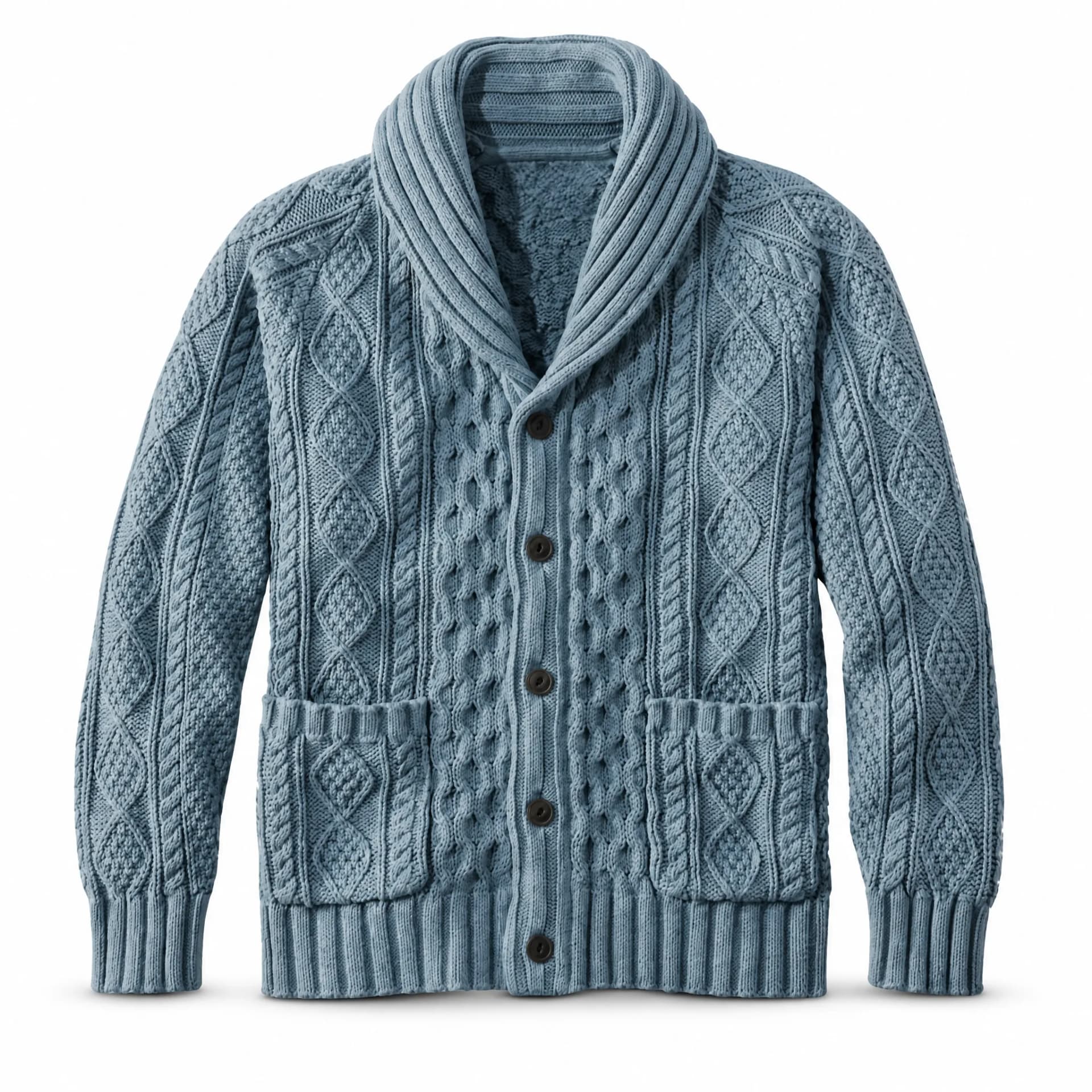
Custom Shawl Collar Cable Knit Cardigan
Chunky cable-and-diamond cardigan with a fully fashioned shawl collar — knitted as structure, never cut and sewn.
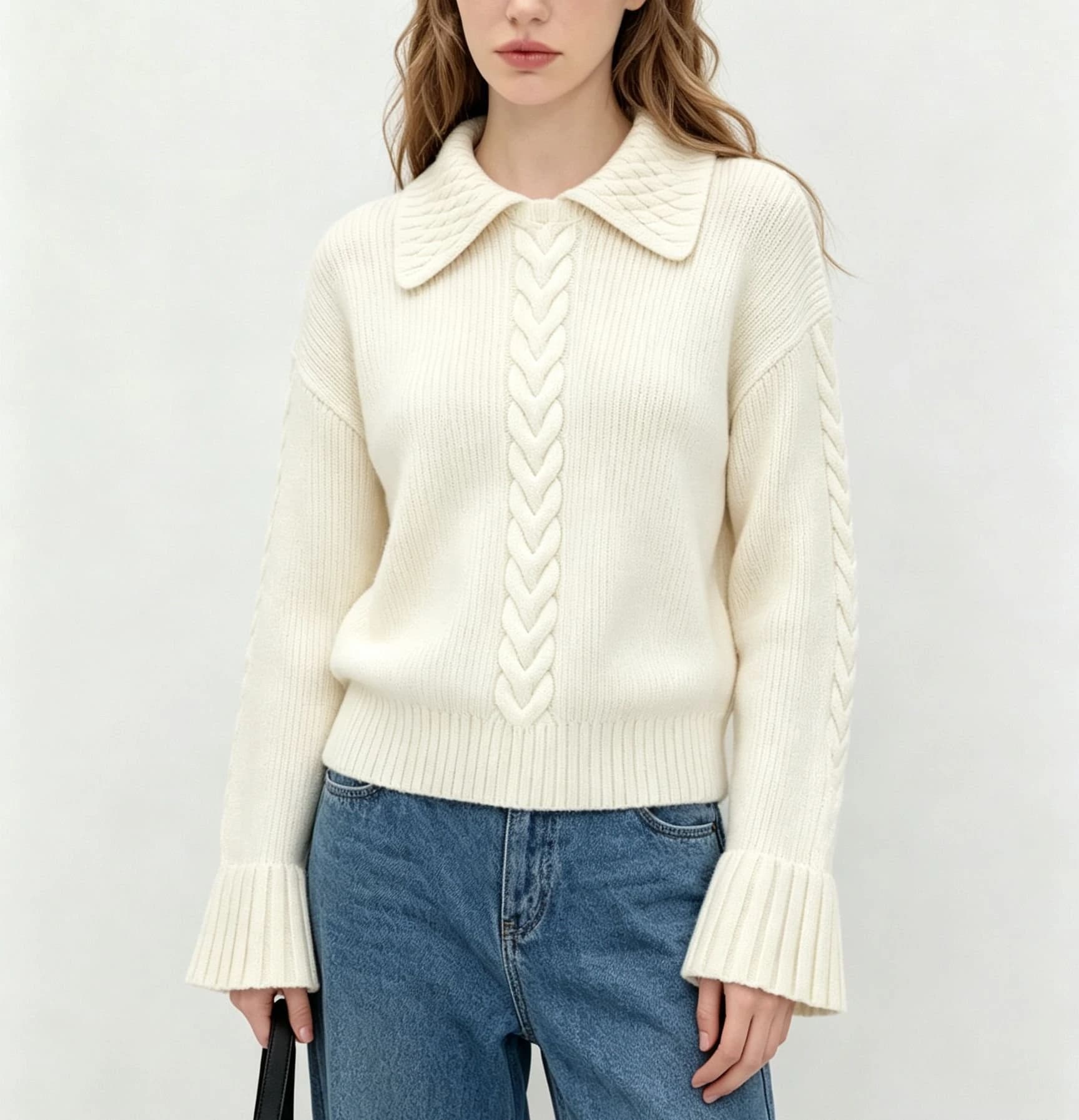
Custom Women's Bell Sleeve Cable Knit Sweater
The collar is a cable panel, not a trim — and the sleeve opens into a flared rib cuff that has to fall right the first time.
Keep reading

It's Time to Custom-Own Your Christmas Jumper
A short consumer-oriented overview of the custom Christmas jumper trend — design ideas, group-event tips, and the festive looks defining this year's holiday season.
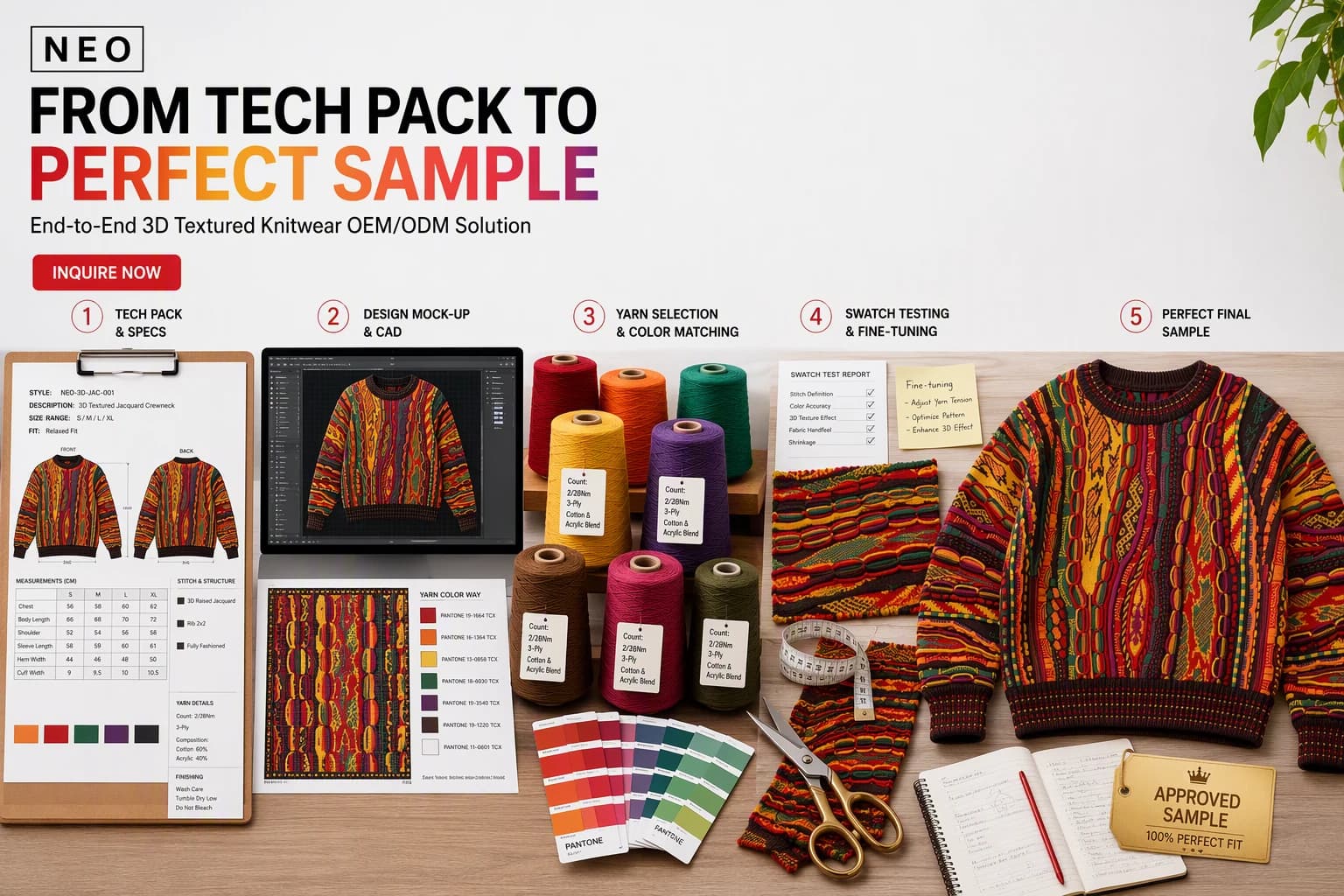
From Tech Pack to Perfect Sample: How Knitwear Sampling Actually Works
A floor-level walkthrough of the five stages between your tech pack and an approvable knit sample — mock-up and CAD programming, yarn colour matching, swatch testing, and the final PPS.
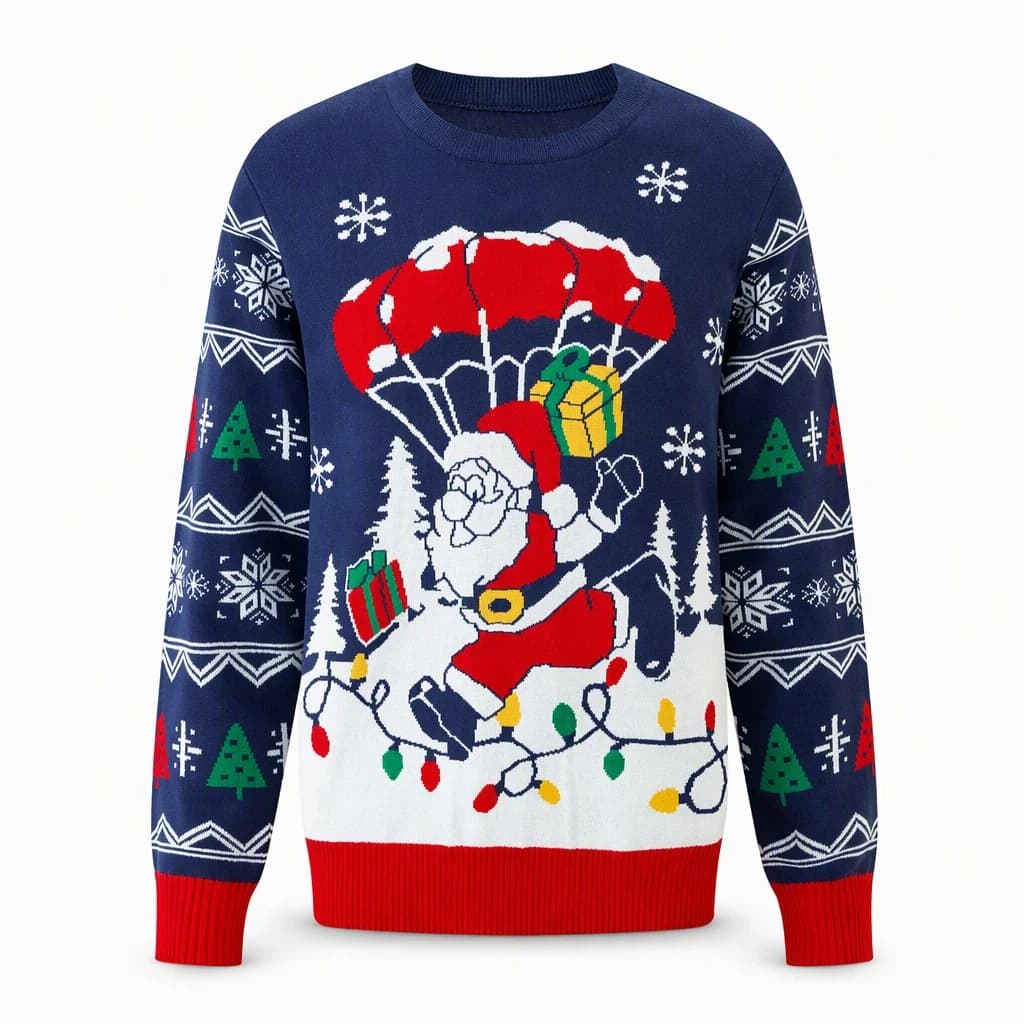
Sourcing Custom Men's Knitwear: What Separates a Knitwear Factory from a Sweater Mill
Mens knitwear briefs rarely fail on the design. They fail on gauge, size grading and reverse-side finishing — three things most price requests never ask about. Here is what to specify before you ask for a quote.
Send us the piece you were told was too hard.
Reference photo, rough sketch, or full tech pack — our Dalang technical punchers evaluate feasibility, machine gauge, yarn options, and pricing within 24 hours.