Custom Jacquard Knitwear: Colors, Patterns, Labels and Hang Tags
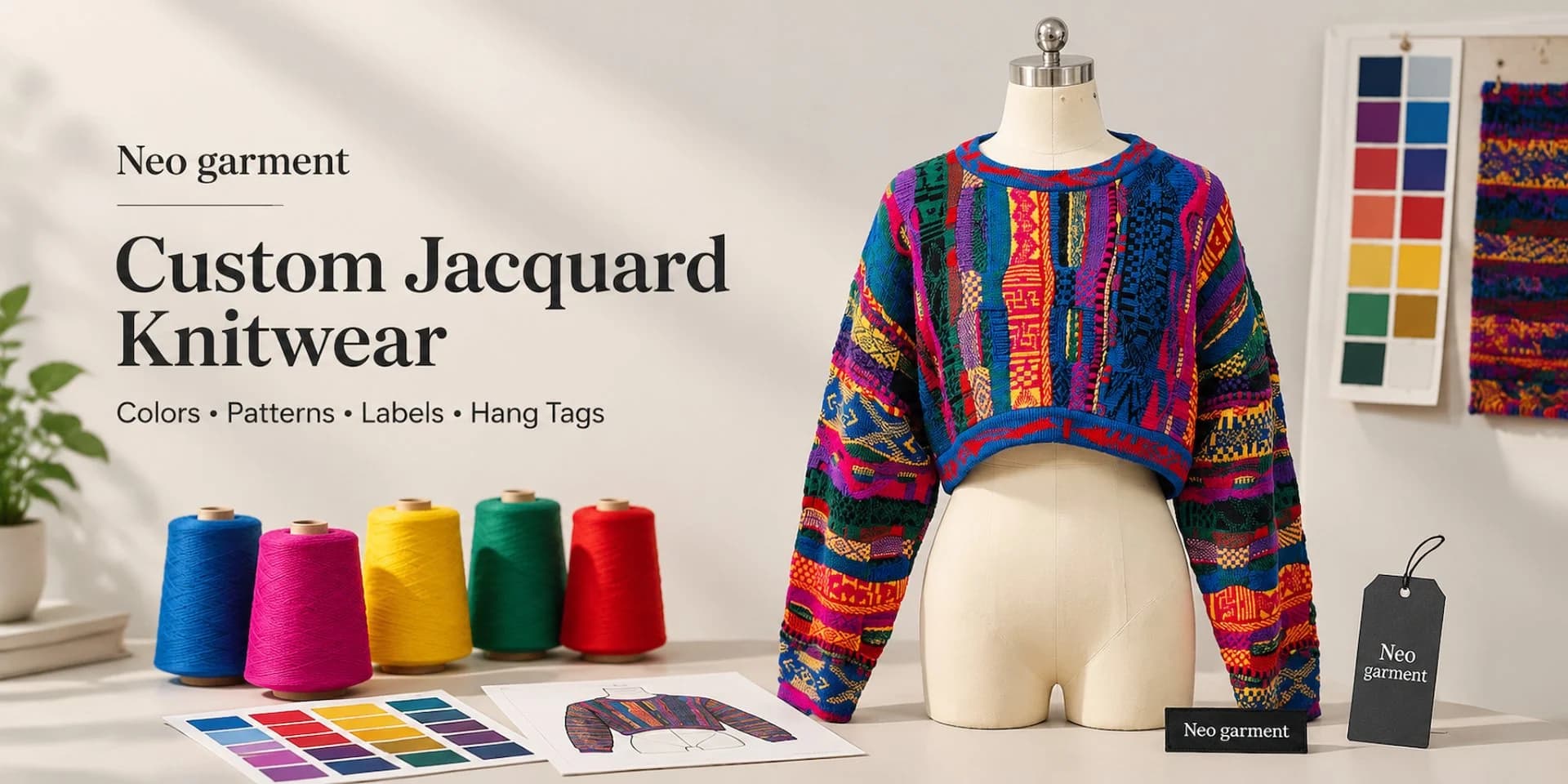
A custom jacquard programme is four deliverables in one line: a colour story, a pattern layout, a woven label and a hang tag. Here is how each one moves from your artwork to a finished garment.
Jacquard is one of two ways a graphic gets into knitwear — the other is intarsia, and the difference matters when you brief a factory. We compared the two techniques in Jacquard vs Intarsia vs Embroidery. This guide covers the other half of the conversation: everything that has to be decided around the knitting to turn a jacquard artwork into a sellable, shelf-ready garment.
When a brand asks for custom jacquard knitwear, the word custom is doing more work than it looks like it should. A finished jacquard sweater is not one decision — it is four deliverables that move in parallel: a colour story that has to survive contact with real yarn cones, a pattern layout that has to be programmed before a single metre knits, a woven main label sewn into the neckline, and a hang tag that speaks for the garment on the retail floor. Factories that only do one or two of these four hand the rest to middlemen, and the seams show — a beautiful jacquard with a crooked neck label reads as a factory problem, not a design problem. This guide walks through all four in the order they actually get decided.
Colour Is a Programme, Not a Preference
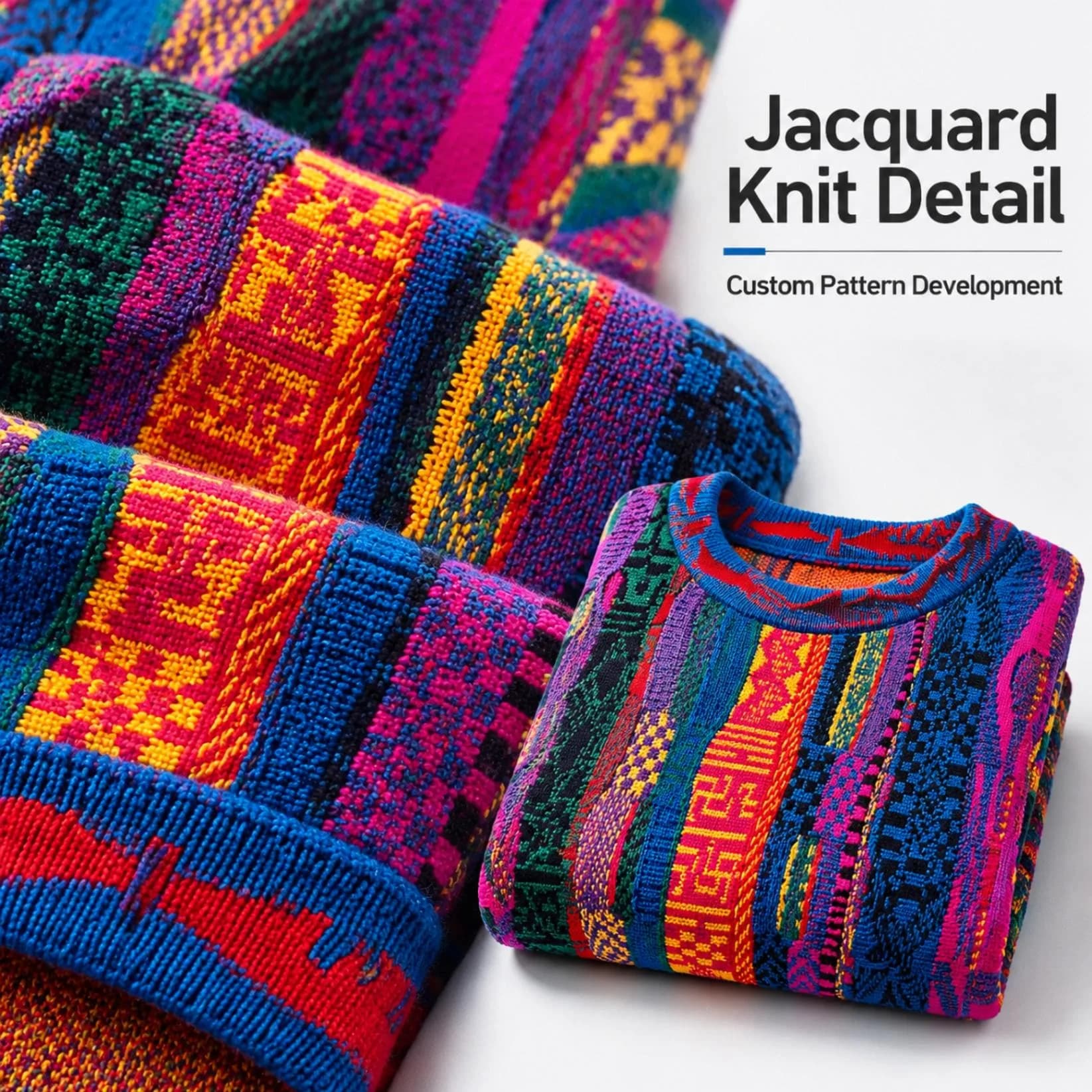
The first thing to understand about jacquard colour is that the machine does not mix inks the way a printer does — every colour in the design is a physical yarn end running down the back of the machine. That is why the colour conversation starts at the yarn stage, not the garment stage. We match against Pantone references from our own yarn inventory hub in Dalang, where cone colours sit in the same room as the machines; a shade either exists close enough to match, or it goes into dye development before programming starts. Colour-block proportions are set in the CAD layout, which means the difference between a quiet design and a loud one is often not the palette at all — it is how many columns each colour occupies.
There is a hard ceiling worth knowing when you brief: a jacquard layout tops out around thirteen colours per design, because every additional colour is another yarn end to manage and another place the reverse side can get messy. Most brands never need that many — a disciplined six-to-eight colour story with strong contrast usually photographs better than a maximum-saturation twelve. What matters more than the count is dye-lot control: if the programme re-orders next season, the navy has to be the same navy. We hold the yarn programme against the approved sample so repeats match, and that is a warehouse discipline, not a machine setting.
Patterns: From Moodboard to CAD Layout
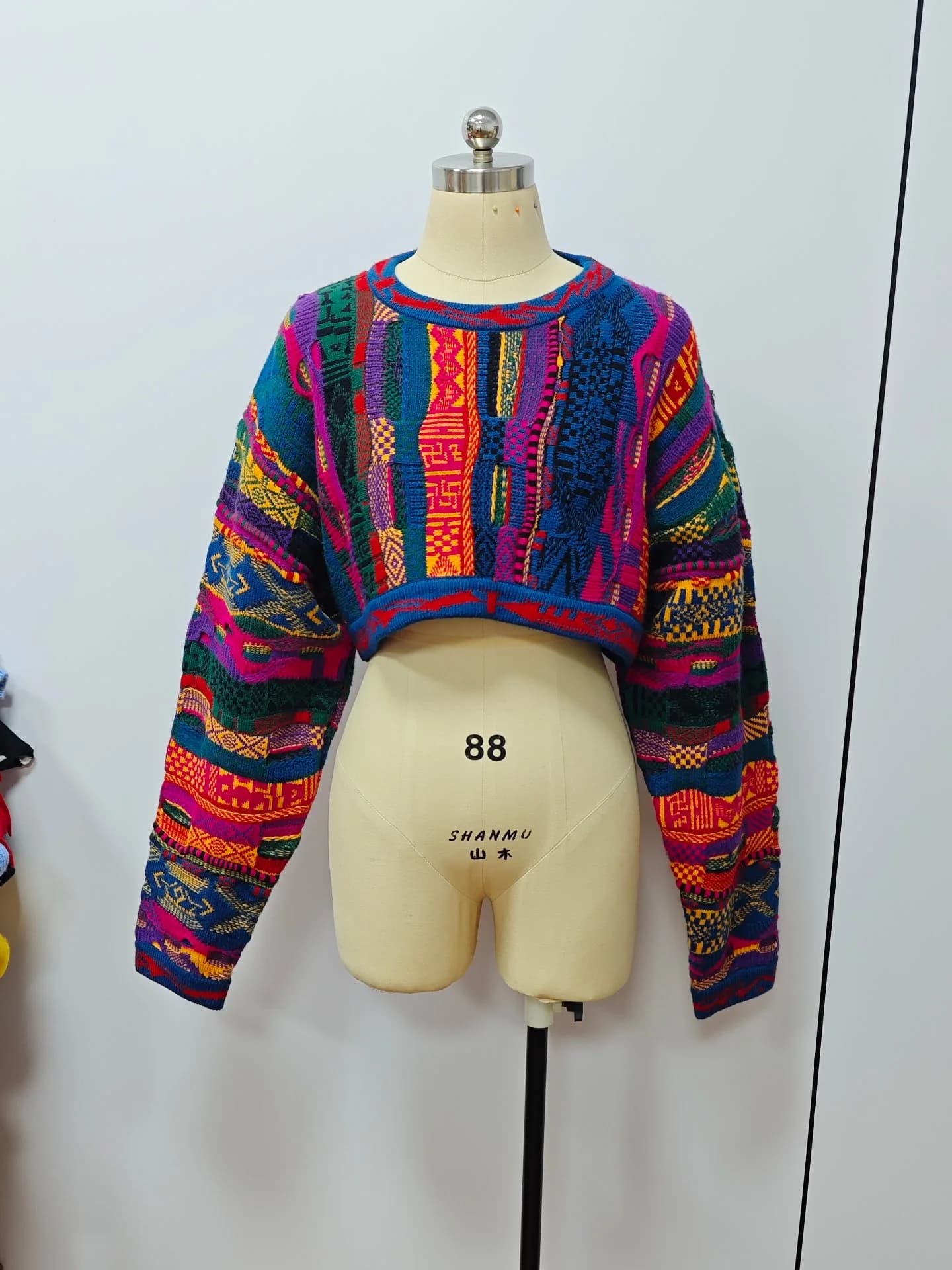
A jacquard motif does not begin at the machine; it begins as a grid decision. Your artwork — a moodboard, a fabric swatch, a sketch, sometimes just a photograph of a vintage piece — gets redrawn into the CAD system as a programmed layout: motif columns, repeat widths, where each colour starts and stops, and where the changeovers hide. This is where custom actually happens. Two sweaters with the same palette and different column proportions read as completely different products, and adjusting those proportions costs nothing at the programming stage and everything after bulk.
The reverse side is the quality test most buyers never think to ask about. A cheap jacquard solves colour changes by letting yarn floats run loose across the back, which catches on jewellery, snags in the wash, and shows through when the garment is held to the light. A disciplined jacquard catches long floats inside the knit structure and places colour changeovers inside the column borders, where the eye expects a break anyway. On a busy patchwork layout — columns of folk motifs each in their own palette — the inside of the garment should be nearly as tidy as the outside. We photograph the reverse of the first sample for approval, and if a factory has never offered to show you theirs, that tells you something.
Labels: The Neckline Is Prime Real Estate
The main label is the first thing a customer flips a garment over to check, which makes it part of the product rather than an afterthought. Woven labels come in a few tiers — damask weave for fine detail on a narrow label, printed satin for a softer hand against the neck, high-density weaves when the logo has small type — and the choice runs through the care and content label too, because a scratchy care label sewn into a soft knit generates returns that no one attributes correctly. Size tabs, fibre-content labels and country-of-origin marks follow the same artwork rules in every market we ship to.
One clarification we make often, because our own catalogue photography shows NEO-branded pieces: the labels in our product photos are presentation visuals for our own catalogue. Every order ships with labels produced to your artwork — your brand at the neck, your care information, your compliance marks — and we do not knit, print or embroider any third-party marks, full stop. If your logo artwork reaches us at sampling, the sample arrives wearing your label, not ours.
Hang Tags: The Only Part That Speaks Before the Garment Is Touched
The hang tag carries no functional load and outsized commercial load: it is the price anchor, the brand story, the fibre credential and the QR code to your lookbook, all on one piece of card. Tags are printed, foil-blocked or embossed to your dieline — kraft board for a natural-hand brand, ivory textured card for premium tiers, matte black for statement knits — and strung before packing so garments arrive floor-ready. For DTC brands the tag is also the cheapest place to add traceability: a batch code or QR link printed at packing costs almost nothing and answers the where-was-this-made question before it is asked.
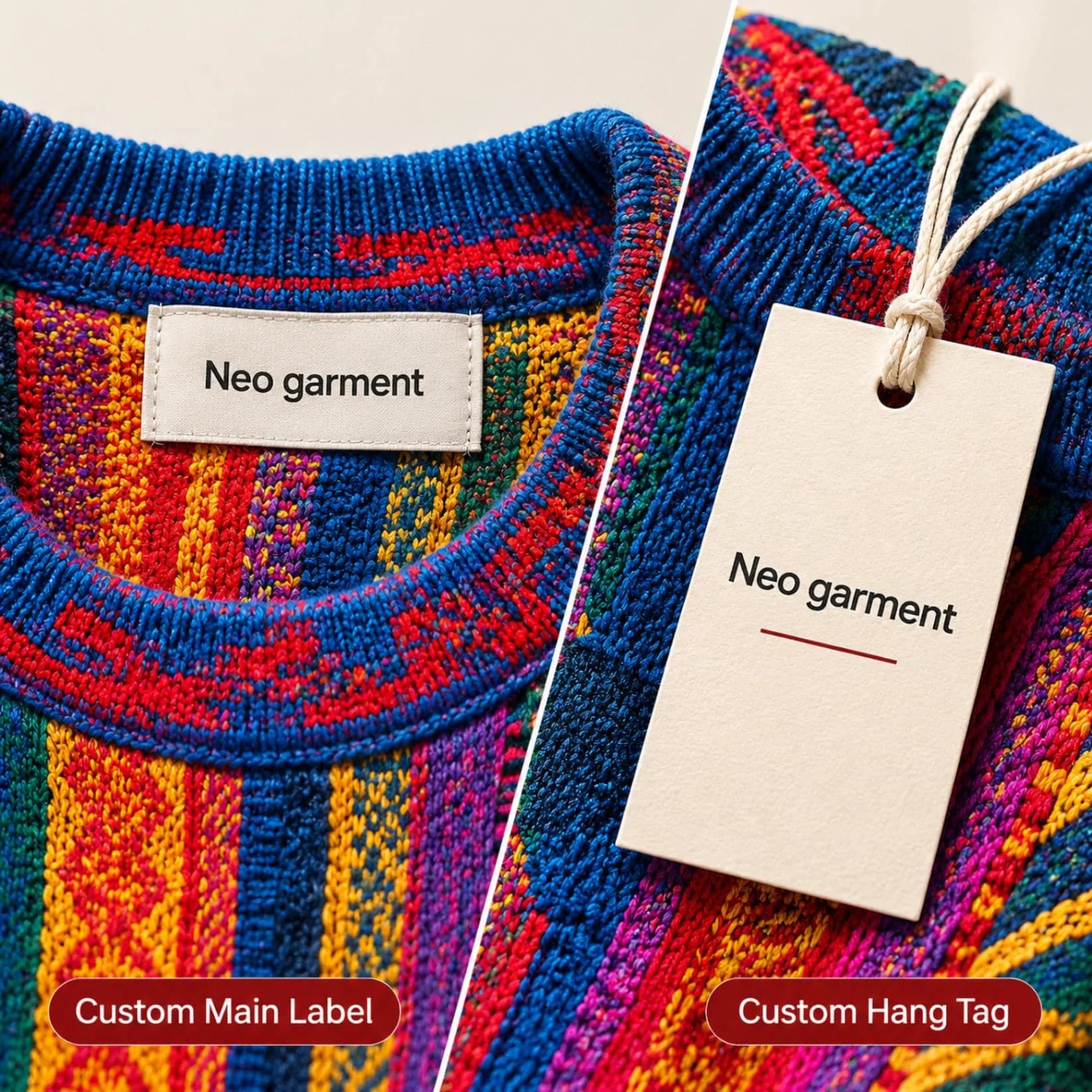
How a Custom Jacquard Programme Actually Runs
With all four deliverables decided, the production rhythm is predictable. Sampling runs five to seven days for a programmed jacquard — longer than a plain-knit sample because the motif layout is built to order in CAD before the first sample knits. Bulk runs three to four weeks including yarn dyeing and programming. MOQ depends honestly on colour count: a two-to-four colour jacquard on an established block can run at 100 pieces, while a thirteen-colour patchwork layout needs around 300 because the setup cost is fixed and has to land somewhere — we would rather say that plainly than pad it into the unit price. Shipping is DDP door-to-door as standard, and every garment passes AQL 2.5 inspection before dispatch.
If you are preparing a first enquiry, four inputs cover the whole conversation:
- A reference — tech sketch, artwork, moodboard, or a photo of the texture you are after
- Colour direction — Pantone codes, fabric swatches, or a mood palette we develop from
- Brand artwork — logo file for the woven label, plus hang tag content if it exists
- Programme shape — target quantity, size curve, and whether the style re-orders or is one-drop
Questions Buyers Ask Before Their First Jacquard Order
Can you match my exact brand colours across several styles?
Within the limits of physical yarn, yes — which is a stronger statement than it sounds. Matching happens at the cone stage against your Pantone reference, and once a shade is approved it is held as a yarn programme, so a reorder next season pulls the same navy. The honest caveat: a screen colour is not a yarn colour until you have a physical swatch in hand, so colour approval happens on sampled knit, never on a monitor.
What if my design has more than thirteen colours?
It either gets distilled or it changes technique. Most designs over thirteen colours contain near-duplicate shades that collapse to one cone without a visible difference; a real thirteen-plus palette usually means the graphic belongs in intarsia for large fields with jacquard detail, or the excess colours move to the trims — cuffs, collar, hem bands — where a contrast rib carries an extra colour cheaply. Send the artwork and we will tell you which of the three it is.
Do labels and hang tags have minimum orders of their own?
Trims run on much smaller minimums than garments — woven labels and printed tags are typically ordered in the thousands of pieces and last multiple production runs, so the trim MOQ almost never becomes the constraint on a garment order. The practical advice is to order the trim programme slightly larger than the first garment run, because reorder garments without reorder labels is the classic schedule-killer.
How do I know the jacquard will look like my artwork?
You look at knitted fabric, not a rendering. The sample stage exists precisely because a CAD simulation flatters a design — real yarn has thickness, motifs round off at the edges, and a motif that sings at swatch scale can turn to noise at garment scale. The counter-sample is the negotiation point: if the layout needs one more revision after you see it knitted, that revision happens before bulk, while it is still free.
Looking to manufacture this style at scale?
Send us your design brief and we'll quote a direct-factory run with low MOQs, 72h sampling and DDP worldwide delivery, knitted on our own floor in Dalang.
Knitwear you can manufacture right now
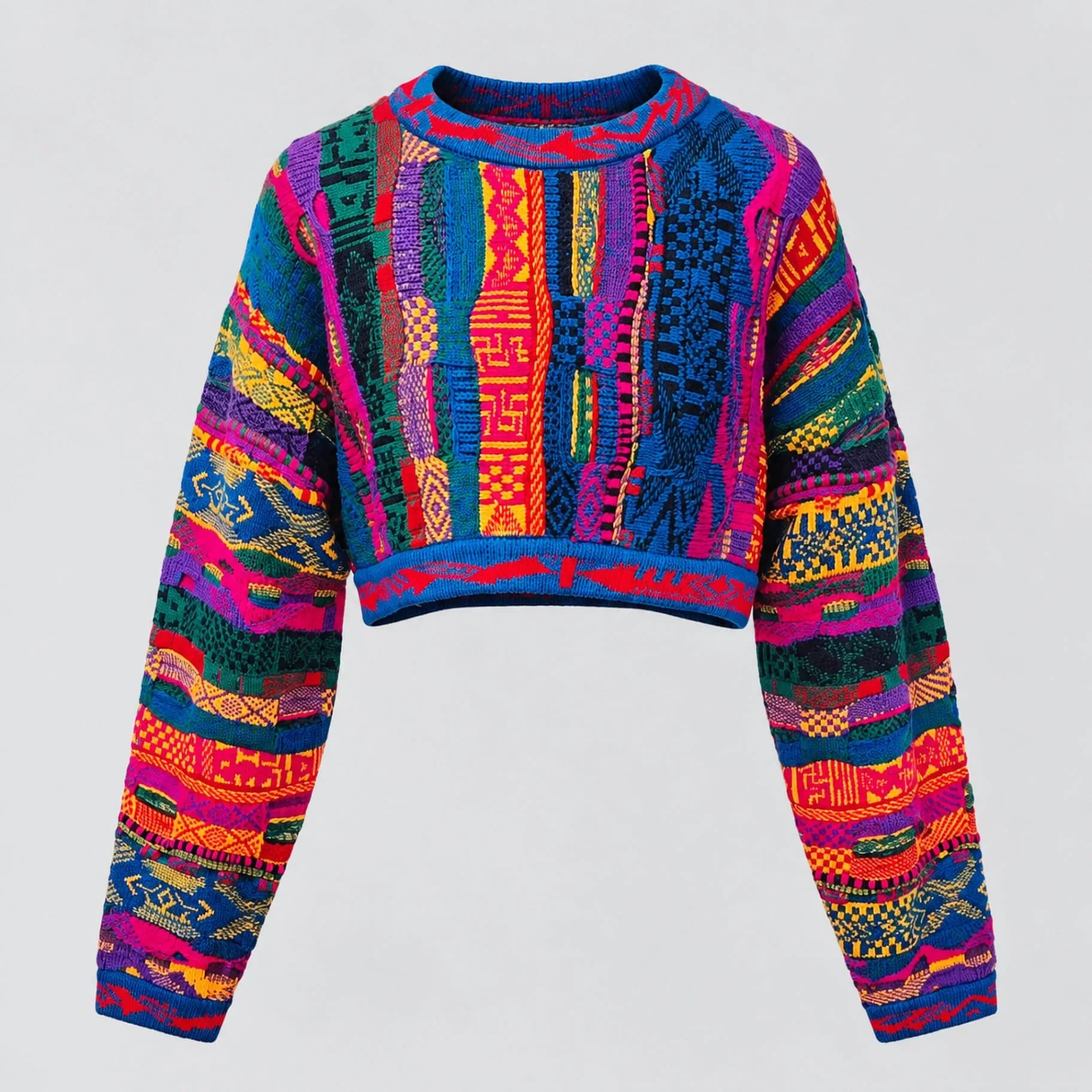
Custom Patchwork Jacquard Crop Sweater
A cropped crew-neck built from columns of folk motifs in up to 13 knitted colours — a statement jacquard piece developed from your colour story.
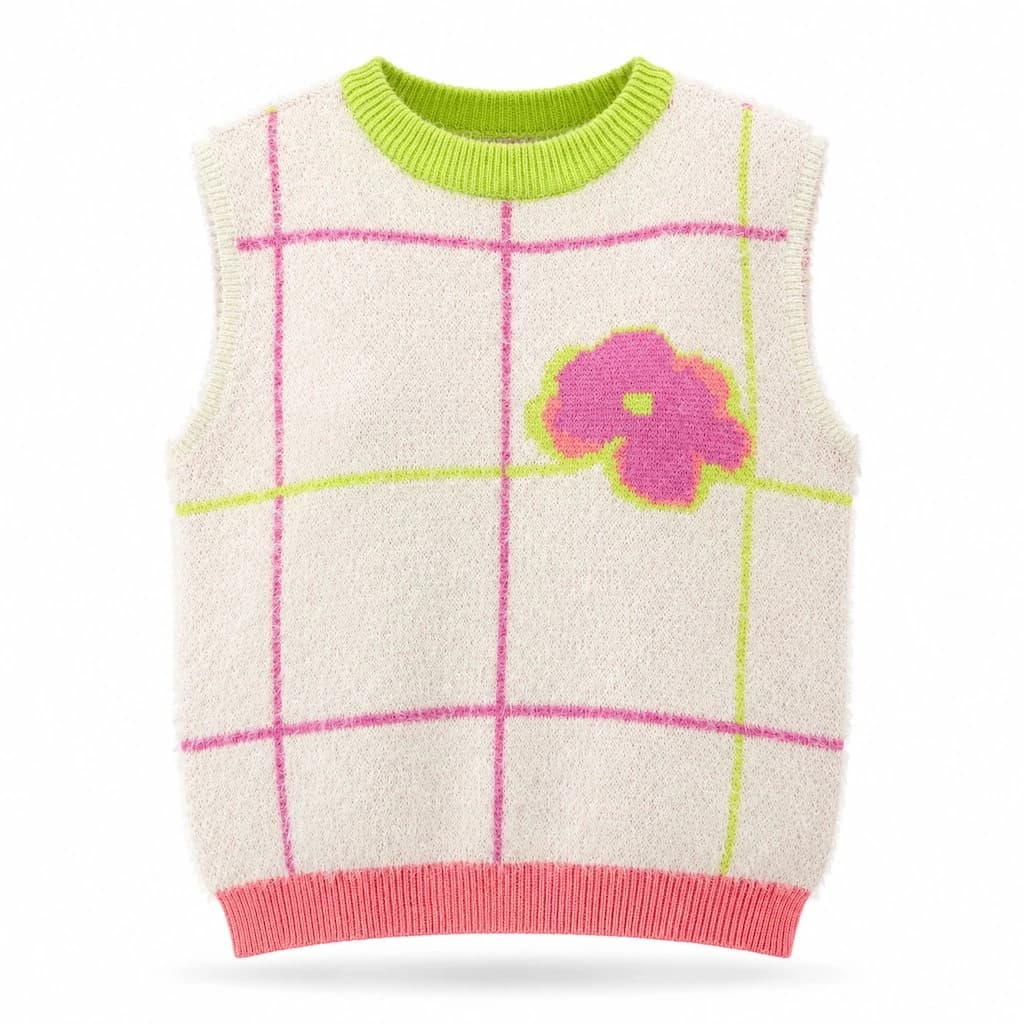
Dancing Yarn Jacquard Sweater Vest
Sleeveless sweater vest in long-hair dancing yarn, with a jacquard windowpane grid and a single floral motif.
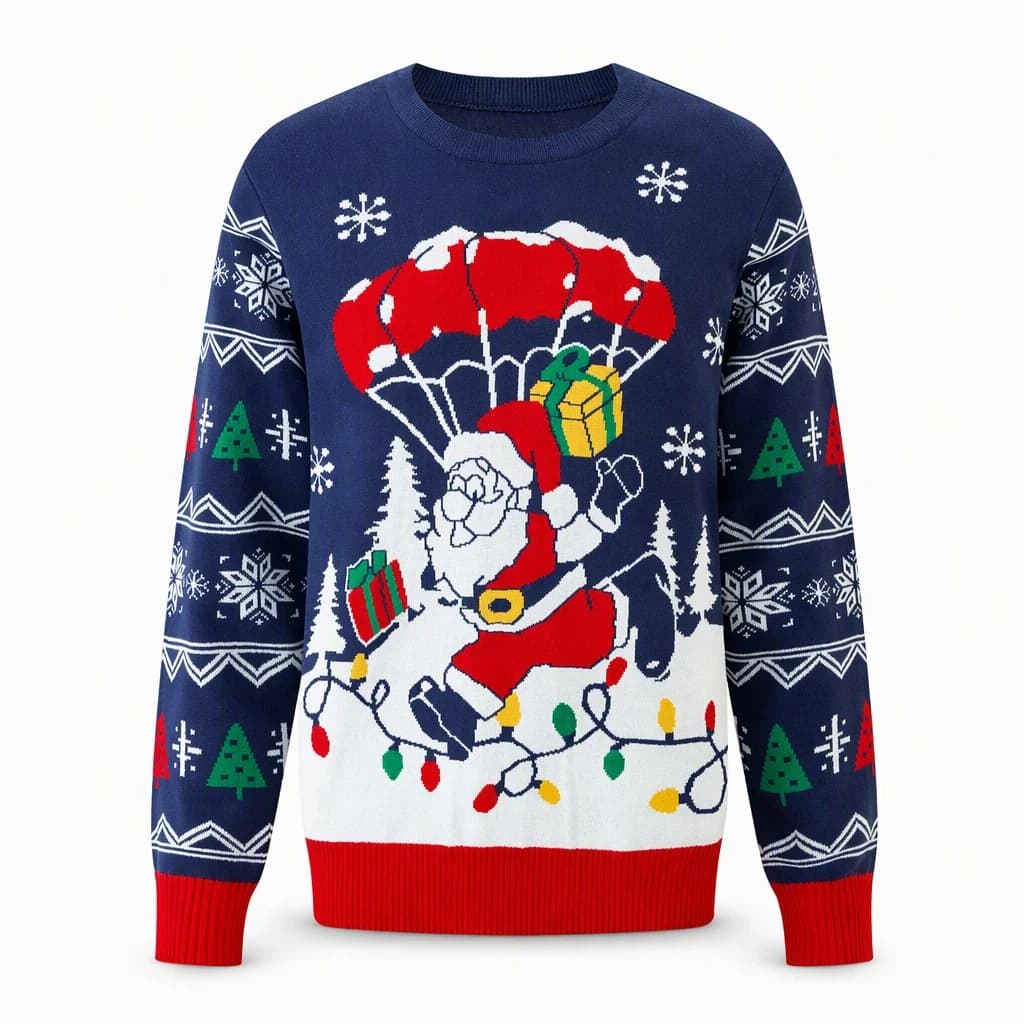
Custom Ugly Christmas Sweater — Double-Layer Thermal Knit
Retail-ready novelty jacquard with a brushed thermal interior — no bonded lining, no bulk at the collar.
Keep reading
It's Time to Custom-Own Your Christmas Jumper
A short consumer-oriented overview of the custom Christmas jumper trend — design ideas, group-event tips, and the festive looks defining this year's holiday season.
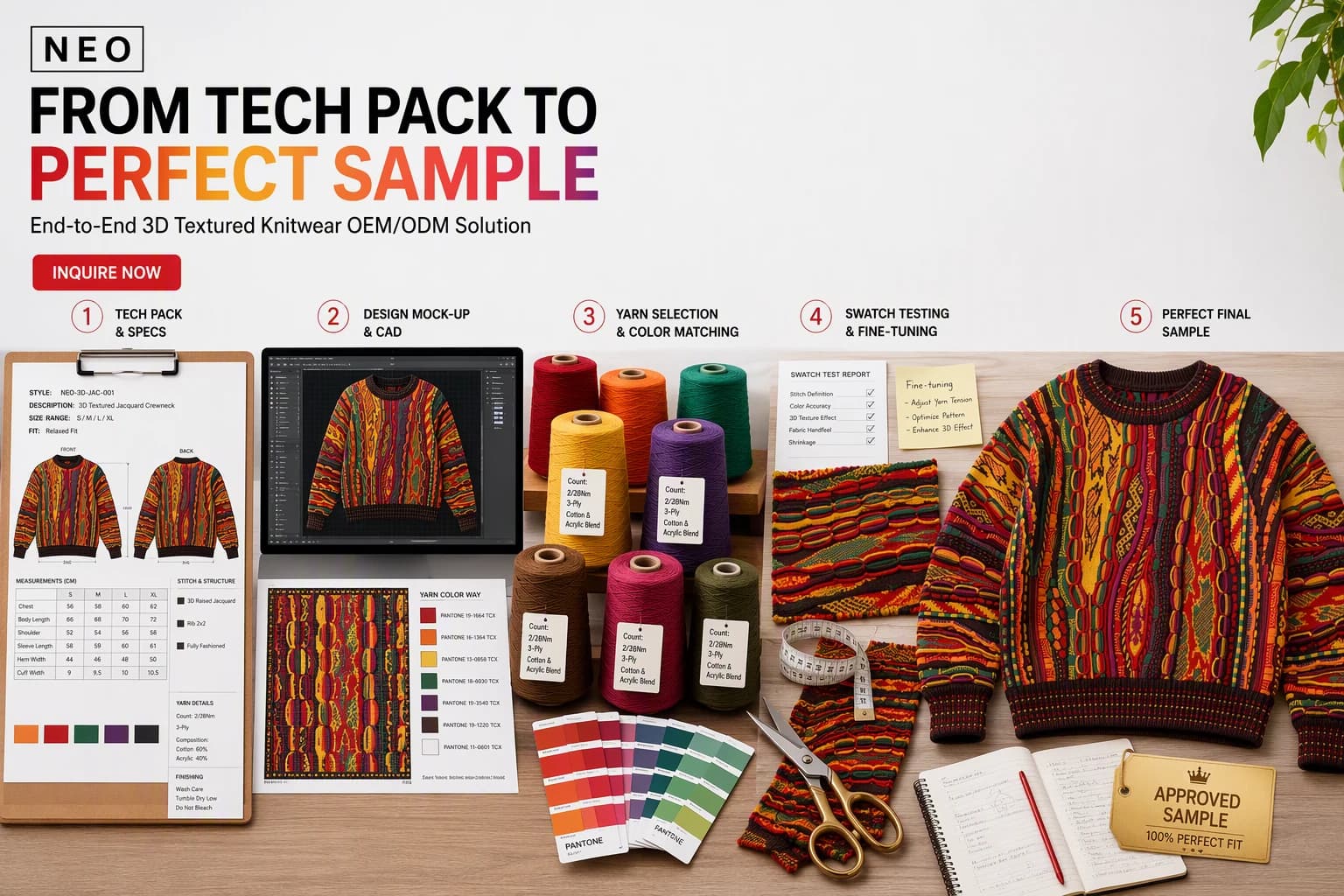
From Tech Pack to Perfect Sample: How Knitwear Sampling Actually Works
A floor-level walkthrough of the five stages between your tech pack and an approvable knit sample — mock-up and CAD programming, yarn colour matching, swatch testing, and the final PPS.
Sourcing Custom Men's Knitwear: What Separates a Knitwear Factory from a Sweater Mill
Mens knitwear briefs rarely fail on the design. They fail on gauge, size grading and reverse-side finishing — three things most price requests never ask about. Here is what to specify before you ask for a quote.
Send us the piece you were told was too hard.
Reference photo, rough sketch, or full tech pack — our Dalang technical punchers evaluate feasibility, machine gauge, yarn options, and pricing within 24 hours.